Similarities and Differences
 Funded by the European Union. Views and opinions expressed are however those of the author(s) only and do not necessarily reflect those of the European Union or the European Education and Culture Executive Agency (EACEA). Neither the European Union nor EACEA can be held responsible for them. |
 All contents, in particular texts, pictures and graphics, are protected by copyright. Unless expressly stated otherwise, copyright is held by sel.eduskills.plus and is licensed under Creative Commons Attribution - Non-commercial - Distribution under the same conditions 4.0 International license. They may be subject to the terms of the license. |
© 2026 sel.eduskills.plus
| Advanced | |
| Age: 4-6 | |
| 20-30 min | |
| Children explore how people can be similar in some ways and different in others. The activity encourages critical thinking, appreciation of diversity, and acceptance of others. | |
| Critical thinking | |
| Flexibility Self-regulation | |
| Cognitive task Conversation Movement | |
|
Preparation
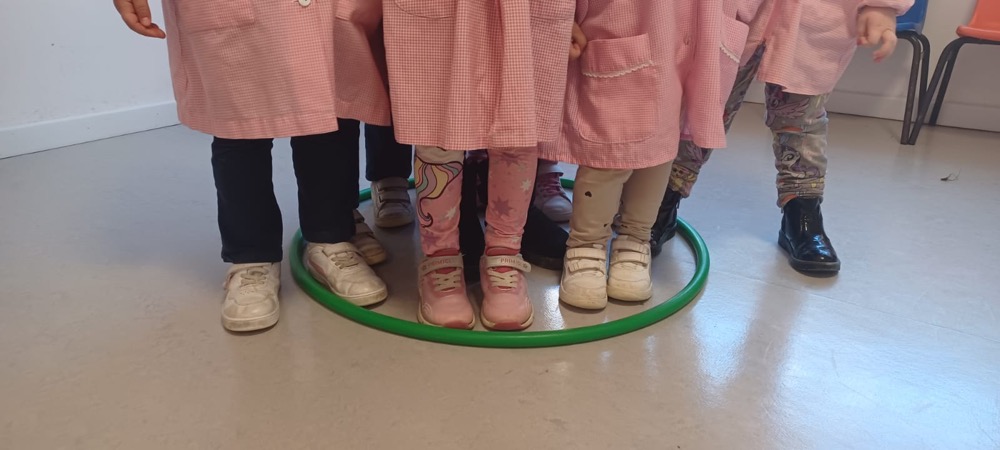
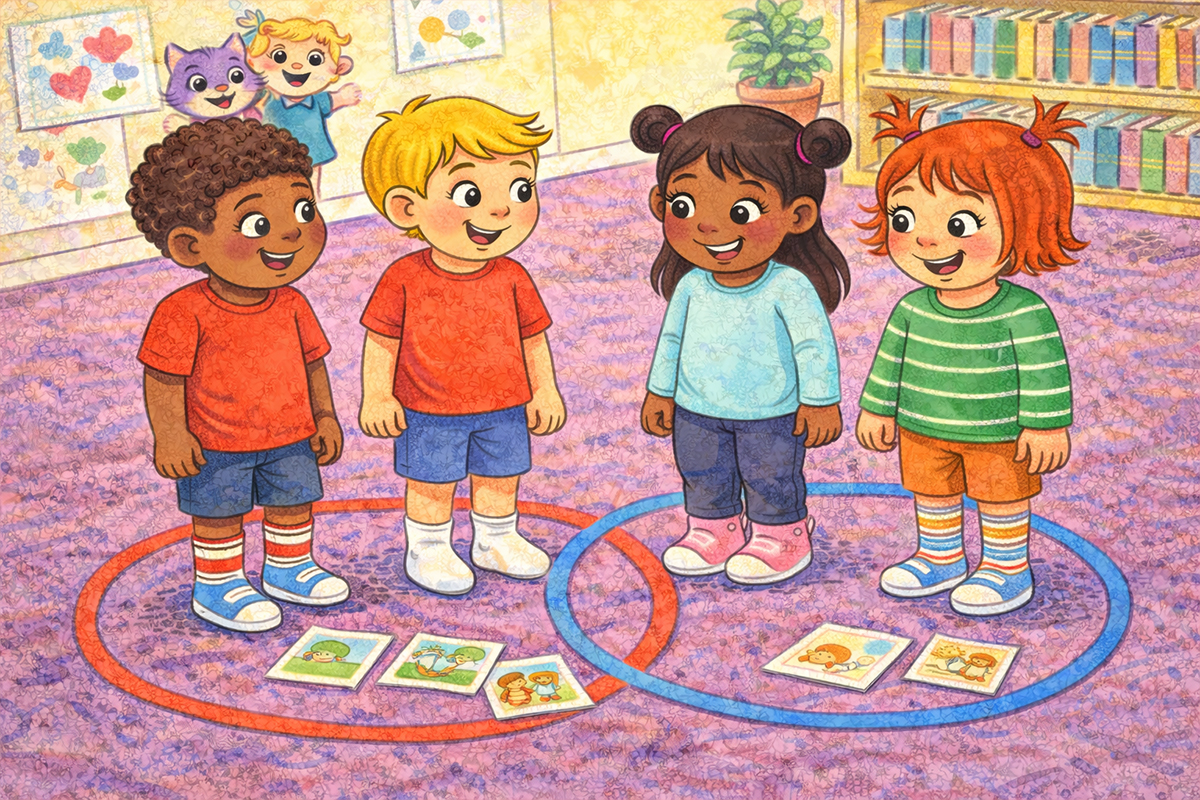
Prepare the play space by marking two circles on the floor with colored chalk, yarn, or adhesive tape in different colors.
Implementation
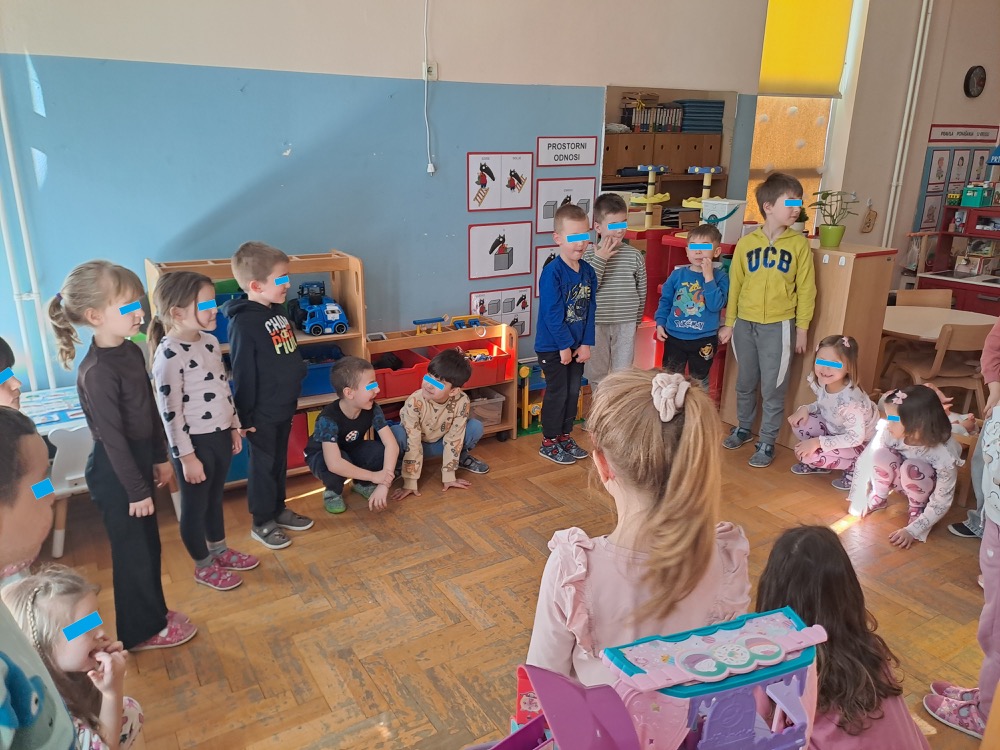
Gather the children in a circle and explain the game.
Show them the two colored circles.
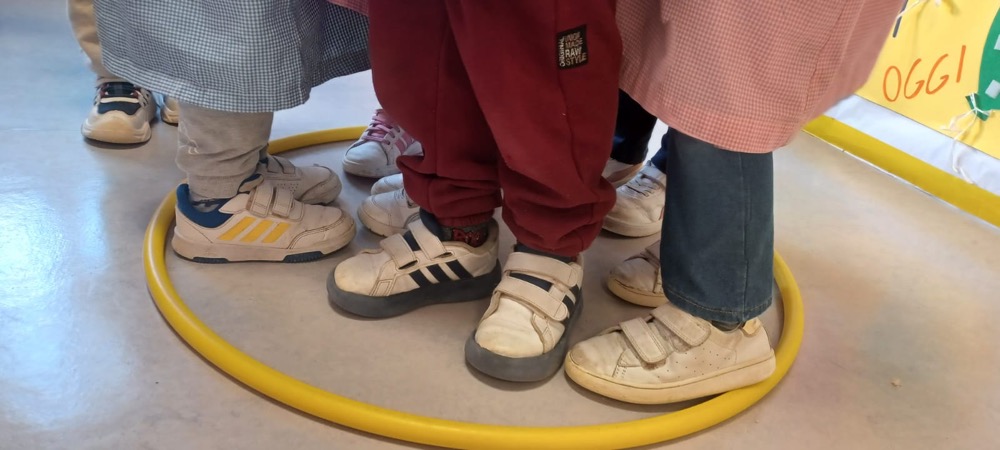
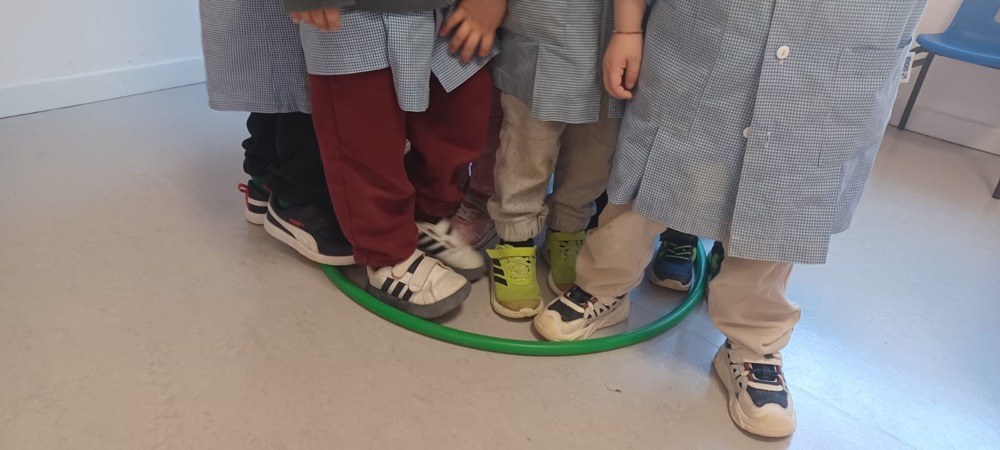
Explain that one circle is for children who are similar in a specific way, and the other circle is for those who are different in that way.
Start with simple visual categories:
- Children with striped socks / children with plain socks
- Children wearing red t-shirts / children not wearing red t-shirts
Once children are comfortable with visible differences, move to other categories:
- Food preferences (sweet / salty / sour)
- Toy preferences (blocks / dolls / cars)
Ask children to step into the circle that matches them.
Keep the tone playful and inclusive. Encourage children to notice both similarities and differences.
Reflection
After the game, gather the children and talk about their experience:
- How did you feel during the game?
- What did you like most? What was difficult?
- How many things do we have in common? In what ways are we different?
Discuss how being different makes each person special, while similarities help us connect and understand one another.
Important note for teachers: anti-bias and emotional safety
This activity can unintentionally highlight differences that make some children feel exposed or excluded.
Before using it, teachers should reflect on their own biases and ensure they are comfortable moderating sensitive moments.
Variations and Additional Ideas
Variation / Optional extension
Use a combination of visible traits and more complex characteristics.
Allow children to suggest categories based on things they like to do, eat, or play with.
Children step into the corresponding circle based on whether they share that characteristic or not.
Repeat the activity with a variety of preferences or interests, keeping the tone playful and inclusive.
Sorting activities using various materials (e.g. buttons, leaves, shapes) based on shared characteristics.
Worksheet "Similarities and Differences - Questions"
- Do you have striped socks or plain socks?
- Are you wearing a red shirt or not?
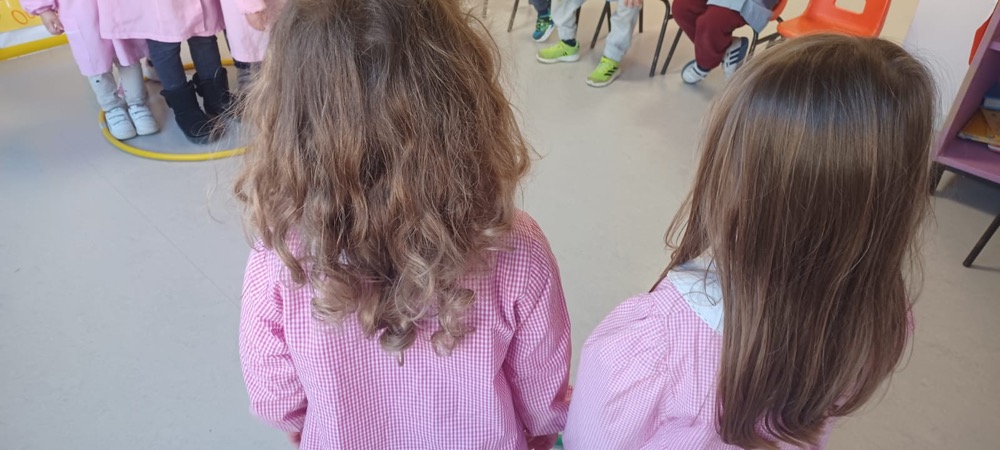
- Do you have long hair or short hair?
- Are you wearing shoes with laces or slip-on shoes?
- Do you have glasses or no glasses?
- Do you like apples or bananas more?
- Do you like milk or water more?
- Do you like soft foods or crispy foods more?
- Do you like playing outdoor?
- Do you like cuddling a toy?
- Do you get scared in the dark?
- Do you feel happy when you help someone?
- Do you like animals?
- Do you like painting?
- Do you like listening to stories?
- Do you like singing or dancing?
Photos of the Activity