Sličnosti i razlike
 Financirano sredstvima Europske unije. Izneseni stavovi i mišljenja su stavovi i mišljenja autora i ne moraju se podudarati sa stavovima i mišljenjima Europske unije ili Europske izvršne agencije za obrazovanje i kulturu (EACEA). Ni Europska unija ni EACEA ne mogu se smatrati odgovornima za njih. |
 Svi sadržaji, a posebno tekstovi, slike i grafikoni, su zaštićeni autorskim pravima. Vlasnik autorskih prava, ukoliko nije drugačije označeno, je sel.eduskills.plus, a autorsko pravo je definirano licencom Creative Commons Imenovanje-Nekomercijalno-Dijeli pod istim uvjetima 4.0 Međunarodna. Autorska prava mogu biti definirana uvjetima licence. |
© 2026 sel.eduskills.plus
| Napredna | |
| Dob: 4-6 | |
| 20-30 minuta | |
| Djeca istražuju kako ljudi u nekim stvarima mogu biti slični, a u drugima različiti. Aktivnost potiče kritičko mišljenje, uvažavanje različitosti i prihvaćanje drugih. | |
| Kritičko razmišljanje | |
| Fleksibilnost Samoregulacija | |
| Kognitivni zadatak Razgovor Pokret | |
|
Priprema
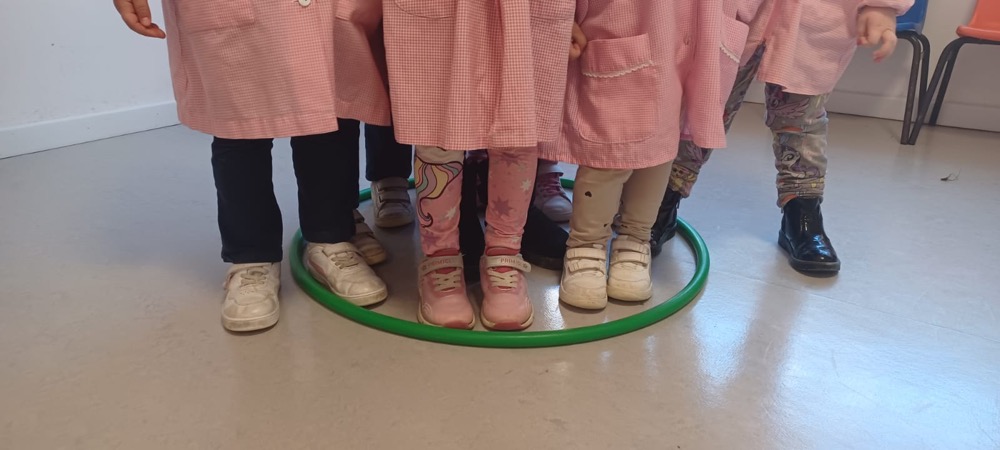
Pripremite prostor za igru označavanjem dvaju krugova na podu obojenom kredom, vunom ili ljepljivom trakom u različitim bojama.
Implementacija
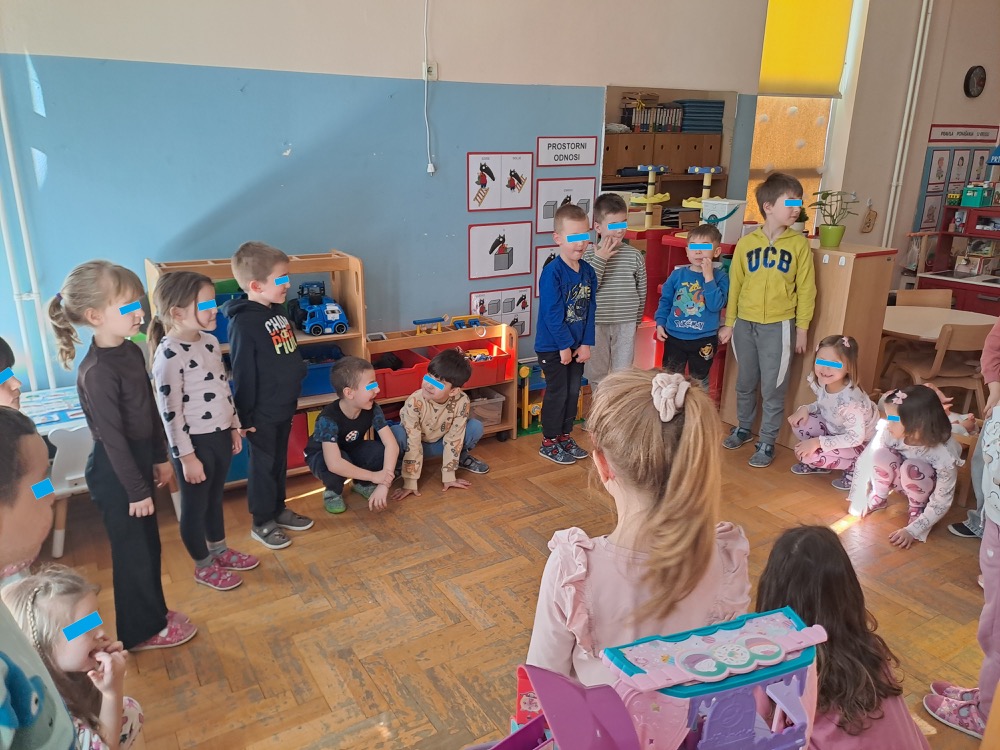
Okupite djecu u krug i objasnite igru.
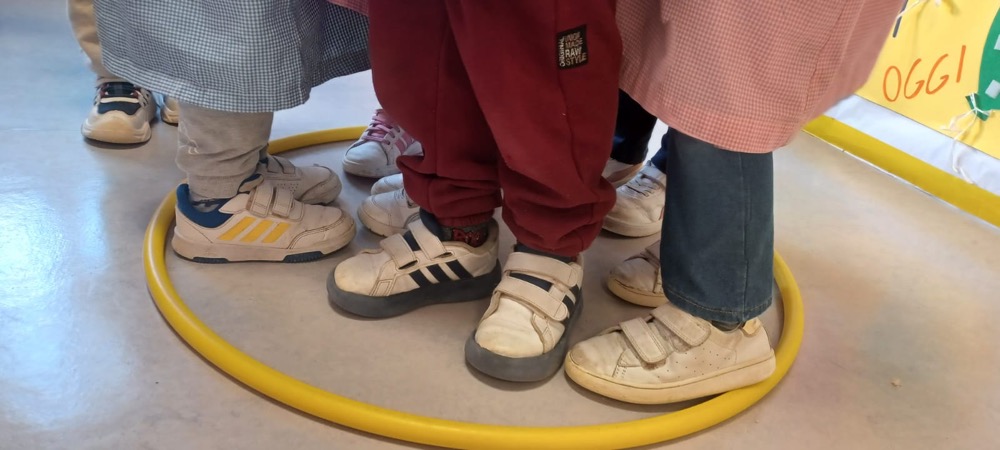
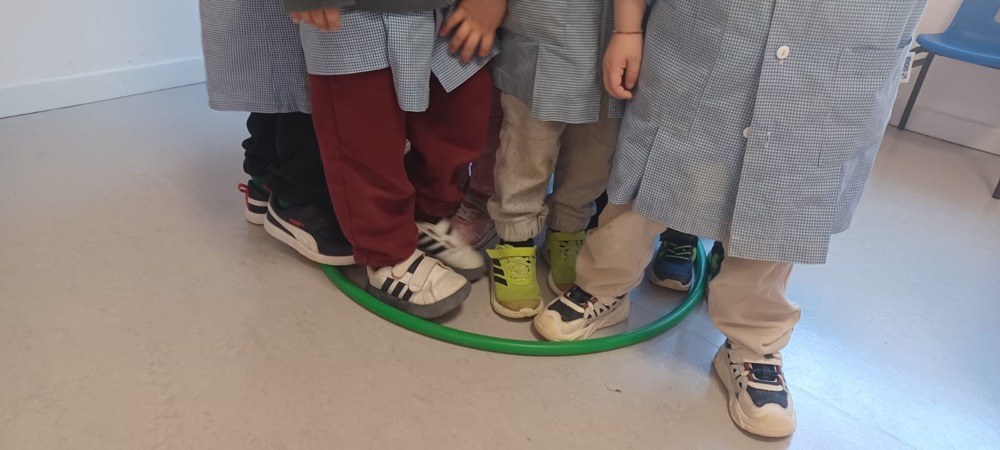
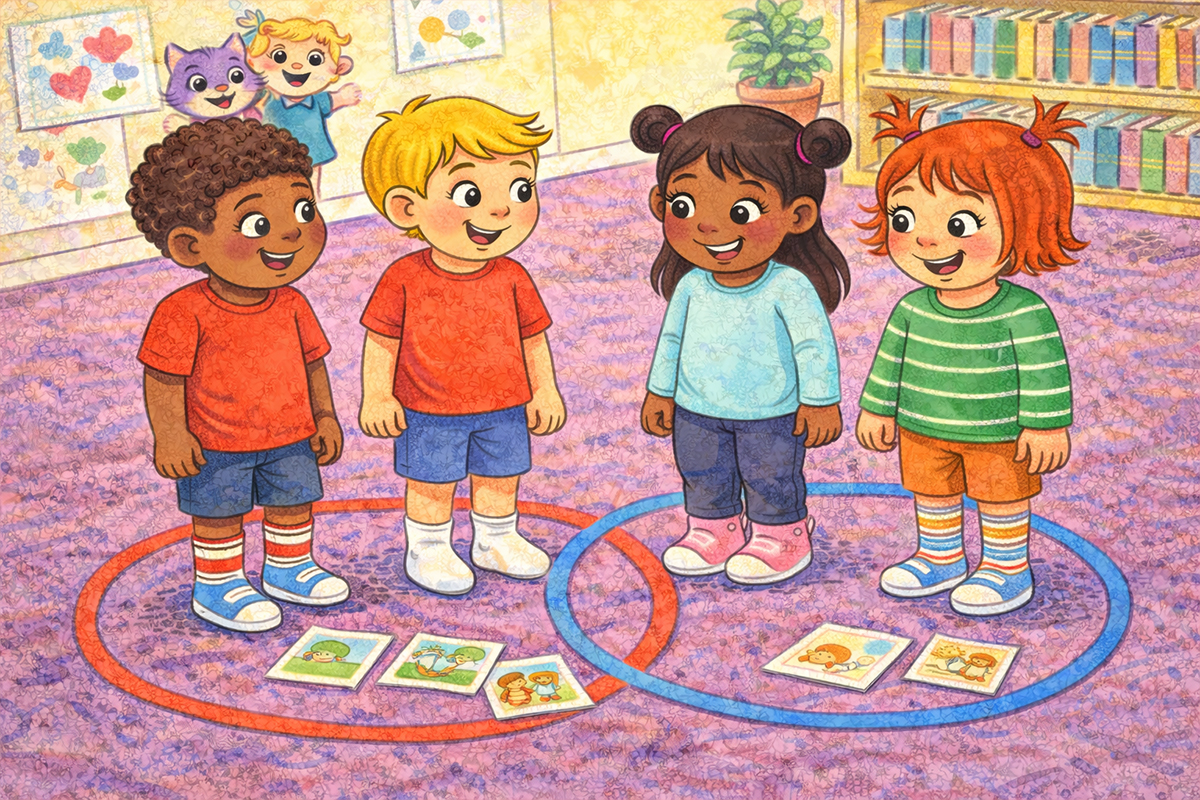
Pokažite im dva obojena kruga.
Objasnite da je jedan krug za djecu koja su u nečemu slična, a drugi za djecu koja se u tome razlikuju.
Započnite s jednostavnim vizualnim kategorijama:
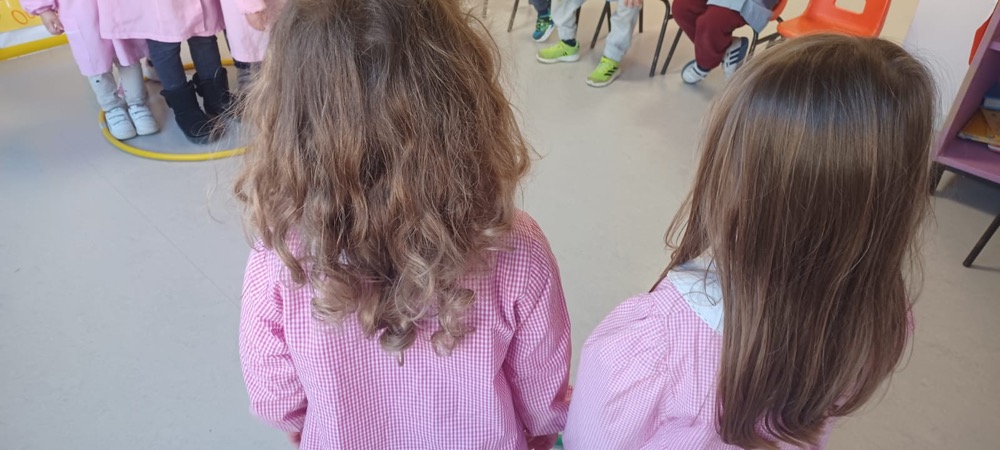
- Djeca s prugastim čarapama / djeca s običnim čarapama
- Djeca koja nose crvene majice / djeca koja ne nose crvene majice
Nakon što se djeca upoznaju s vidljivim razlikama, prijeđite na druge kategorije:
- Preferencije u hrani (slatko / slano / kiselo)
- Preferencije igračaka (kockice / lutke / automobili)
Zamolite djecu da uđu u krug koji im odgovara.
Neka ton bude razigran i uključiv. Potaknite djecu da uoče i sličnosti i razlike.
Refleksija
Nakon igre okupite djecu i razgovarajte o njihovom iskustvu:
- Kako si se osjećao/osjećala tijekom igre?
- Što ti se najviše svidjelo? Što je bilo teško?
- Koliko toga imamo zajedničkog? U čemu se razlikujemo?“
Razgovarajte o tome kako nas različitosti čine posebnima, a sličnosti pomažu povezati se i razumjeti jedni druge.
Važna napomena za odgojiteljice: suzbijanje pristranosti i emocionalna sigurnost
Ova aktivnost može nenamjerno istaknuti razlike zbog kojih se neka djeca mogu osjećati izloženo ili isključeno.
Prije provođenja važno je da odgojiteljica promisli o vlastitim pristranostima i bude sigurna da se osjeća spremnom voditi osjetljive trenutke na siguran i podržavajući način.
Varijacije i dodatne ideje
Varijacije / Dodatne ideje
Koristite kombinaciju vidljivih osobina i složenijih karakteristika.
Dopustite djeci da predlože kategorije na temelju stvari koje vole raditi, jesti ili se s čime vole igrati.
Djeca ulaze u odgovarajući krug ovisno o tome dijele li tu osobinu ili ne.
Ponovite aktivnost s različitim preferencijama i interesima, zadržavajući razigran i uključiv ton.
Aktivnosti razvrstavanja različitih materijala (npr. gumbi, listovi, oblici) prema zajedničkim obilježjima.
Radni list: "Sličnosti i razlike - pitanja"
- Imaš li prugaste ili obične čarape?
- Nosiš li crvenu majicu ili majicu neke druge boje?
- Imaš li dugu ili kratku kosu?
- Nosiš li cipele s vezicama ili cipele bez vezica?
- Imaš li naočale?
- Voliš li više jabuke ili banane?
- Voliš li više mlijeko ili vodu?
- Voliš li više mekanu ili hrskavu hranu?
- Voliš li se igrati vani?
- Voliš li se maziti s igračkom?
- Bojiš li se ponekad mraka?
- Osjećaš li se sretno kada pomogneš nekome?
- Voliš li životinje?
- Voliš li bojati?
- Voliš li slušati priče?
- Voliš li pjevati ili plesati?
Slike aktivnosti