Me, My Breath, and the World Around Me
 Funded by the European Union. Views and opinions expressed are however those of the author(s) only and do not necessarily reflect those of the European Union or the European Education and Culture Executive Agency (EACEA). Neither the European Union nor EACEA can be held responsible for them. |
 All contents, in particular texts, pictures and graphics, are protected by copyright. Unless expressly stated otherwise, copyright is held by sel.eduskills.plus and is licensed under Creative Commons Attribution - Non-commercial - Distribution under the same conditions 4.0 International license. They may be subject to the terms of the license. |
© 2026 sel.eduskills.plus
| Advanced | |
| Age: 4-6 | |
| 20-30 min | |
| Children practice calm breathing to relax, feel their bodies, and notice sounds or sensations around them. | |
| Self-regulation | |
| Wellbeing | |
| Other | |
|
Preparation
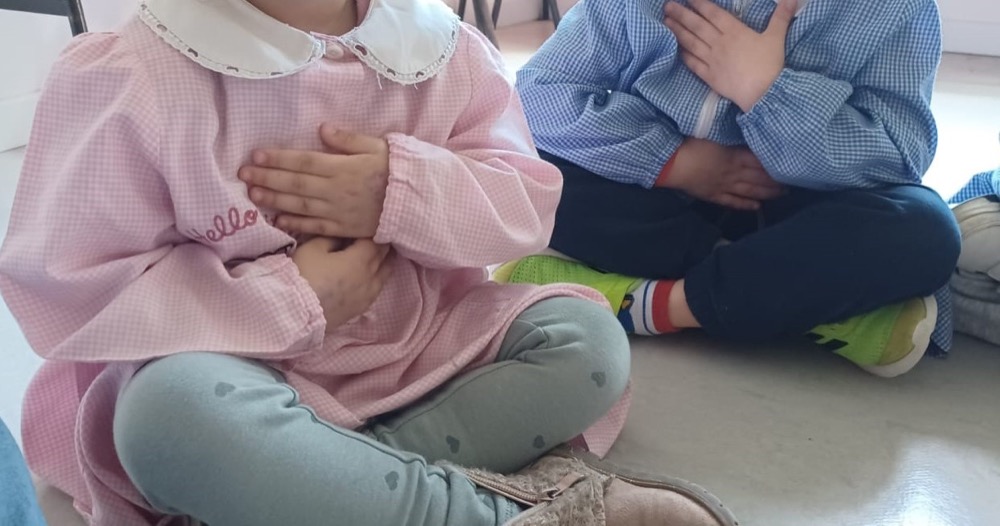
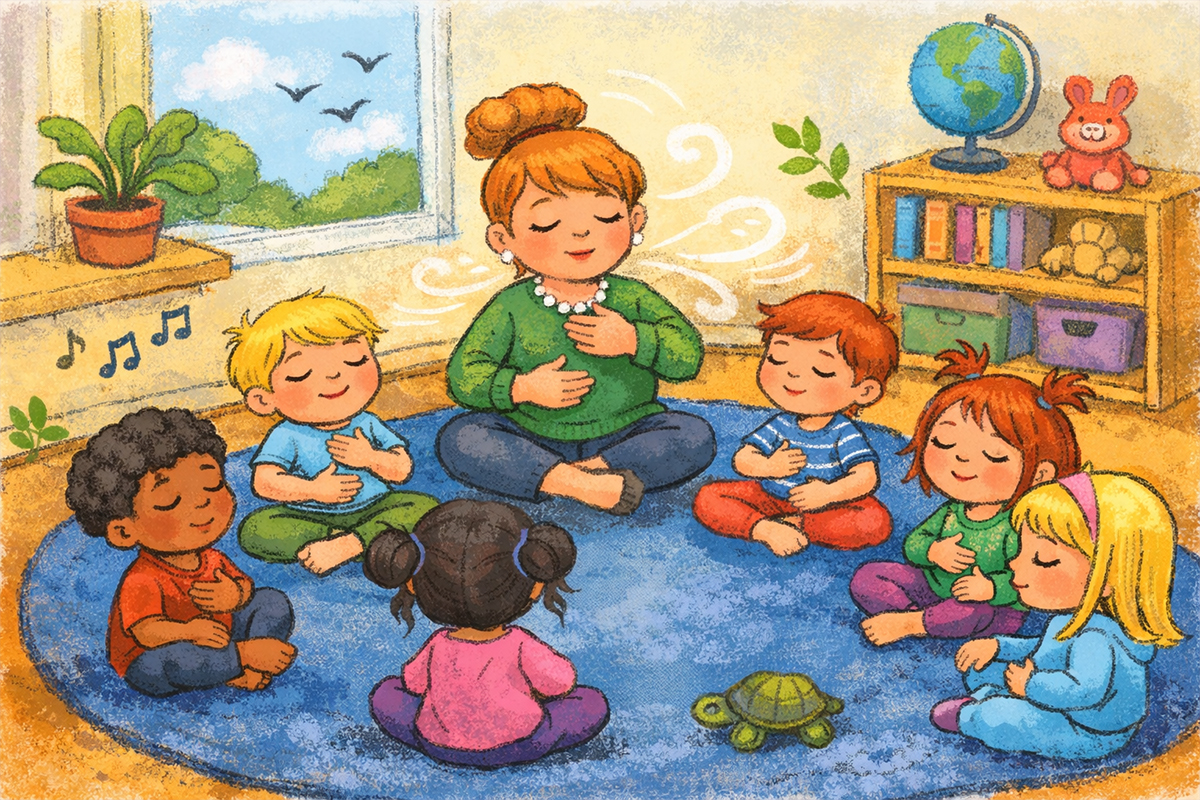
Place a carpet or mat on the floor and have the children sit together in a circle. The teacher sits with the group at the same level.
Implementation
The teacher demonstrates calm, deep breathing:
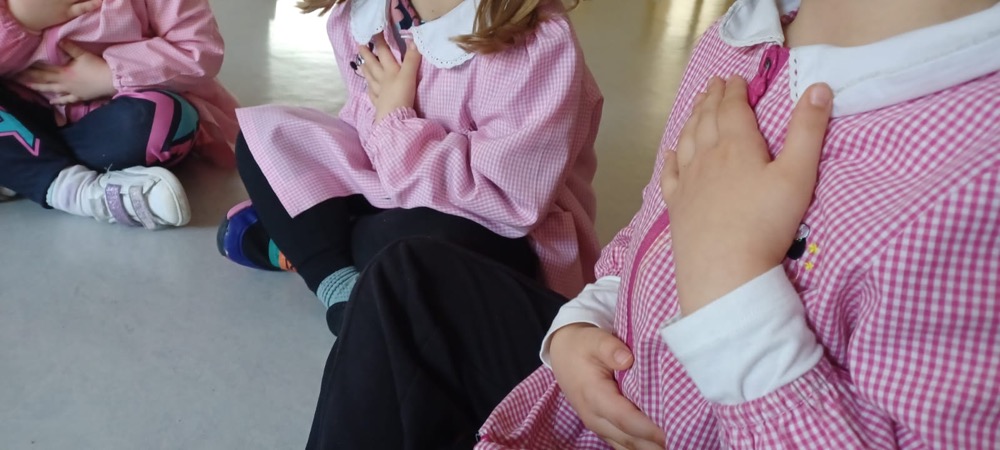
- Place one hand on the belly and one on the chest. Inhale slowly through the nose, feeling first the belly and then the chest expand.
- Hold the breath gently while counting 1, 2, 3, then exhale slowly through the mouth, feeling the chest and belly soften again.
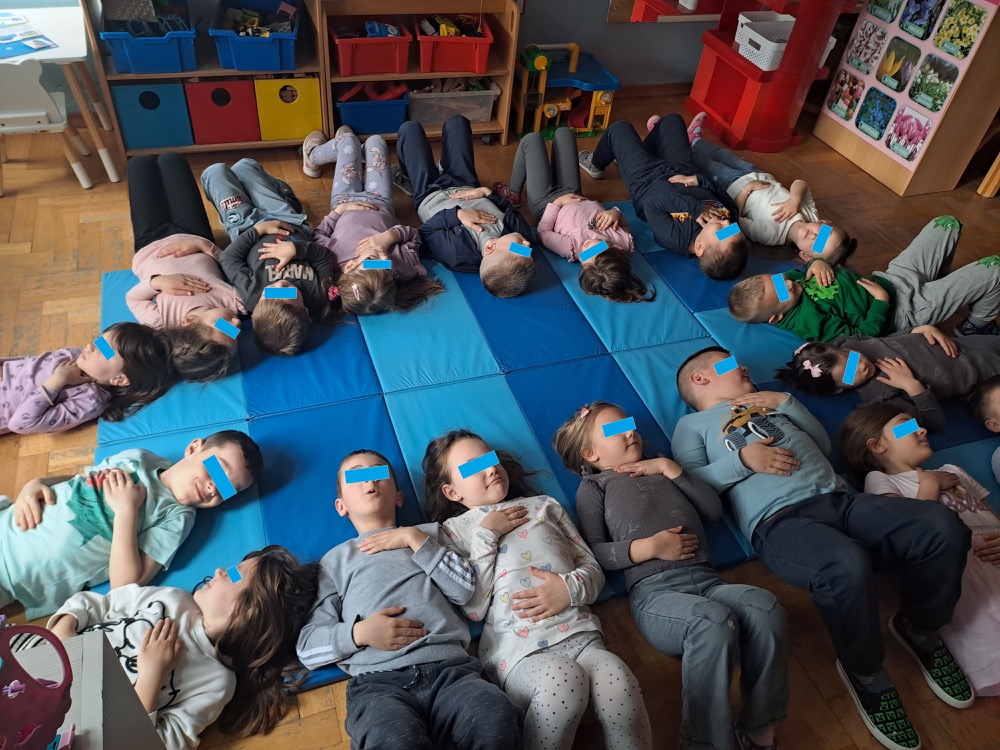
The teacher gives gentle guidance using a calm and reassuring tone. Once the children are familiar with the rhythm, they can try closing their eyes or resting their hands on their knees while breathing.
During the breathing exercise, the teacher can guide children’s attention to sounds or sights in their surroundings.
Ask them to listen carefully and notice what sounds they can hear (e.g.: birds, wind, footsteps).
Afterward, invite each child to share what they noticed and how that sound made them feel.
Reflection
After the activity, have a short group conversation about how everyone felt while breathing.
Ask questions such as:
- How did your body feel?
- Did anything feel new, strange, or funny?
- What did you enjoy about the activity?
Encourage children to use words or gestures to express their feelings.
Photos of the Activity