Ja, moj dah i svijet oko mene
 Financirano sredstvima Europske unije. Izneseni stavovi i mišljenja su stavovi i mišljenja autora i ne moraju se podudarati sa stavovima i mišljenjima Europske unije ili Europske izvršne agencije za obrazovanje i kulturu (EACEA). Ni Europska unija ni EACEA ne mogu se smatrati odgovornima za njih. |
 Svi sadržaji, a posebno tekstovi, slike i grafikoni, su zaštićeni autorskim pravima. Vlasnik autorskih prava, ukoliko nije drugačije označeno, je sel.eduskills.plus, a autorsko pravo je definirano licencom Creative Commons Imenovanje-Nekomercijalno-Dijeli pod istim uvjetima 4.0 Međunarodna. Autorska prava mogu biti definirana uvjetima licence. |
© 2026 sel.eduskills.plus
| Napredna | |
| Dob: 4-6 | |
| 20-30 minuta | |
| Djeca vježbaju mirno disanje kako bi se opustila, osjetila vlastito tijelo te primijetila zvukove ili osjete oko sebe. | |
| Samoregulacija | |
| Dobrobit | |
| Ostalo | |
|
Priprema
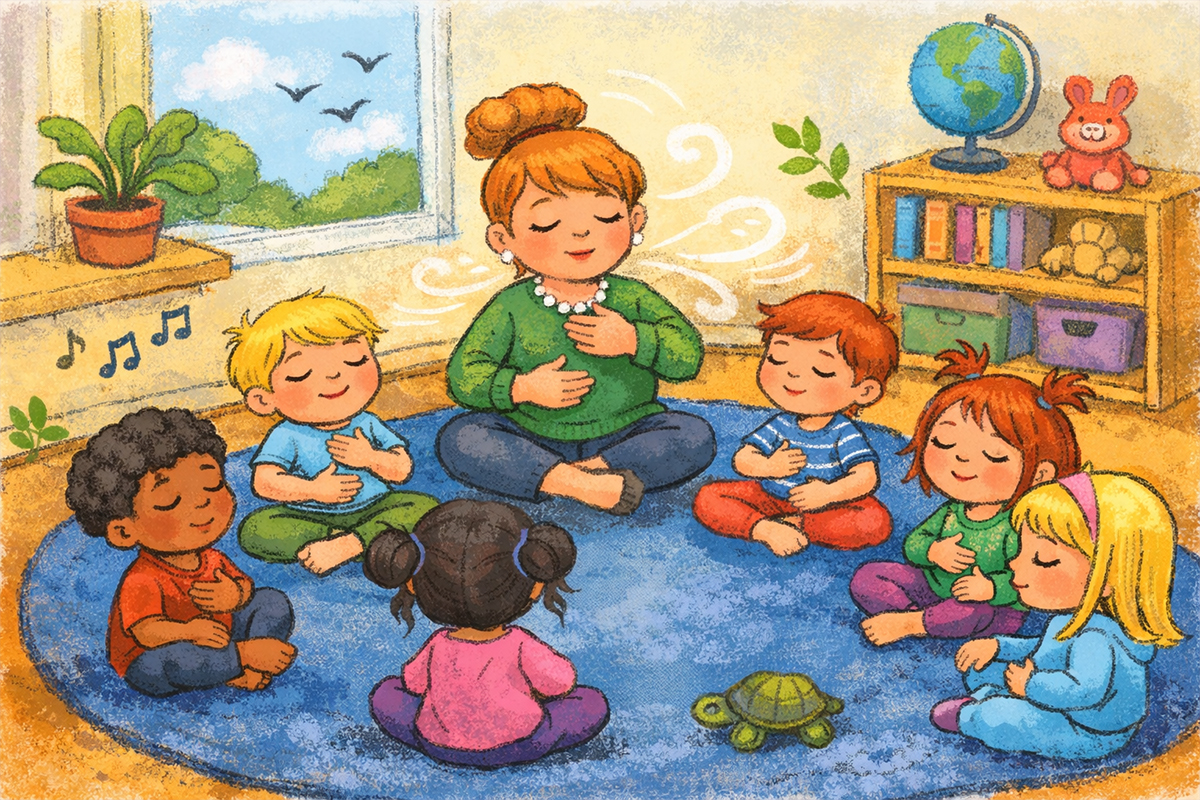
Postavite tepih ili prostirku na pod i zamolite djecu da sjednu zajedno u krug. Odgojiteljica sjedi sa skupinom u istoj razini.
Implementacija
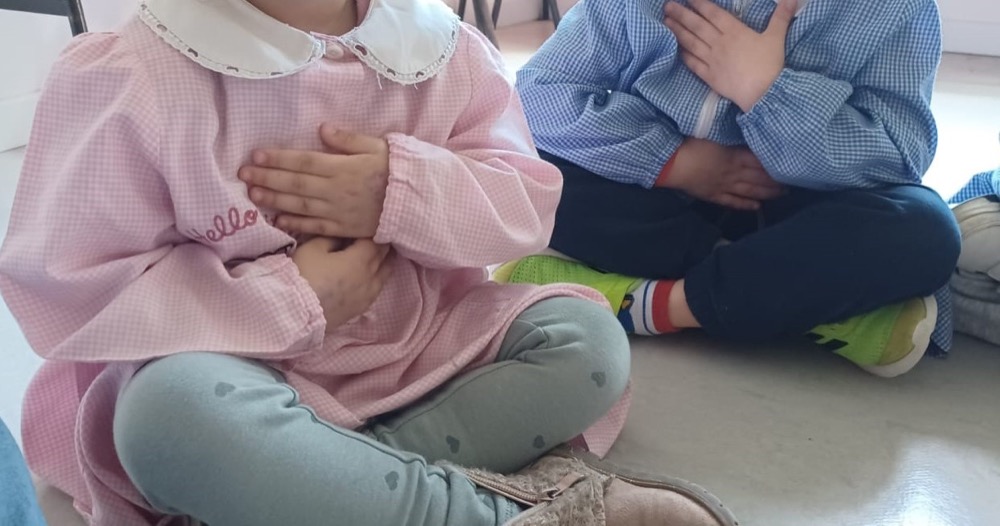
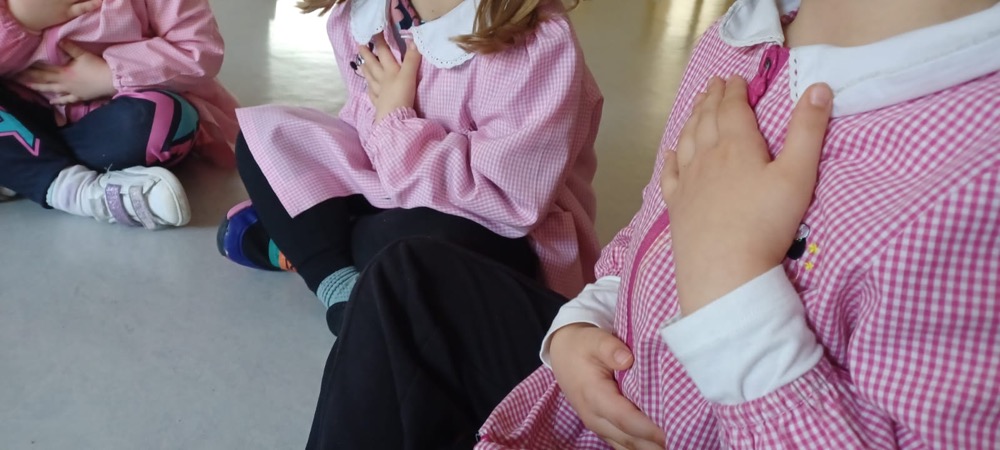
Odgojiteljica pokazuje mirno, duboko disanje:
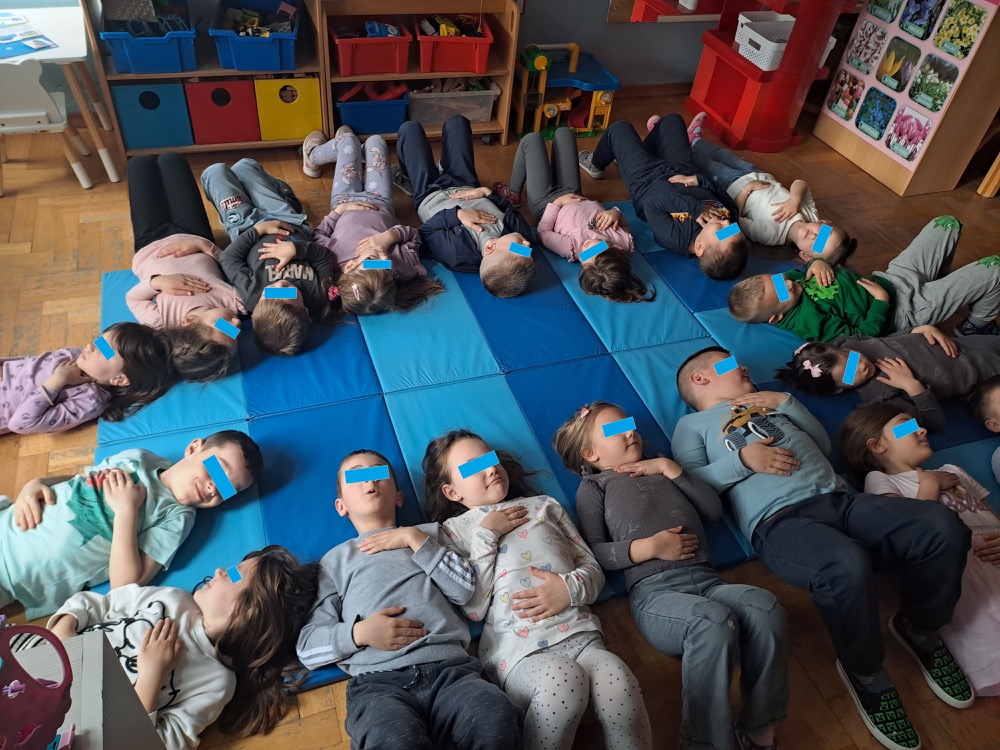
- Stavi jednu ruku na trbuh, a drugu na prsa. Udahni polako kroz nos, osjećajući kako se najprije trbuh, a zatim prsa šire.
- Nježno zadrži dah brojeći „1, 2, 3“, zatim polako izdahni na usta, osjećajući kako se prsa i trbuh ponovno opuštaju.
Odgojiteljica daje blage upute smirenim i umirujućim tonom. Kada djeca steknu osjećaj za ritam, mogu pokušati zatvoriti oči ili spustiti ruke na koljena dok dišu.
Tijekom vježbe disanja odgojiteljica može usmjeriti dječju pažnju na zvukove ili prizore u okolini.
Zamolite djecu da pažljivo slušaju i primijete koje zvukove mogu čuti (npr. ptice, vjetar, korake).
Nakon toga pozovite svako dijete da podijeli što je primijetilo i kako se zbog tog zvuka osjećalo.
Refleksija
Nakon aktivnosti provedite kratak razgovor u skupini o tome kako su se osjećali tijekom disanja.
Postavite pitanja poput:
- Kako se osjećalo tvoje tijelo?
- Je li nešto bilo novo, neobično ili smiješno?
- Što ti se najviše svidjelo u aktivnosti?
Potičite djecu da svoje osjećaje izraze riječima ili gestama.
Slike aktivnosti