Body in Motion 3D/2D
 Funded by the European Union. Views and opinions expressed are however those of the author(s) only and do not necessarily reflect those of the European Union or the European Education and Culture Executive Agency (EACEA). Neither the European Union nor EACEA can be held responsible for them. |
 All contents, in particular texts, pictures and graphics, are protected by copyright. Unless expressly stated otherwise, copyright is held by sel.eduskills.plus and is licensed under Creative Commons Attribution - Non-commercial - Distribution under the same conditions 4.0 International license. They may be subject to the terms of the license. |
© 2026 sel.eduskills.plus
| Advanced | |
| Age: 4-6 | |
| 1 h | |
| Children explore how their bodies move using songs, puppets, and games that compare 3D and 2D movement. | |
| Self-regulation | |
| Critical thinking Growth mindset Managing learning | |
| Art Cognitive task Conversation Movement Music Outdoors | |
|
Preparation
The teacher prepares didactic games on the tables.
Implementation
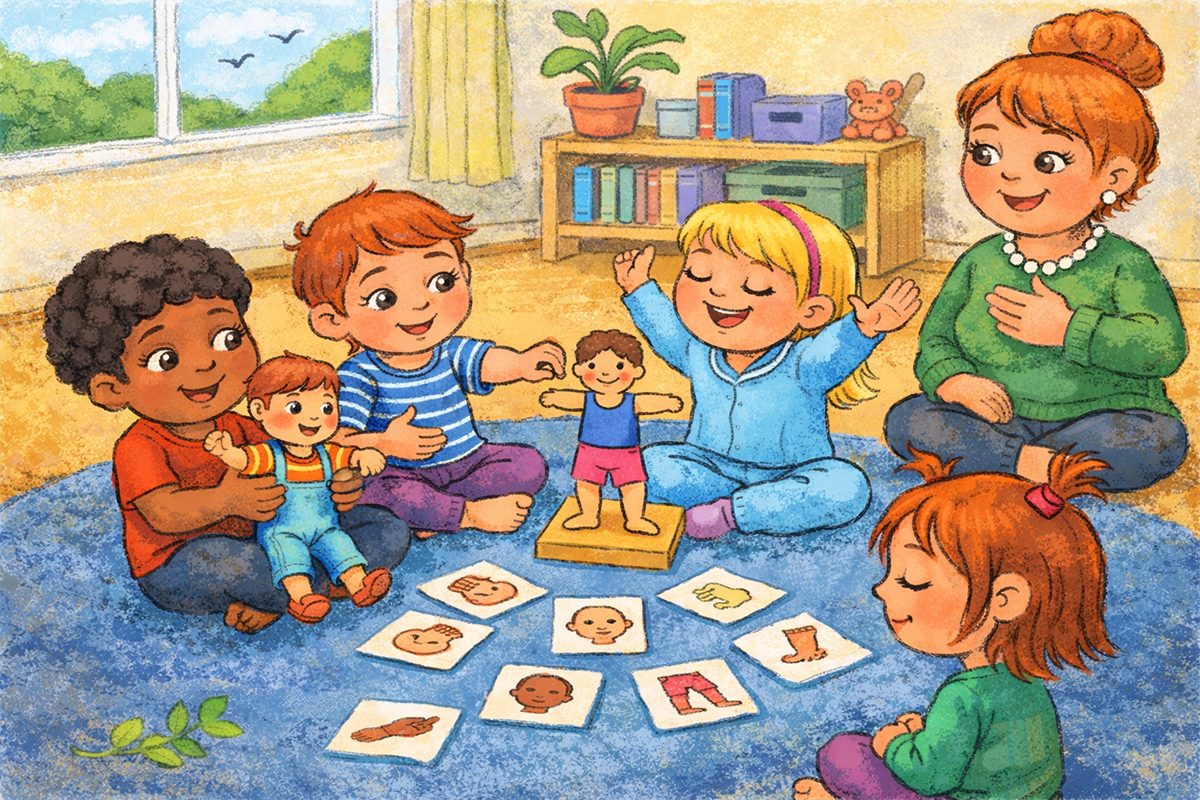
The teacher gathers the children and starts a conversation about the body, its parts, and what each part can do.
They ask questions such as: What can your head do? Your hands? Your feet?
The teacher encourages movement and participation through songs like Head and Shoulders or the rhyme Open Them, Shut Them.
After the introduction, children explore movement through playful materials:
- Memory cards with body parts
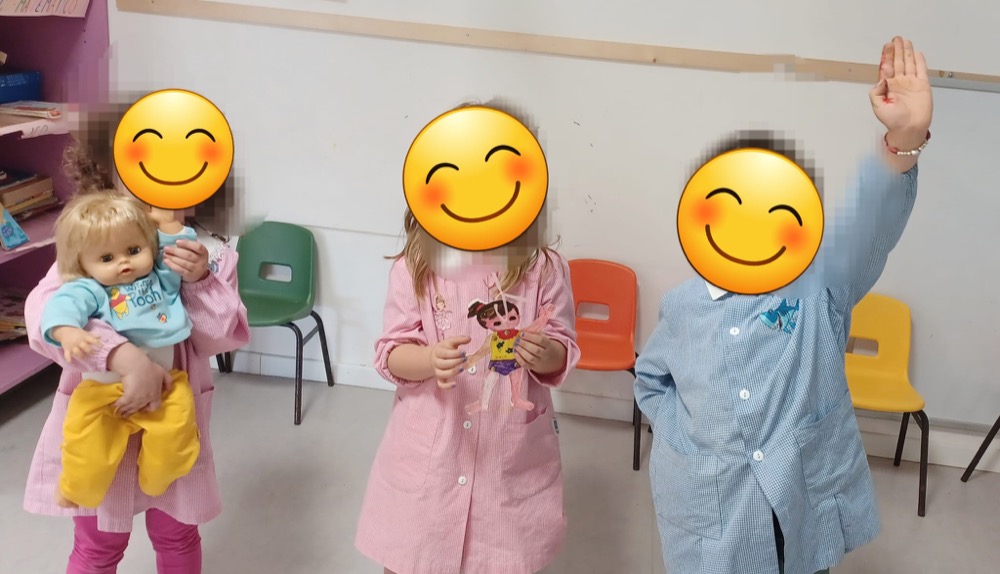
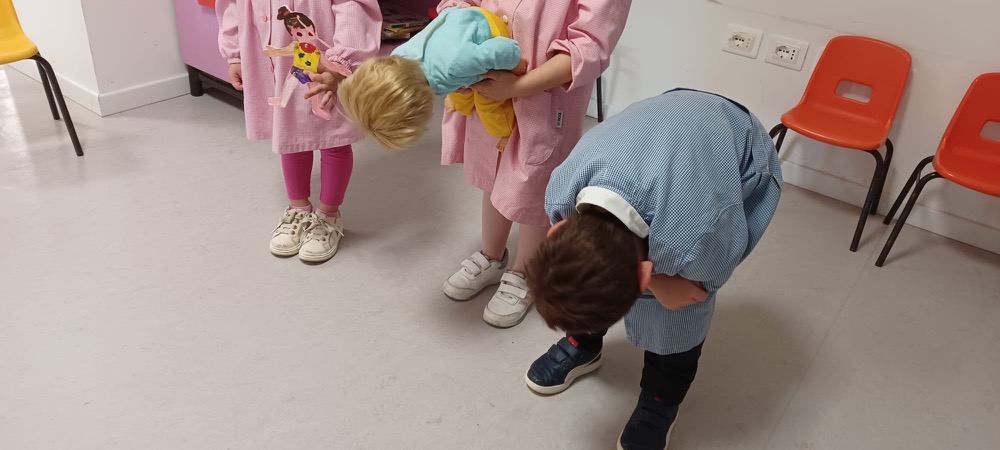
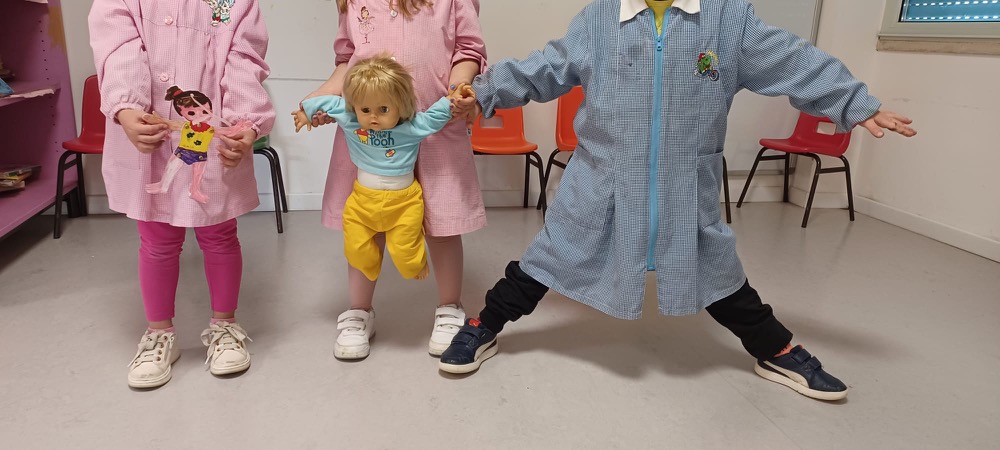
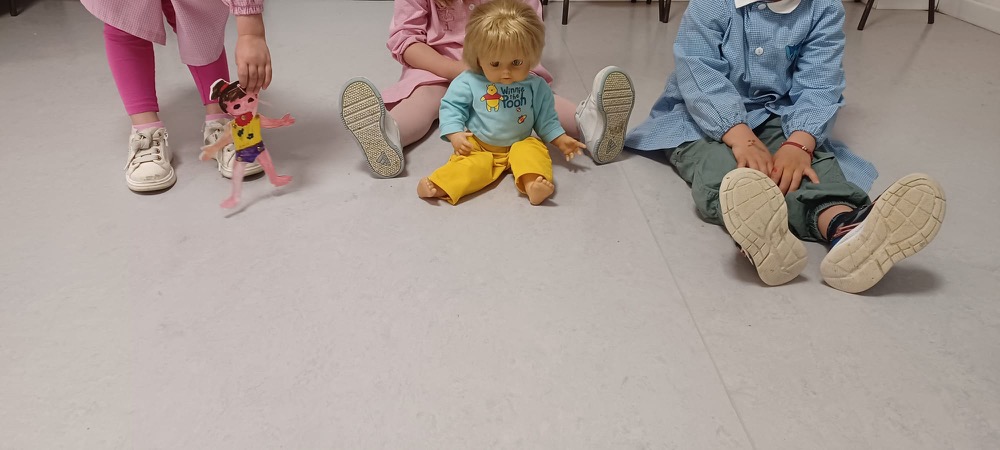
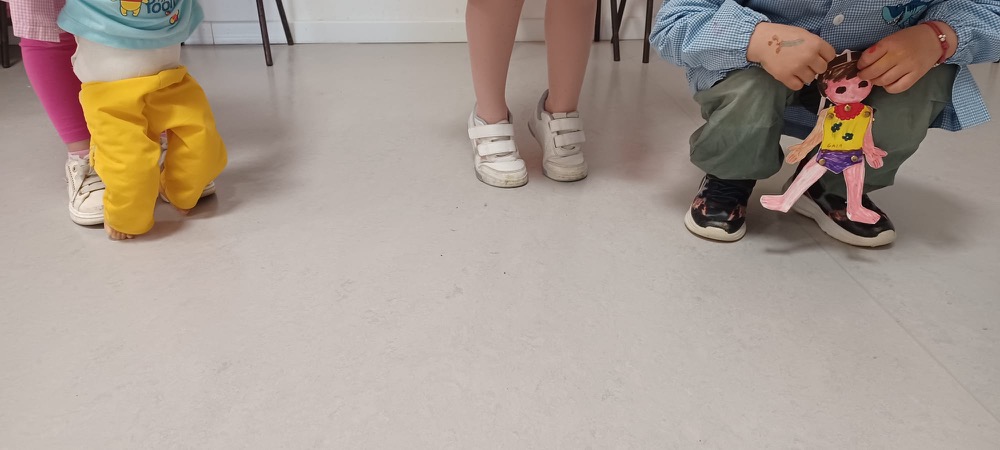
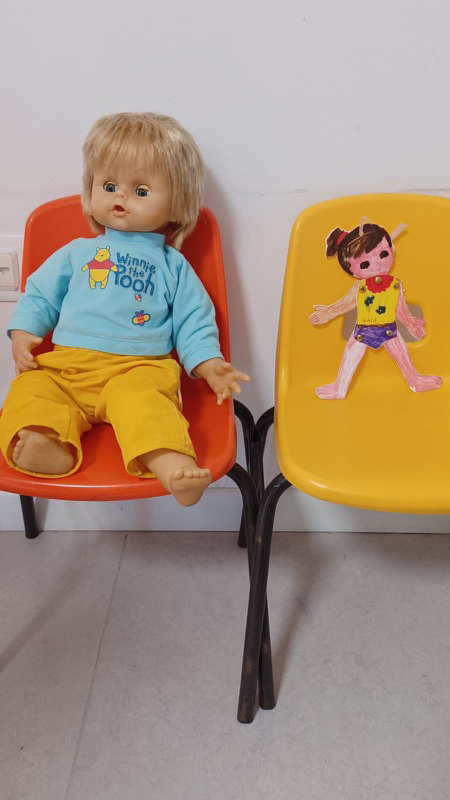
- Doll (3D)
- Flat wooden puppet (2D)
While playing, the teacher asks guiding questions:
- What can the 3D puppet do that the 2D puppet cannot?
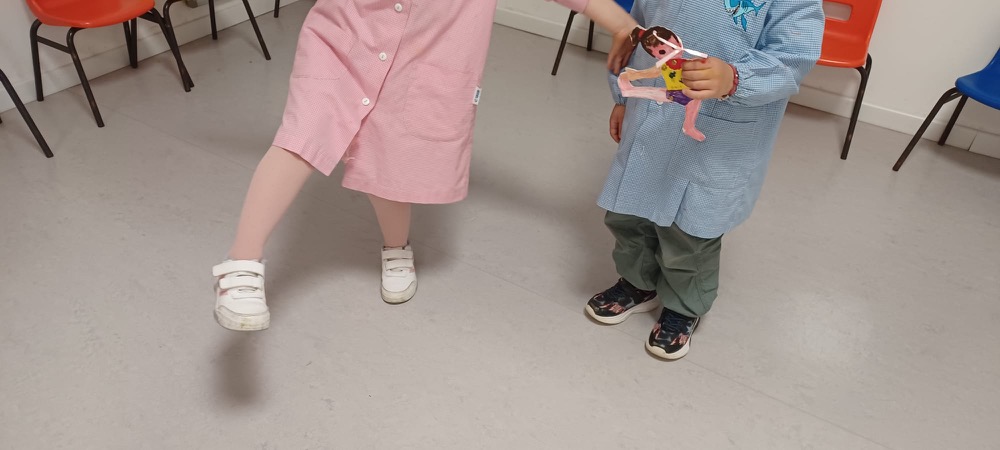
- Can you move like the puppet? What feels similar or different?
Children are invited to imitate the movements and observe how their own bodies can move in space.
Reflection
At the end, the group gathers to reflect together.
The teacher asks open-ended questions to support self-expression:
- Did you enjoy these activities? Why?
- What did you like the most?
- What did you discover about your body?
Children are encouraged to share their experiences and what they learned about movement and body awareness.
Variations and Additional Ideas
The activity can be expanded with the game Ice Statues, where children freeze in different body positions.
You can also open a group discussion to further explore how the human body moves and what it can do.
These variations enrich the activity by encouraging creativity, communication, and critical thinking.
Photos of the Activity