Vrijednosti u našoj grupi – Prijateljstvo
 Financirano sredstvima Europske unije. Izneseni stavovi i mišljenja su stavovi i mišljenja autora i ne moraju se podudarati sa stavovima i mišljenjima Europske unije ili Europske izvršne agencije za obrazovanje i kulturu (EACEA). Ni Europska unija ni EACEA ne mogu se smatrati odgovornima za njih. |
 Svi sadržaji, a posebno tekstovi, slike i grafikoni, su zaštićeni autorskim pravima. Vlasnik autorskih prava, ukoliko nije drugačije označeno, je sel.eduskills.plus, a autorsko pravo je definirano licencom Creative Commons Imenovanje-Nekomercijalno-Dijeli pod istim uvjetima 4.0 Međunarodna. Autorska prava mogu biti definirana uvjetima licence. |
© 2026 sel.eduskills.plus
| Napredna | |
| Dob: 4-6 | |
| 5 sesija od cca. 30 min | |
| Djeca istražuju promjene kod svojih vršnjaka te kroz razgovor, crtanje i igru „Tajni prijatelj“ uče cijeniti prijateljstvo, dobrotu i osjećaj pripadanja. | |
| Fleksibilnost | |
| Kritičko razmišljanje | |
| Kognitivni zadatak Razgovor | |
|
Priprema
Promjene kod naših prijatelja
- Prikupite fotografije djece iz mlađe dobi.
- Stavite fotografije u košaru ili kutiju.
- Pripremite bilježnicu za opažanja i plakat za bilježenje komentara o promjenama i rastu.
Plakat – Kako se prijateljstvo vidi, čuje i osjeća
- Pripremite veliki list papira ili ploču te bojice i flomastere za crtanje i pisanje.
Biti dobar prijatelj
- Ponudite različite veličine papira, bojice i flomastere za crtanje.
- Držite olovku pri ruci za zapisivanje dječjih izjava.
- Pripremite plakat ili ploču za prikupljanje misli.
Igra Tajni prijatelj
- Pripremite papiriće s dječjim imenima ili fotografijama za izvlačenje Tajnog prijatelja.
- Pripremite košaru ili kutiju za izvlačenje.
- Pripremite papir i bojice za male darove, crteže ili poruke ljubaznosti.
- Pripremite plakat ili tablicu za praćenje aktivnosti i refleksiju.
Refleksija i novi ciljevi
- Pripremite list papira ili kalendar za bilježenje refleksija i postavljanje novih ciljeva.
- Pripremite jednostavna vizualna pomagala (poput nasmijanih ili zamišljenih lica) kako biste djeci pomogli izraziti svoje osjećaje.
Implementacija
Promjene kod naših prijatelja
Djeca uče primjećivati i razgovarati o tome kako su njihovi vršnjaci narasli i promijenili se.
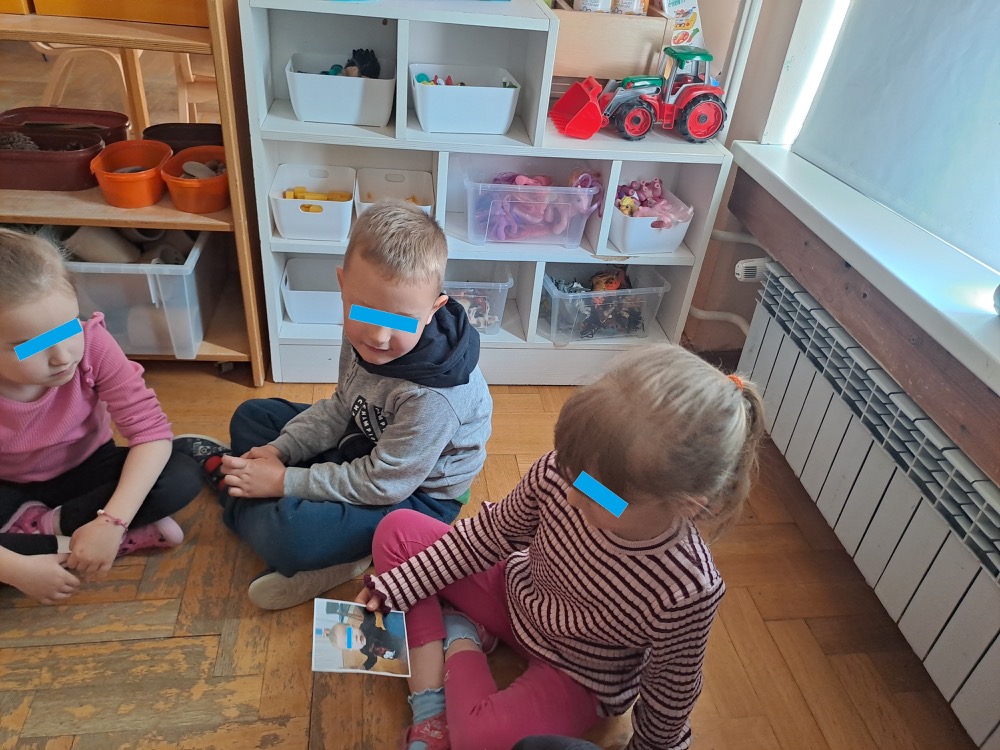
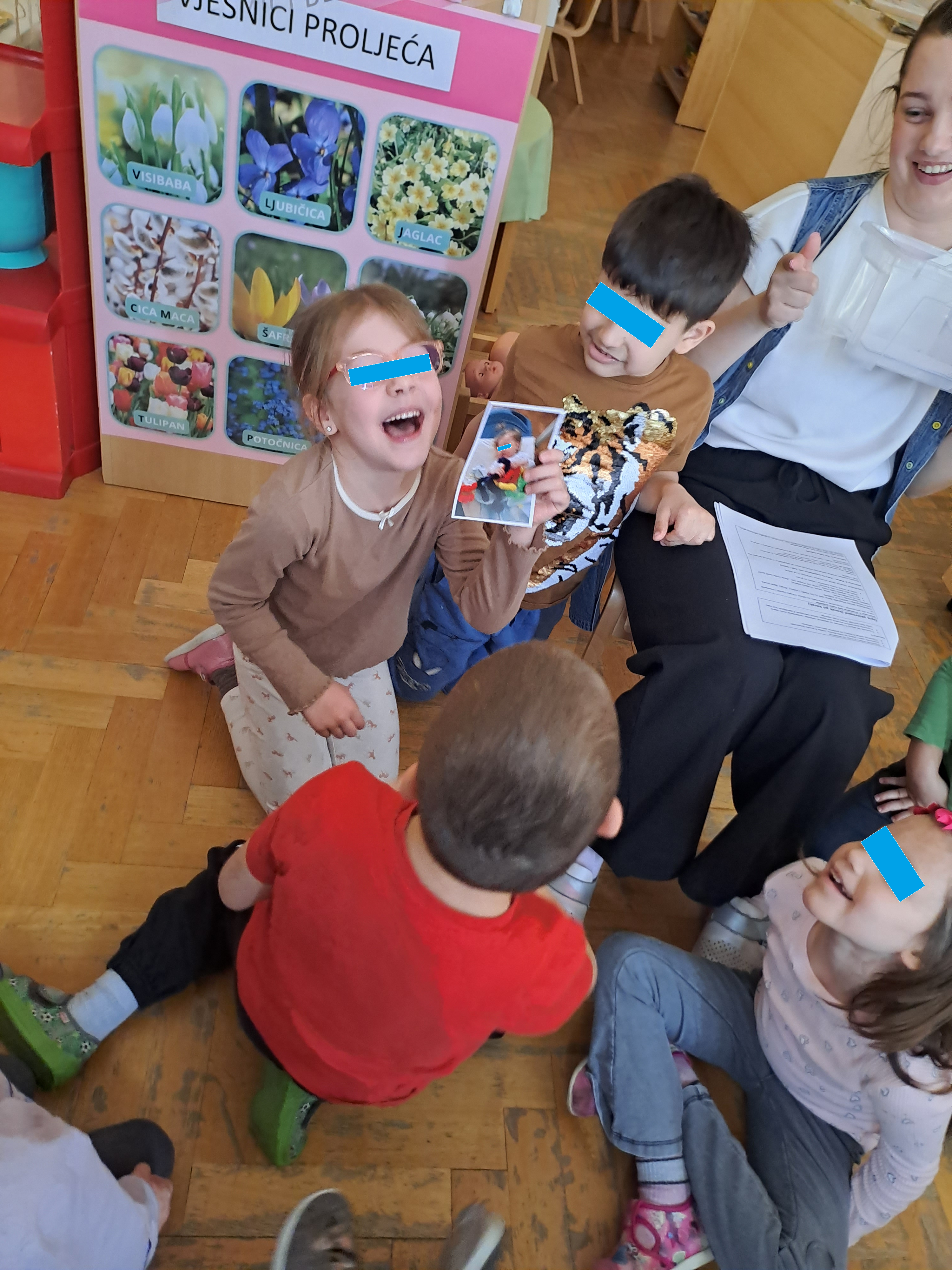
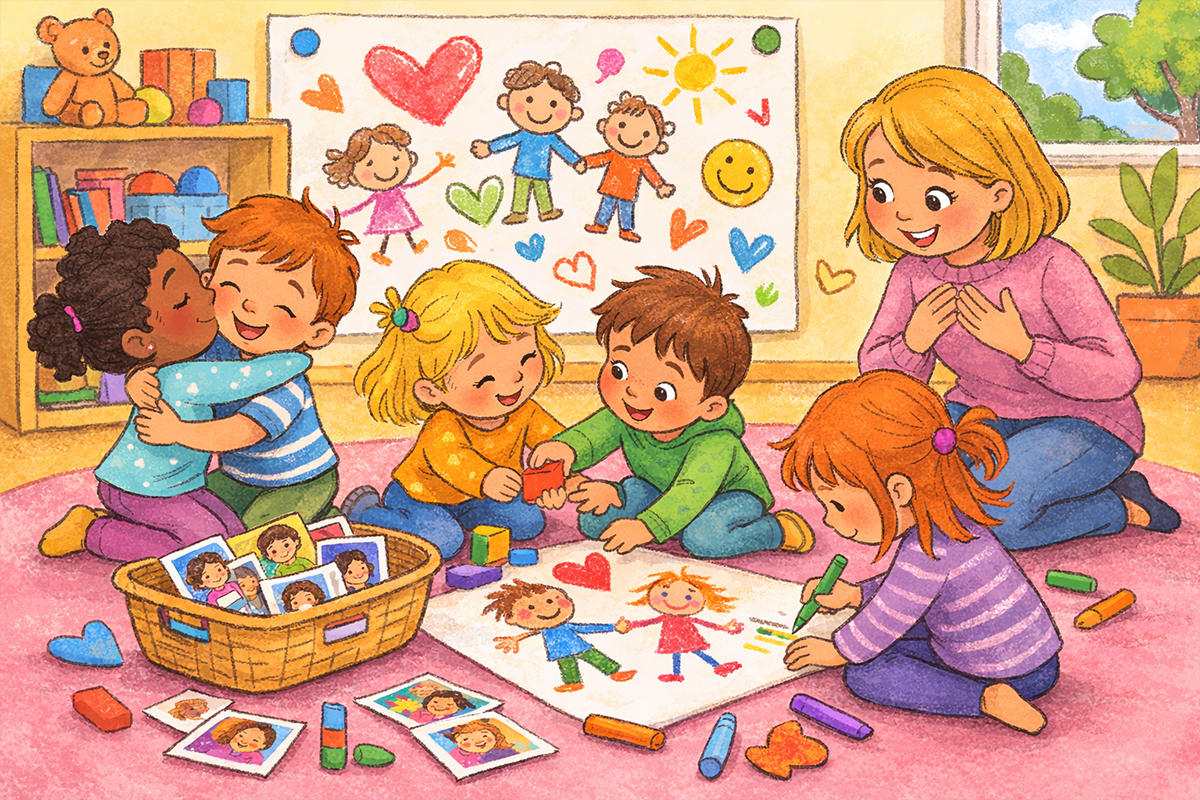
Odgojiteljica stavlja fotografije djece (dok su bili mlađi) u košaru. Svako dijete izvuče jednu fotografiju i pažljivo je pogleda.
Zajedno razgovaraju o tome:
- Ššto se promijenilo (npr. kosa, visina, omiljena odjeća).
- Što njihov prijatelj sada može, a prije nije mogao (npr. „Sada može voziti bicikl“, „Sada jako dobro crta životinje“).
- Zašto je svaka osoba posebna i važna za grupu.
Odgojiteljica zapisuje dječje komentare i prikuplja ih na plakat.
Plakat – Kako se prijateljstvo vidi, čuje i osjeća
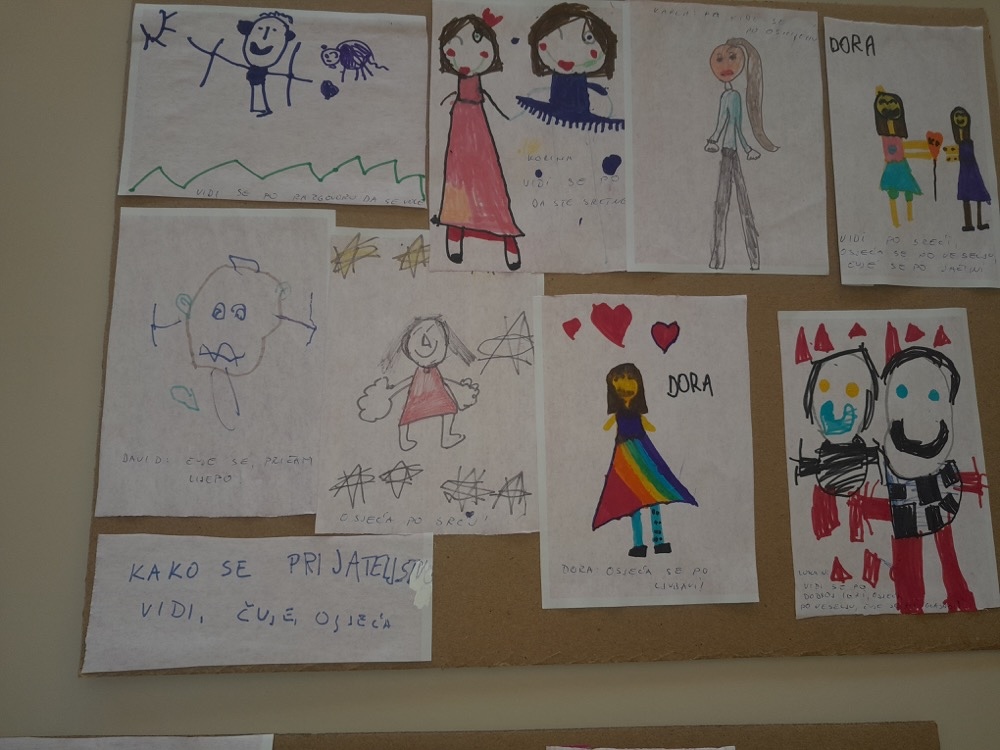
Skupina zajedno izrađuje plakat koji prikazuje kako se prijateljstvo u njihovoj skupini vidi, čuje i osjeća.
Primjeri:
- Vidi se: kroz osmjehe, djecu koja se zajedno igraju, međusobno si pomažu.
- Čuje se: „Hajdemo se igrati!“, „Hvala!“, „Možeš li mi pomoći?“
- Osjeća se: kroz sigurnost, sreću, zbrinutost, smirenost.
Djeca dodaju crteže i riječi koje pokazuju kako se prijateljstvo izražava u njihovoj svakodnevici.
Biti dobar prijatelj
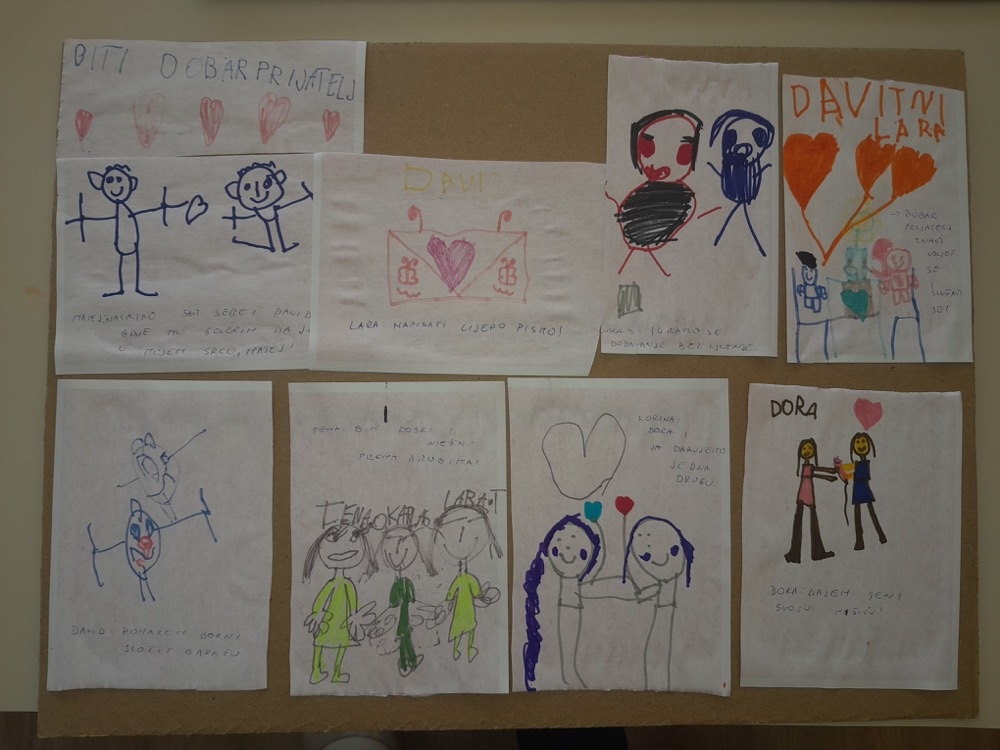
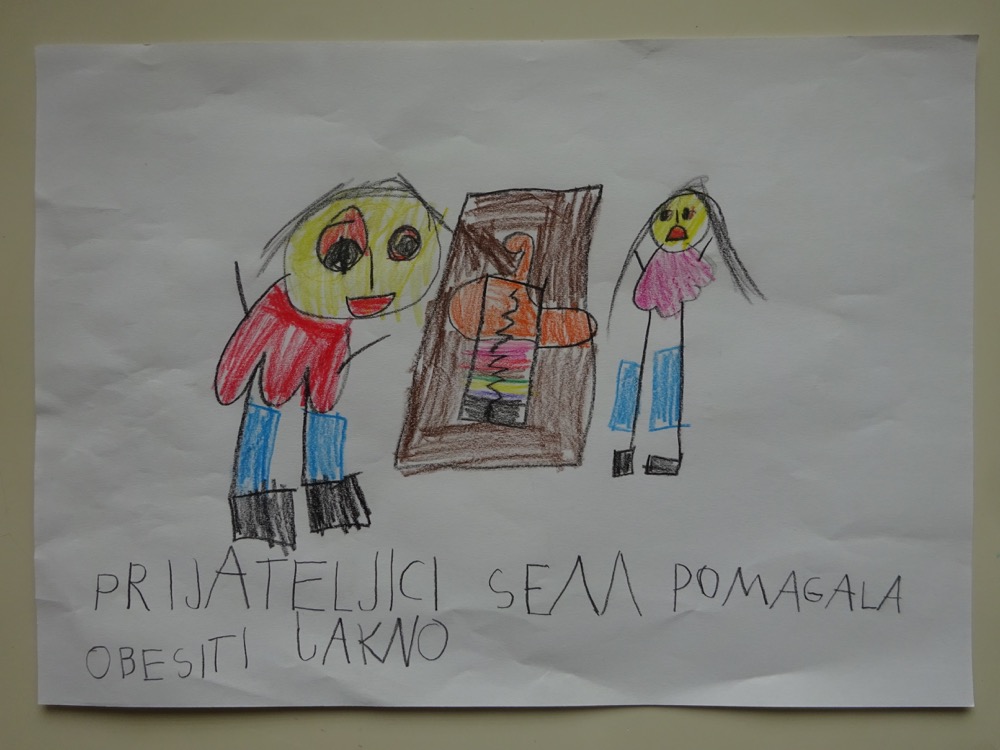
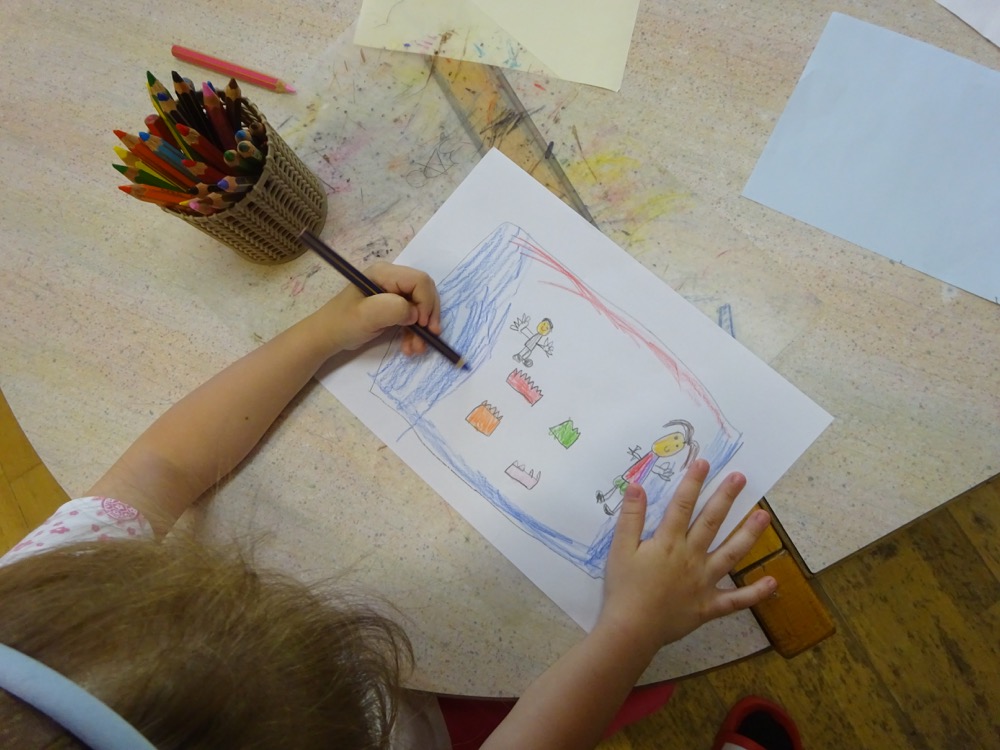
Djeca crtaju sebe kako čine nešto prijateljski.
Opisuju što rade i kako to pomaže drugima (npr. „Pomažem prijateljici zakopčati jaknu“, „Dijelim svoje bojice“).
Odgojiteljica zapisuje njihove rečenice i razgovara o tome kako mali znakovi dobrote doprinose ugodnoj atmosferi u skupini.
Igra Tajni prijatelj
Svako dijete izvuče papirić s imenom ili fotografijom tajnog prijatelja.
Tijekom dana ili tjedna pokušavaju učiniti male, lijepe geste za svog prijatelja (pružanje pomoći, crtež, lijepa riječ).
Na kraju tjedna skupina se okupi i pokušava pogoditi tko je bio njihov tajni prijatelj.
Zajedno razgovaraju o tome kako takve male geste pomažu da se svi u skupini osjećaju bolje i povezanije.
Napomene za inkluziju
Razina apstrakcije može se prilagoditi dobi i razvojnim mogućnostima djece.
Odgojitelji trebaju pružiti podršku djeci koja teže razumiju perspektivu drugih dajući konkretne primjere, koristeći vizualne materijale ili modelirajući prijateljska ponašanja.
Cilj je pomoći svoj djeci da iskuse da prijateljstvo znači brigu, suradnju i stvaranje ugodne atmosfere u skupini.
Refleksija
Na kraju tjedna djeca razmišljaju o tome kako su pokazivala prijateljstvo.
Mogu koristiti izraze lica ili kratke izjave kako bi opisala kako su se osjećala dok su pomagala drugima ili kad je netko pomogao njima.
Zajedno postavljaju jednostavne nove ciljeve za sljedeći tjedan (npr. „Pozvat ću nekoga novog na igru“, „Slušat ću prijatelja dok govori“).
Odgojiteljica zapisuje dječje ideje i ostavlja plakat na vidljivom mjestu kao podsjetnik.
Varijacije i dodatne ideje
Gledanje grupnih fotografija
Umjesto pojedinačnih fotografija, djeca mogu promatrati starije i novije grupne fotografije. Zajedno uočavaju kako se skupina s vremenom promijenila: tko se pridružio, tko je možda otišao i kako su svi narasli.
To im pomaže razmišljati o pripadnosti, prijateljstvu i tome kako se skupine mijenjaju, a ipak ostaju povezane.
Slike aktivnosti