Exploring the Orange
 Funded by the European Union. Views and opinions expressed are however those of the author(s) only and do not necessarily reflect those of the European Union or the European Education and Culture Executive Agency (EACEA). Neither the European Union nor EACEA can be held responsible for them. |
 All contents, in particular texts, pictures and graphics, are protected by copyright. Unless expressly stated otherwise, copyright is held by sel.eduskills.plus and is licensed under Creative Commons Attribution - Non-commercial - Distribution under the same conditions 4.0 International license. They may be subject to the terms of the license. |
© 2026 sel.eduskills.plus
| Advanced | |
| Age: 4-6 | |
| 4 sessions of approx. 20 min | |
| A fruitful exploration: with the help of the orange, children train their senses and their knowledge about healthy food and food processing as well. | |
| Wellbeing | |
| Art Conversation | |
|
Preparation
Gather all necessary materials: fresh oranges, knives or cutlery (child-safe), magnifying glasses, paper, and crayons or markers for drawing.
Prepare a clean space where children can safely observe, touch, smell, and taste the fruit.
Implementation
Exploring the Orange
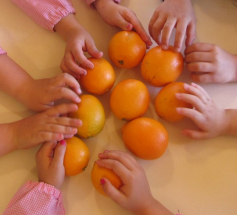
Children observe the orange closely using their senses.
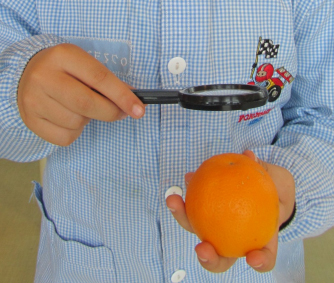
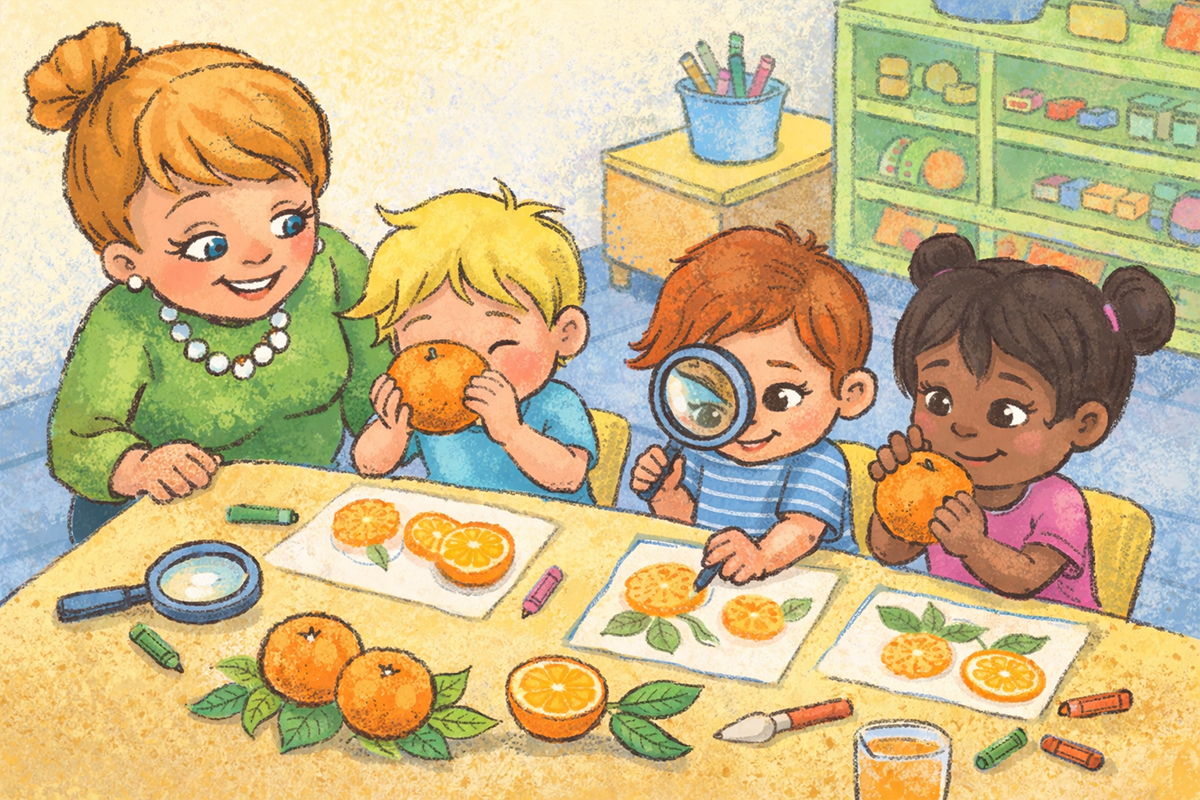
They look at its color, smell its scent, feel its surface, and examine it with a magnifying glass.
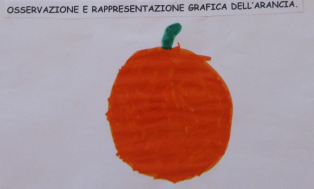
Together, they draw what they notice - the shape, texture, and details of the peel.
Discovering What’s Inside
The teacher cuts the orange open.
Children look carefully at its parts: peel, pith, pulp, juice, and seeds.
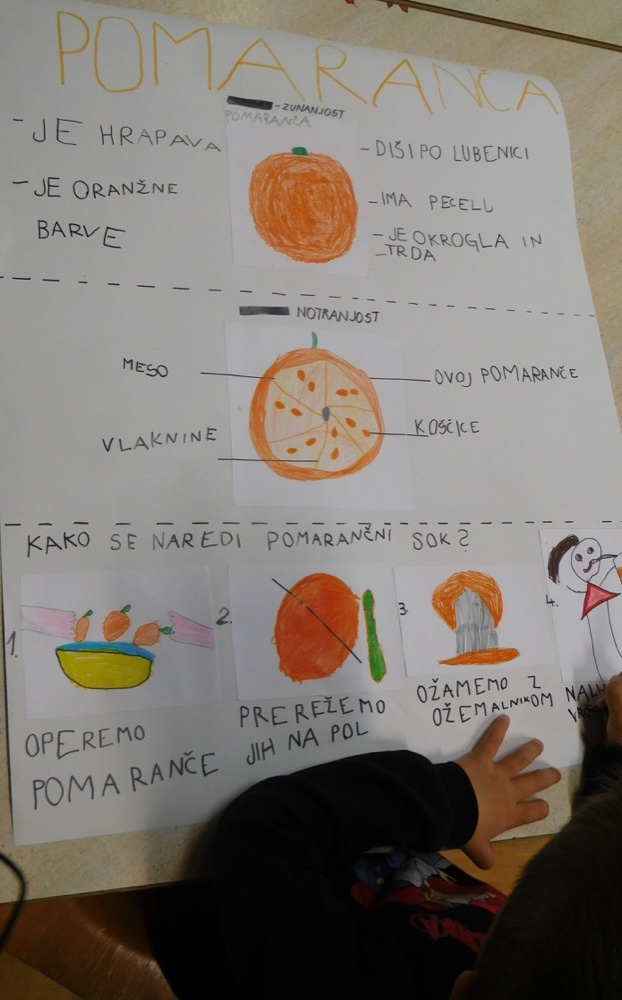
They talk about what they see and make a simple drawing or diagram showing the parts of the orange.
The Day of Orange Juice
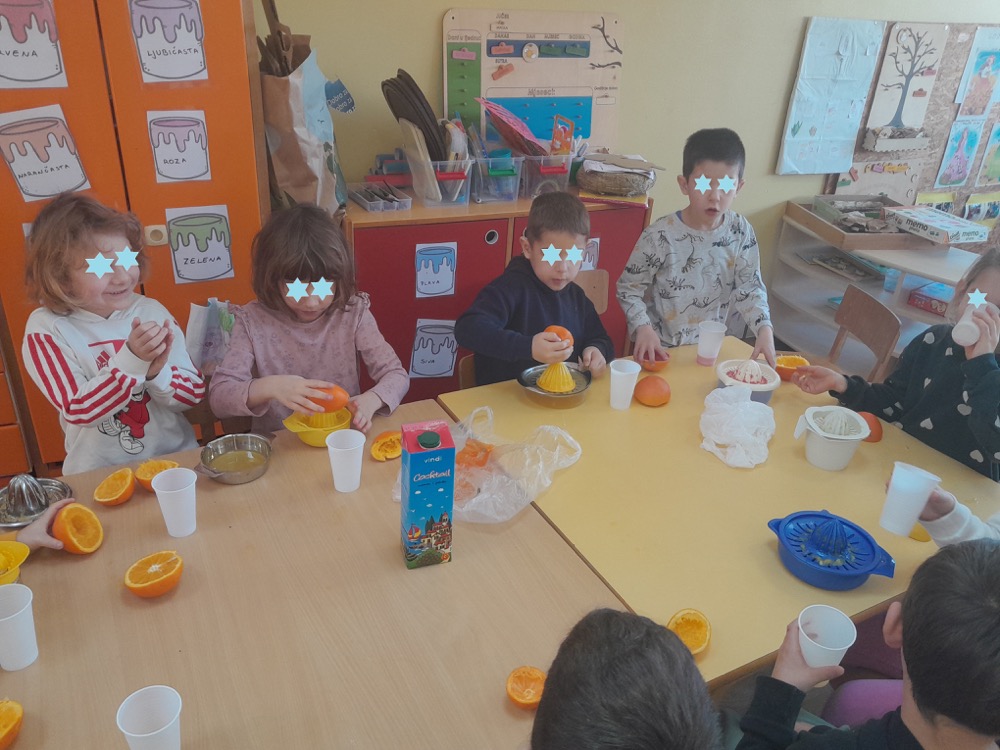
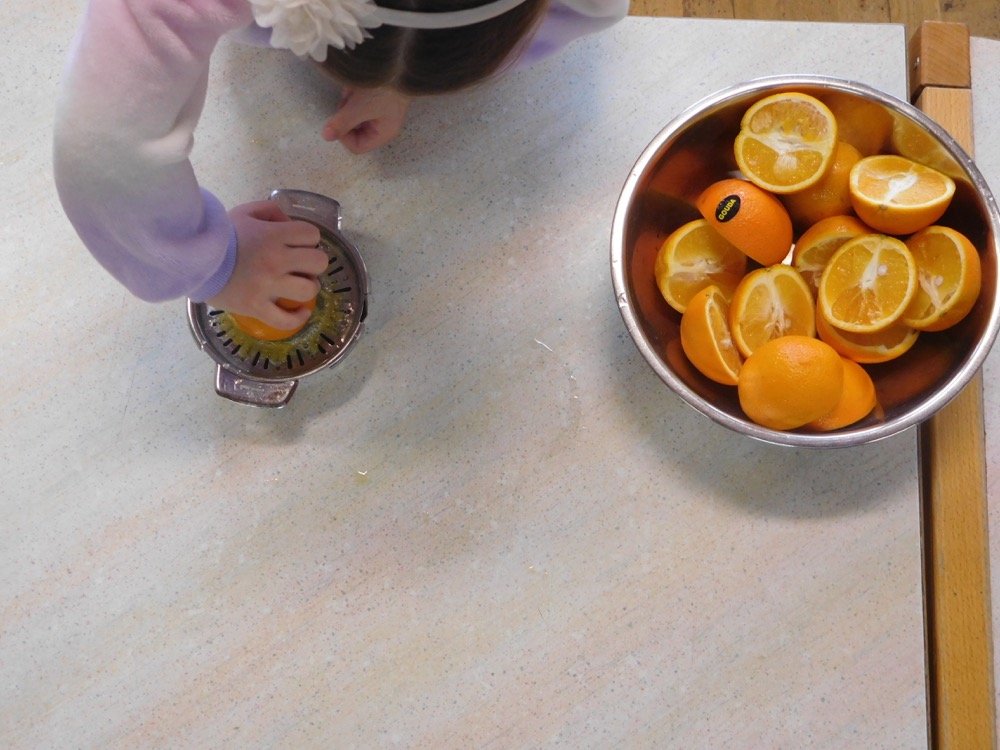
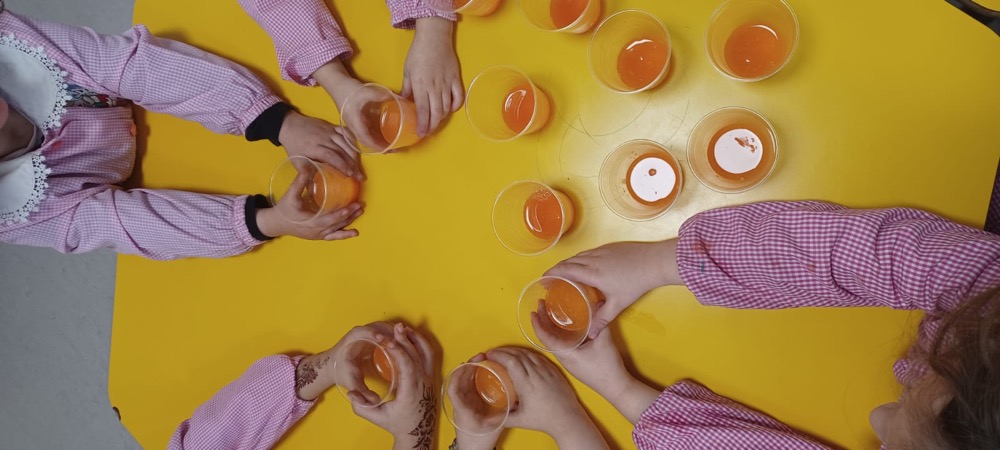
Children squeeze oranges to make fresh juice.
They smell and taste it, then describe how it feels and tastes: Is it sweet or sour? Cold or warm?
The teacher invites reflection: How does it feel to drink something you made yourself that is also good for your body?
Children draw the process in sequence (especially suitable for 5-year-olds).
The Day of the Orange Drink
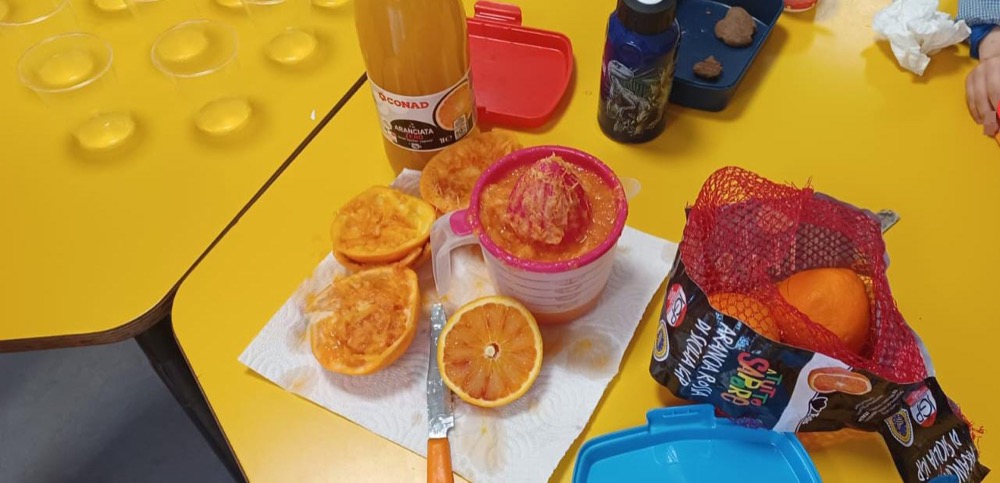
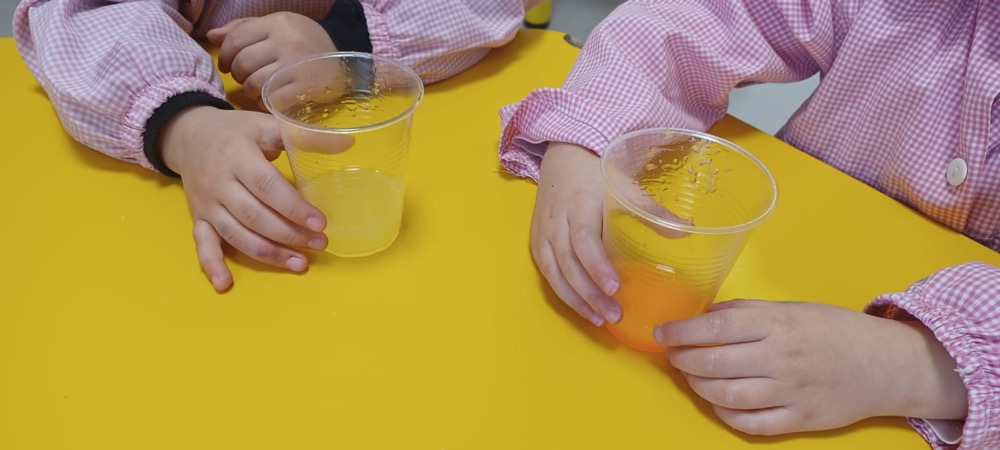
The teacher offers two drinks: natural orange juice and a store-bought orange drink.
Children compare their tastes and talk about the differences: Which one do you like more? Which one tastes sweeter?
Discuss why one is healthier than the other: Why do you think the teacher gave you only a little of the orange drink?
Reflect on how advertisements sometimes make us want things that are not the best for our health.
Reflection
Children learn to make mindful choices about what they eat and drink.
They discover that natural foods are often healthier, even if they are less colorful or less advertised, and that preparing food together can be fun and rewarding.
Variations and Additional Ideas
This activity can be expanded into a broader exploration of the five senses and how our bodies help us experience food.
Children can choose other fruits or vegetables they would like to explore in the same way, comparing colors, smells, textures, and tastes.
Photos of the Activity