Naš dan u vrtiću – vremenska linija aktivnosti i potreba
 Financirano sredstvima Europske unije. Izneseni stavovi i mišljenja su stavovi i mišljenja autora i ne moraju se podudarati sa stavovima i mišljenjima Europske unije ili Europske izvršne agencije za obrazovanje i kulturu (EACEA). Ni Europska unija ni EACEA ne mogu se smatrati odgovornima za njih. |
 Svi sadržaji, a posebno tekstovi, slike i grafikoni, su zaštićeni autorskim pravima. Vlasnik autorskih prava, ukoliko nije drugačije označeno, je sel.eduskills.plus, a autorsko pravo je definirano licencom Creative Commons Imenovanje-Nekomercijalno-Dijeli pod istim uvjetima 4.0 Međunarodna. Autorska prava mogu biti definirana uvjetima licence. |
© 2026 sel.eduskills.plus
| Napredna | |
| Dob: 4-6 | |
| 1 tjedan | |
| Djeca izrađuju vizualnu vremensku liniju svog dana u vrtiću, navodeći aktivnosti i pripadajuće potrebe poput hrane, odmora i vode. | |
| Dobrobit | |
| Samoregulacija Kritičko razmišljanje Razvojni mentalni sklop Upravljanje učenjem | |
| Kognitivni zadatak Razgovor Pričanje priče Umjetnost | |
|
Priprema
Prikupite materijale.
Implementacija
Igrokaz s lutkama
Kira i MIro predstavljaju aktivnost govoreći: „Istražimo što radimo svaki dan u vrtiću i razmislimo o tome što nam je potrebno u svakom dijelu dana!”
Miro potiče djecu pitanjima poput: „Kada piješ vodu?” ili „Što ti treba za vrijeme odmora?”
Kira potiče djecu da podijele svoja razmišljanja o omiljenim aktivnostima i potrebama koje imaju tijekom njih.
Lutke zamole odgojiteljicu da to razradi zajedno s djecom i da im kasnije (ili na sljedećem susretu) predstave što su naučili.
Razgovor o dnevnim aktivnostima
Odgojiteljica moderira razgovor u skupini i vodi bilješke.
Izrada vremenske linije
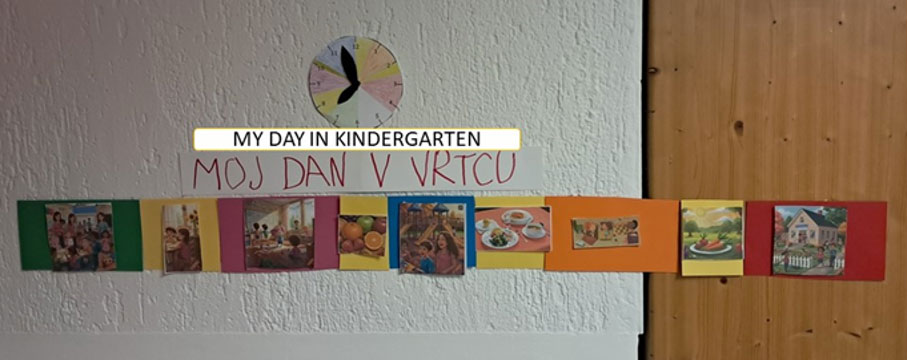
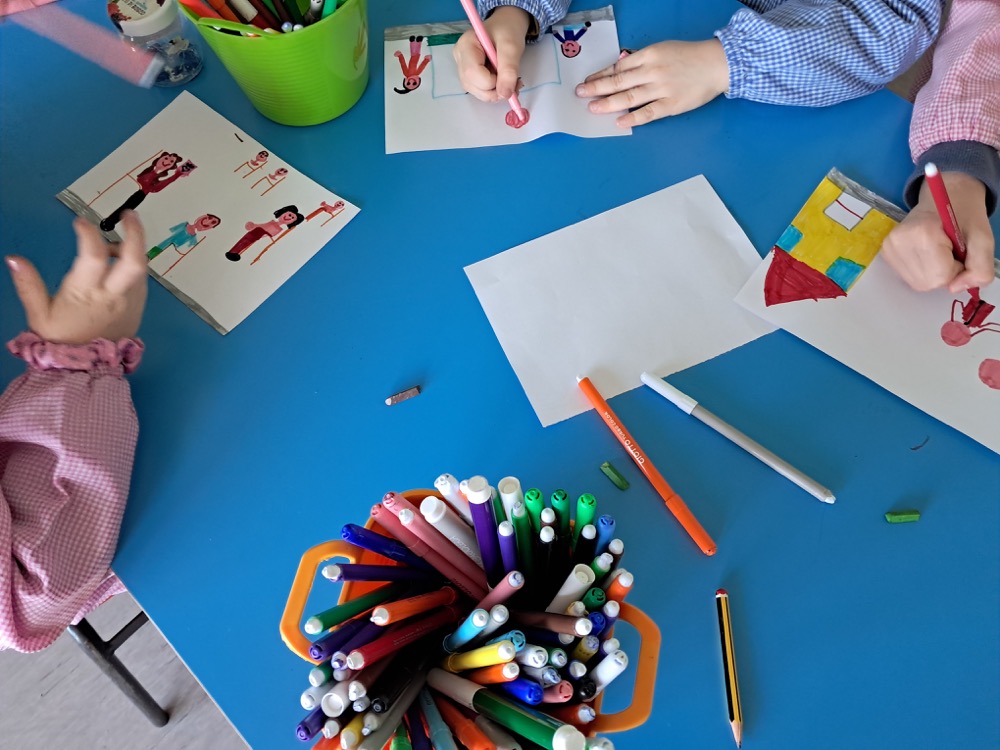
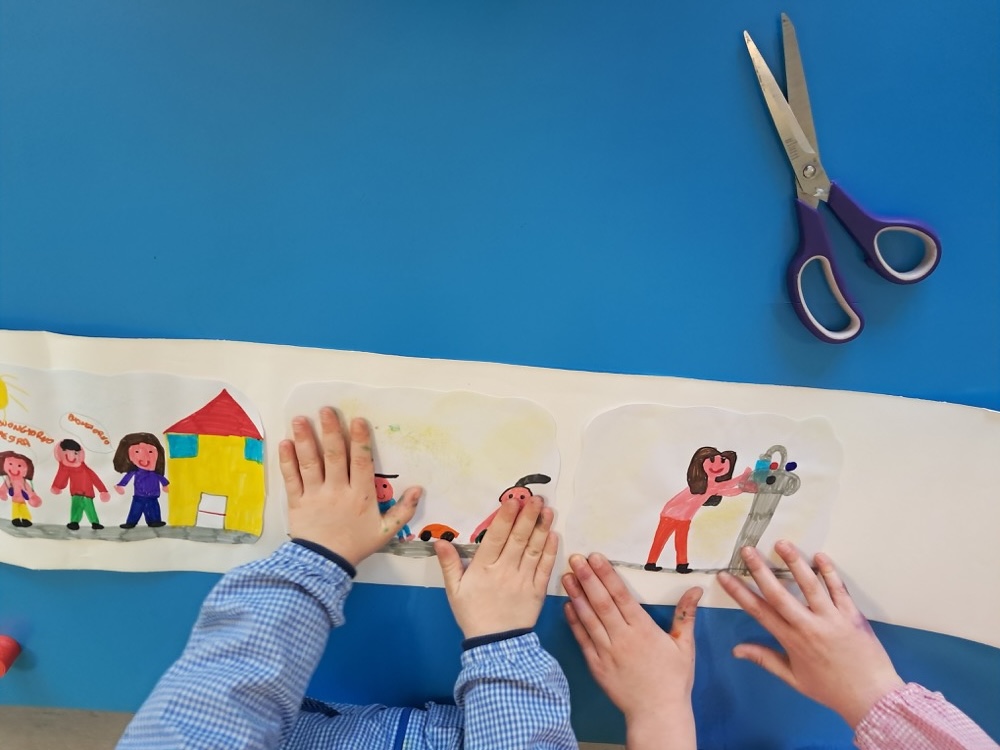
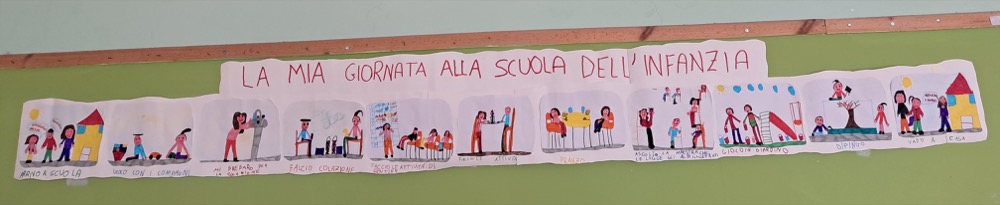
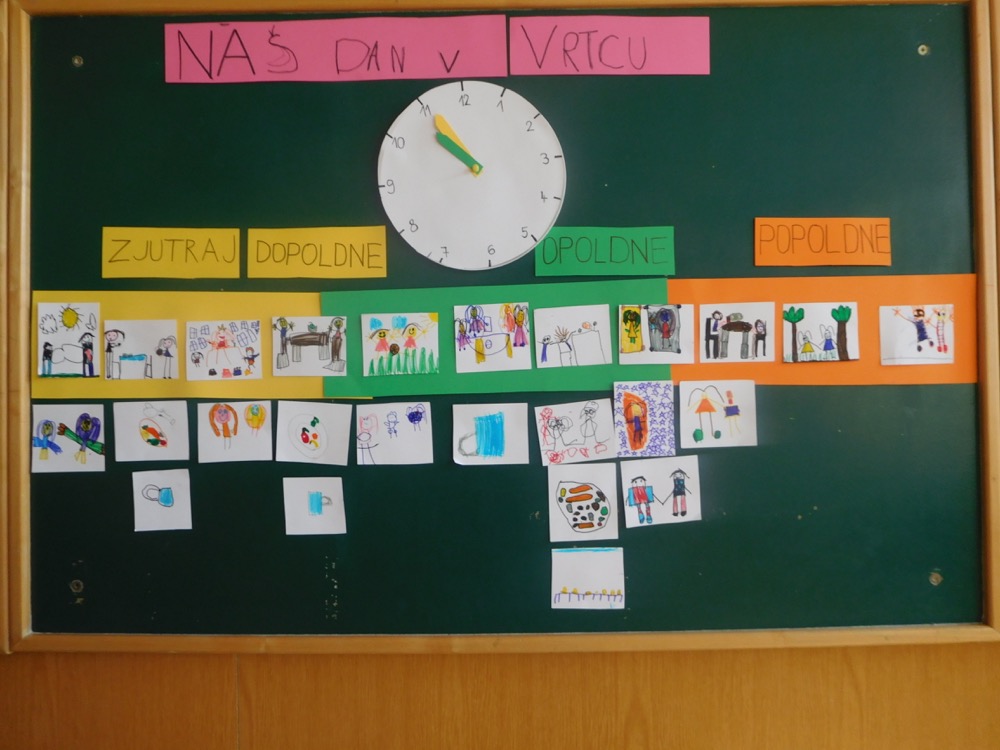
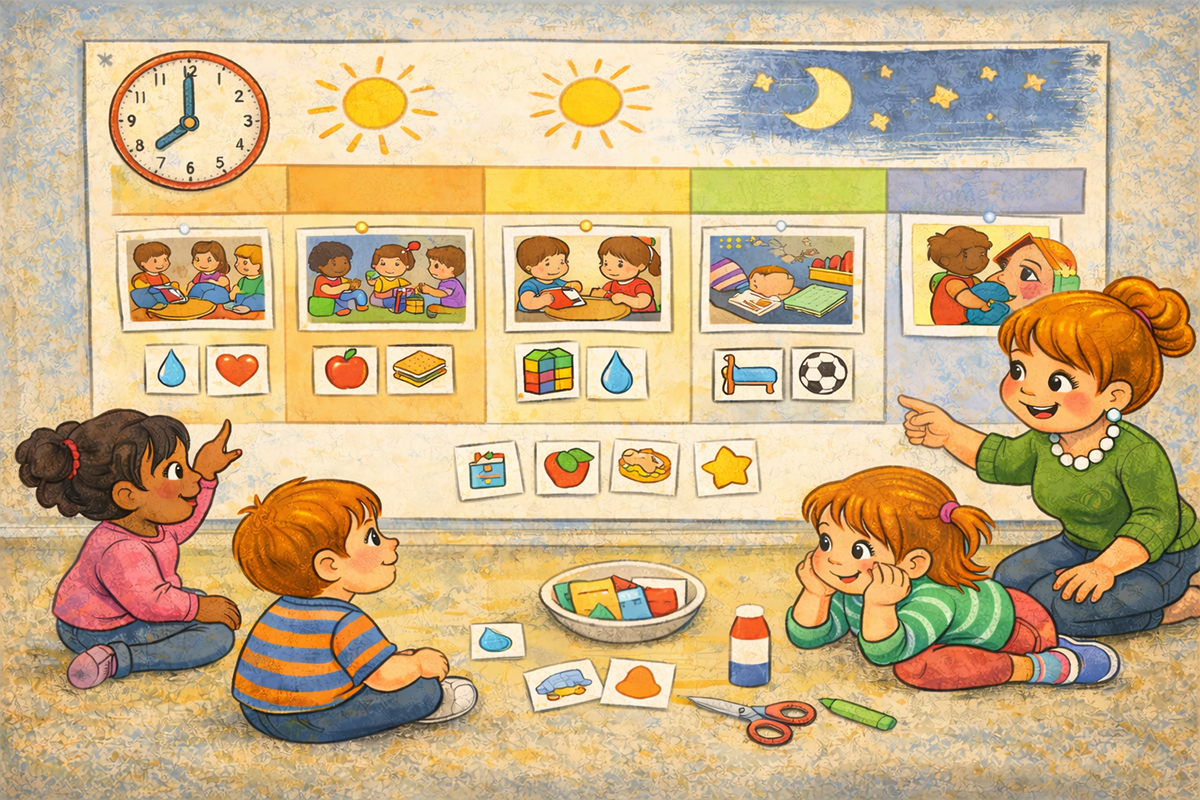
Djeca zajedno crtaju jednostavnu vremensku liniju na velikom listu papira. Uključuju dijelove poput jutra, ručka i poslijepodneva te dodaju boje ili simbole za obilježavanje različitih dijelova dana.
Dodavanje aktivnosti
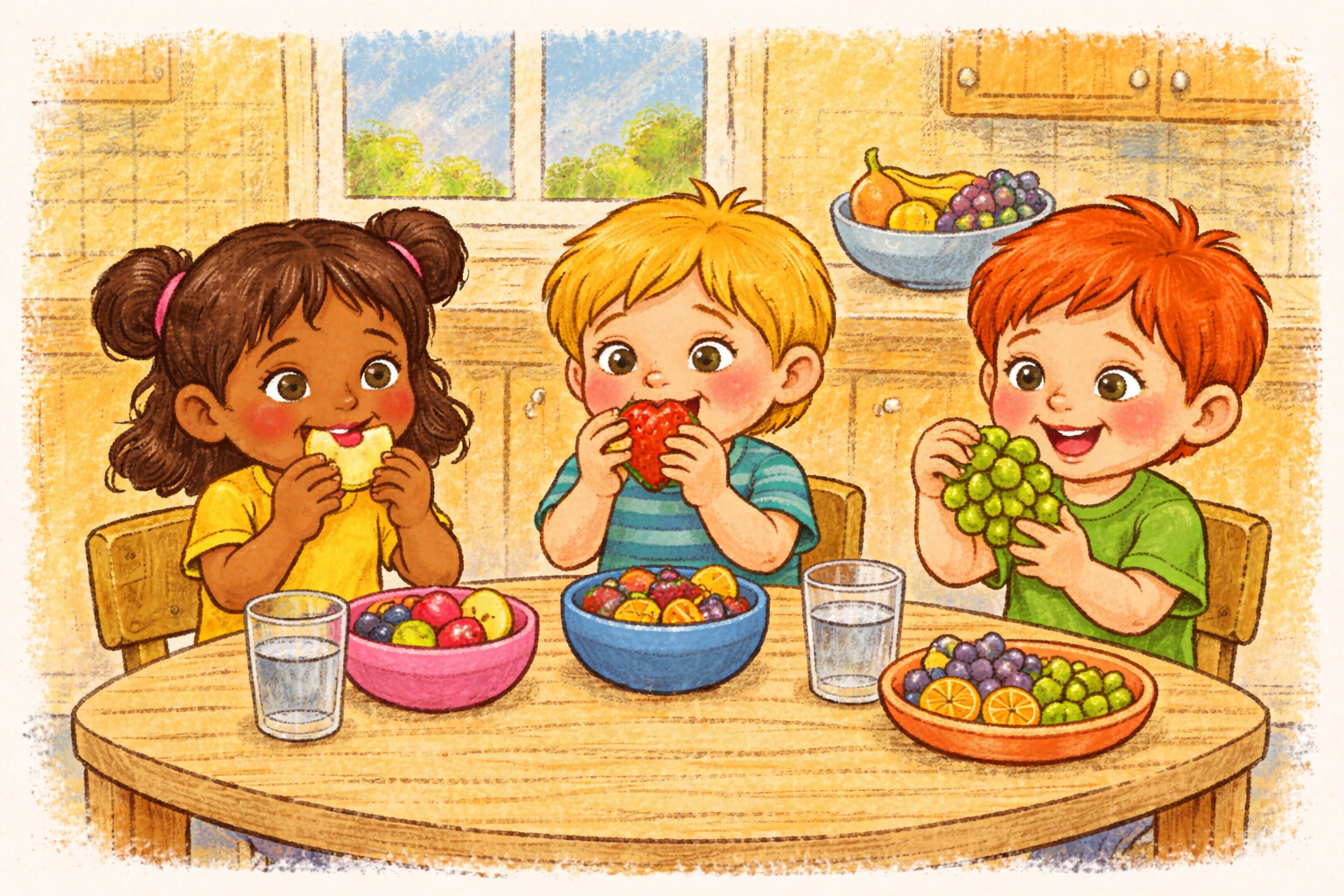
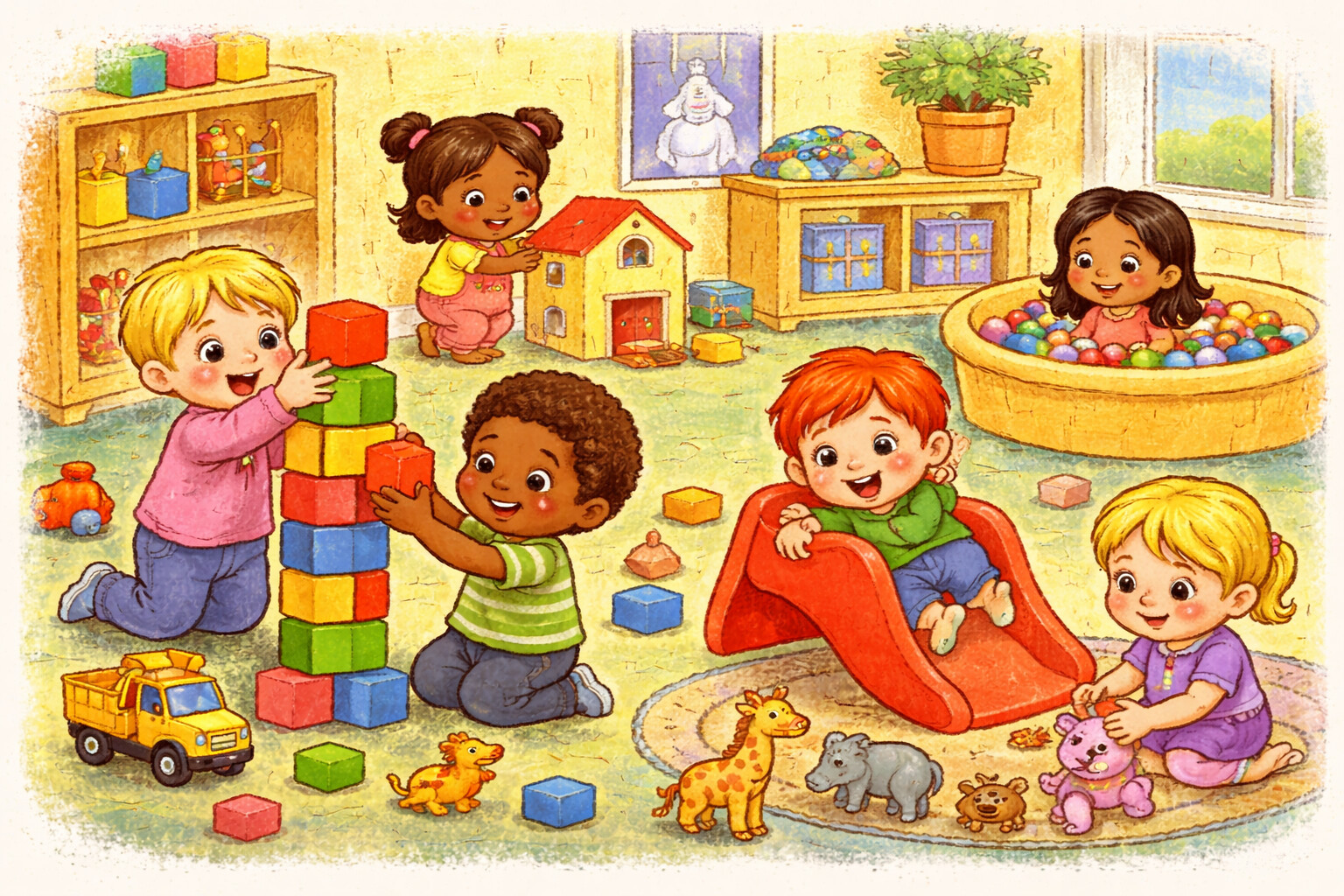
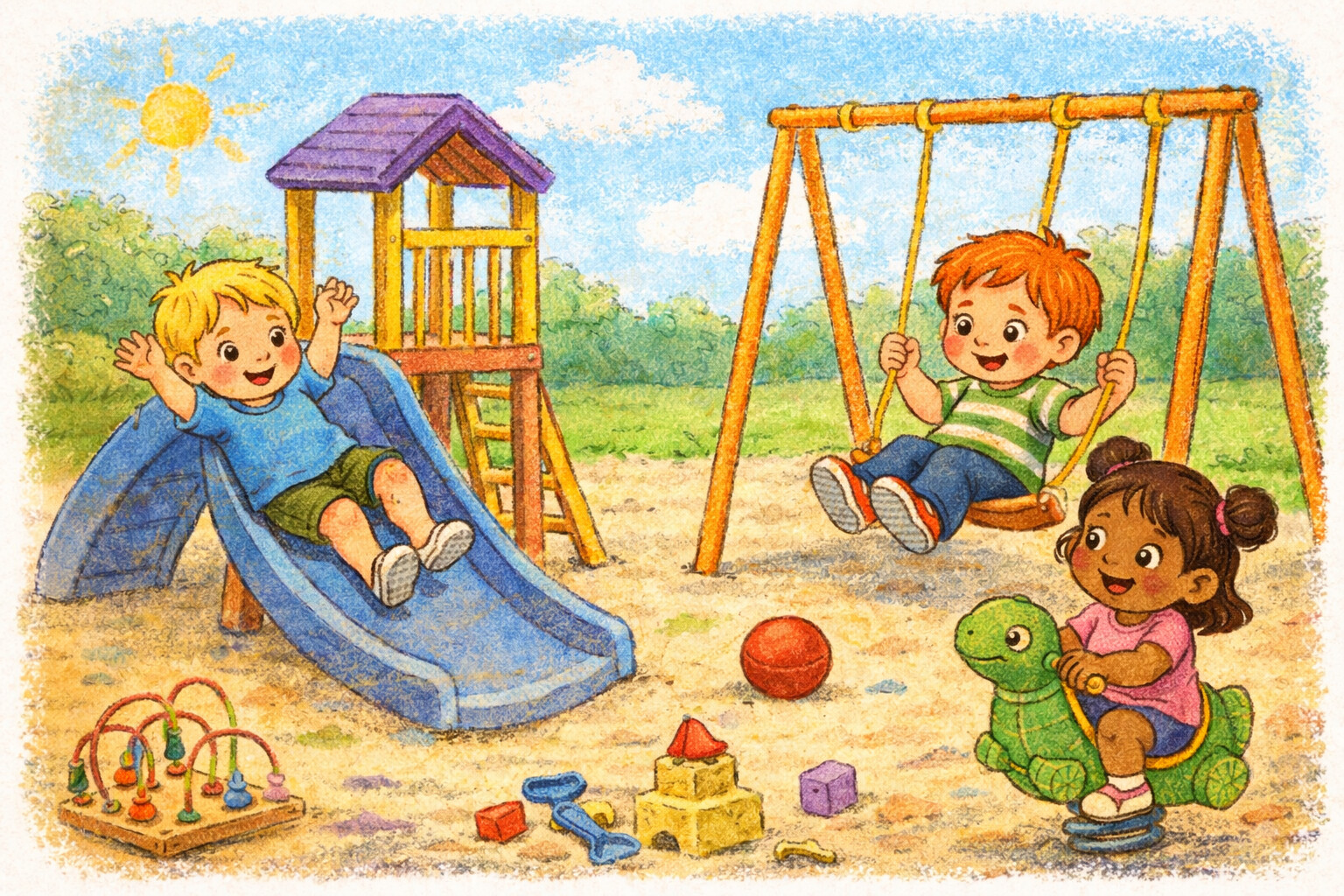
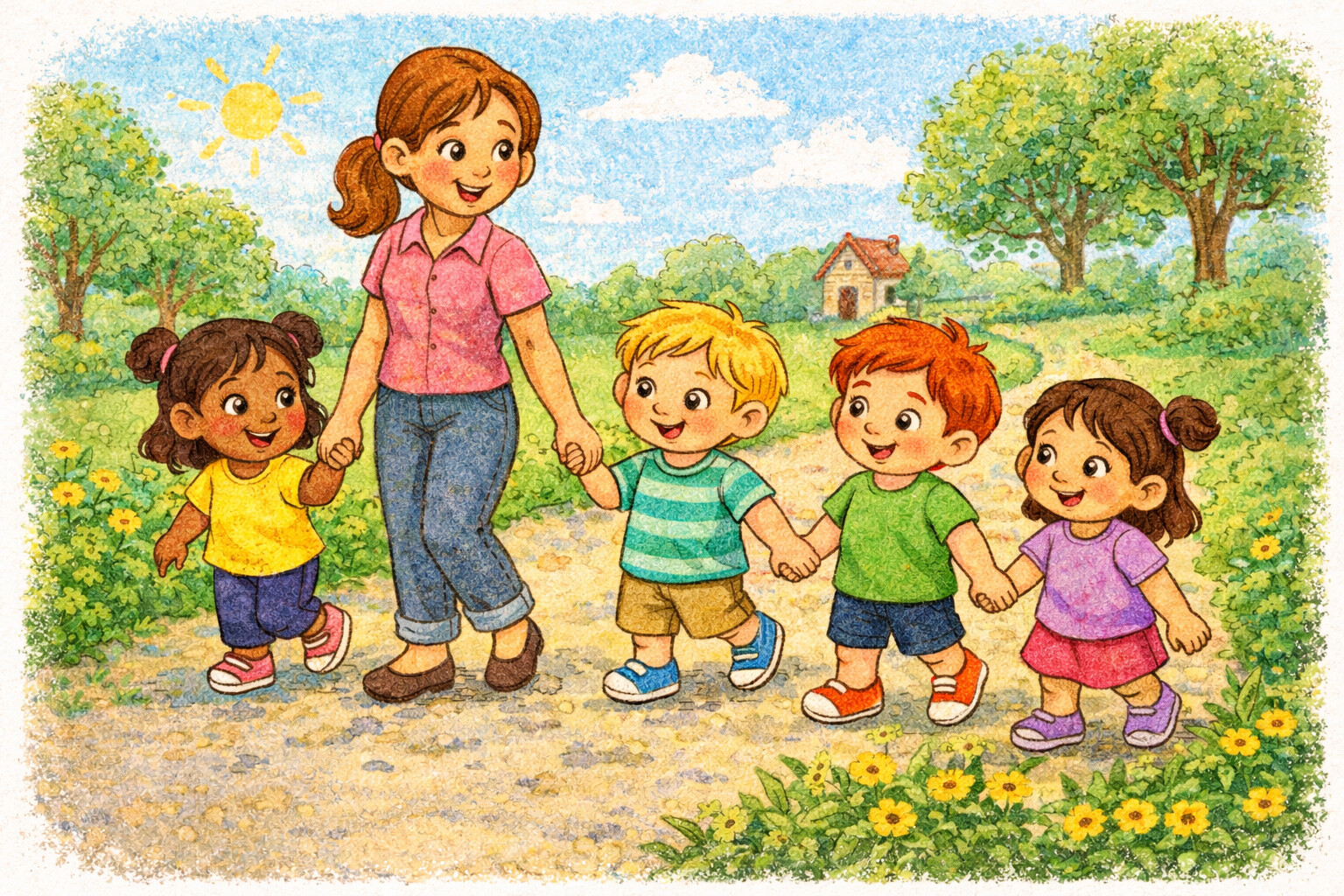
Odgojiteljica pomaže djeci odabrati ili nacrtati slike svakodnevnih aktivnosti (npr. jutarnji krug, igra, obroci) i smjestiti ih na vremensku liniju u odgovarajuće segmente.
Prepoznavanje potreba
Skupina djece priprema kartice koje predstavljaju različite potrebe.
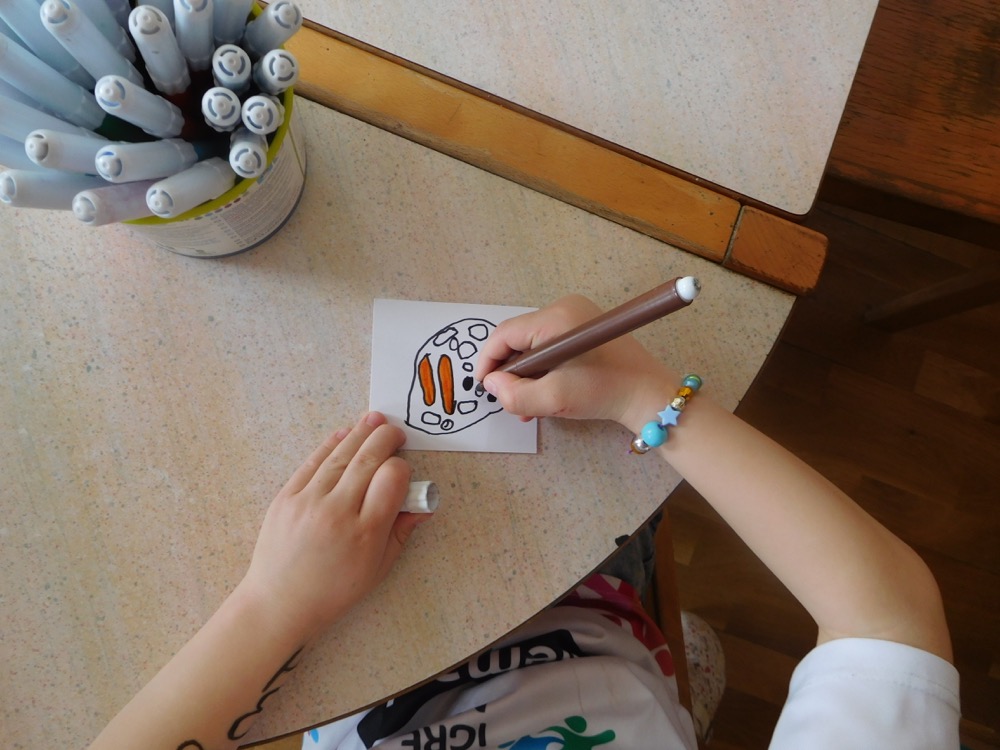
Za svaku aktivnost djeca razmišljaju što im je potrebno te koriste kartice s oznakama ili crtaju simbole, npr.:
- Voda: kada su žedni, primjerice tijekom igre ili nakon šetnje.
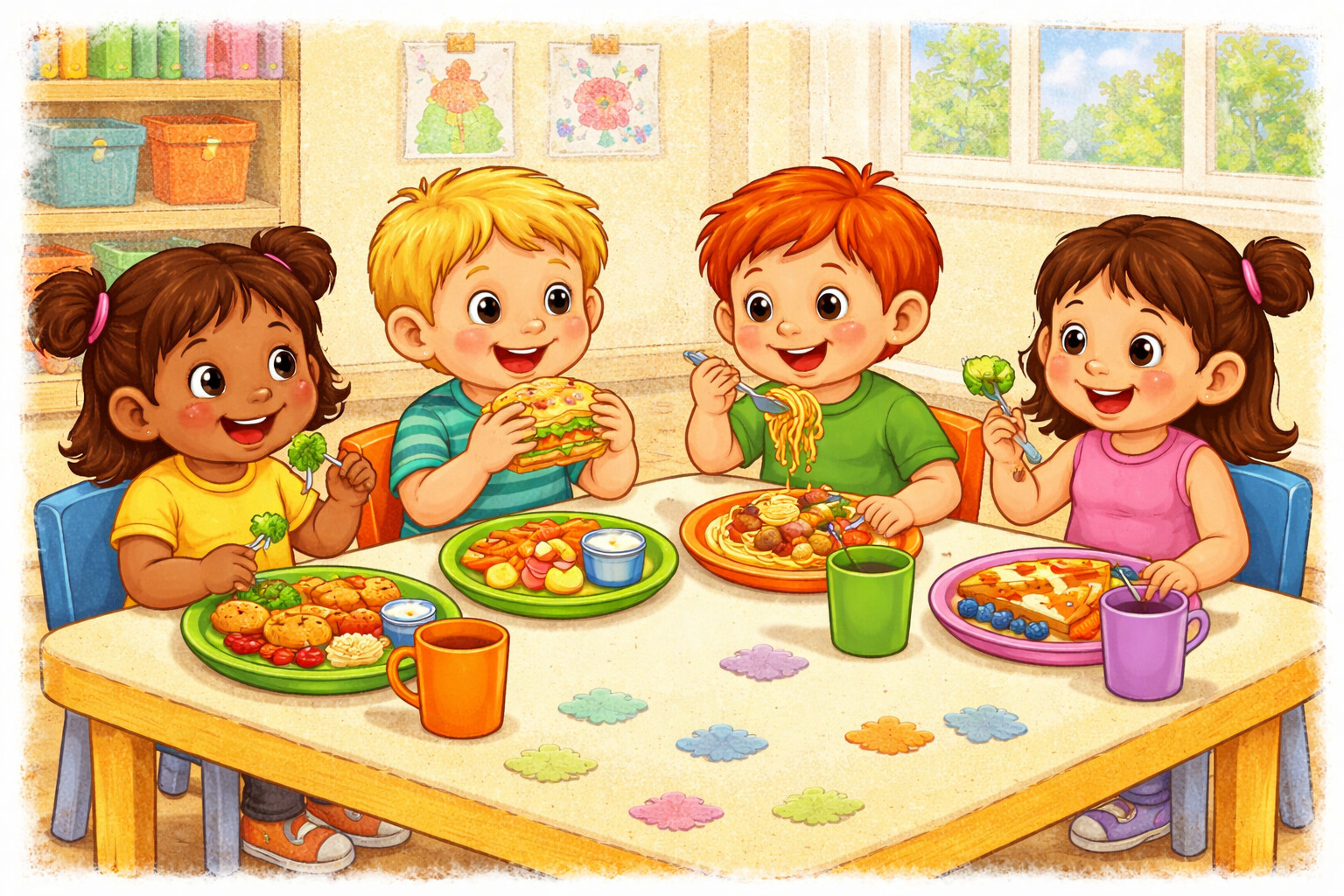
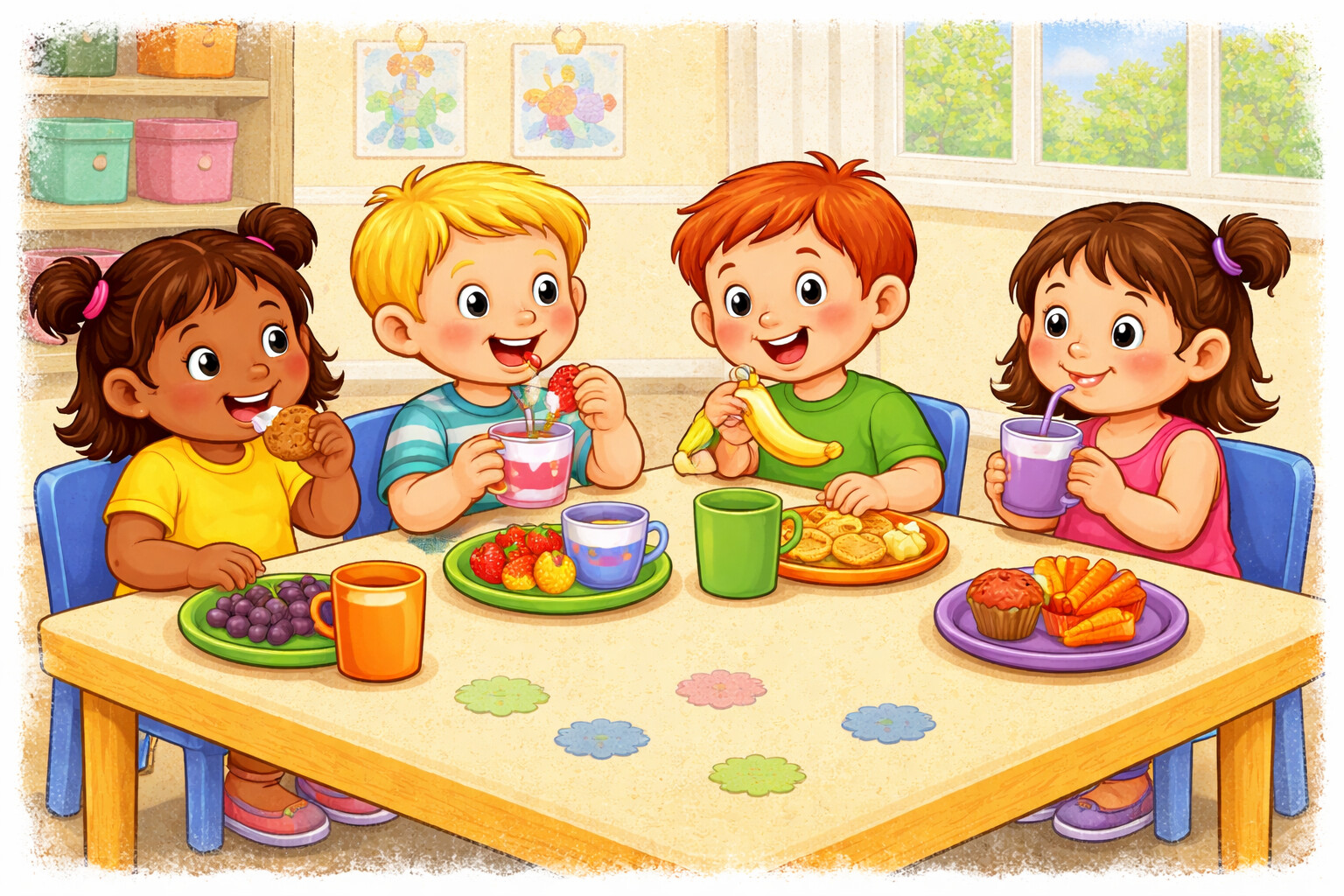
- Hrana: kada je vrijeme za užinu ili ručak.
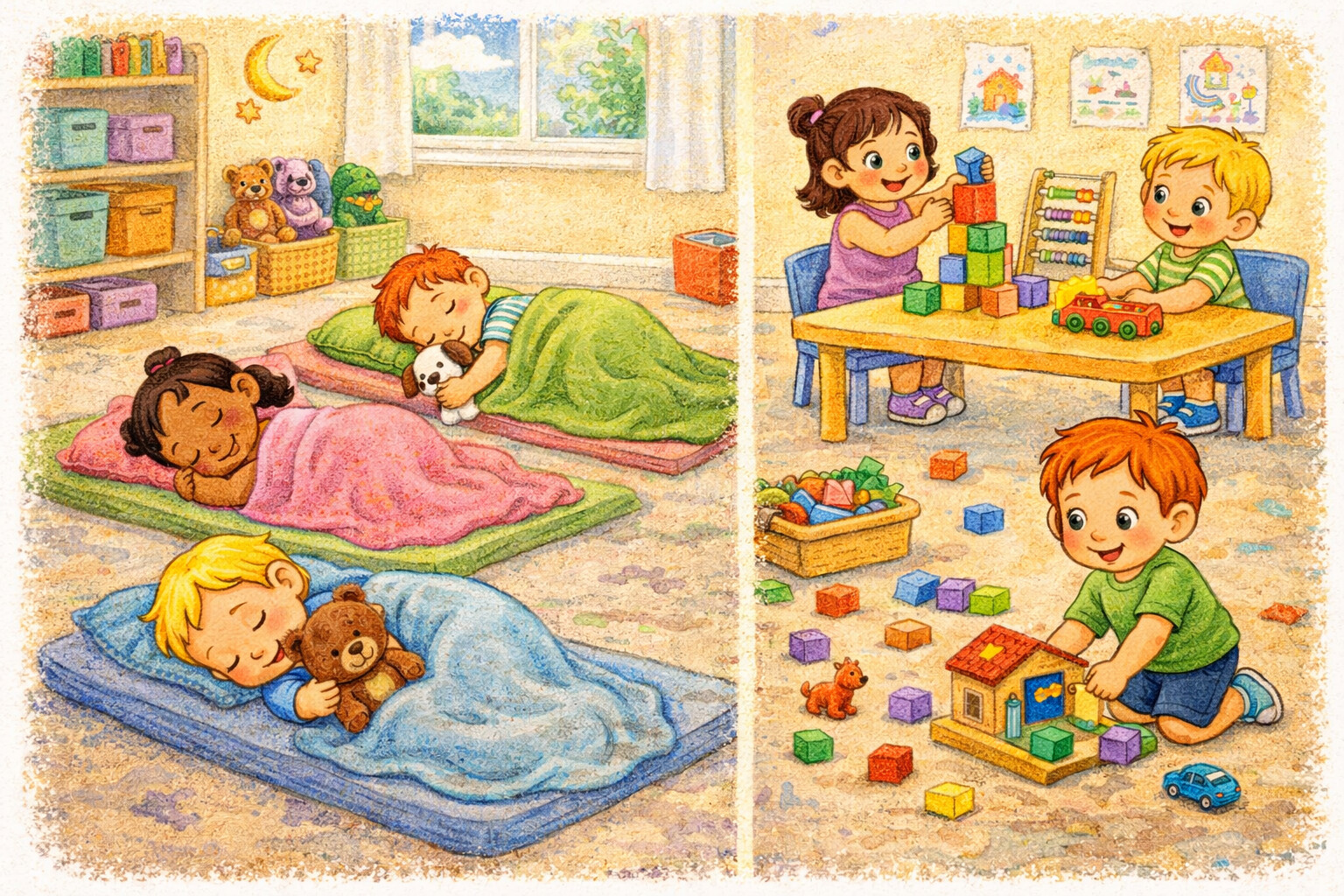
- Odmor: kada se osjećaju umorno, npr. nakon ručka.
- Pomoć: kad im je potrebna pomoć odgojiteljice ili prijatelja.
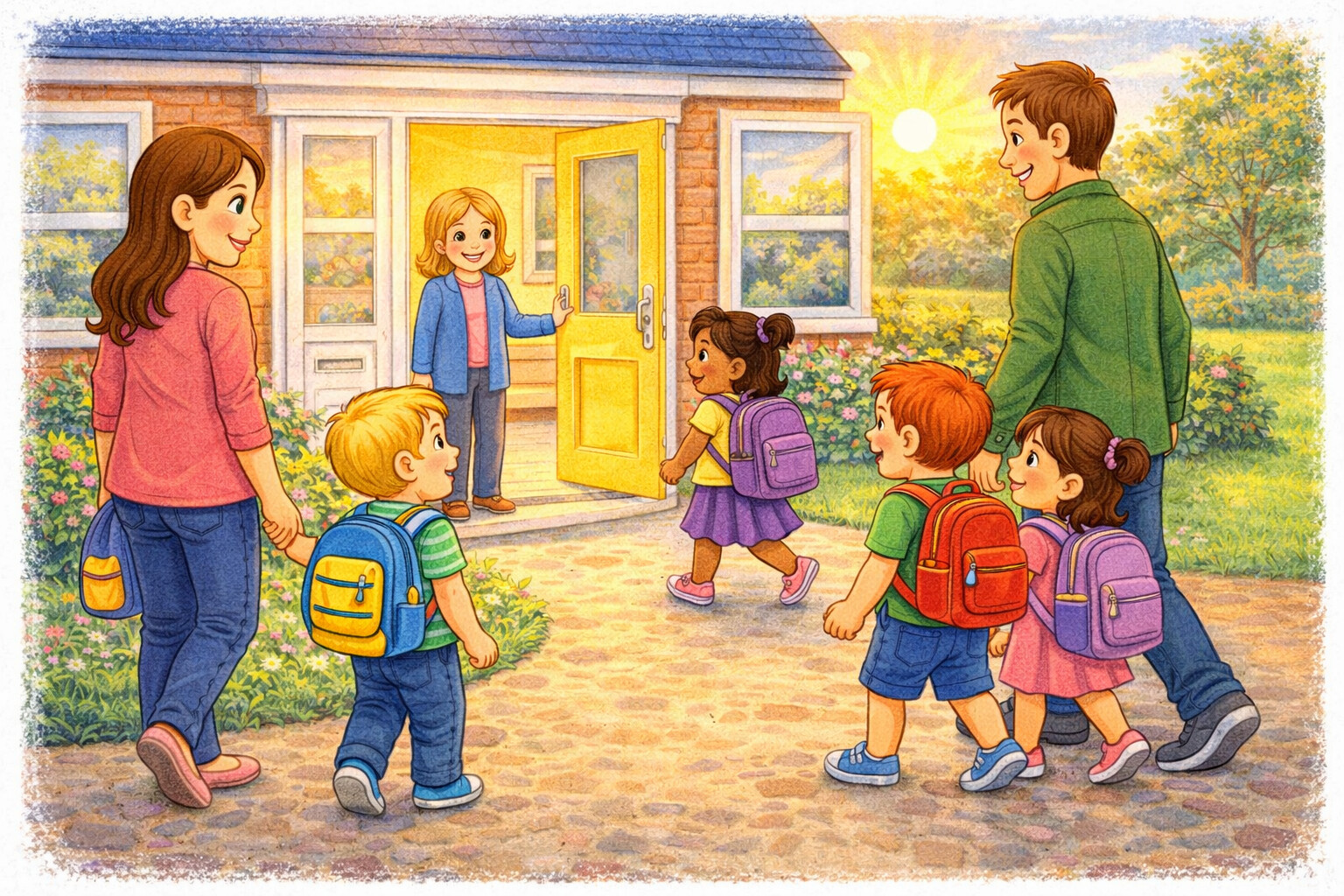
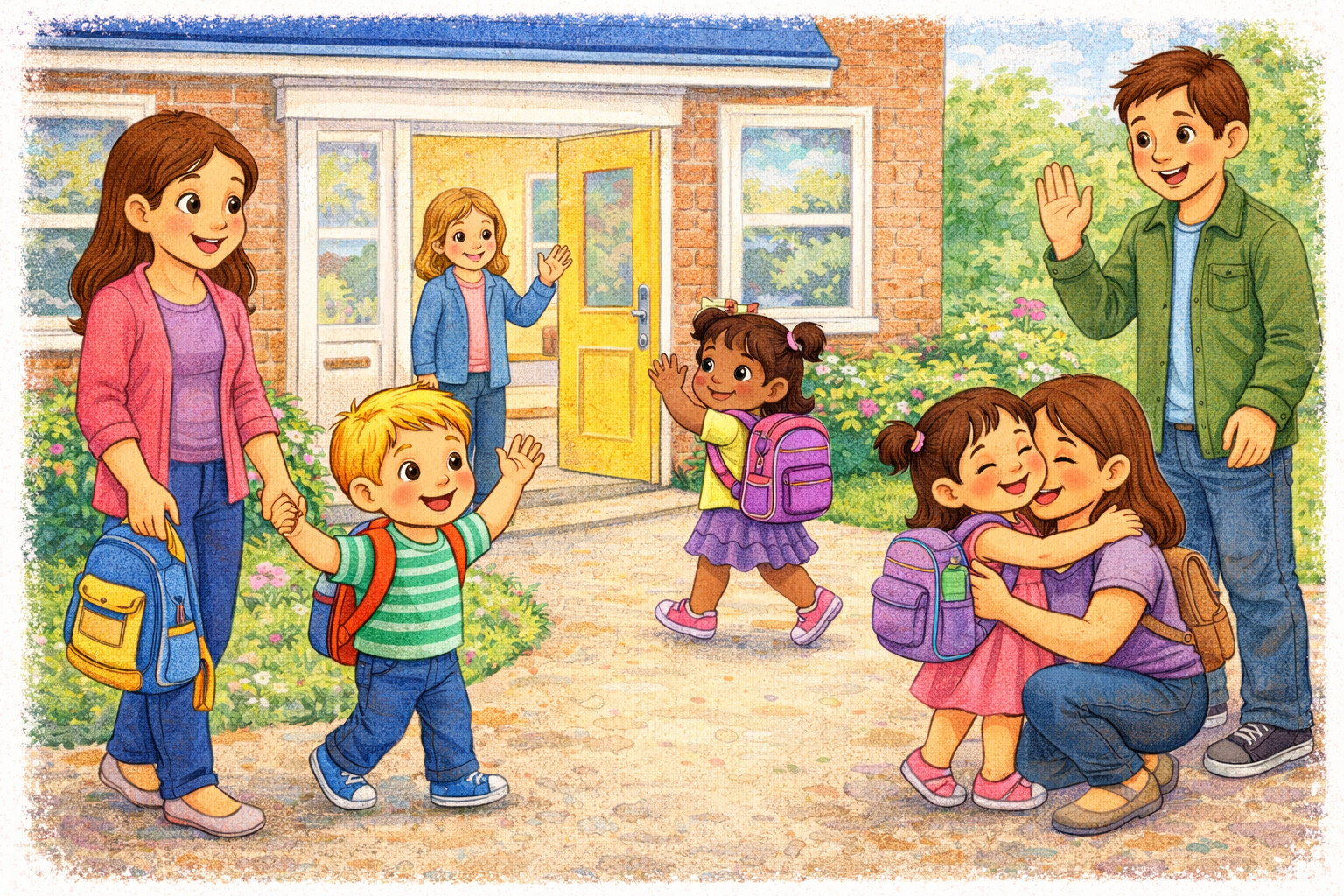
- Topla dobrodošlica: od odgojiteljice ili prijatelja pri dolasku u vrtić.
Svako dijete odabire jednu aktivnost i dodaje karticu s pripadajućom potrebom. Na primjer, za vrijeme užine mogu nacrtati simbol hrane ili dodati karticu s oznakom „Hrana”, a za vrijeme odmora mogu dodati simbol kutka za opuštanje ili karticu „Odmor”.
Refleksija
Refleksija i dijeljenje (igrokaz s lutkama)
Kada je vremenska linija dovršena, djeca je predstavljaju Kiri i Miri.
Kira i Miro postavljaju pitanja i parafraziraju ono što djeca objašnjavaju te daju pozitivne povratne informacije o radu djece.
Naglašavaju koliko je važno provjeravati svoje potrebe tijekom dana.
Pokazuju interes i za „individualne vremenske linije” (npr. ne osjeća se svatko pospano nakon ručka…), što može dovesti do varijacija u osobnim vremenskim linijama.
Varijacije i dodatne ideje
Osobne vremenske linije
Svako dijete izrađuje manju, osobnu vremensku liniju koja prikazuje njegove/njezine omiljene aktivnosti i potrebe, bilo u vrtiću ili kod kuće.
Igranje uloga – dnevne potrebe
U malim skupinama djeca glume dijelove dana i naglas izražavaju svoje potrebe (npr. „Žedan/žedna sam nakon igre vani.”).
Planiranje dana
Djeca i odgojiteljica surađuju u planiranju rutine za sljedeći dan, zajedno odlučujući kako zadovoljiti potrebe poput odmora, hrane i vremena za igru.
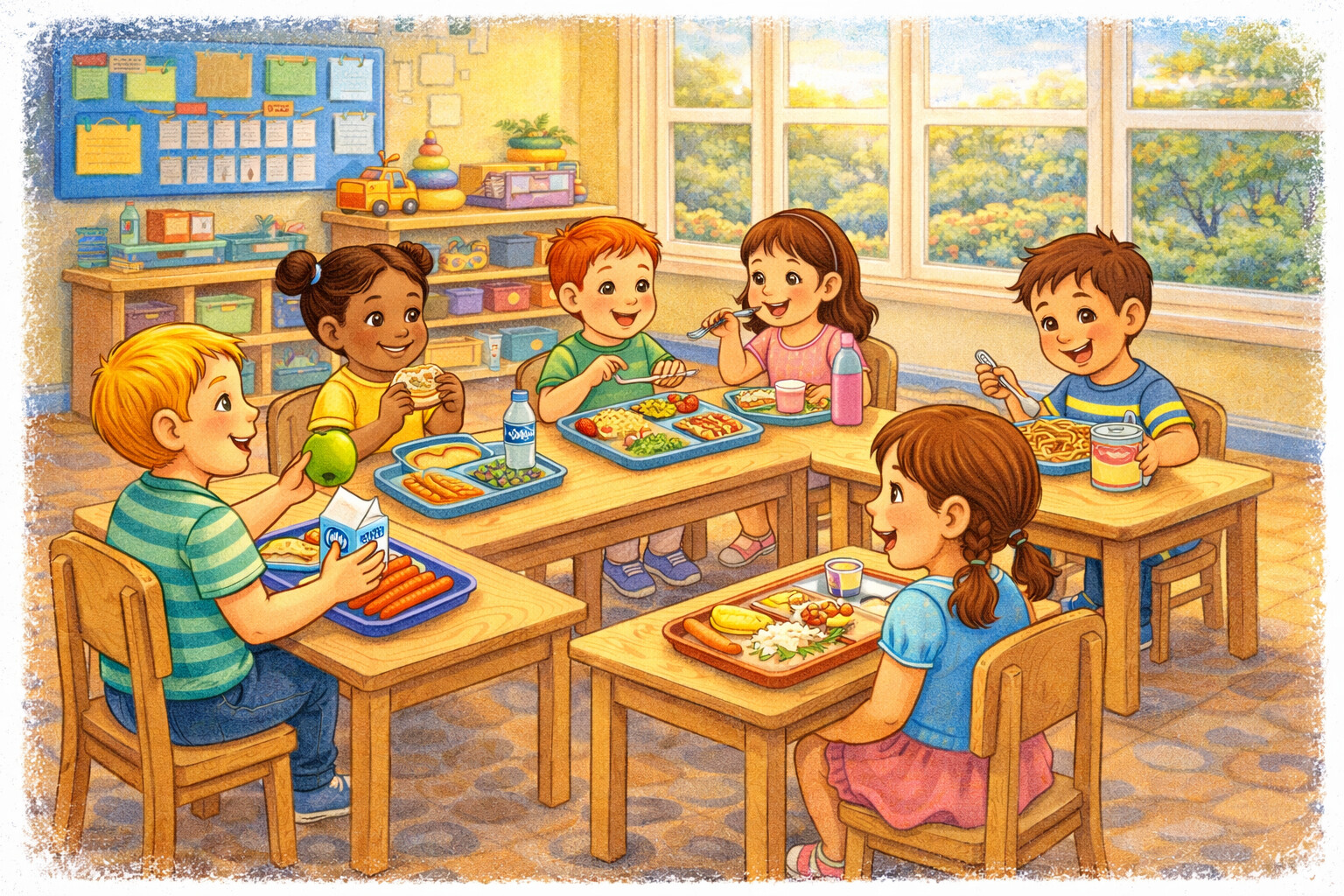
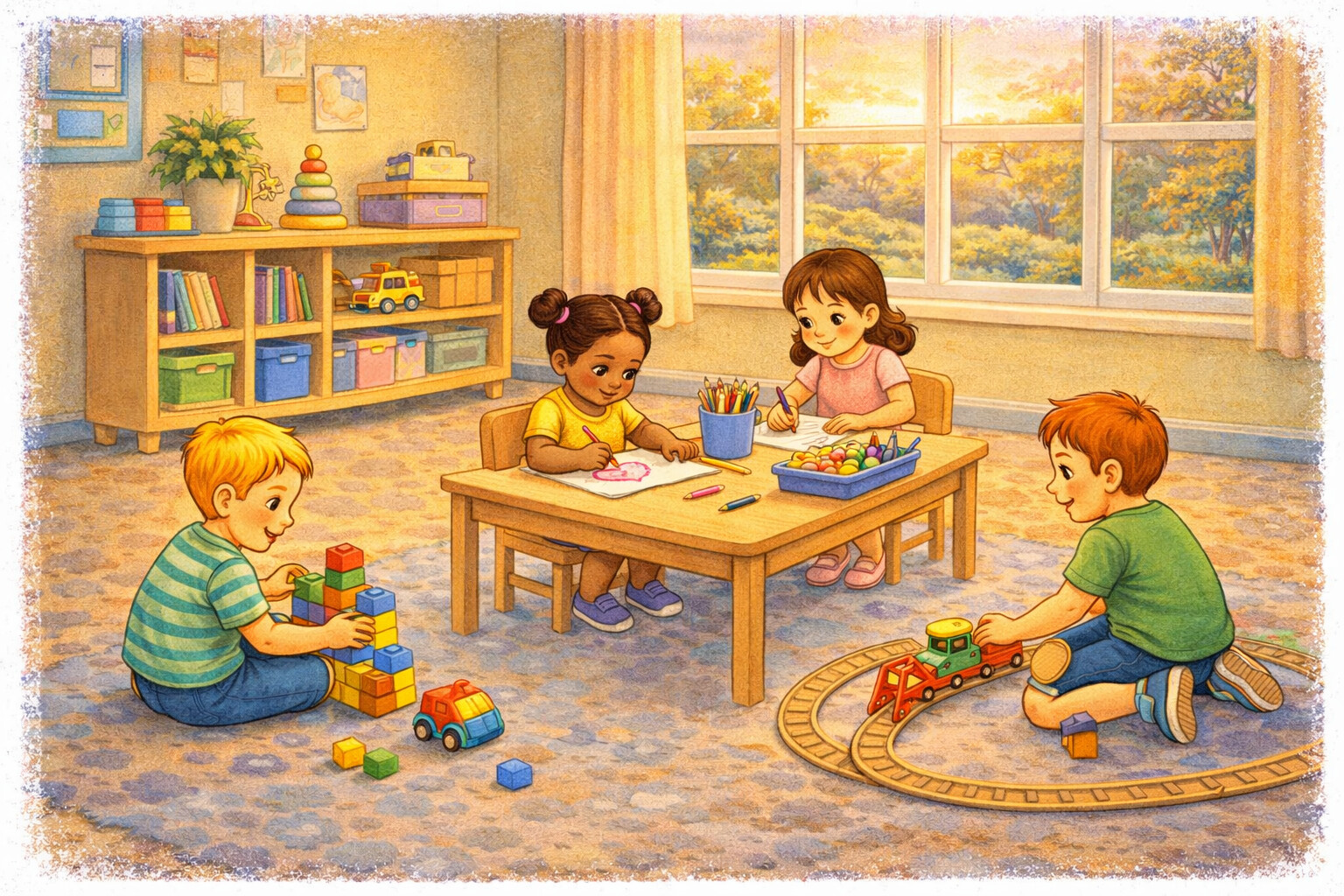
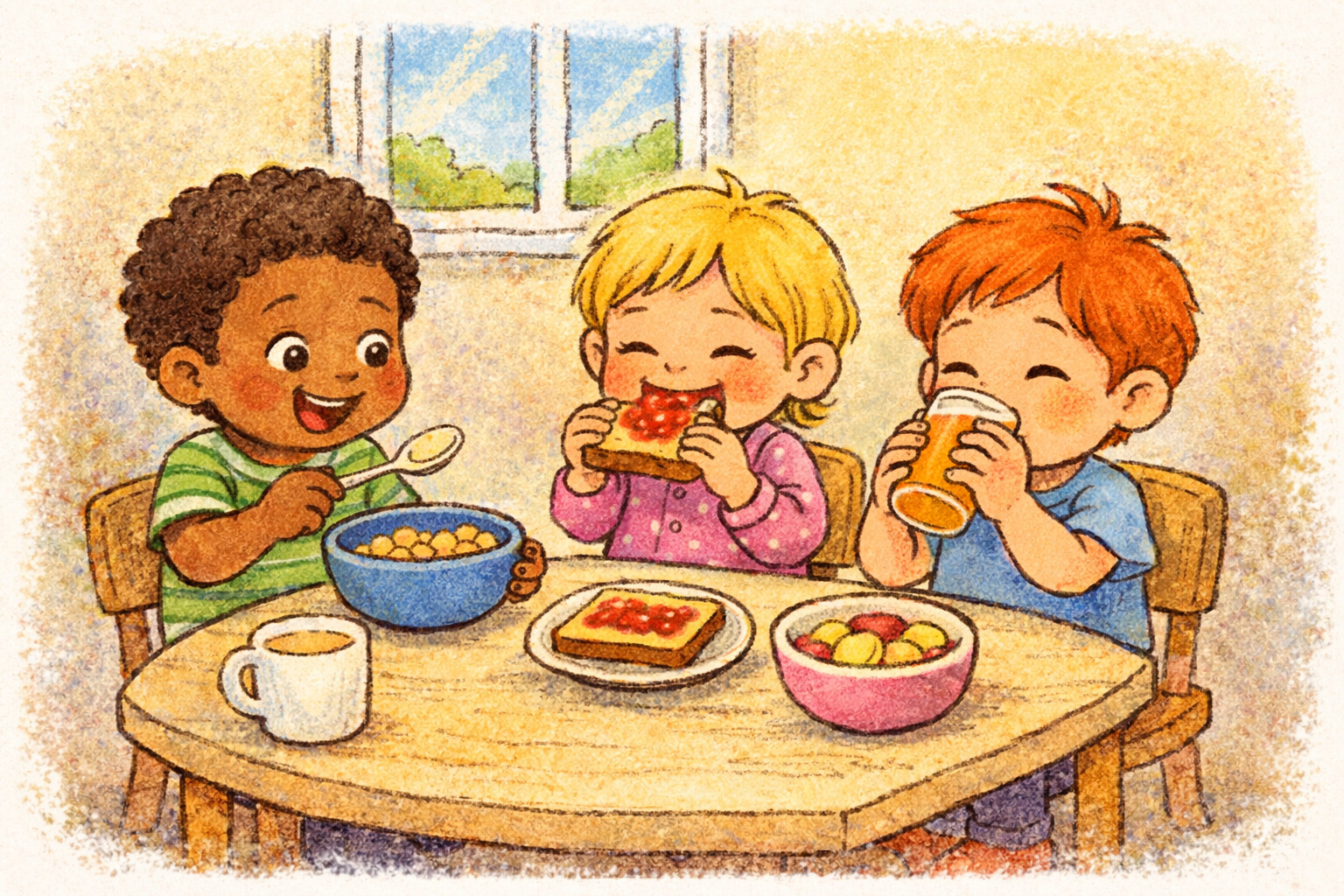
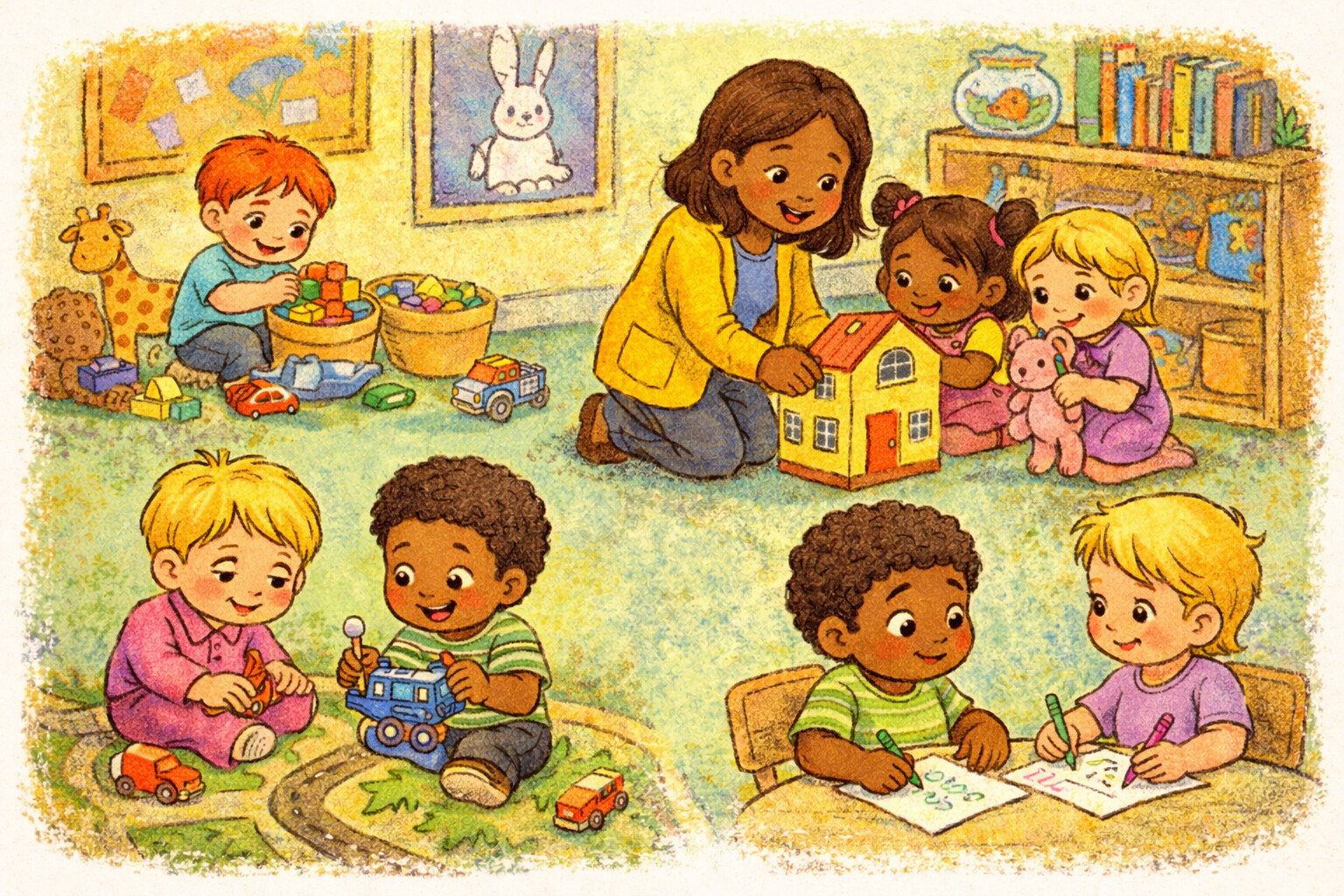
Radni list "Različita doba dana"
|
|
|
|
|
|
|
|
|
|
|
|
|
Radni list "Ikone potreba"

|

|

|

|

|
Slike aktivnosti