Essere un buon ascoltatore
 Finanziato dall'Unione europea. Le opinioni espresse appartengono, tuttavia, al solo o ai soli autori e non riflettono necessariamente le opinioni dell'Unione europea o dell’Agenzia esecutiva europea per l’istruzione e la cultura (EACEA). Né l'Unione europea né l'EACEA possono esserne ritenute responsabili. |
 Tutti i contenuti di questo sito, in particolare testi, immagini e grafica, sono protetti da copyright. Salvo espressa indicazione contraria, il copyright è detenuto da sel.eduskills.plus ed è concesso in licenza sotto la Creative Commons Attribution - Non-commercial - Distribution alle stesse condizioni di 4.0 International license. Essi possono essere soggetti ai termini della licenza. |
© 2026 sel.eduskills.plus
| Avanzato | |
| Età: 4-6 | |
| 3 giorni | |
| I bambini esplorano cosa significa essere un buon ascoltatore e imparano come l'ascolto attento favorisca l'attenzione, la fiducia e una comunicazione di gruppo più efficace. | |
| Conversazione | |
|
Preparazione
Preparare i materiali e sistemate lo spazio nella stanza dei giochi prima di iniziare l'attività.
Implementazione
Iniziare parlando con i bambini dell'importanza dell'ascolto. Chiedere loro se sanno cosa significa essere un buon ascoltatore.
Chi è un buon ascoltatore?
Chiedere al gruppo:
- Chi pensi sia un buon ascoltatore?
Invitare i bambini a condividere le loro idee. Scrivere le loro risposte su un cartellone oppure lasciare che uno di loro le scriva.
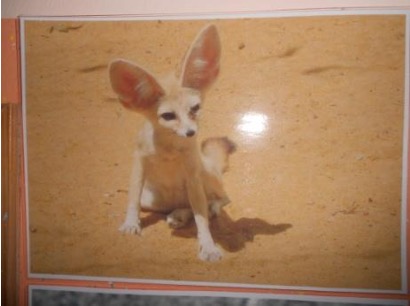
Incoraggiarli a pensare a degli esempi: a volte potrebbero citare personaggi dei cartoni animati o dei film con un udito molto fine, come Superman. Usare questo come punto di partenza giocoso per una riflessione più profonda:
Spiegare che un buon ascolto non dipende dall'avere orecchie grandi o superpoteri, ma dal prestare attenzione alla persona che parla, notare da dove proviene il suono e concentrarsi sull'argomento della conversazione.
Se i bambini danno risposte divertenti o letterali (come "orecchie grandi"), usatele come spunto per continuare la discussione in modo leggero e inclusivo.
Come possiamo essere buoni ascoltatori nel nostro gruppo?
Chiedere:
- Cosa possiamo fare per essere dei buoni ascoltatori qui nel nostro gruppo?
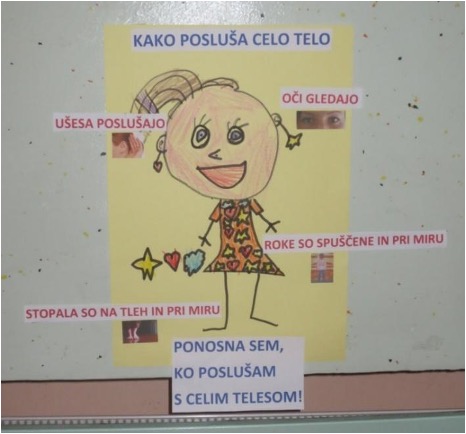
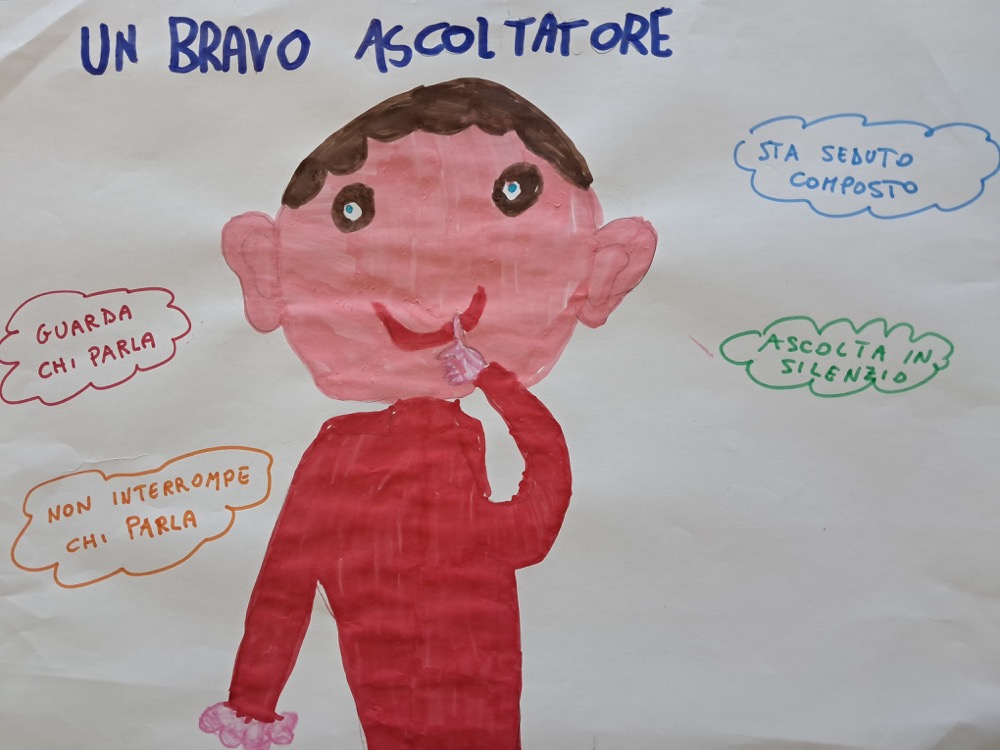
- Come fai a sapere se stai ascoltando bene? (ad esempio: sedendoti tranquillamente, guardando chi parla, non interrompendo, rimanendo concentrato sull'attività).
- Come si comporta un buon ascoltatore? (ad esempio: parla uno alla volta, risponde con gentilezza, mostra interesse).
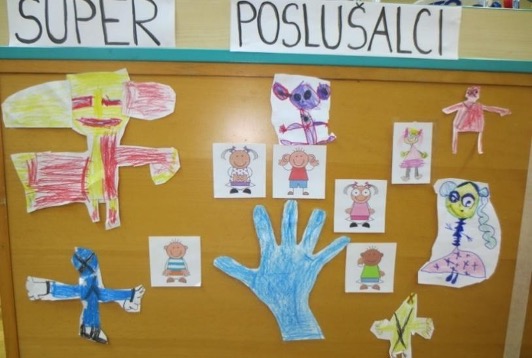
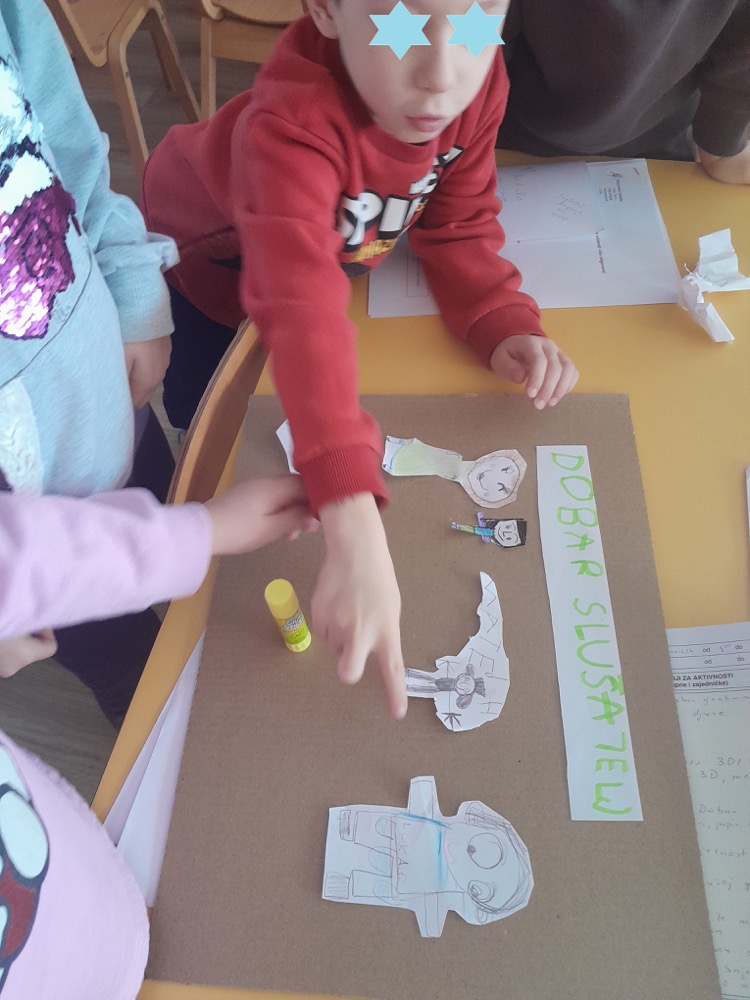
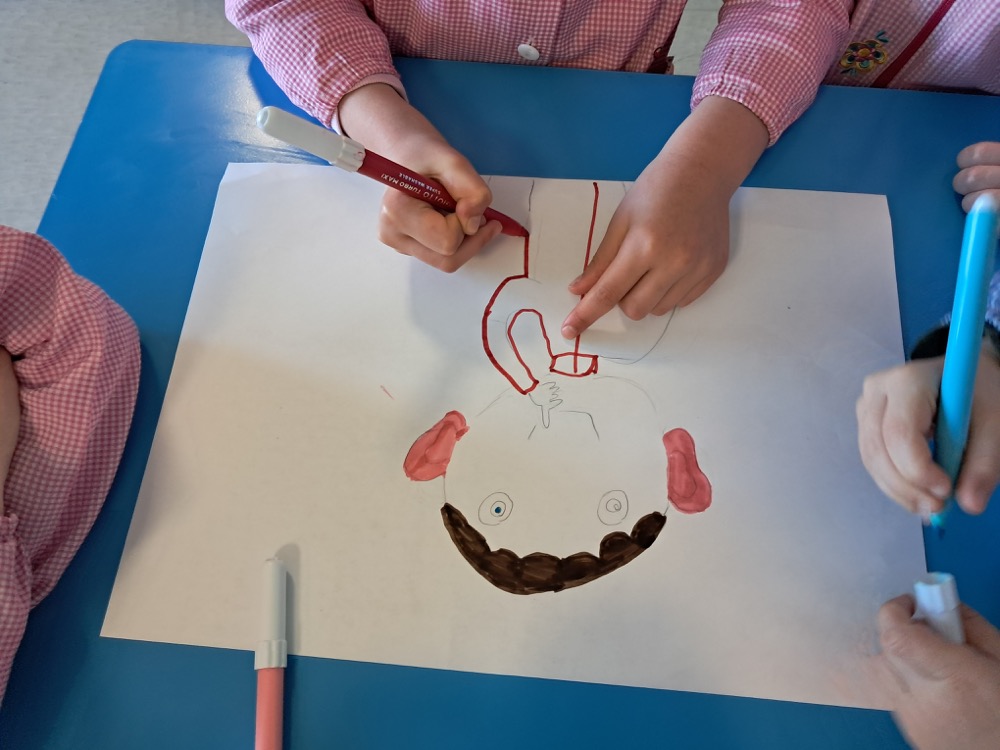
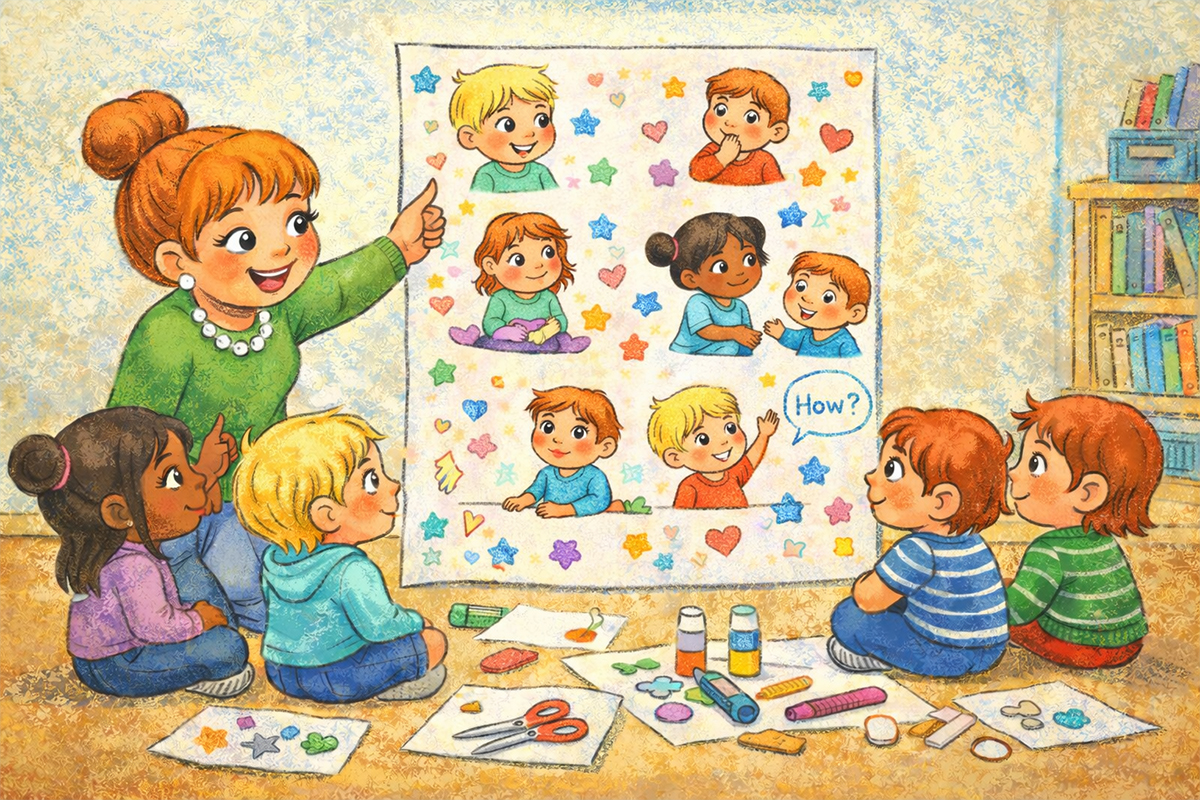
Insieme, riassumere le loro idee e realizzare un poster intitolato "Un buon ascoltatore nel nostro gruppo". I bambini possono disegnarsi come bravi ascoltatori e decorare il poster.
Appenderlo in un luogo ben visibile come promemoria quotidiano.
Foto dell'attività