That’s Me - That’s You!
 Funded by the European Union. Views and opinions expressed are however those of the author(s) only and do not necessarily reflect those of the European Union or the European Education and Culture Executive Agency (EACEA). Neither the European Union nor EACEA can be held responsible for them. |
 All contents, in particular texts, pictures and graphics, are protected by copyright. Unless expressly stated otherwise, copyright is held by sel.eduskills.plus and is licensed under Creative Commons Attribution - Non-commercial - Distribution under the same conditions 4.0 International license. They may be subject to the terms of the license. |
© 2026 sel.eduskills.plus
| Basic | |
| Age: 4-6 | |
| 20-30 min | |
| Children share something about themselves while passing a wool ball, creating a web of connection and drawing self-portraits afterward. | |
| Self-regulation | |
| Conversation | |
|
Preparation
Prepare a ball of wool (or see variations) and print out worksheets.
Implementation
Explain the activity by introducing yourself - say your name and share something simple about yourself (e.g., “I’m Ana, and I love drawing”).
Use a small ball of wool as a prop. After your introduction, roll the ball to a child. You can also use puppets to model the game and make it more playful and engaging.
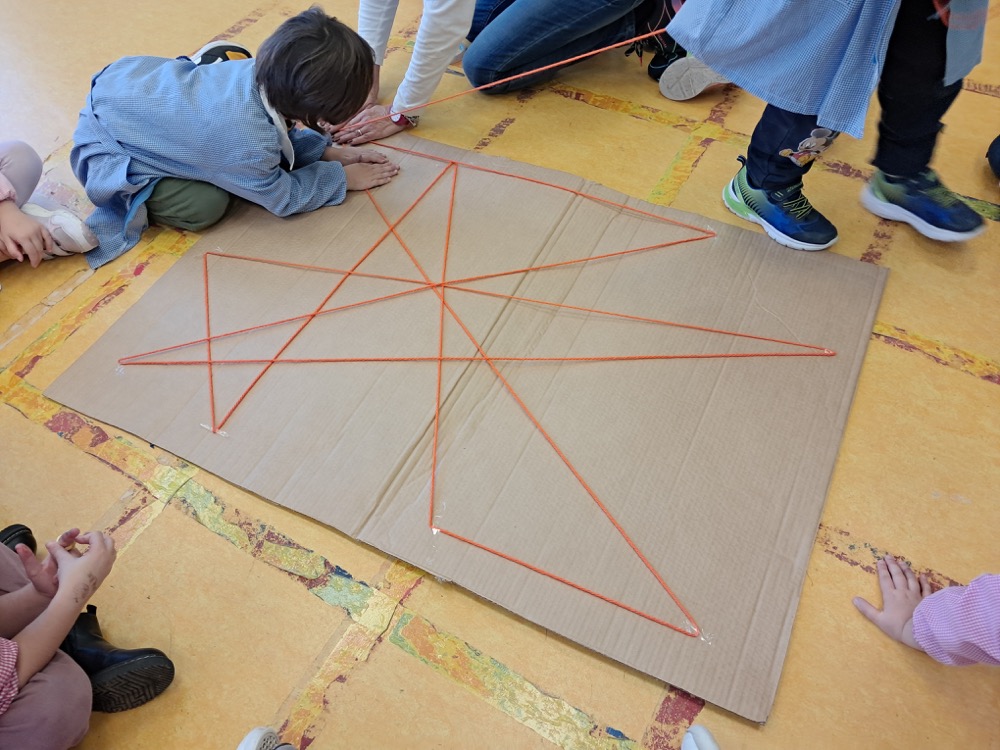
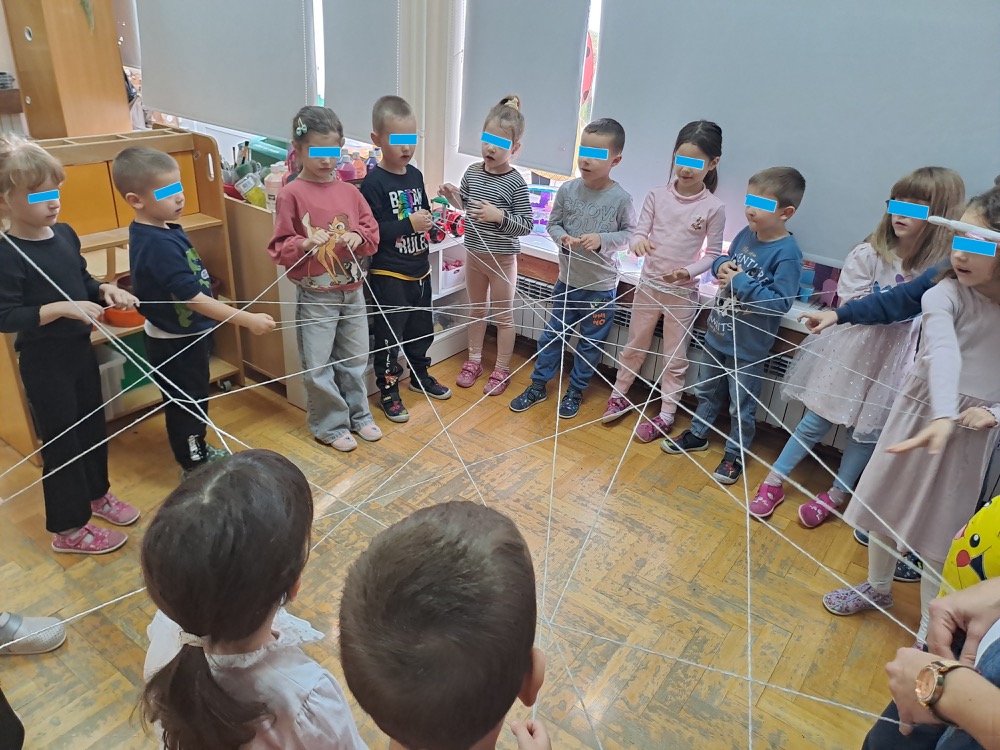
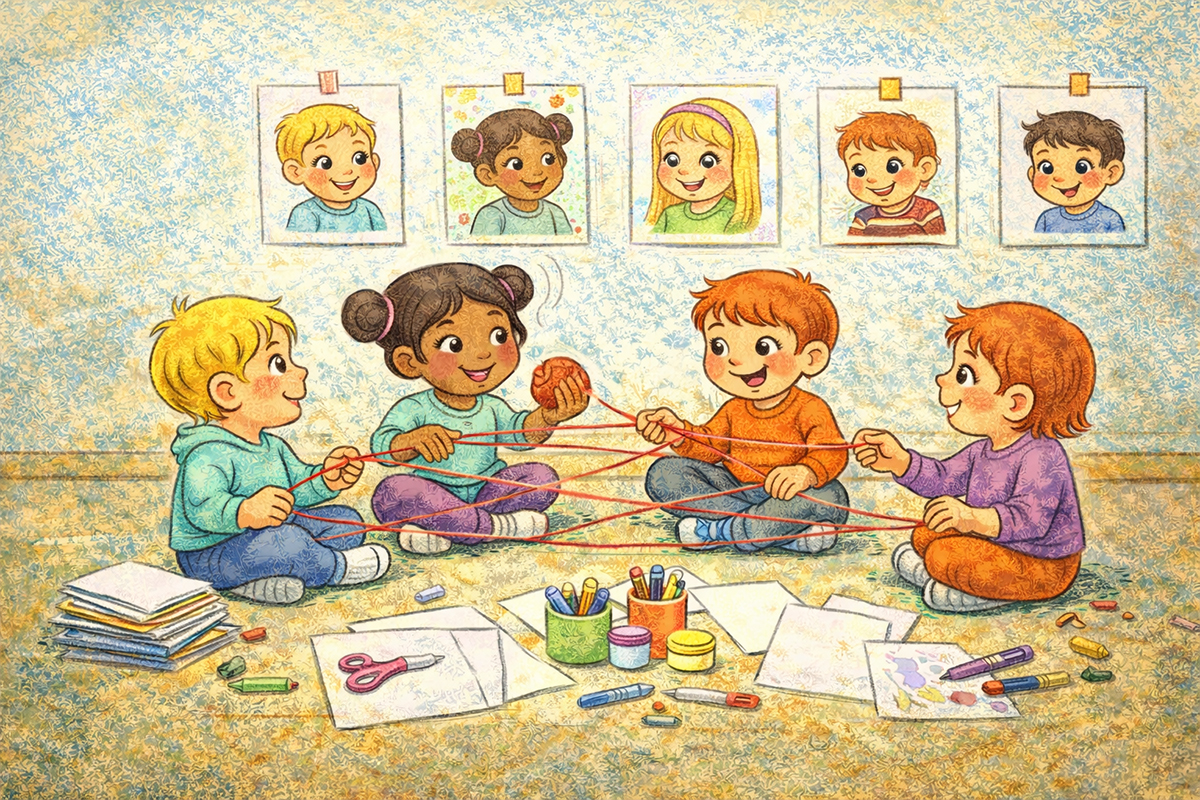
Each child who receives the wool ball says their name and shares one thing about themselves - it can be a hobby, a feeling, a favorite color, or anything they choose. Then they roll the ball to another child, holding onto a part of the thread before passing it.
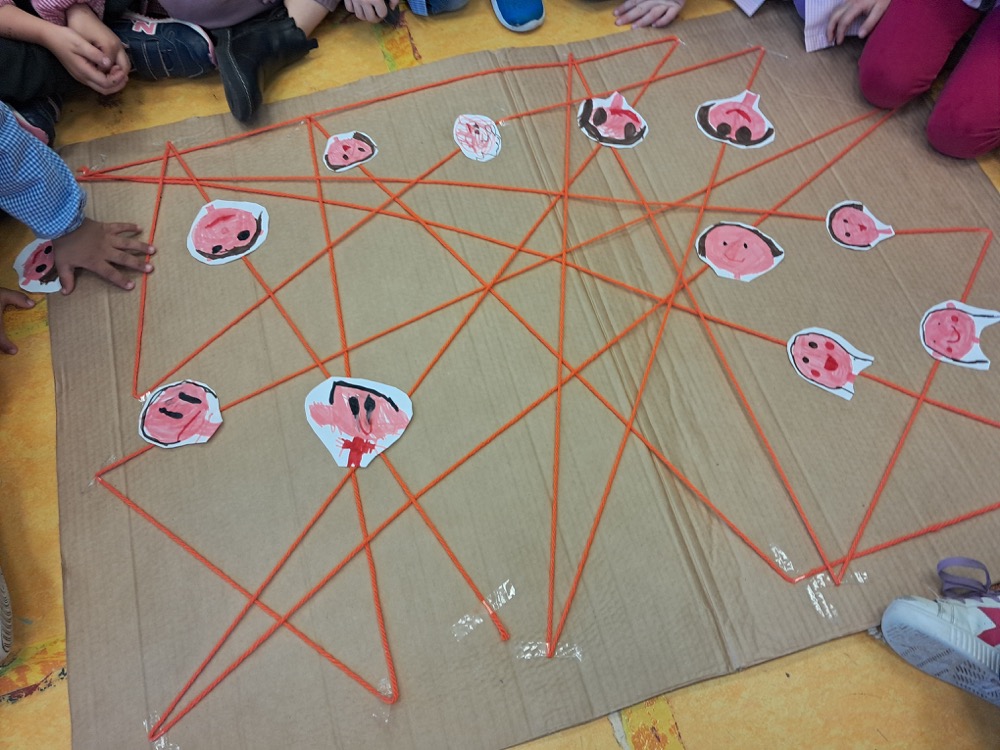
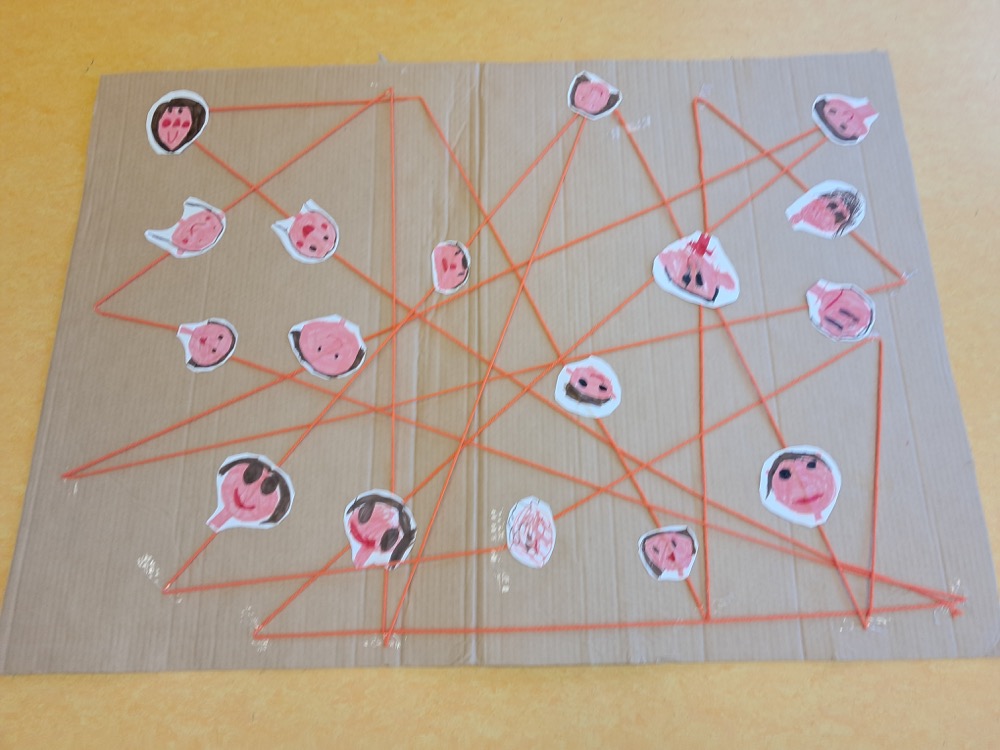
As the activity continues, the wool thread creates a visible web that connects all the children, symbolizing the network of friendships and belonging we build through daily interaction and communication.
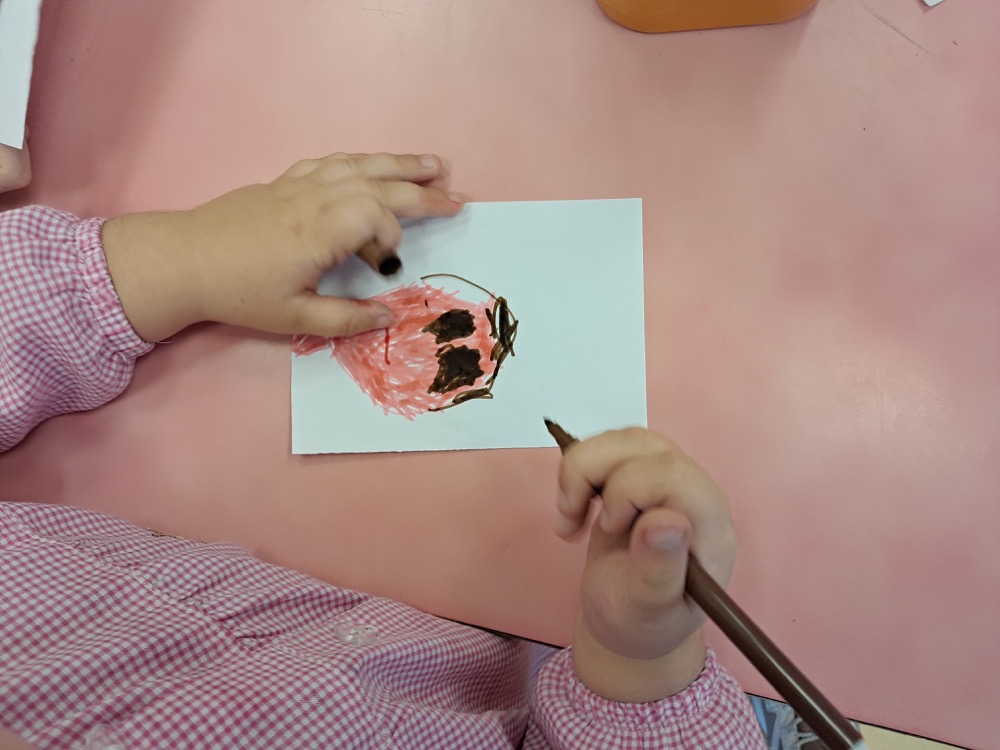
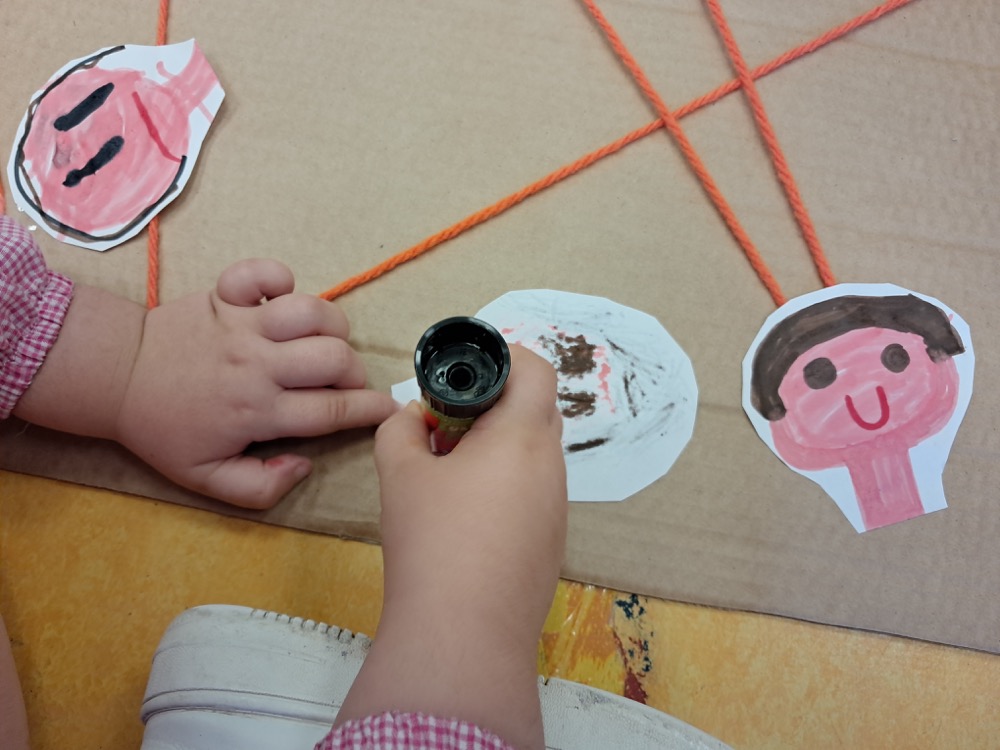
After the web is complete, provide paper and drawing materials. Invite each child to draw a picture of themselves. These drawings can be displayed in the classroom as a celebration of each child’s identity and a reminder of their place in the group.
Reflection
End the activity with a group reflection. Use open-ended questions to encourage children to think and talk about their experience:
- Did you enjoy this activity? Why?
- What did you like most?
- How does it feel to talk about yourself?
- Is it easy or hard to share your feelings, needs, or wishes?
Give space for children to share as much or as little as they like. Remind them that everyone’s story and presence matters in the group.
Variations and Additional Ideas
You can expand the game with gentle, open-ended questions to help children share more about themselves, such as:
- How do you feel today?
- What are you afraid of?
- Who is your best friend?
- What do you like to play?
- Who do you enjoy spending time with?
Circle of Stones
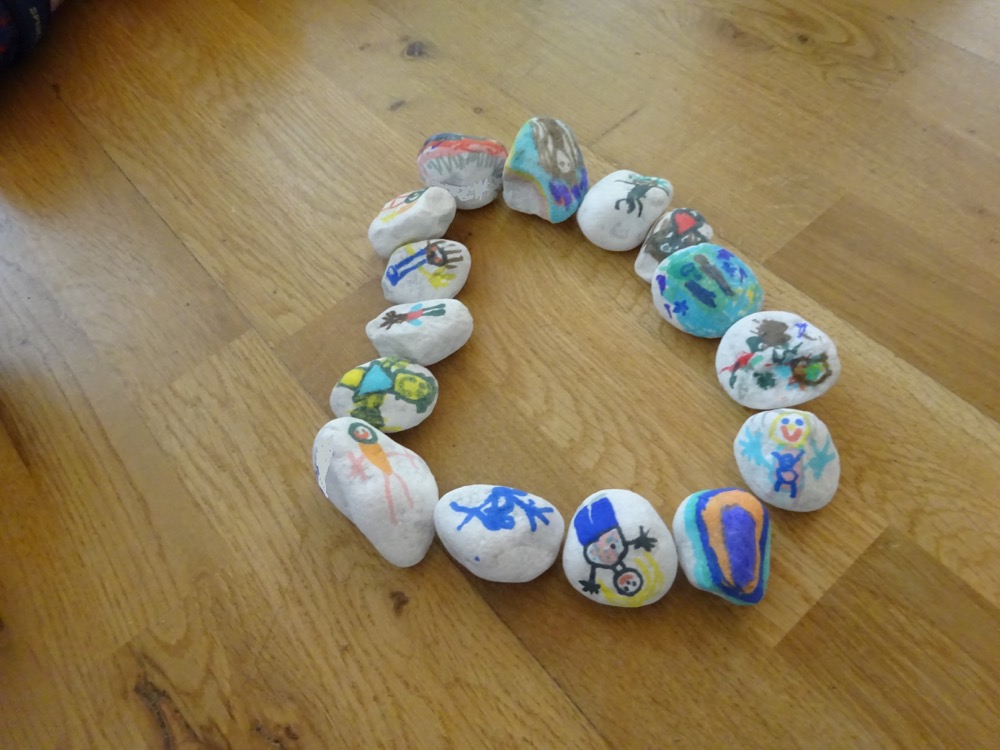
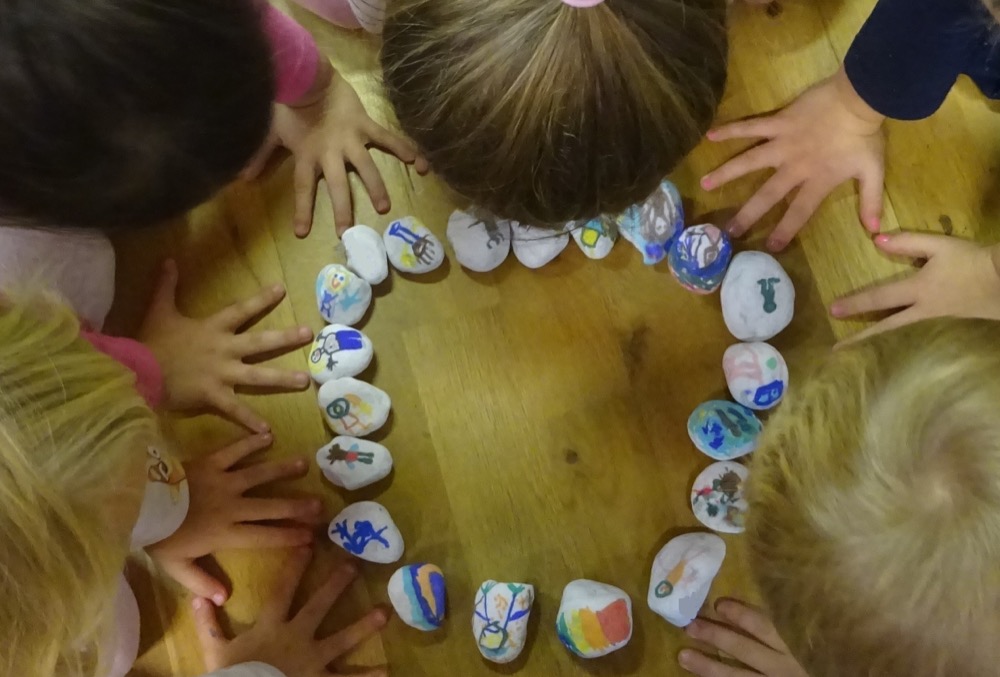
Instead of using a wool thread, invite the children to pick a small stone and lay it on the ground after sharing their name and something about themselves. Over time, the group creates a circle of stones - a calm, visual symbol of unity and belonging.
That’s Me, That’s You Rap
Turn the activity into group rapping. One child steps forward and says something in a rhythm, like:
“I’m Justin, I like to play ball!”
Then the whole group responds together like a chorus:
“You are Justin, you like to play ball!”
This playful format encourages creativity, rhythm, and group energy.
Photos of the Activity