Exploring Materials "Hands-on"
 Funded by the European Union. Views and opinions expressed are however those of the author(s) only and do not necessarily reflect those of the European Union or the European Education and Culture Executive Agency (EACEA). Neither the European Union nor EACEA can be held responsible for them. |
 All contents, in particular texts, pictures and graphics, are protected by copyright. Unless expressly stated otherwise, copyright is held by sel.eduskills.plus and is licensed under Creative Commons Attribution - Non-commercial - Distribution under the same conditions 4.0 International license. They may be subject to the terms of the license. |
© 2026 sel.eduskills.plus
| Basic | |
| Age: 4-6 | |
| 1-2 days | |
| Children engage in hands-on exploration of various materials, discovering their unique properties while developing an awareness of their own tactile sensations. | |
| Self-regulation | |
| Cognitive task Conversation | |
|
Preparation
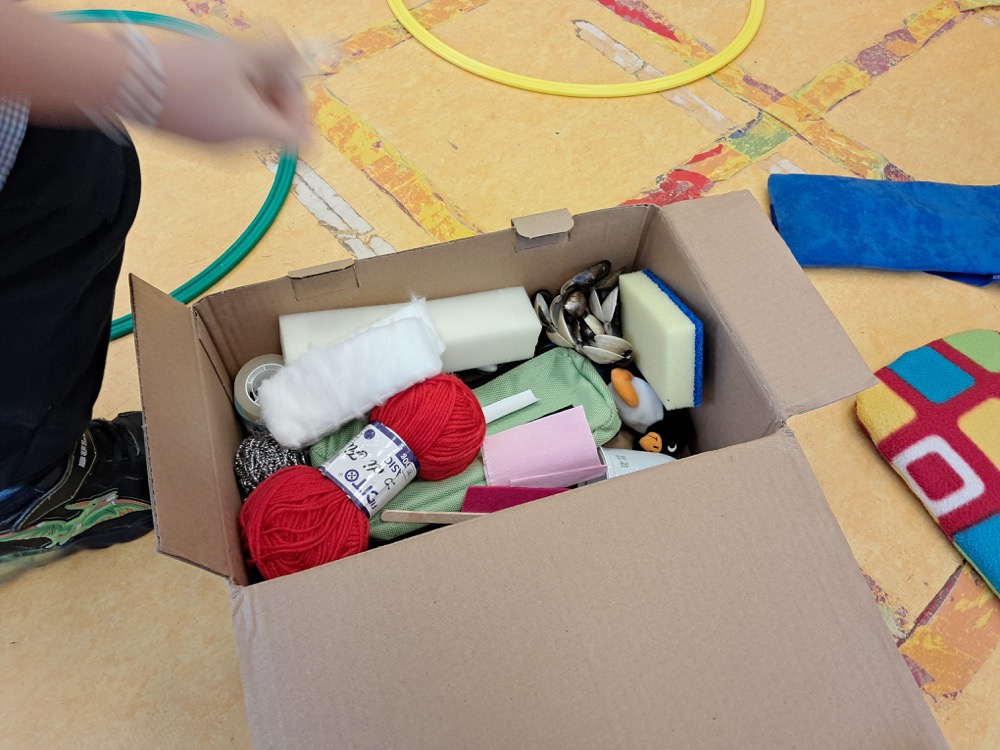
Collect different materials that fit the instructions on the worksheet (e.g. soft, hard, rough, smooth...). You may do this together with the children.
Implementation
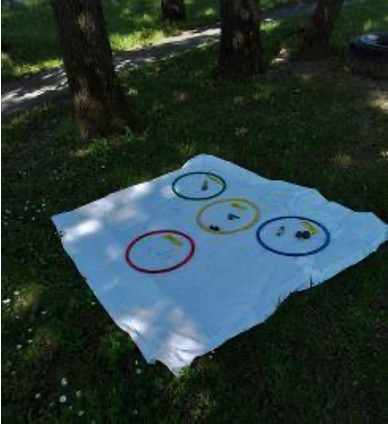
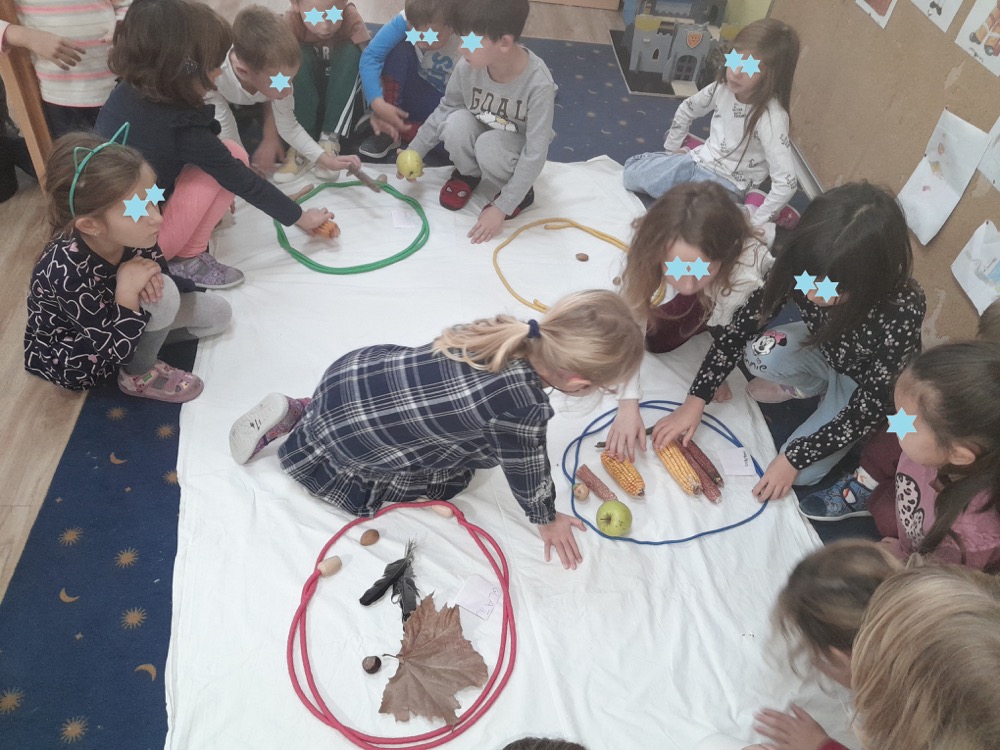
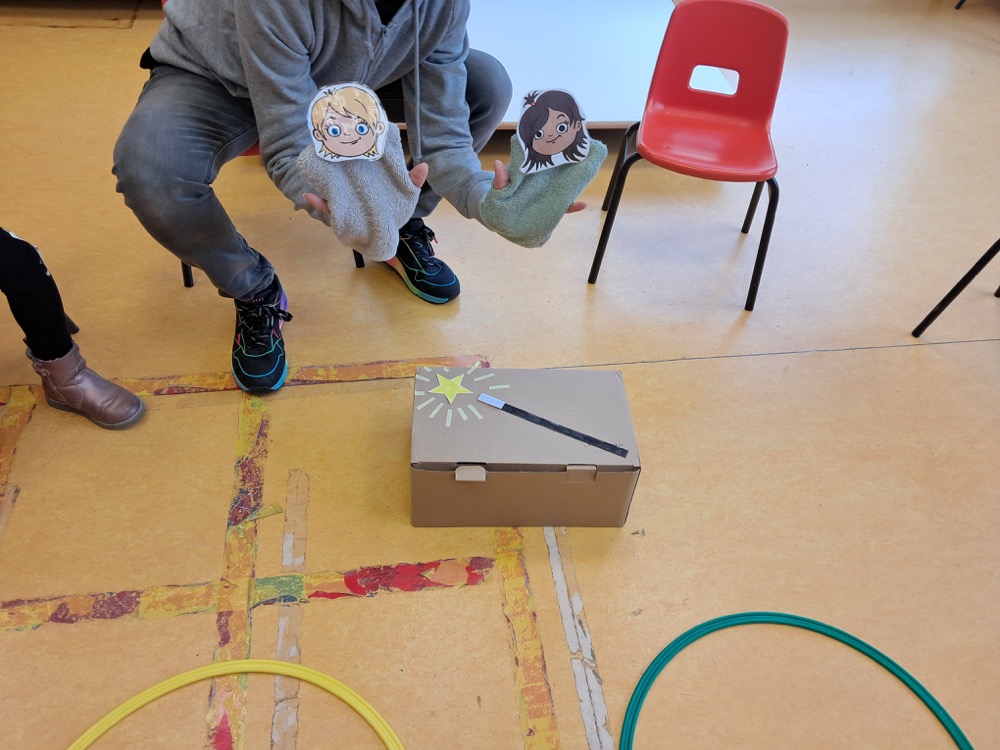
Kira and Miro gather the children in the group room or on the playground, where they notice a large old bedsheet spread out on the ground. On top of the sheet are hoops and the magic box. Kira, brimming with curiosity, says, “Wow, what do you think is inside the box? I bet it’s something exciting!” Miro gently encourages the children, adding, “Let’s take a look together. Maybe it has clues for a fun activity.”
They open the magic box, revealing the cloth bag and explaining its purpose. Miro takes out the bag, saying, “This bag has special cards with instructions for an adventure!” Kira asks, “Do you think we can work together to find all the things the cards describe? Let’s explore and see what we can discover!”
Collecting and Attributing Materials
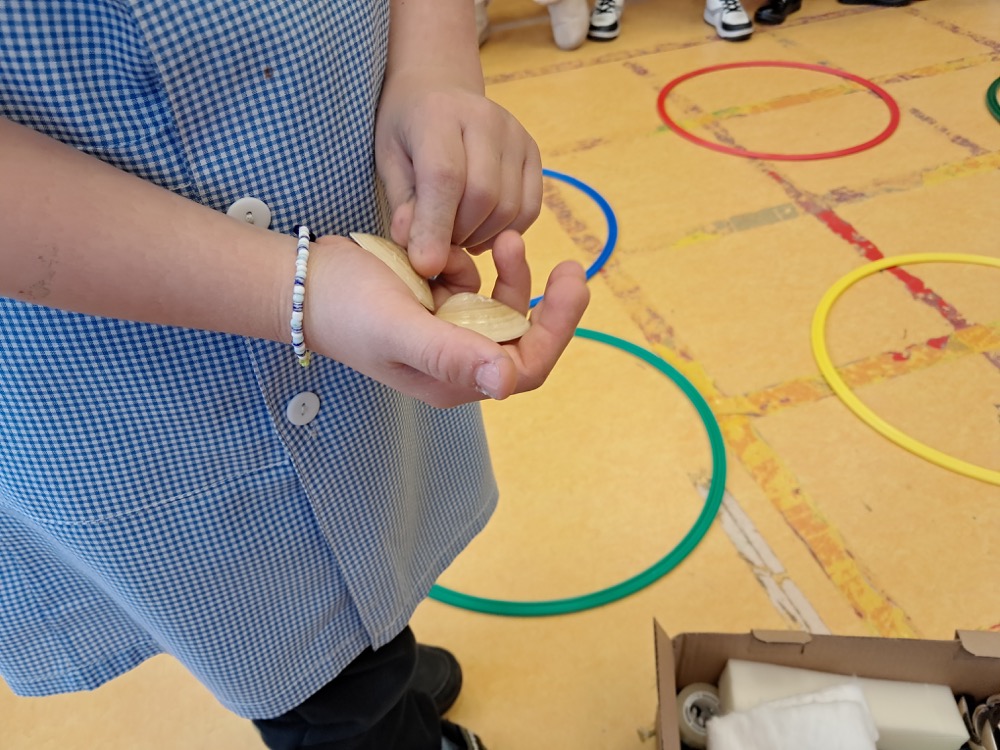
Kira draws the first card from the bag and reads it aloud: “Find something soft.” She asks the children what they think might match that description. Miro chimes in, “Let’s see what we can find! You can search on your own, or I can help if you need it.” The children scatter across the playground, collecting items that fit the description. Each time a new card is drawn, such as “Find something hard” or “Find something rough,” Kira and Miro encourage the children to share their thoughts and discoveries.
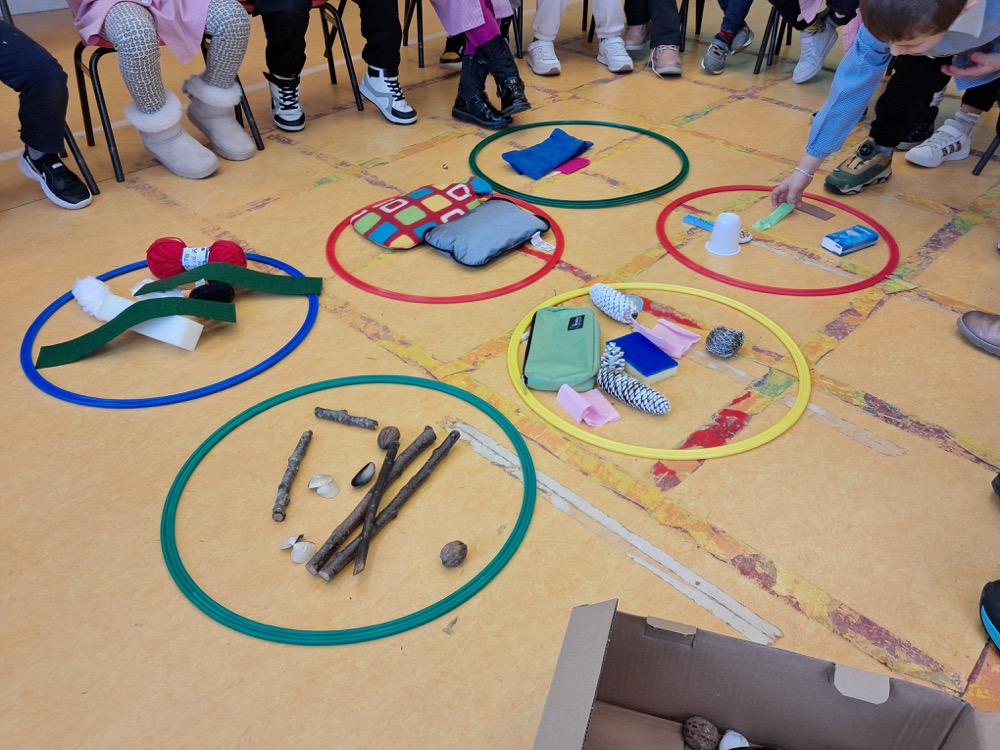
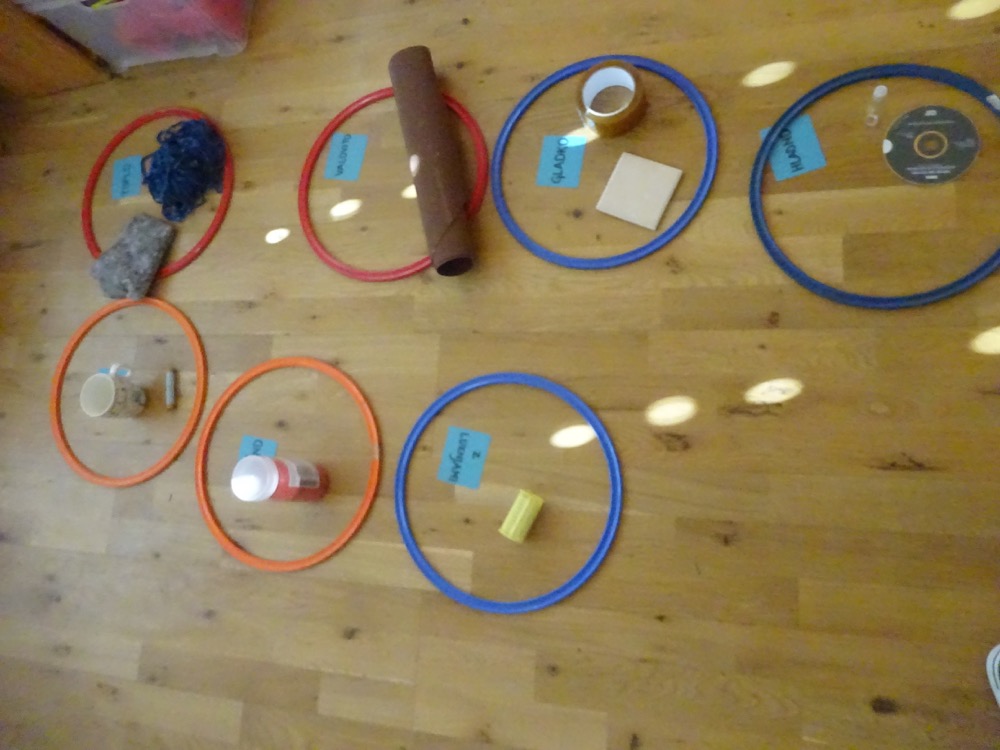
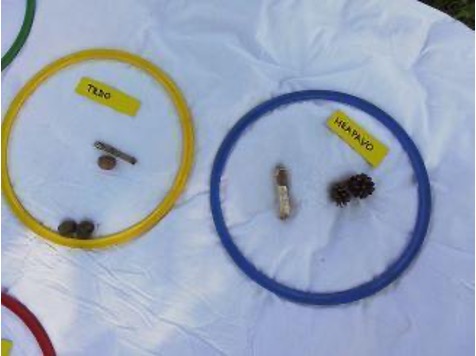
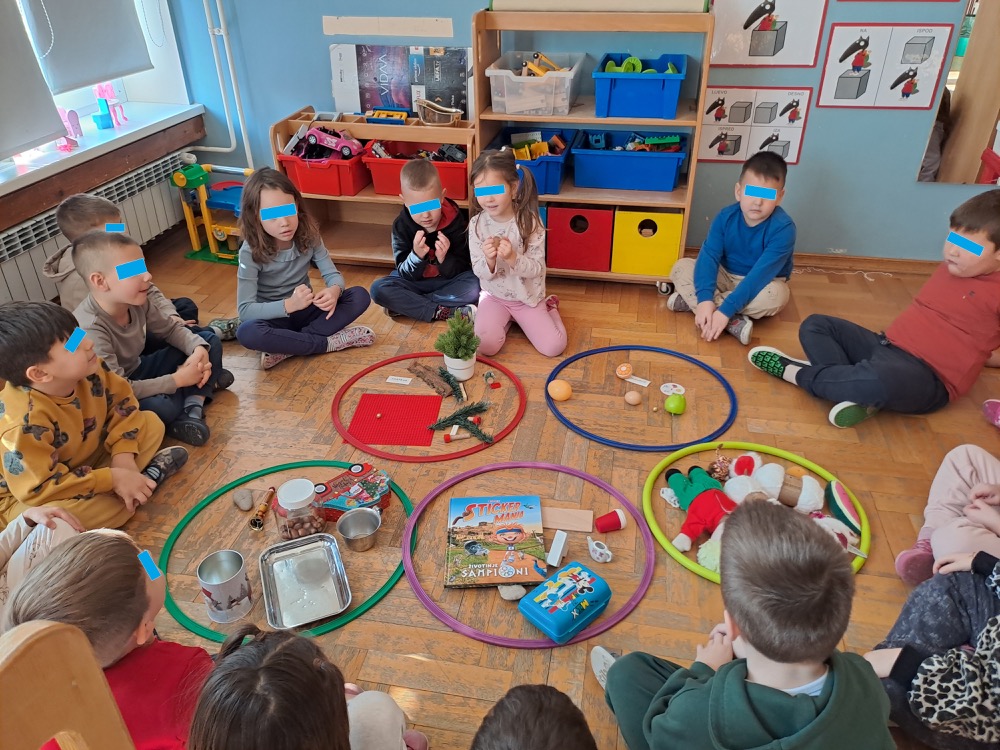
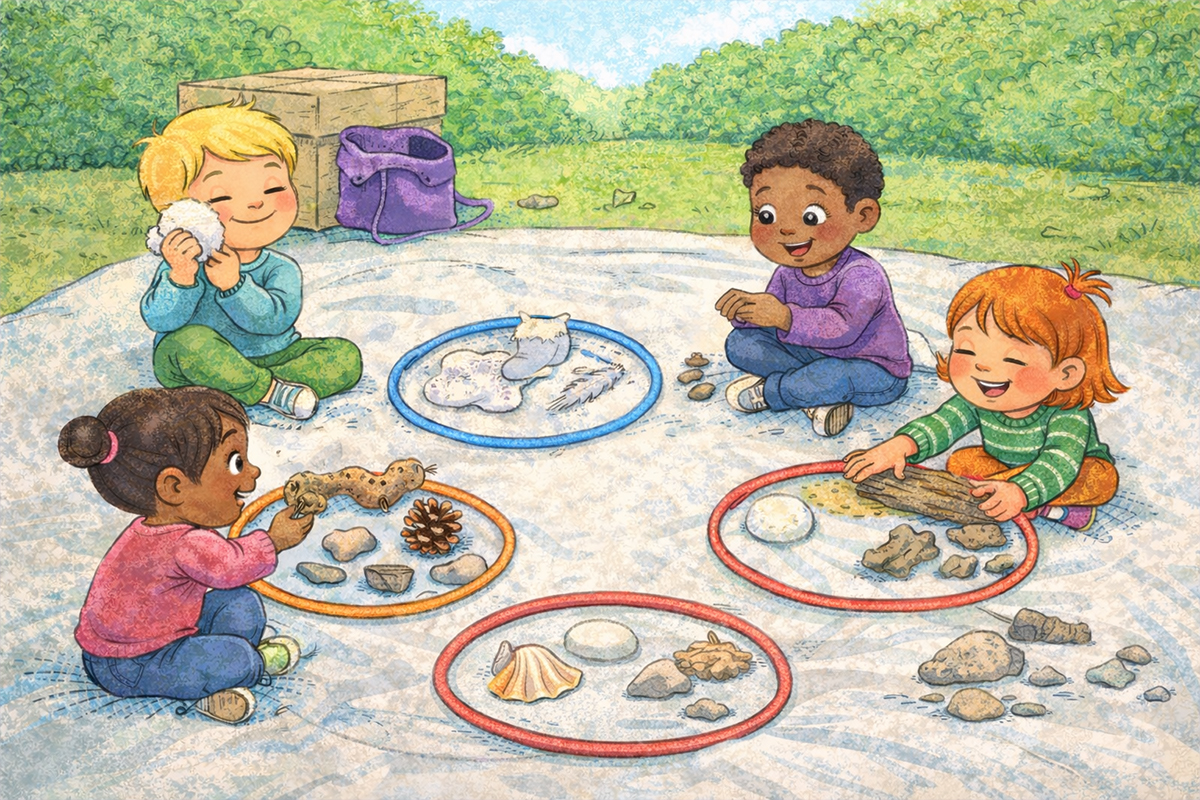
Once the children have gathered their items, they return to the bedsheet and work together to sort the materials into the hoops based on shared characteristics. Ask, “What makes this item soft? What about this one - is it hard or smooth?” Add, “Do any of these materials feel the same to everyone, or do they feel different to different people?” Together, the group examines and discusses the textures.
Creating and Playing with Sensory Boxes
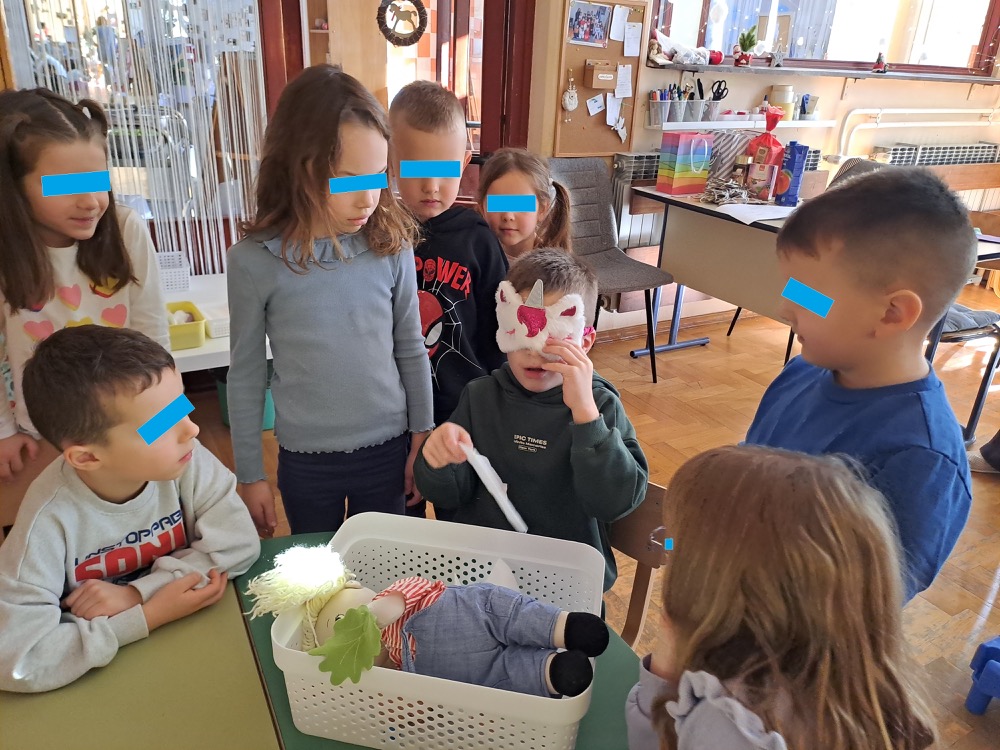
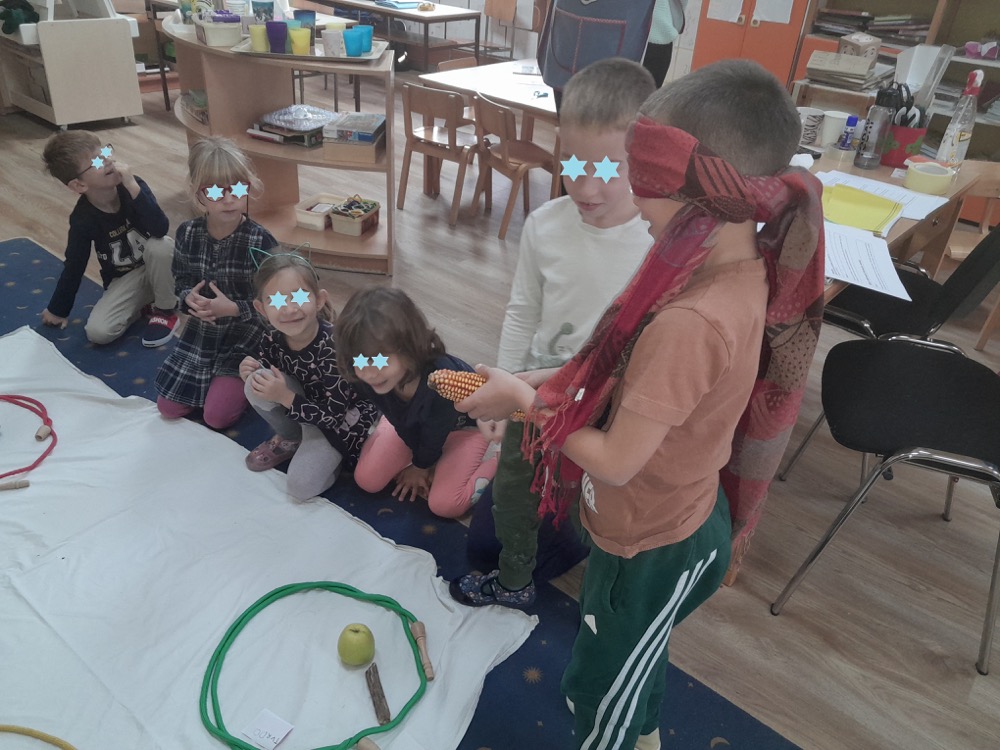
Kira and Miro bring up the idea to create sensory boxes. Miro suggests, “Let’s choose one kind of texture, like soft or rough, and make a box filled with items that match!” Kira adds, “This will help us understand how different textures feel.” The children select and organize materials based on the textures they’ve explored. Ask reflective questions to support their decision-making, such as, “Why do you think this belongs in the soft category?” Children may use blindfolds when playing with the sensory boxes.
Reflection
Invite the children to reflect on their experiences by asking open questions, e.g.:
- What did you enjoy most about finding and touching the materials?
- Was there anything surprising about how the textures felt?
- Did you find something you didn’t expect?
Encourage each child to share their thoughts, reinforcing that everyone’s experiences are valid. Emphasize, “It’s okay if some things felt good to you but not to others. We all experience touch differently.” You may ask what other kinds of materials the children would like to explore next time.
The puppets thank the children for participating and sharing their ideas.
Variations and Additional Ideas
Children can expand their exploration by working on larger projects such as sensory wall boards or a sensory pathway. Sensory wall boards allow children to attach materials with different textures to a vertical surface, encouraging them to explore by touch. A sensory pathway can be created by arranging various materials on the ground, providing an opportunity for children to walk or crawl across and experience different tactile sensations with their hands and feet. These variations add new dimensions to the activity, fostering creativity and deeper engagement with sensory experiences.
Worksheet "Instruction Cards"

Bring something
soft |
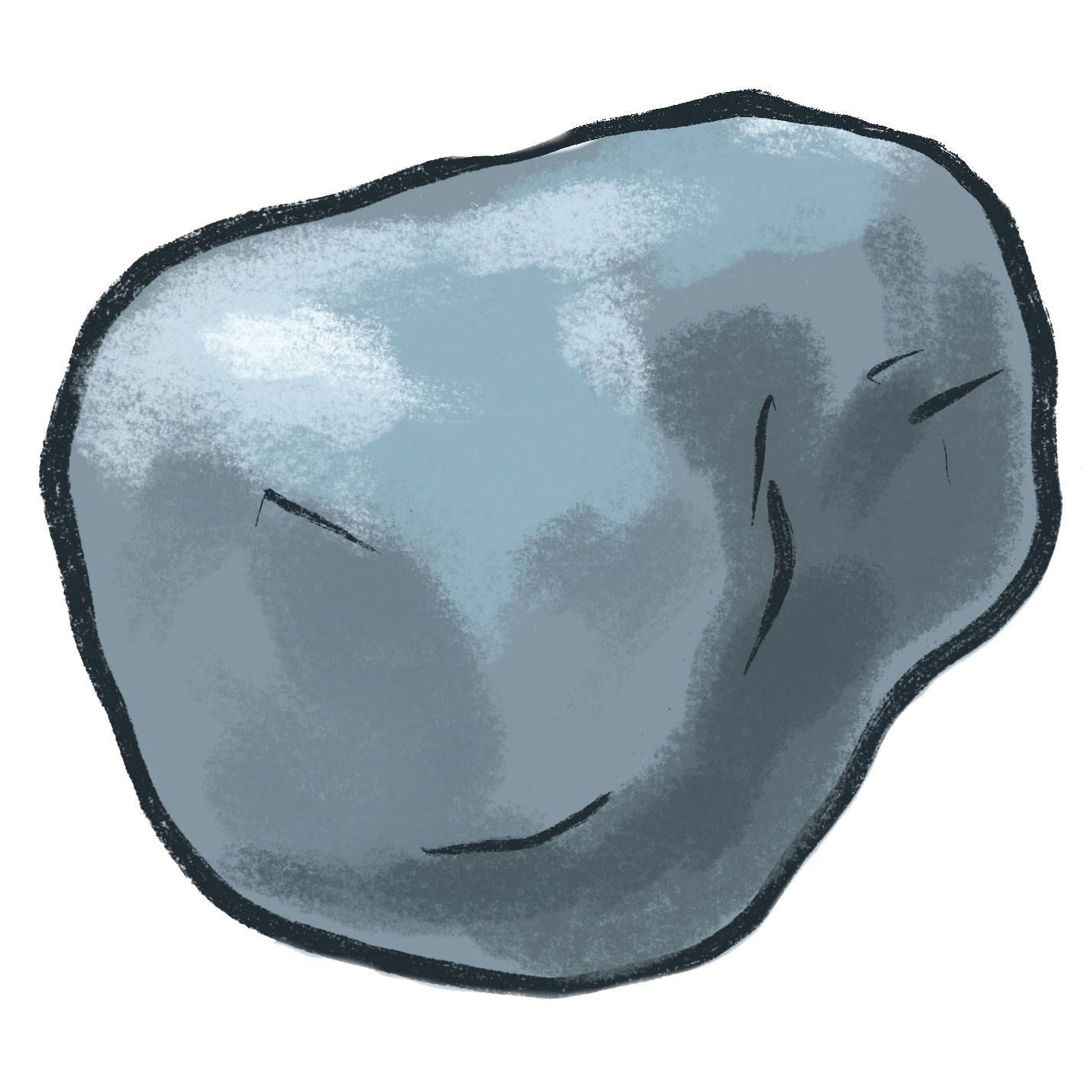
Bring something
hard |
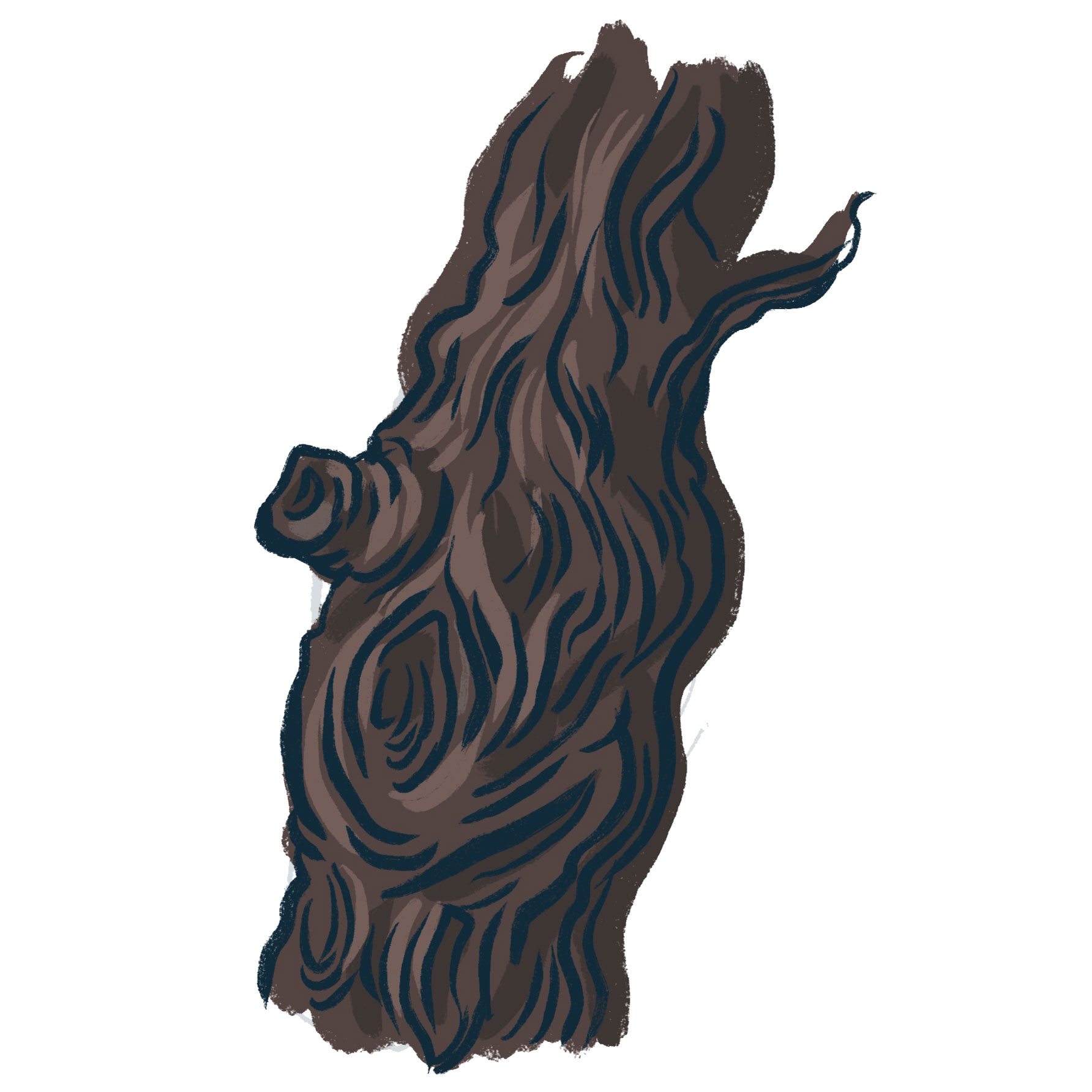
Bring something
rough |

Bring something
smooth |
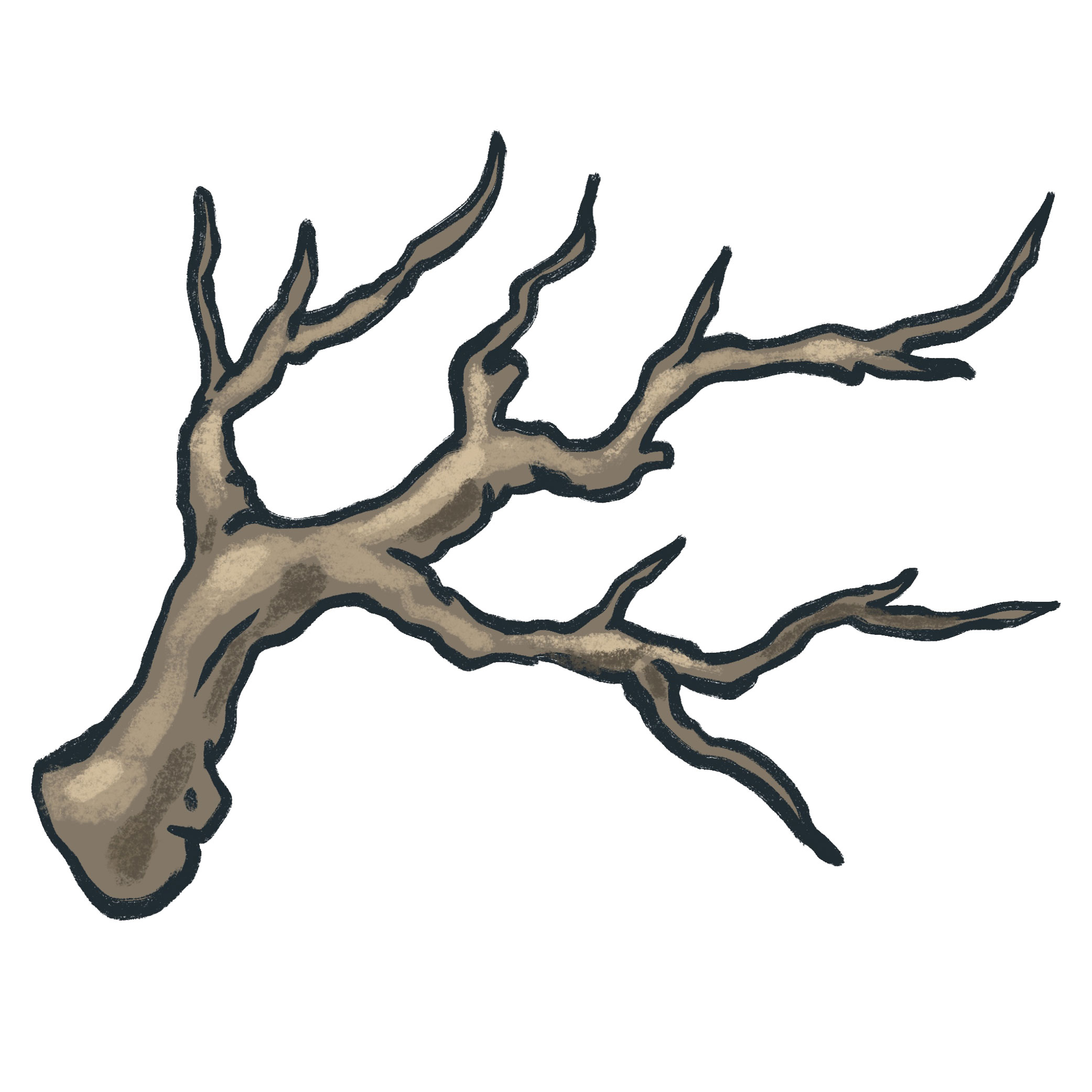
Bring something
warm |
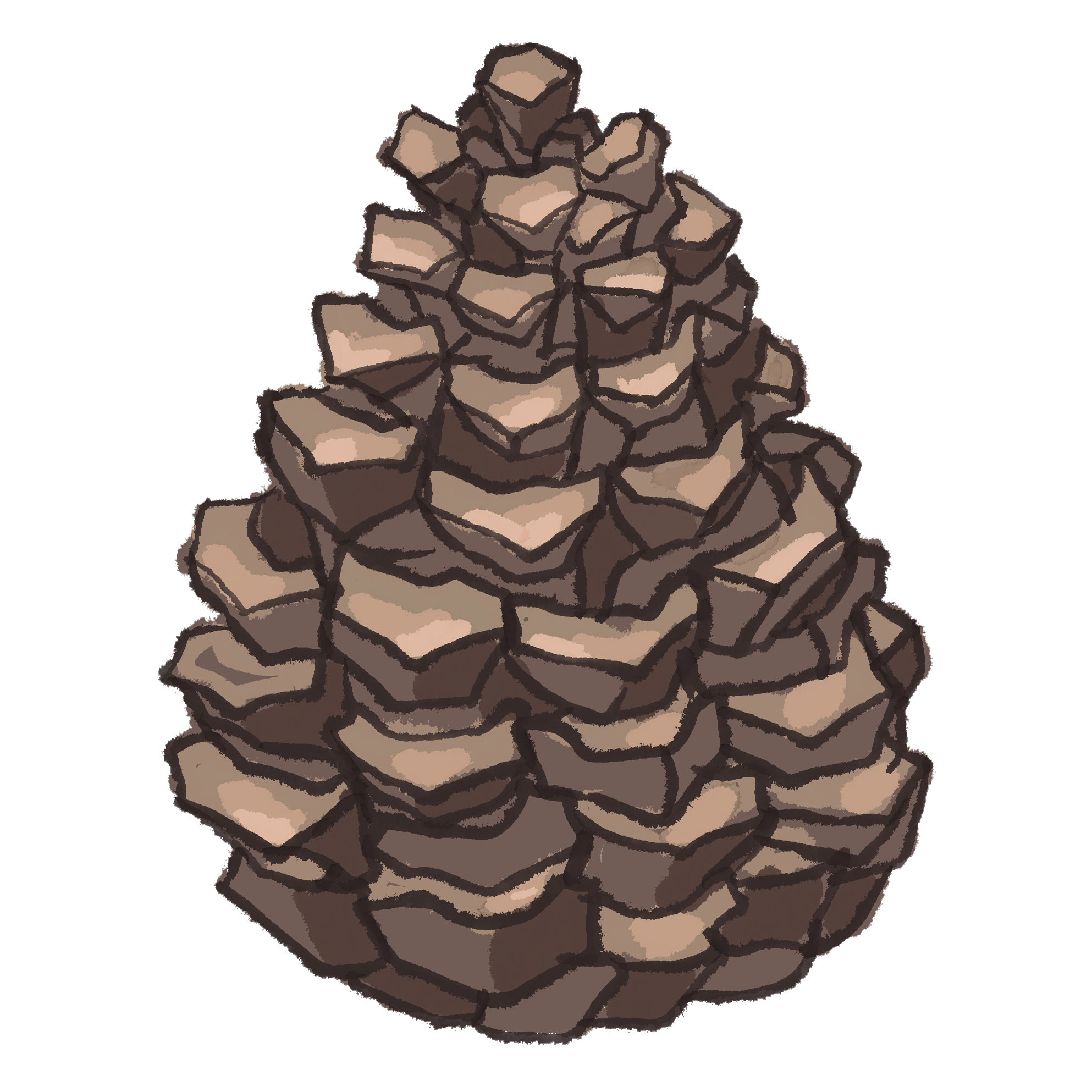
Bring something
rippled |
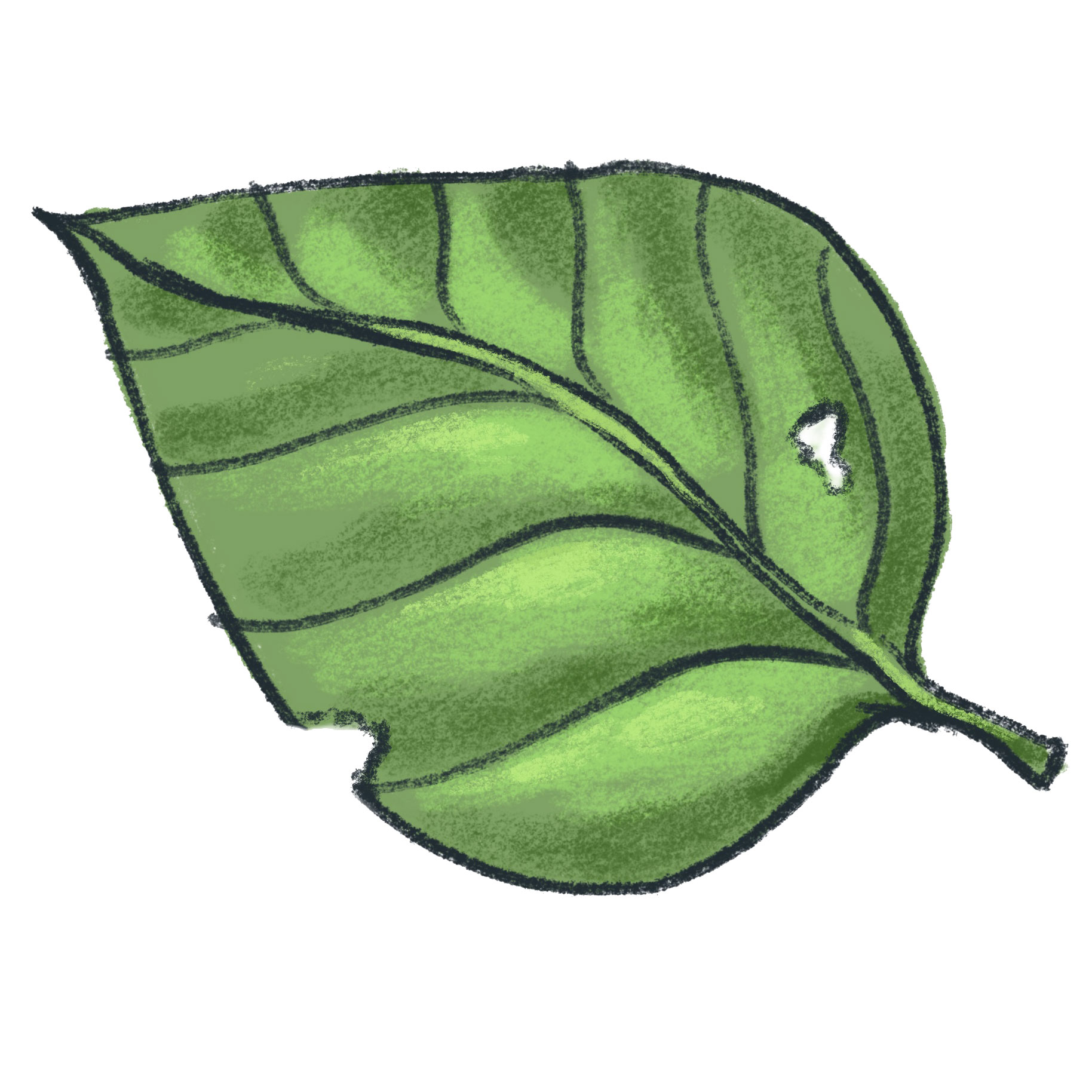
Bring something
with holes |

Bring something
wet |
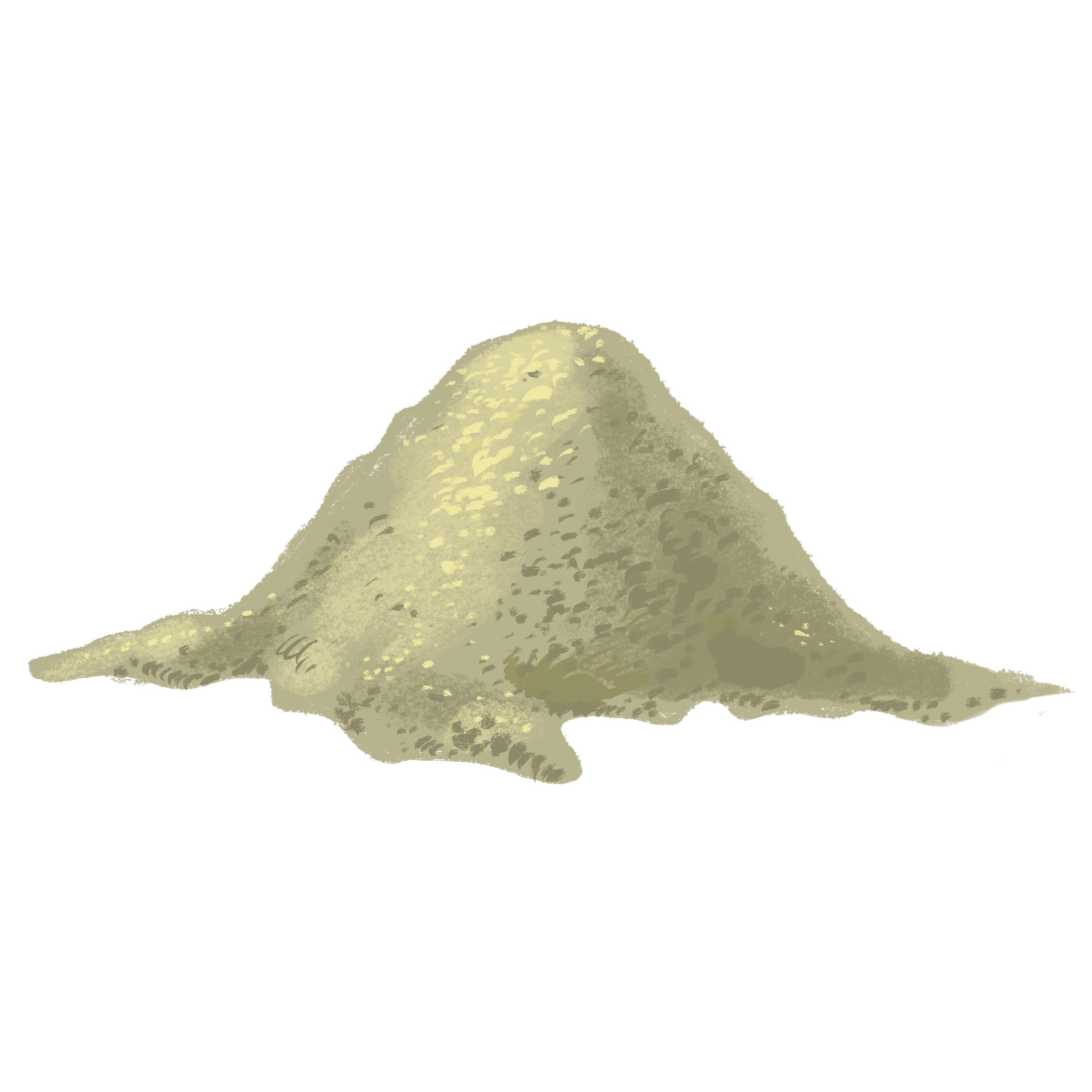
Bring something
powdery |
Photos of the Activity