The Sound of Joy
 Funded by the European Union. Views and opinions expressed are however those of the author(s) only and do not necessarily reflect those of the European Union or the European Education and Culture Executive Agency (EACEA). Neither the European Union nor EACEA can be held responsible for them. |
 All contents, in particular texts, pictures and graphics, are protected by copyright. Unless expressly stated otherwise, copyright is held by sel.eduskills.plus and is licensed under Creative Commons Attribution - Non-commercial - Distribution under the same conditions 4.0 International license. They may be subject to the terms of the license. |
© 2026 sel.eduskills.plus
| Basic | |
| Age: 4-6 | |
| 3-4 sessions of approx. 20 min | |
| Children explore how joy sounds, collect real sounds, and create simple melodies or drawings inspired by joyful moments. | |
| Self-regulation | |
| Wellbeing Growth mindset | |
| Art Outdoors Parents | |
|
Preparation
The activity is based on the child's background knowledge of the emotion joy (happiness). Make sure that everybody understands the word and the emotion.
Implementation
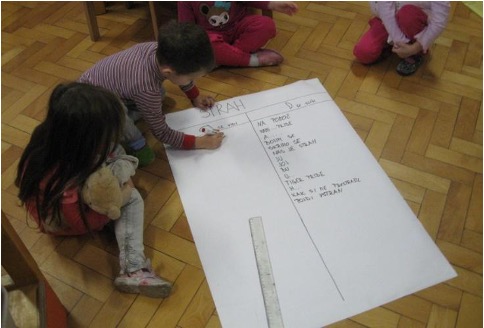
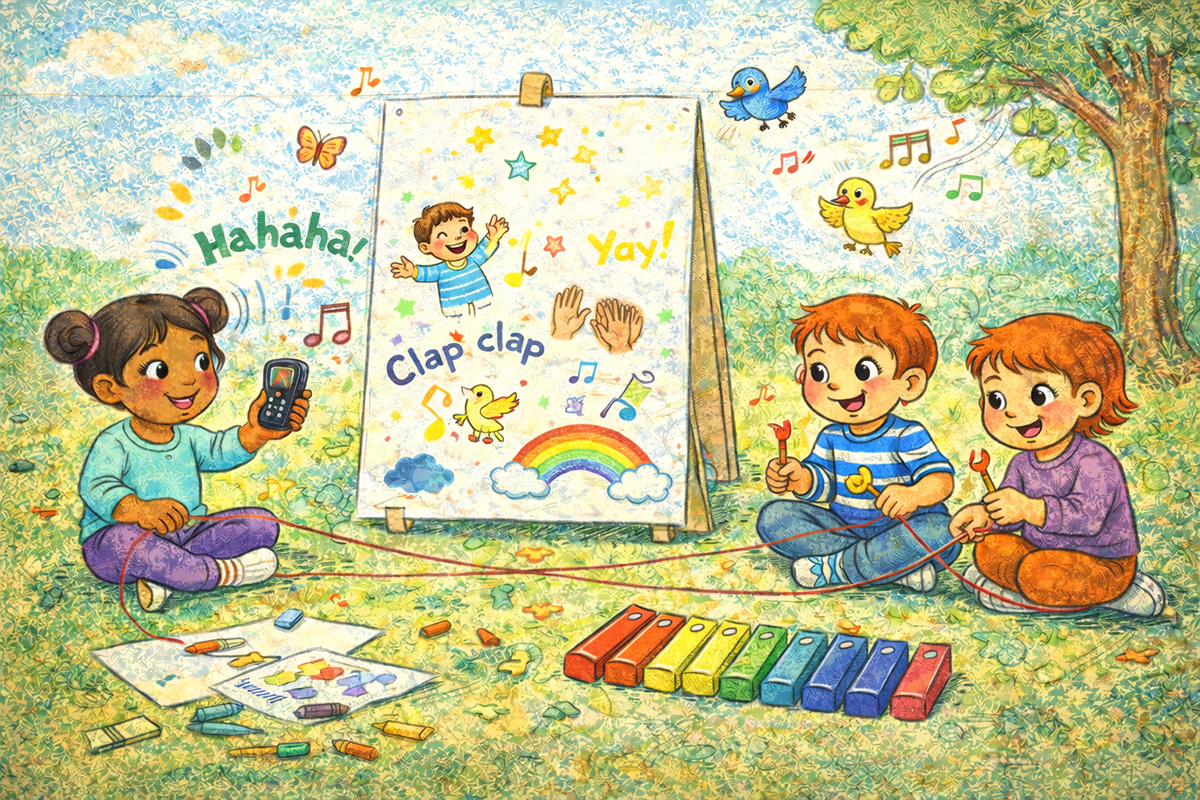
Begin by gathering the children and asking them to imagine how joy might sound. Encourage them to share their own ideas - such as laughter, shouting "yay!", clapping, or singing. Write or draw their ideas on a prepared poster so their thoughts are visible to everyone.
Collecting Joyful Sounds
Suggest using a voice recorder or phone to record moments of joy during the day. These could be sounds from playing on the playground, sledding in the snow, or celebrating small successes.
Later, listen to the recordings together and talk about what the children hear.
- What sounds joyful?
- How do these sounds make them feel?
Write or draw their shared ideas on a second poster to capture the "Sound of Joy".
Creating Joyful Melodies
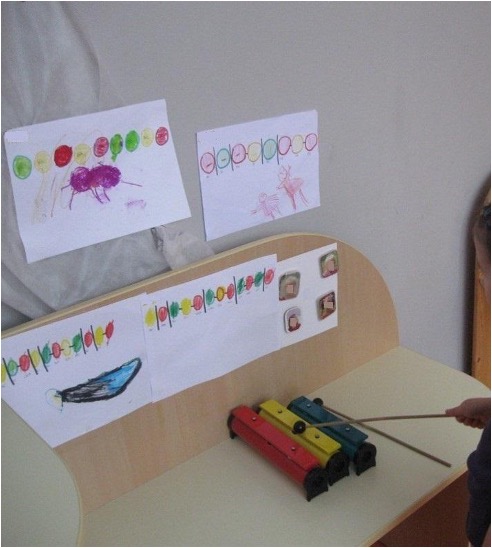
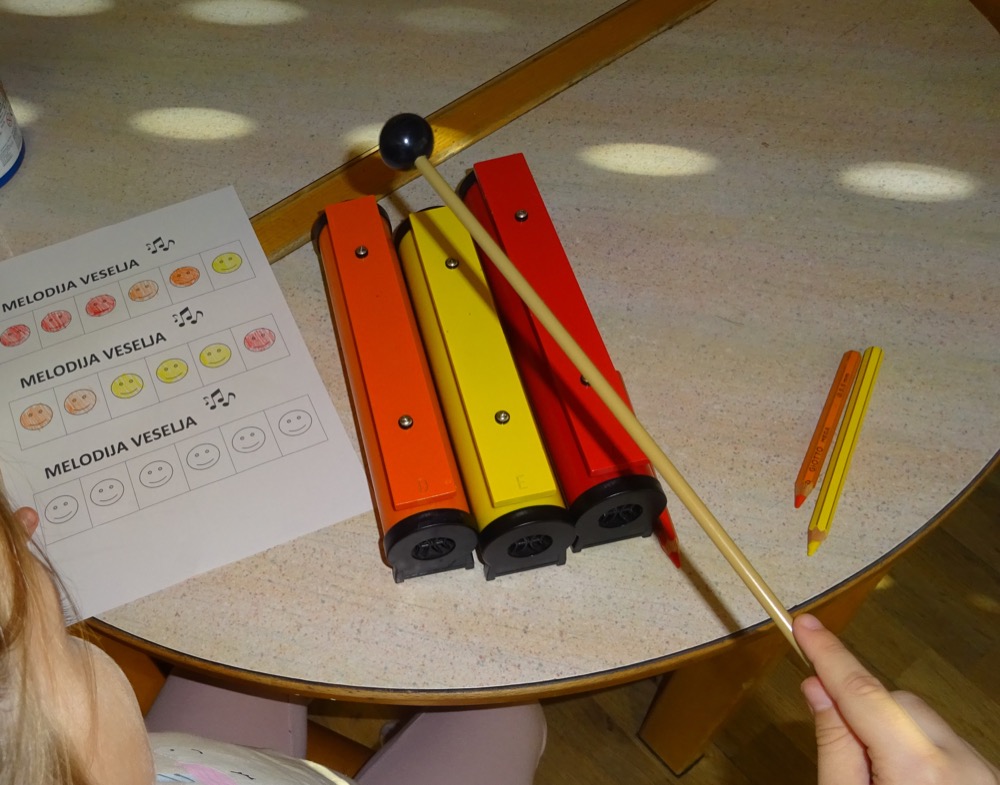
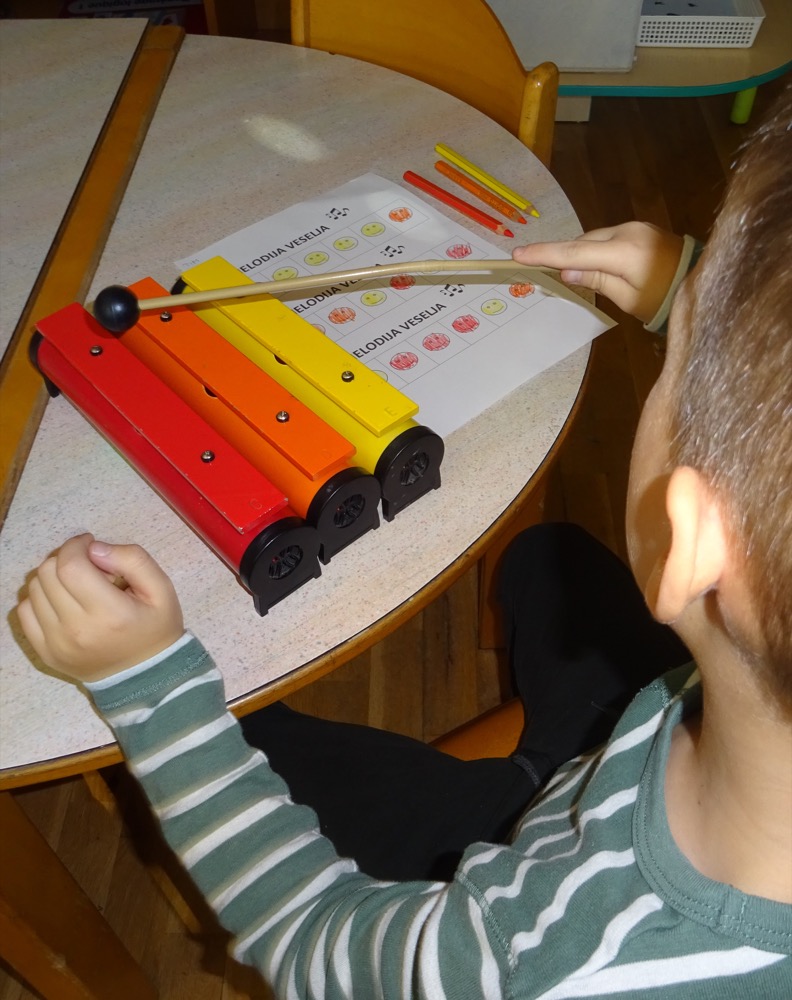
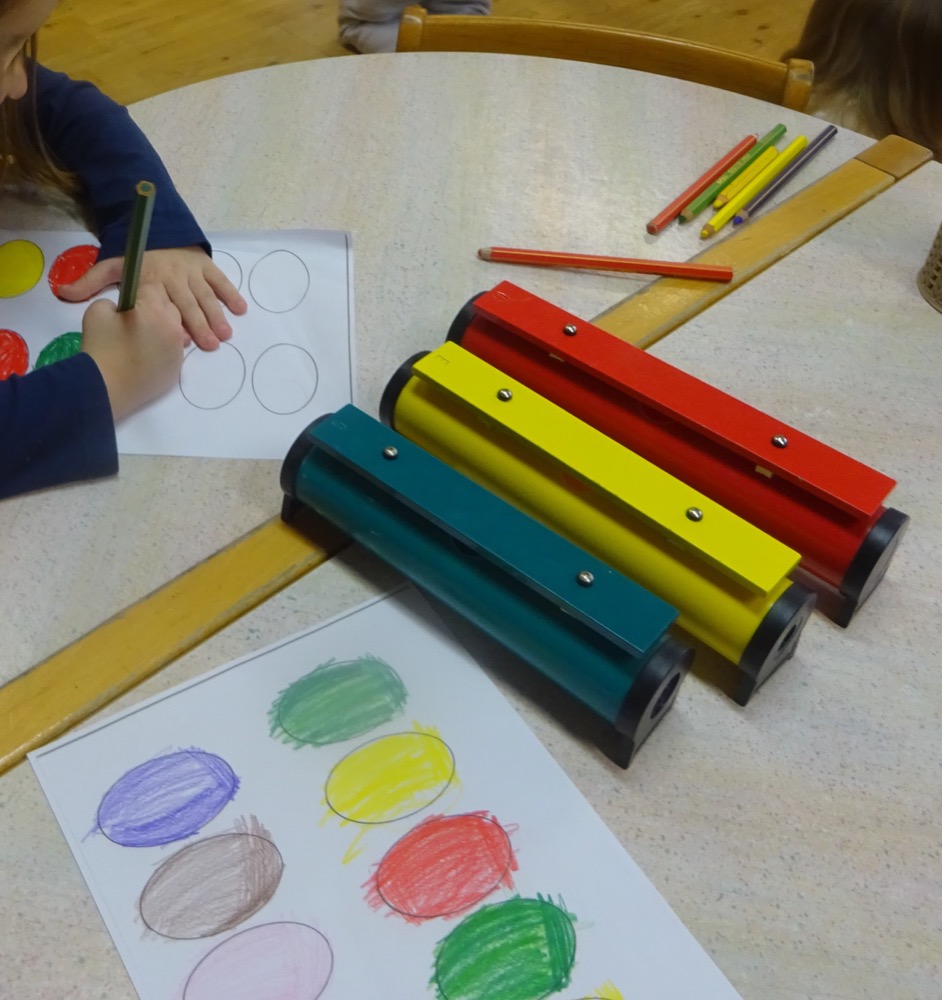
Give the children simple musical instruments like Boomwhackers or chimes. Invite each child to create a short melody that reminds them of joy.
Children don’t need any musical training. They can also draw their melody on paper using colored circles that match the colors of the instruments. This makes the activity inclusive and creative, regardless of musical ability.
Reflection
Come together as a group and reflect on how joy can look, sound, and feel different for everyone. Celebrate the children’s ideas and their personal joyful sounds and melodies.
Variations and Additional Ideas
Invite parents to a Concert of Joy, where children play their melodies!
Photos of the Activity