My Emotions... How Do I Feel Today?
 Funded by the European Union. Views and opinions expressed are however those of the author(s) only and do not necessarily reflect those of the European Union or the European Education and Culture Executive Agency (EACEA). Neither the European Union nor EACEA can be held responsible for them. |
 All contents, in particular texts, pictures and graphics, are protected by copyright. Unless expressly stated otherwise, copyright is held by sel.eduskills.plus and is licensed under Creative Commons Attribution - Non-commercial - Distribution under the same conditions 4.0 International license. They may be subject to the terms of the license. |
© 2026 sel.eduskills.plus
| Basic | |
| Age: 4-6 | |
| 1 h | |
| Children take turns asking each other how they feel, choose an emotion face, and explain their feelings to build empathy and emotional awareness. | |
| Self-regulation | |
| Conversation Storytelling | |
|
Preparation
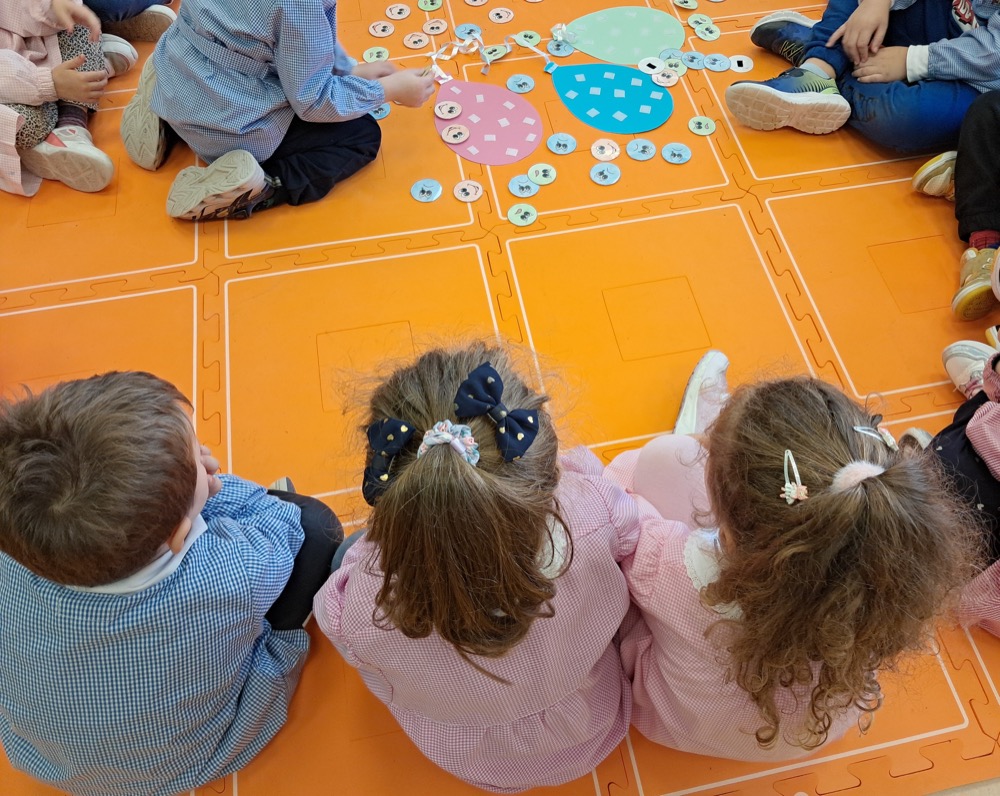
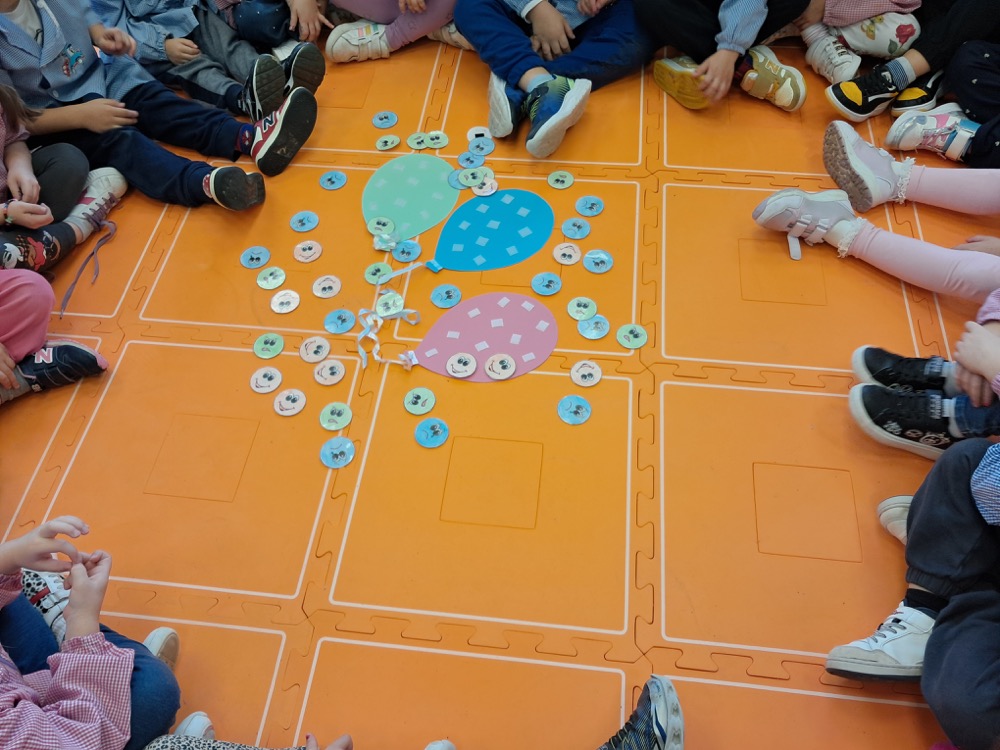
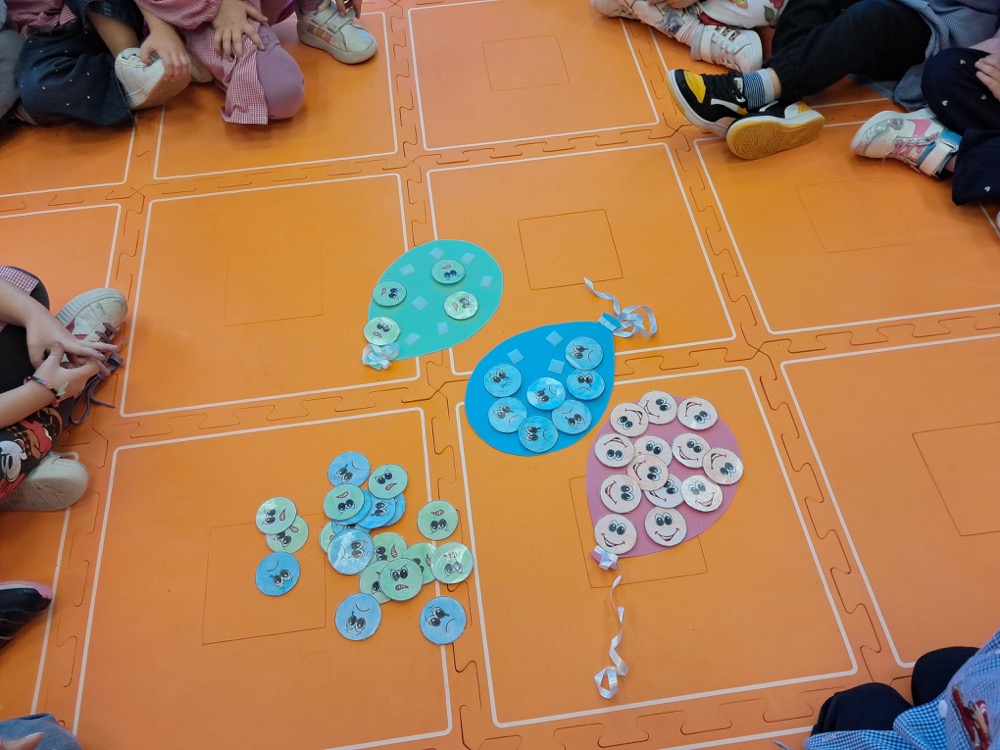
Work together with the children to create the main set of emoticon/emotion face palettes. Also prepare a large emotions poster on flip chart paper. Fill it with many emoticons created by the children themselves. This poster will serve as a visual aid during the game and help spark emotional recognition and discussion.
This activity can trigger strong feelings. You can find selected strategies for dealing with them in the Guidelines. We recommend that you familiarize yourself with these strategies before implementing the activity in group settings.
Implementation
Gather the children in a semicircle in front of the emotions poster. Remind them that it’s okay to feel different things at different times and that this activity will help everyone understand each other a little better.
Children work in small or large groups. Begin the round with one child who chooses a partner by name and asks: How are you feeling today?
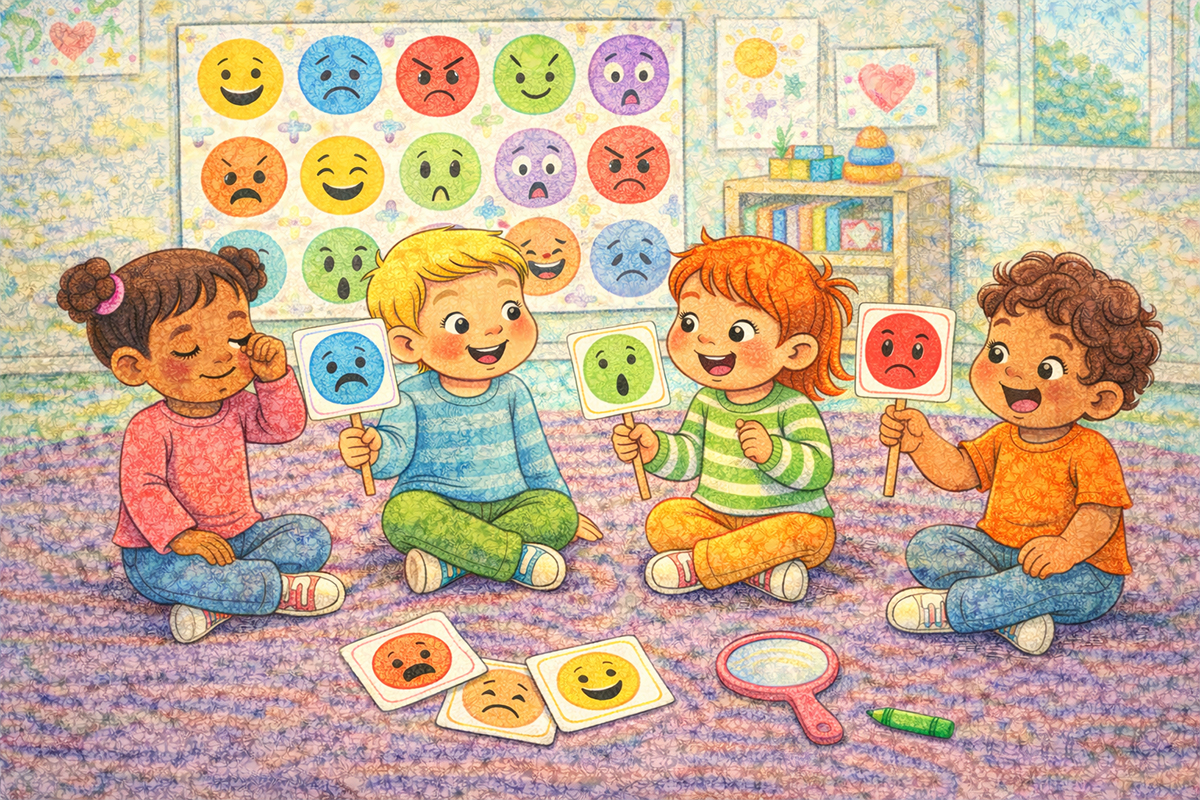
The chosen child steps forward, picks an emoticon from the emotions palette (e.g. happy, sad, angry, scared, excited), and tells the group how they feel and why.
The process continues with the child who answered calling on the next partner, and so on, until everyone has had a turn.
Encourage active listening and respectful responses throughout the activity.
Reflection
Invite children to share how they felt during the game:
- Was it easy or hard to talk about how you feel?
- Did anything surprise you?
- What could we do to make this game even better?
Photos of the Activity