| Basic | |
| Age: 4-6 | |
| 20-30 min | |
| Children develop self-regulation and flexibility. They become aware of and connect with their body. | |
| Self-regulation | |
| Flexibility | |
| Movement Music Outdoors | |
|
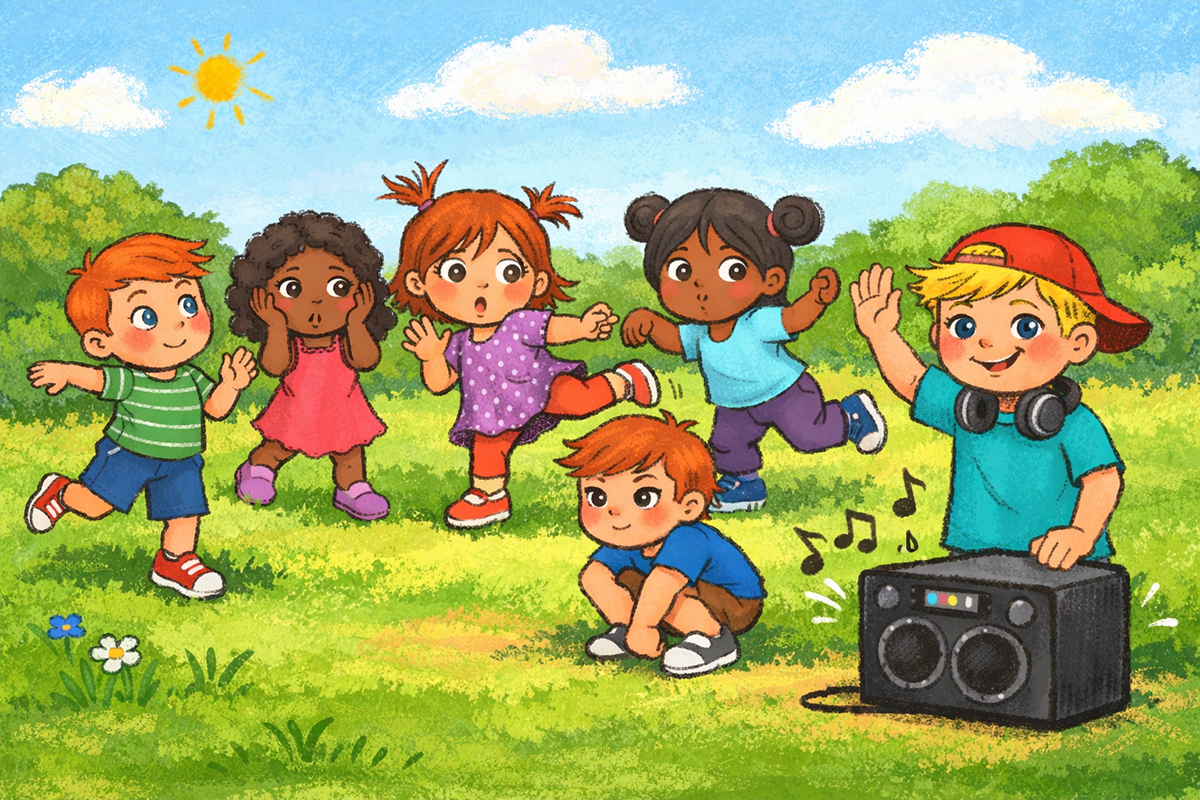
Select music with a happy, energetic rhythm that invites free movement and dancing (e.g., Crazy Frog, I Like to Move It Move It).
Prepare a speaker or music player loud enough for the whole group to hear.
Miro and Kira pop out of a magic box, excited to introduce a game that mixes music, movement, and emotion.
Kira says: “Today, we’re going to dance - and freeze! But not just for fun... we’ll also notice what our bodies are telling us.”
Miro adds in his calm voice: “Let’s see how it feels to hold still... and what we discover when we pause.”
The puppets explain the rules: When the music plays, everyone moves freely. When it stops, everyone freezes in place - exactly as they are.
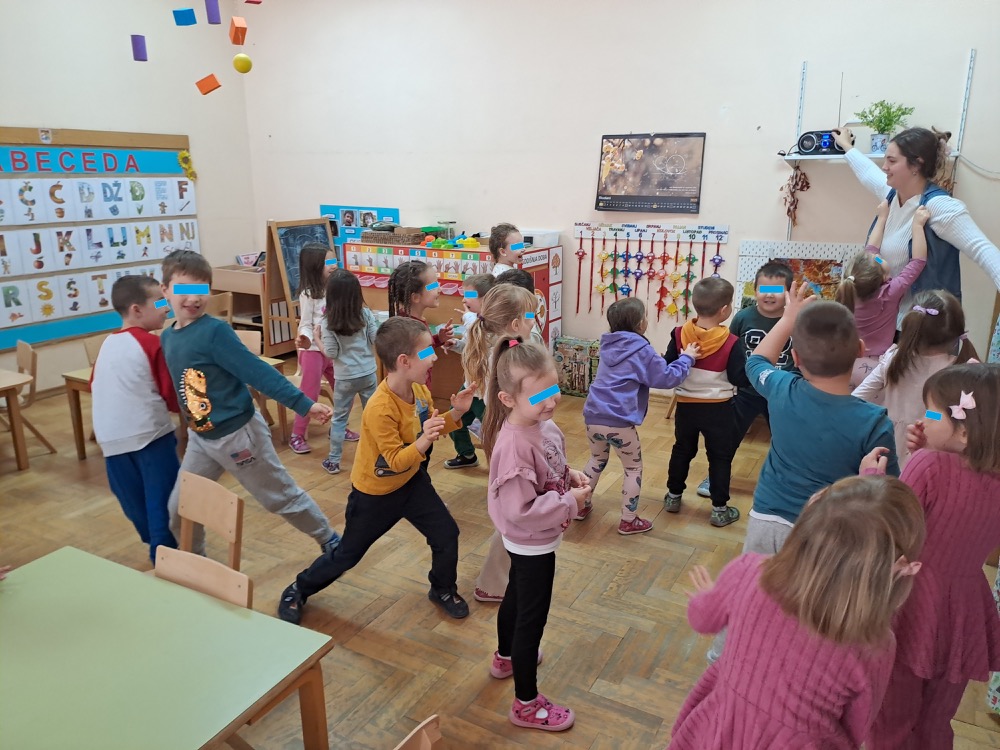
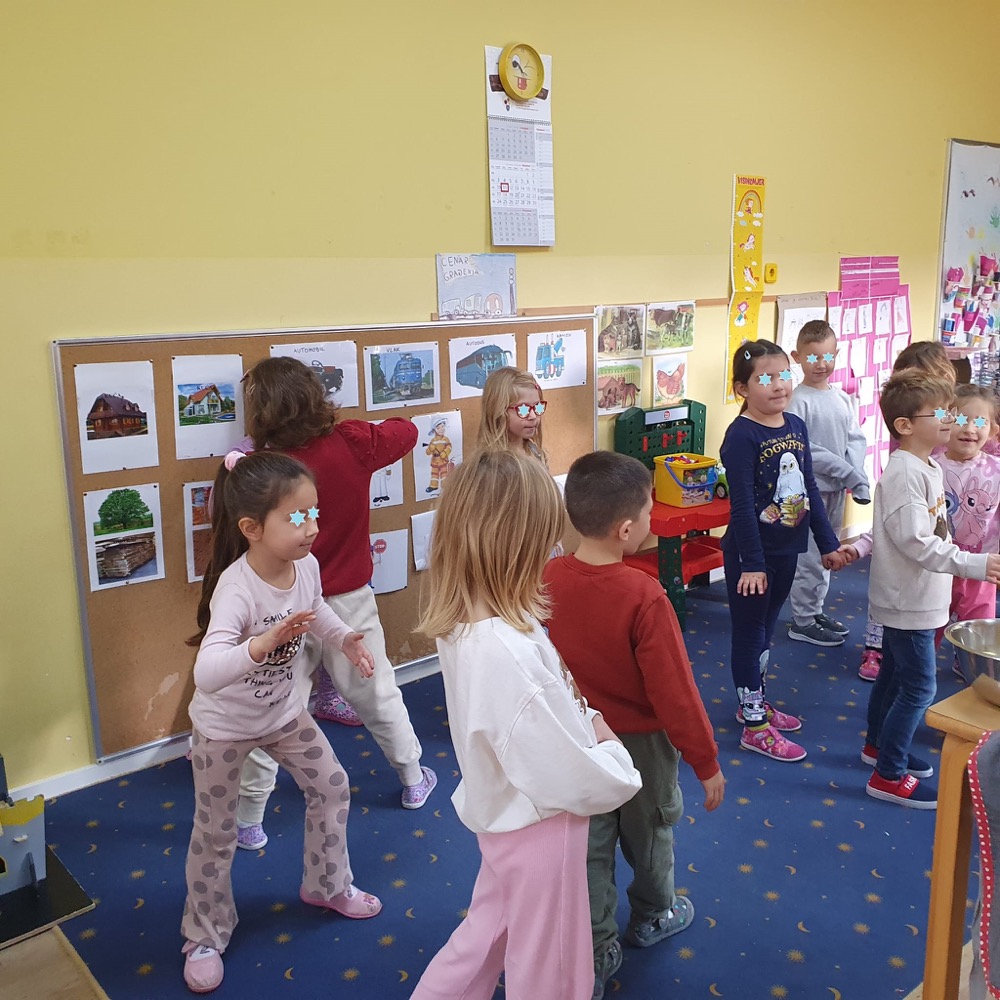
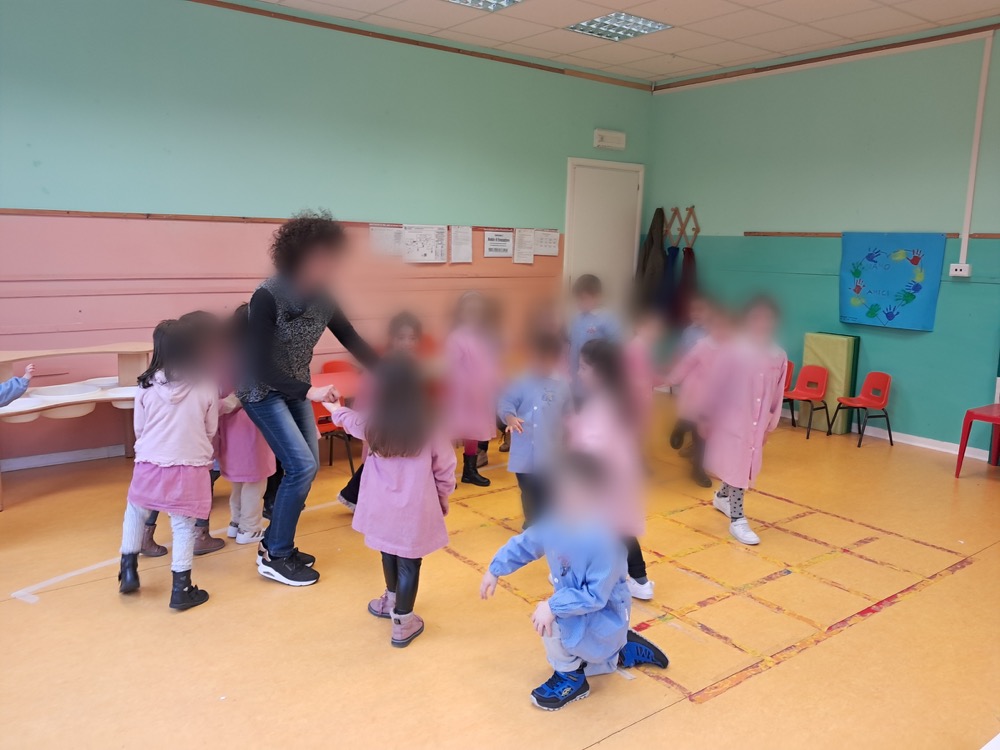
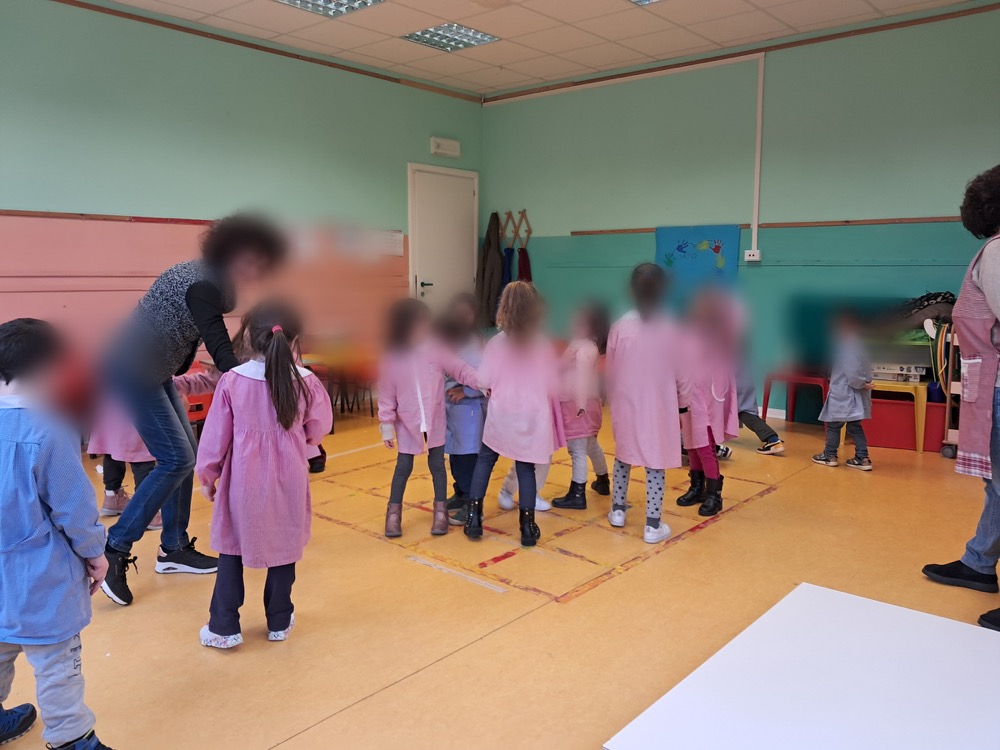
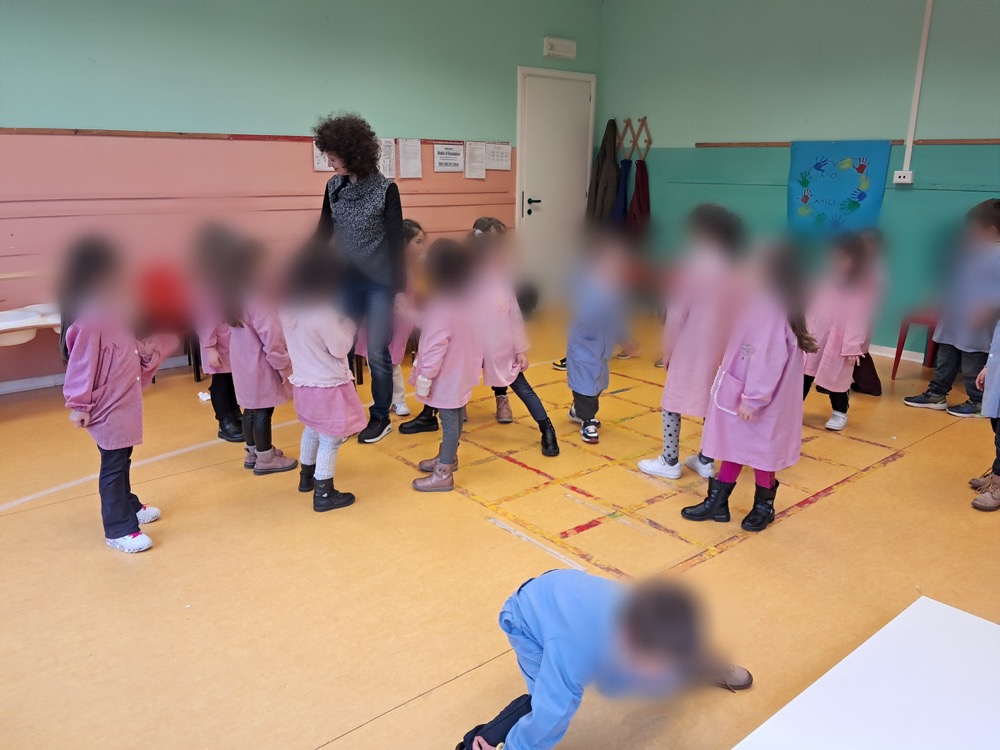
Start the music and invite the children to dance or move freely in the space. Let their movements be spontaneous - big, small, fast, slow - whatever feels right to them.
When the music stops, Miro shouts “Stop!” and all children freeze in the position they find themselves in. Encourage them to hold the position for a few moments and quietly notice how it feels.
Guide them gently with reflective prompts:
Then, restart the music and let the movement begin again.
Repeat the process several times. As the game continues, children can take turns being the DJ/DJane, choosing when to stop and start the music.
Talk about the experience. Ask questions like:
Encourage children to notice how movement and stillness connect to their emotions, and how listening to their body can help them understand and regulate their feelings.
Talk also about how the children felt during the game: what was easy and fun for them, and what was difficult or unpleasant.
Children move to music. The educator (or a child) moves through the space and anyone they touch must freeze. When everyone is frozen, the game ends.
As Variation 1, but moving children can unfreeze frozen children. Continue as long as the children have fun and remain interested.

Funded by the European Union. Views and opinions expressed are however those of the author(s) only and do not necessarily reflect those of the European Union or the European Education and Culture Executive Agency (EACEA). Neither the European Union nor EACEA can be held responsible for them.

All contents, in particular texts, pictures and graphics, are protected by copyright. Unless expressly stated otherwise, copyright is held by sel.eduskills.plus and is licensed under Creative Commons Attribution - Non-commercial - Distribution under the same conditions 4.0 International license. They may be subject to the terms of the license.
© 2024-2026 sel.eduskills.plus | Impressum