| Advanced | |
| Age: 4-6 | |
| 20-30 min | |
| Children become aware of changes as a part of life. They feel better connected to their surroundings, use explorative skills, and experience daily changes as something interesting they don’t have to fear. | |
| Flexibility | |
| Critical thinking | |
| Cognitive task Conversation Outdoors | |
|
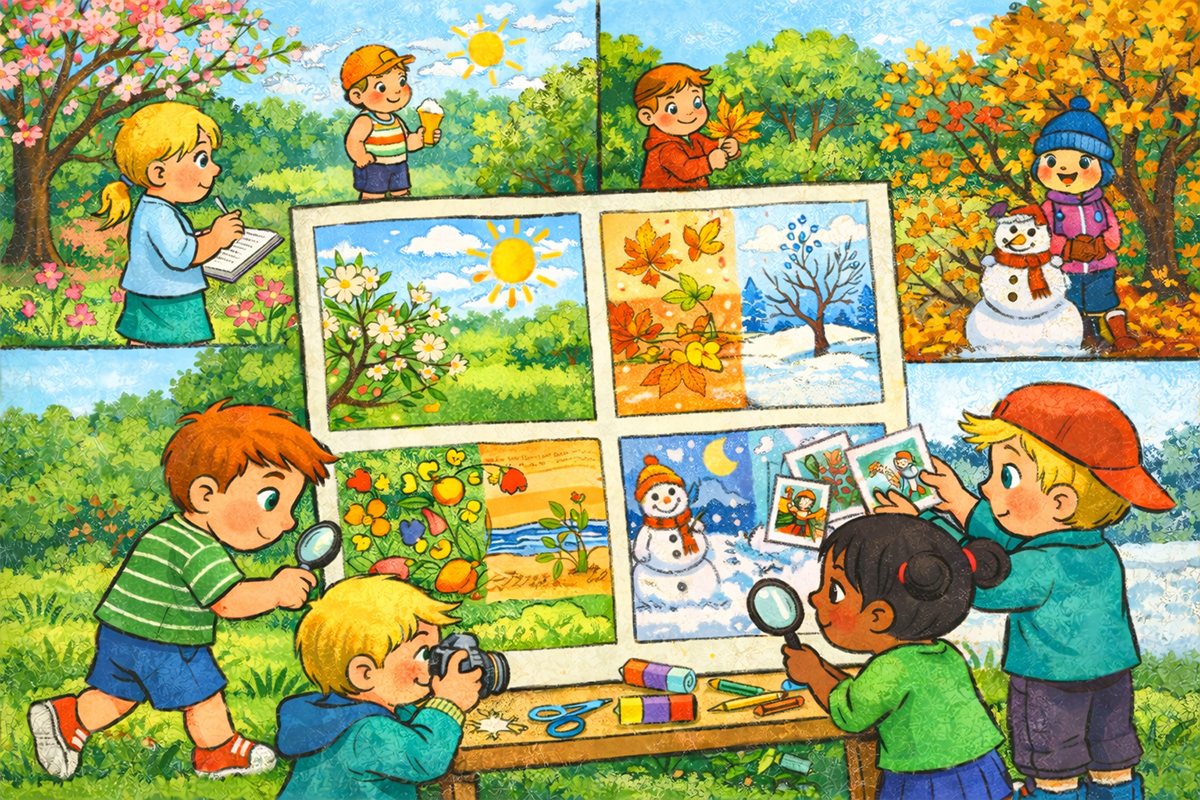
Prepare magnifiers and cameras for studying nature on a walk, prepare color journals, scissors and glue, and a poster for journaling. Plan for 15 minutes of preparation and 20–30 minutes for the activity once a week throughout the school year, as this activity is carried out over a longer period of time.
Begin by explaining that sometimes things change, and it’s essential to learn how to adapt to these changes. Children will explore and learn how to recognize and adapt to changes in their environment.
Ask children to close their eyes and listen carefully to the sounds around them. While their eyes are closed, make a small change in the classroom (e.g., move a chair, close a door, or turn off a light). Ask children to open their eyes and identify the change that has occurred. Discuss how the change made them feel and how they were able to adapt to it.
Repeat this activity several times, making different changes each time. This will help children practice adapting to changes and become more comfortable with the idea that changes are a natural part of life.
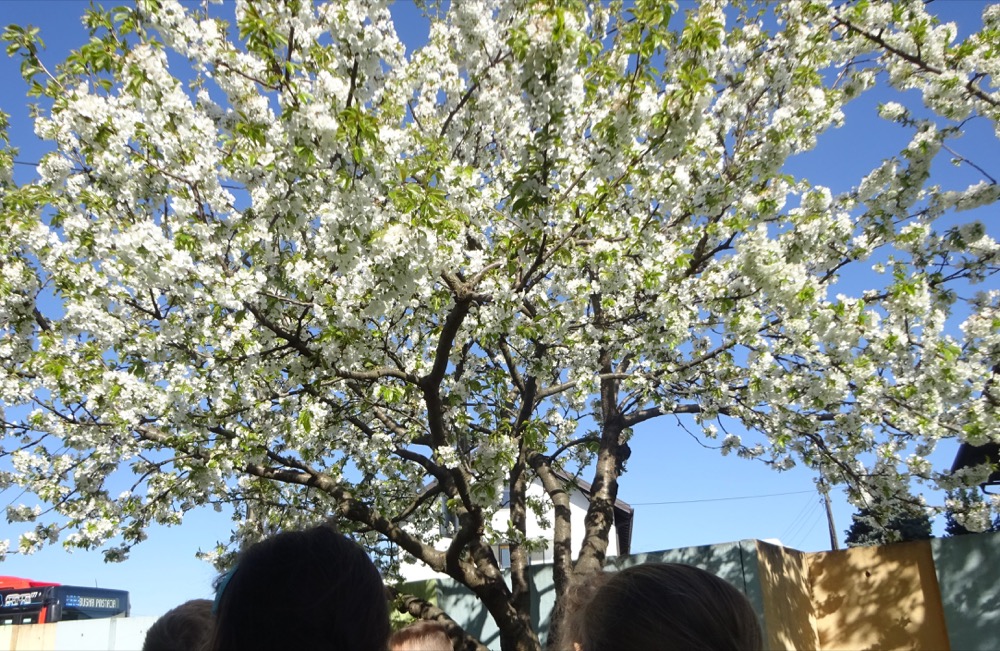
The best way to explore the changing seasons is to take learning outside. Spend time outdoors with the children, encouraging them to observe the world around them.
Encourage children to use their senses:
By asking open-ended questions, you’re encouraging children to look more closely at the natural world and make discoveries on their own. Use the camera and photograph details of the season.
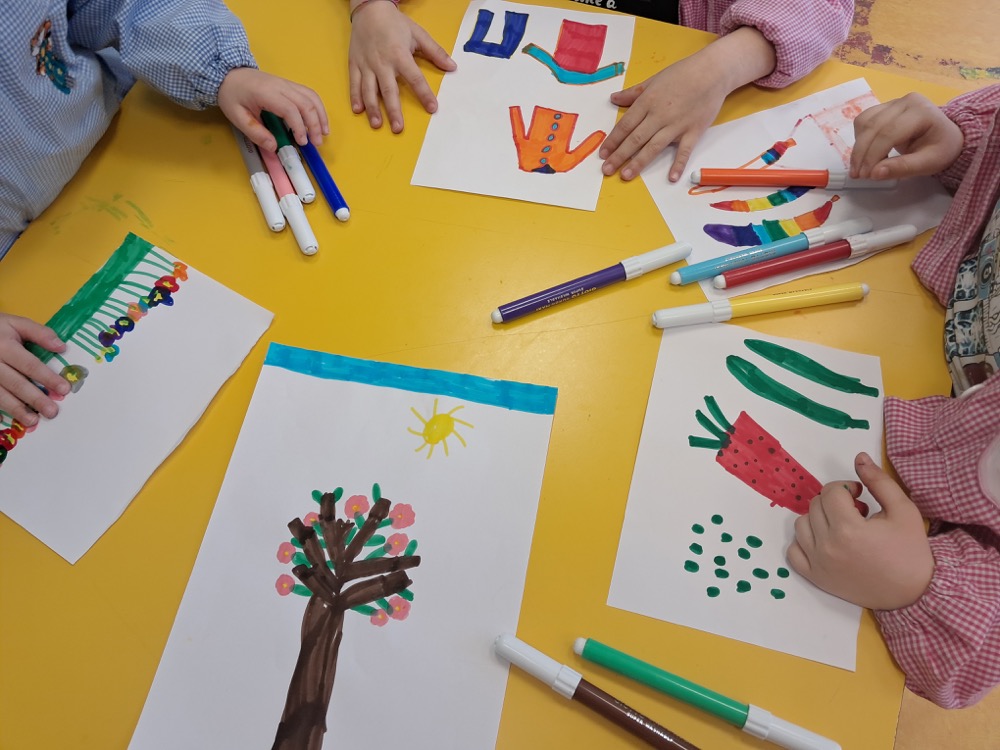
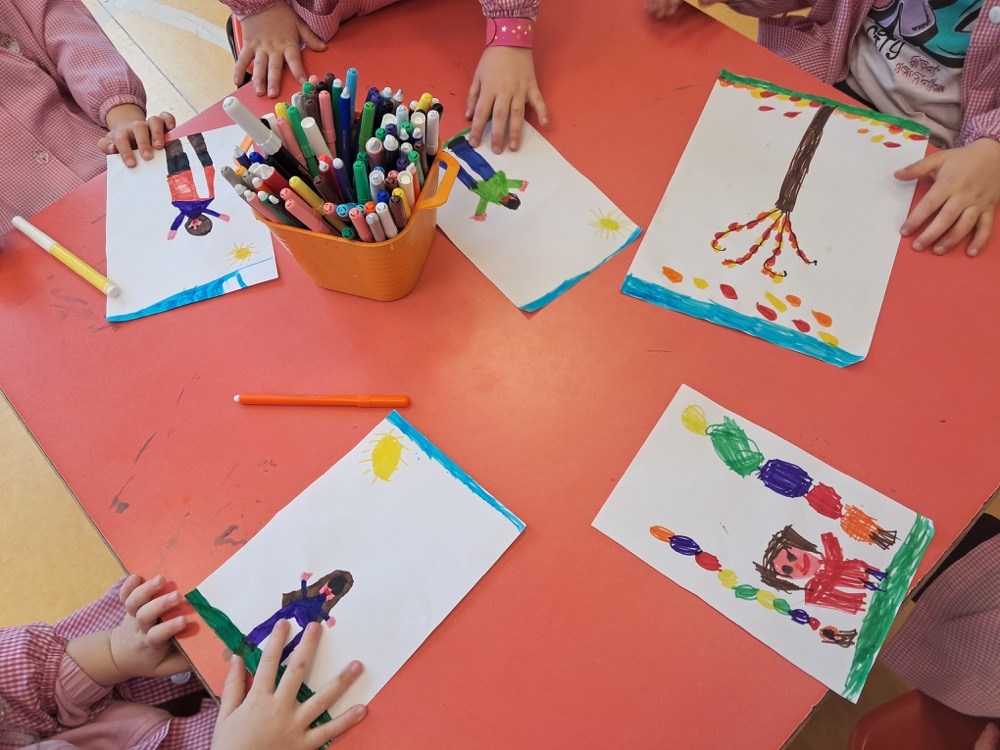
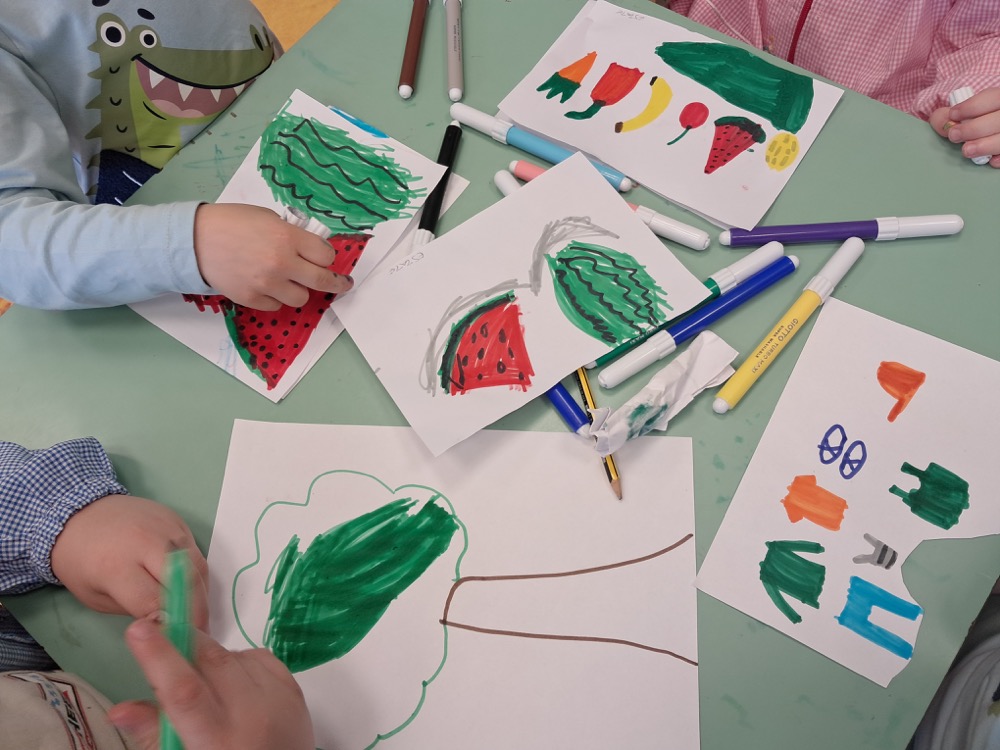
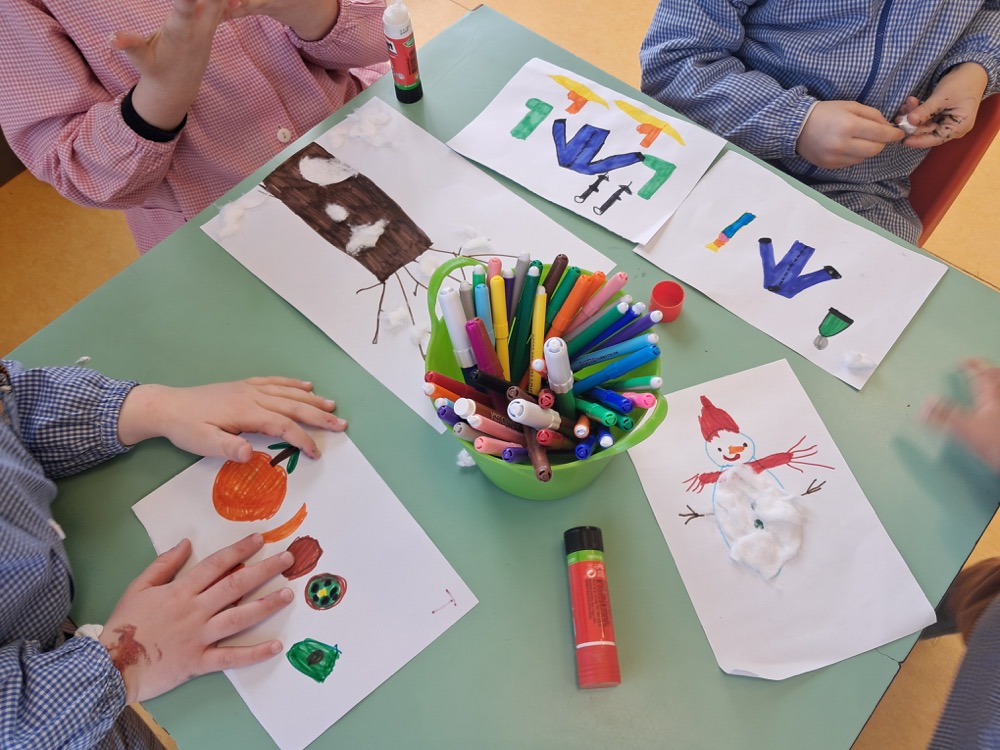
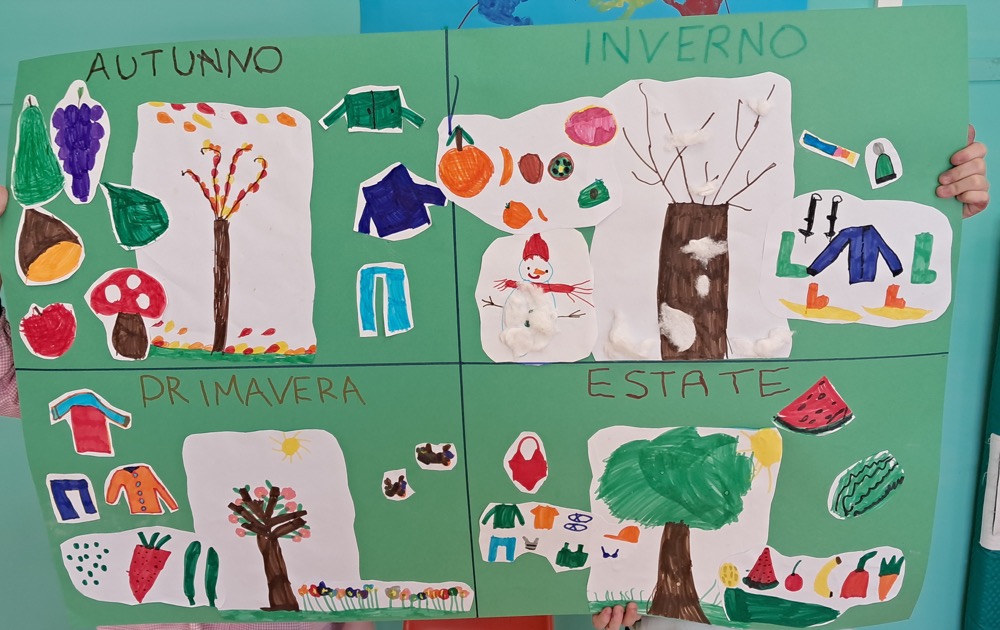
Help children document the changes they notice. Use a poster to show the observations. Divide the poster into four parts, for each season. Take a few moments each week to ask them to draw what they see outside, like trees with their leaves falling. Children can add stickers, photos, or small natural objects (like leaves or petals) to their journal to show what’s going on outside.
Ask open-ended questions about nature:
By observing these changes firsthand, children begin to develop an understanding of natural cycles, ecosystems, and weather patterns.
Ask open-ended questions about how we adapt to the seasons:
Find magazine pictures and cut out people’s activities related to certain seasons. Add them to the poster of the seasons.
Use the following questions to stimulate further discussions about changes and how to handle them:

Funded by the European Union. Views and opinions expressed are however those of the author(s) only and do not necessarily reflect those of the European Union or the European Education and Culture Executive Agency (EACEA). Neither the European Union nor EACEA can be held responsible for them.

All contents, in particular texts, pictures and graphics, are protected by copyright. Unless expressly stated otherwise, copyright is held by sel.eduskills.plus and is licensed under Creative Commons Attribution - Non-commercial - Distribution under the same conditions 4.0 International license. They may be subject to the terms of the license.
© 2024-2026 sel.eduskills.plus | Impressum