| Basic | |
| Age: 4-6 | |
| 2-4 sessions of approx. 20 min | |
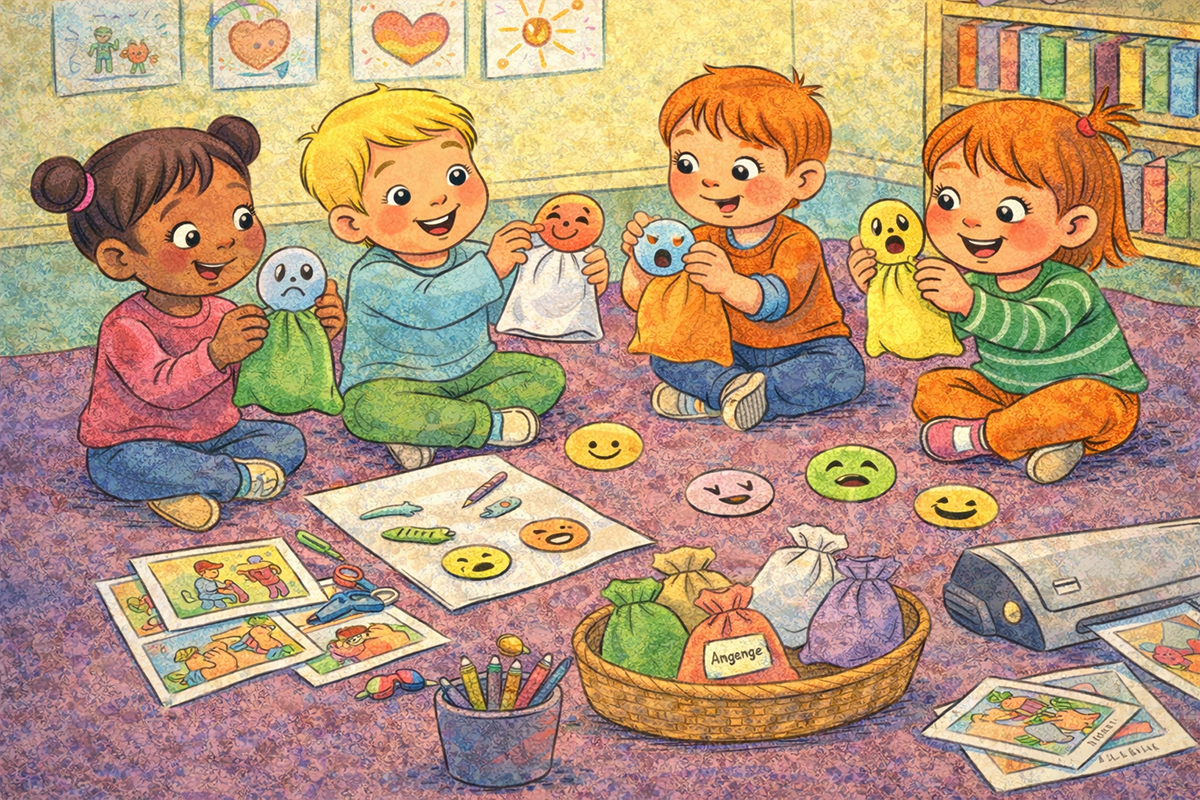
| Create personal puppets with changeable emotion faces and explore feelings through play and daily life situations. | |
| Self-regulation | |
| Growth mindset | |
| Cognitive task Conversation Parents Storytelling | |
|
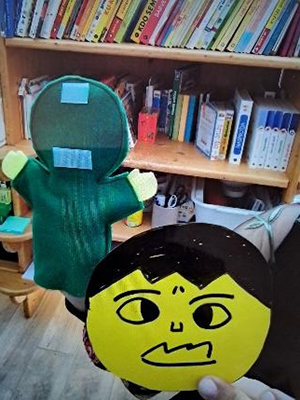
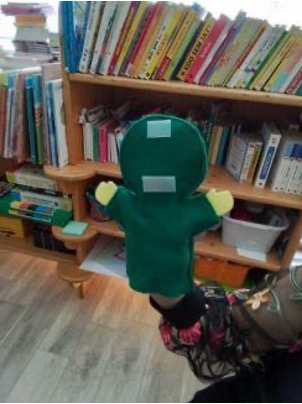
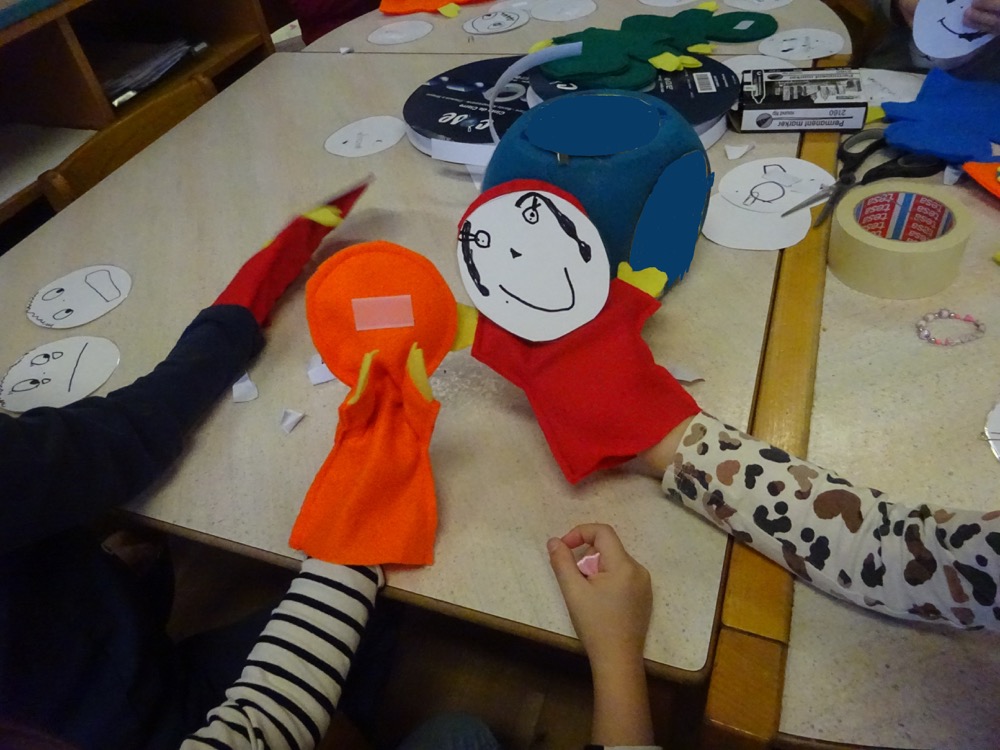
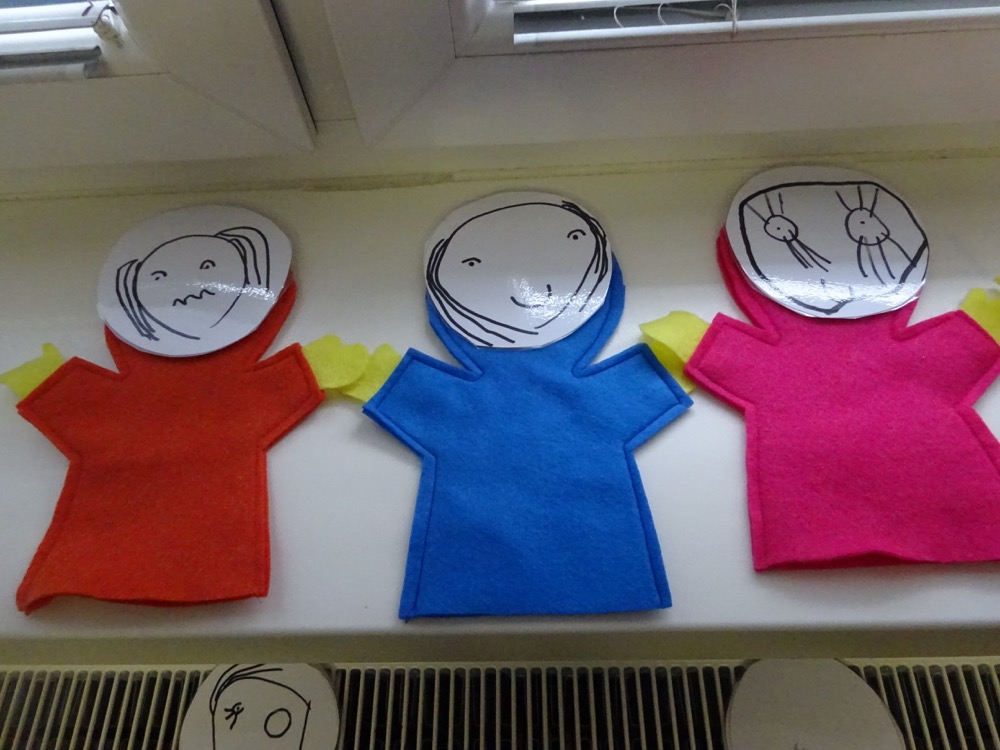
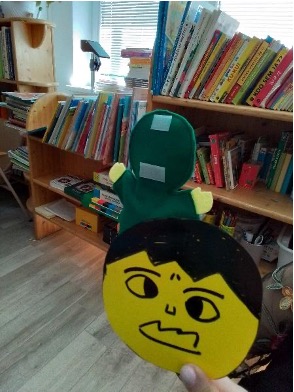
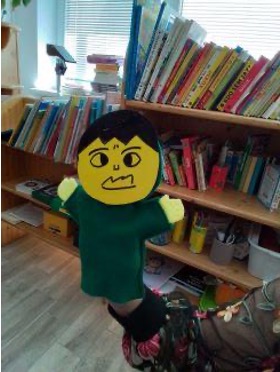
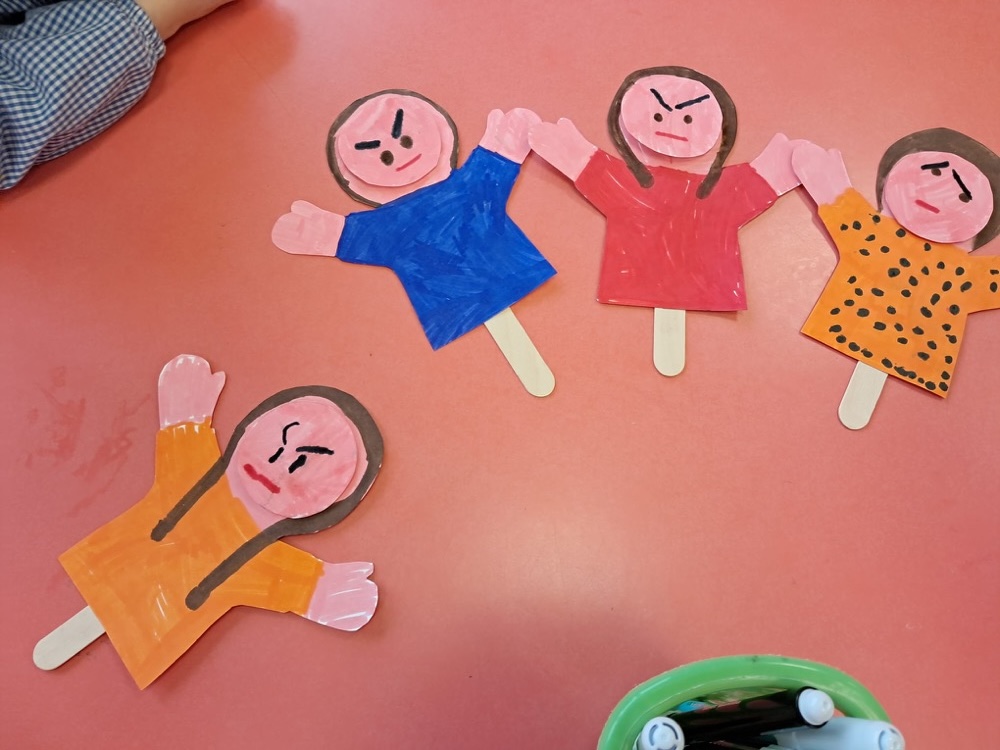
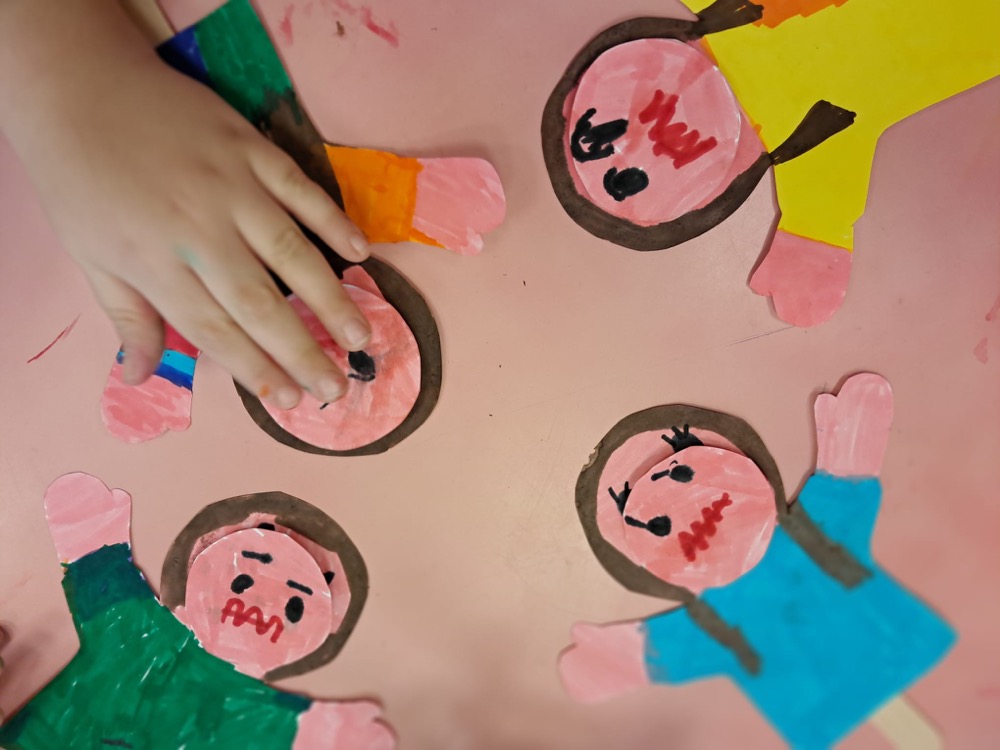
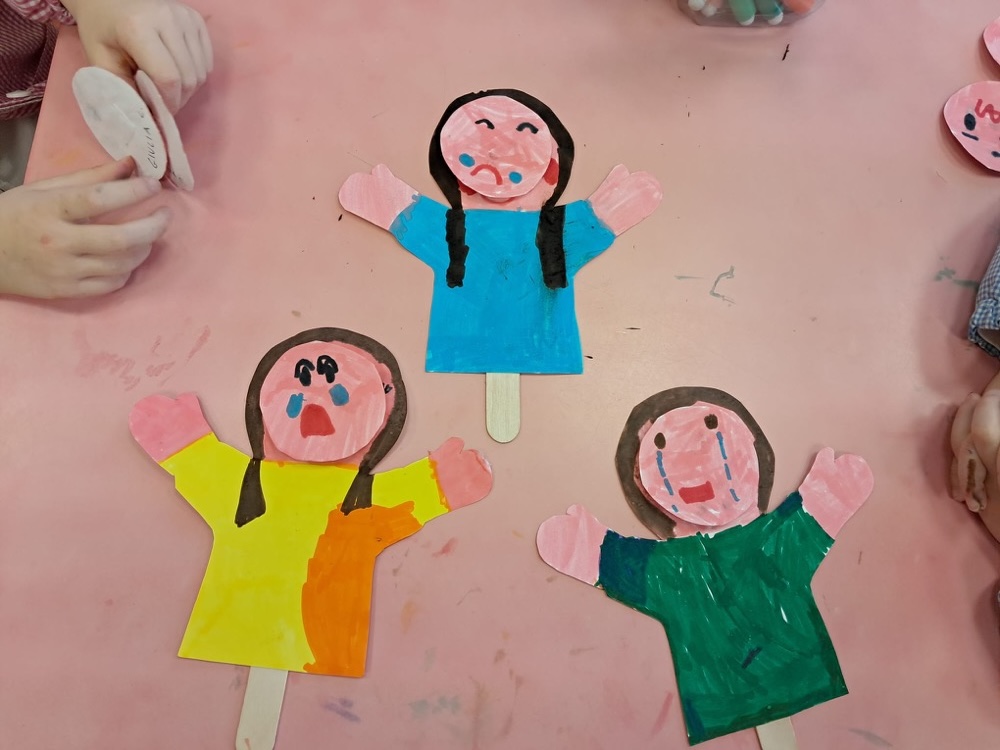
Prepare one hand puppet for each child in the group, plus one for yourself to use as an example during the activity. Instead of sewing: take a washcloth, cut holes at the side for fingers,or use a piece of fabric, stuff the head and seal the knot with a thread.
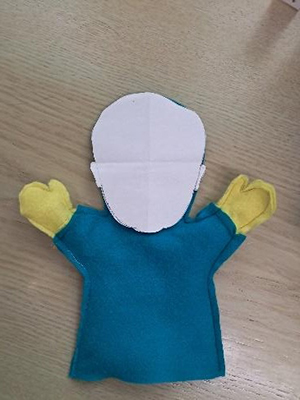
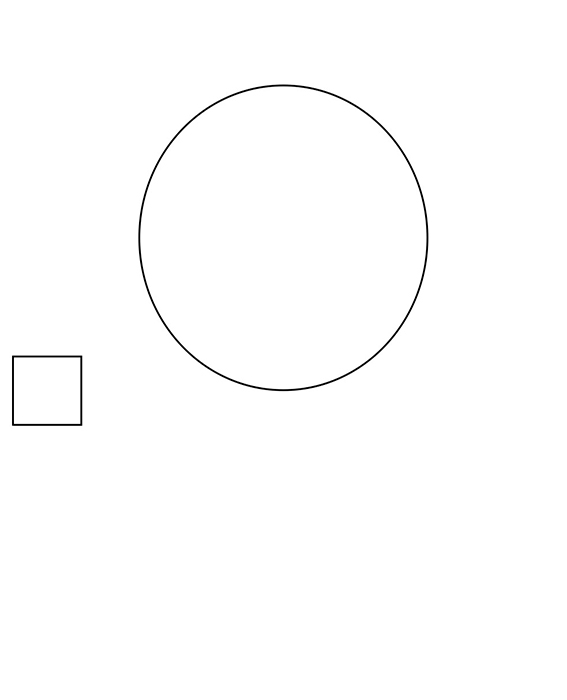
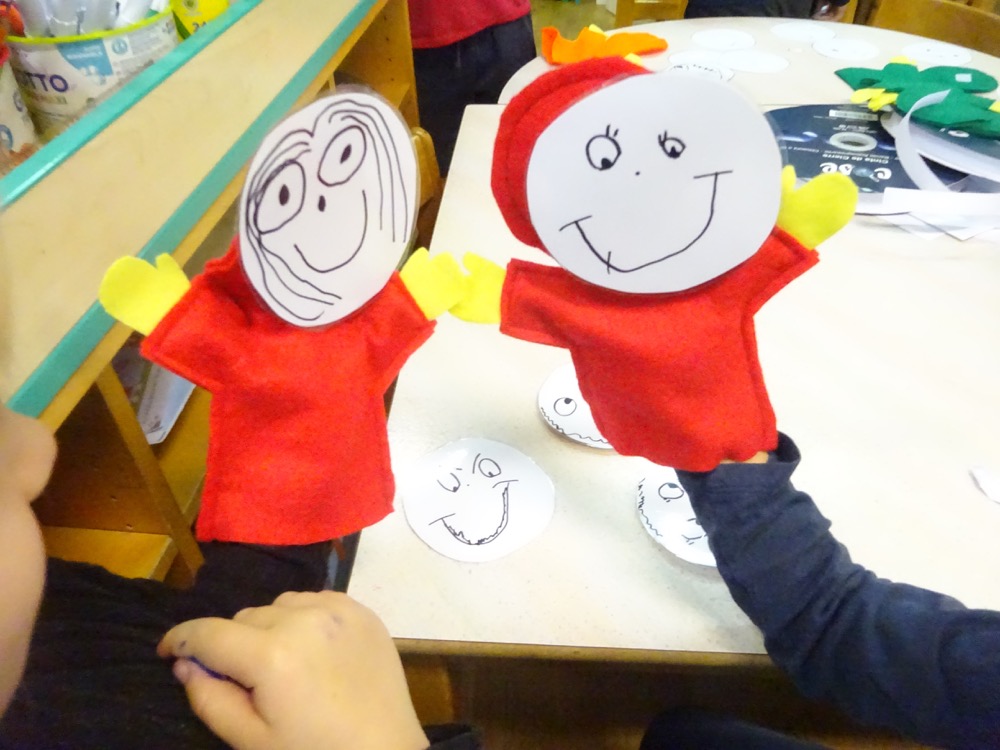
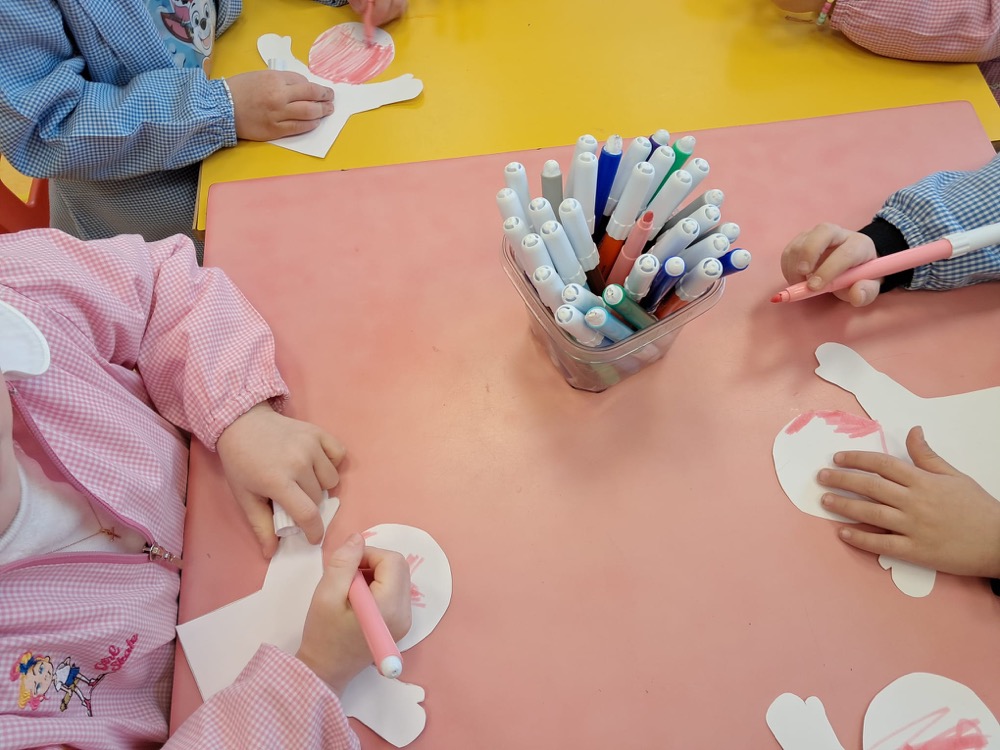
Use round or oval blank head silhouettes as the puppet’s face. Later, the children will draw different emotional expressions on these cards: anger, sadness, joy, fear, and surprise.
This activity can trigger strong feelings. You can find selected strategies for dealing with them in the Guidelines. We recommend that you familiarize yourself with these strategies before implementing the activity in group settings.
Begin with a group conversation about emotions and feelings. Ask children if they can remember a time they felt joy, and what happened in that moment. Encourage them to show joy on their face - a smile, wide eyes, or a little laugh.
Continue with the other basic emotions: anger, sadness, surprise, and fear. Let the children act them out with their faces. Remind them gently that all emotions are normal and okay to feel - they’re part of being human and help us understand the world around us.
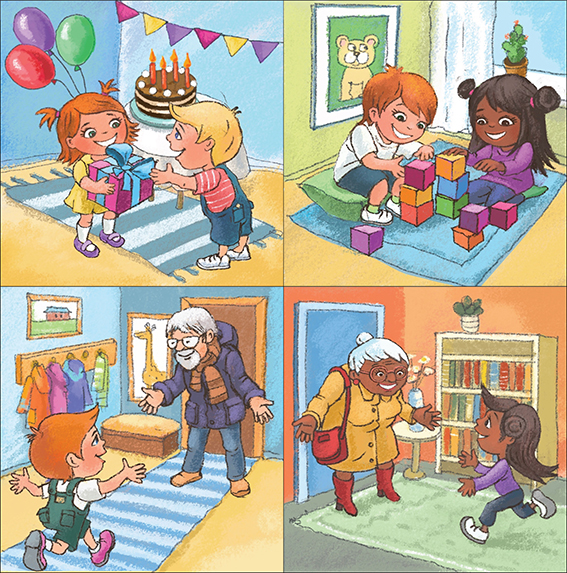
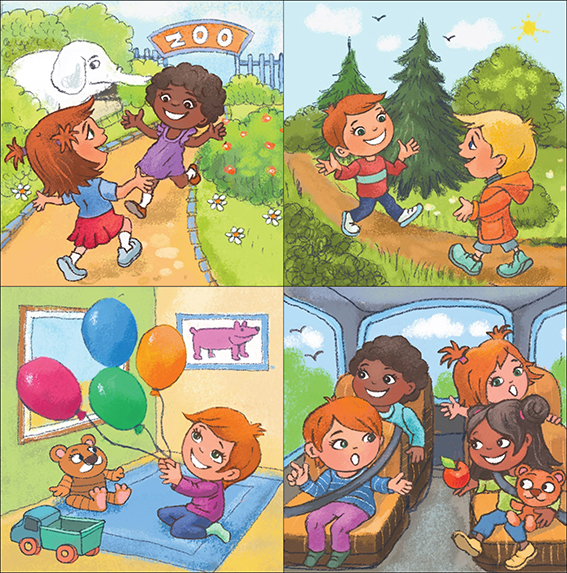
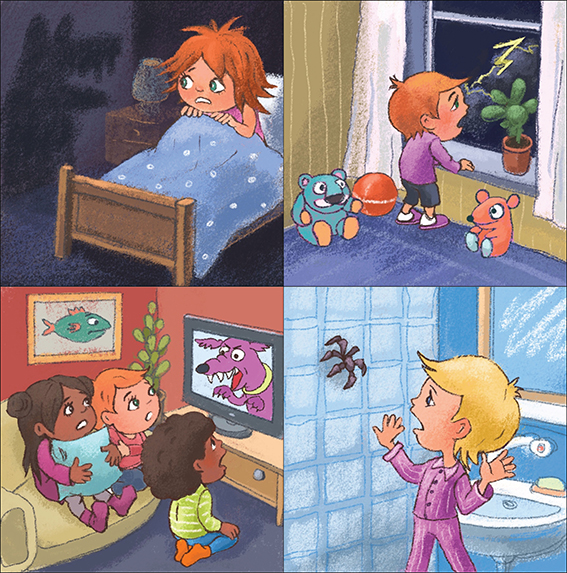
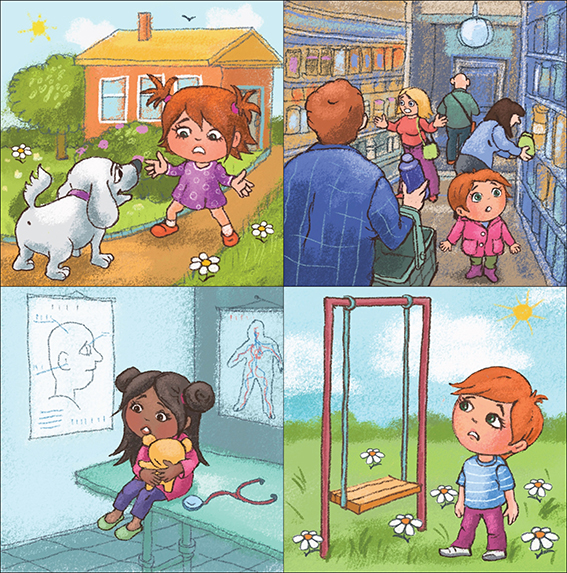
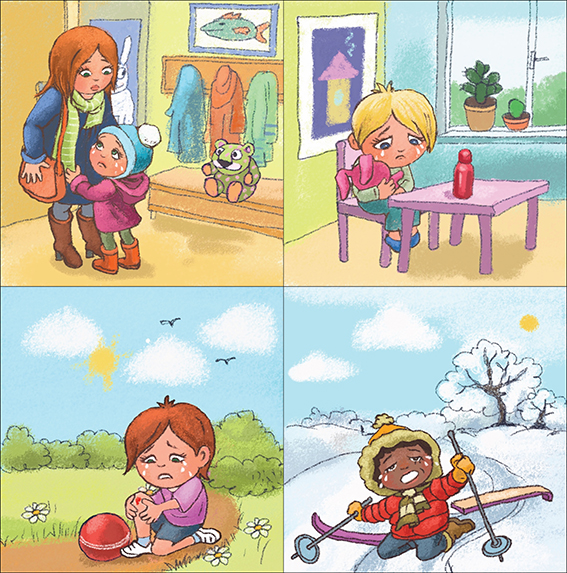
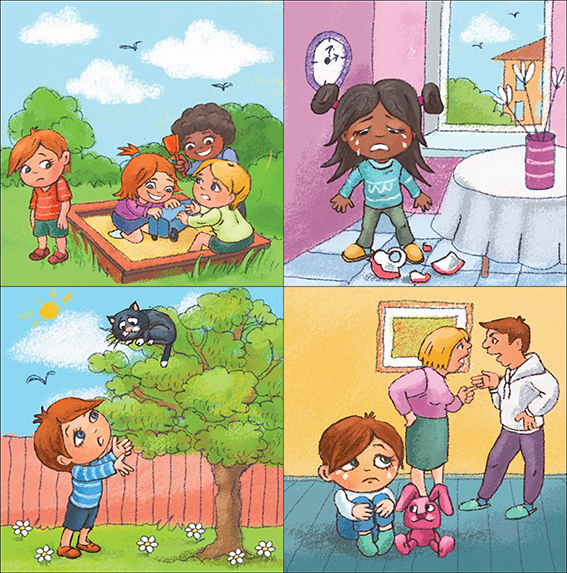
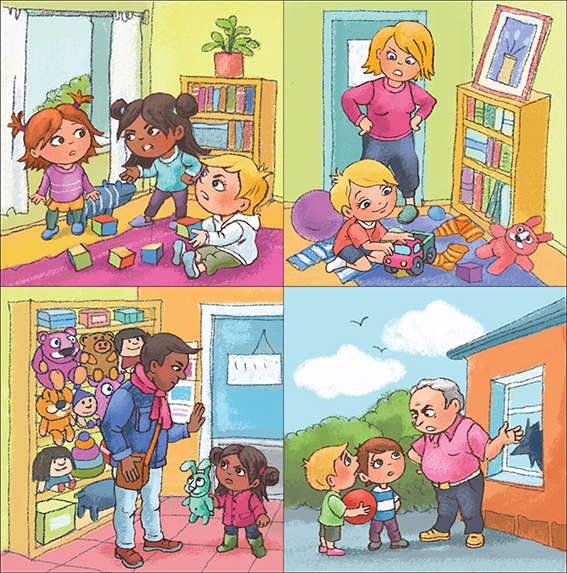
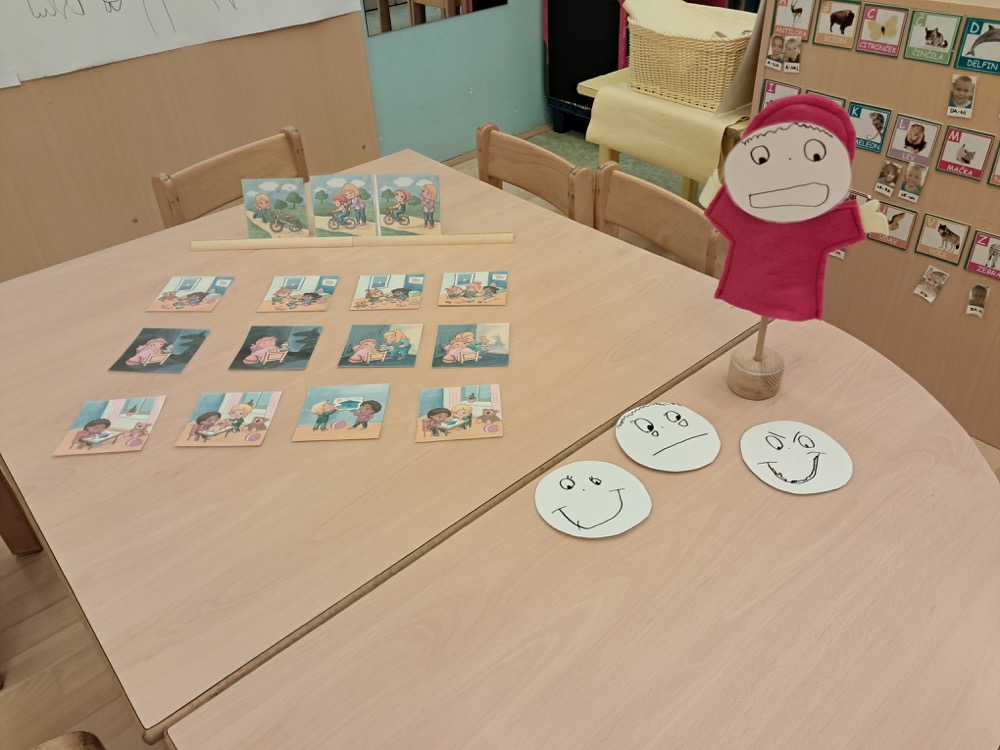
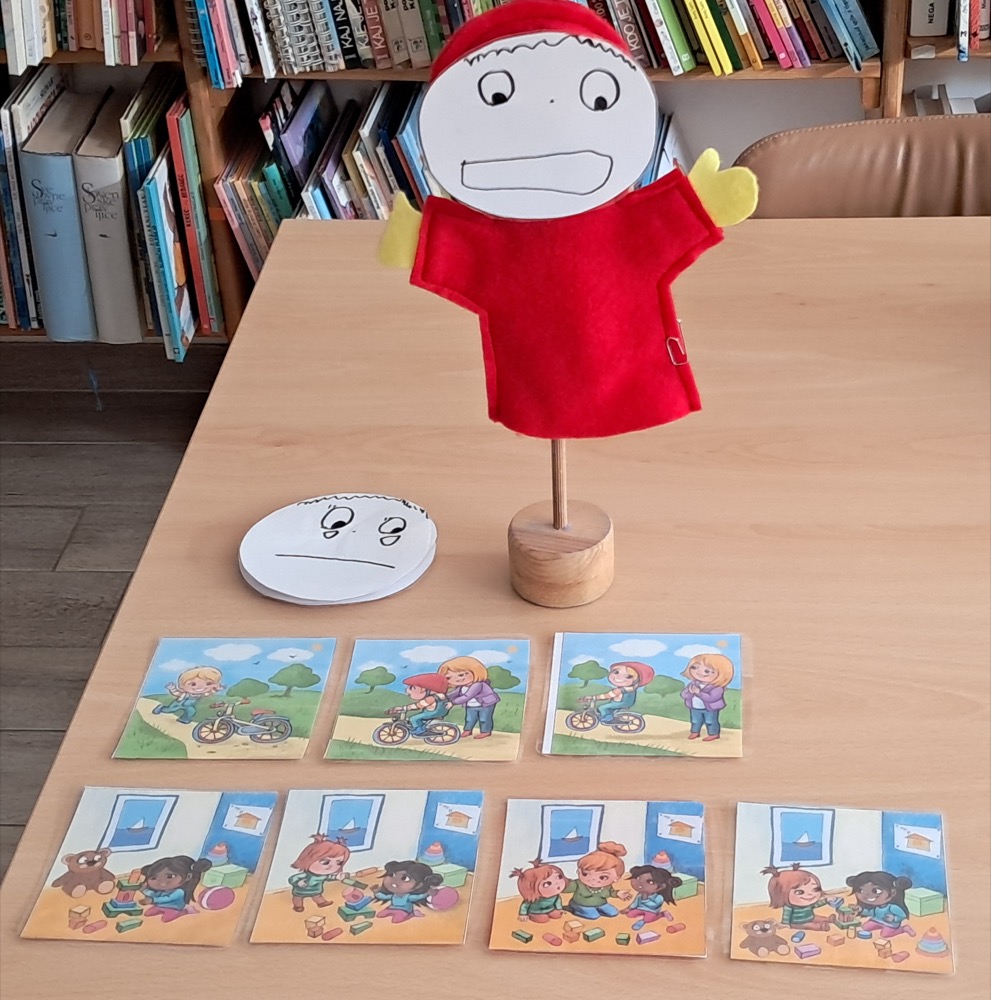
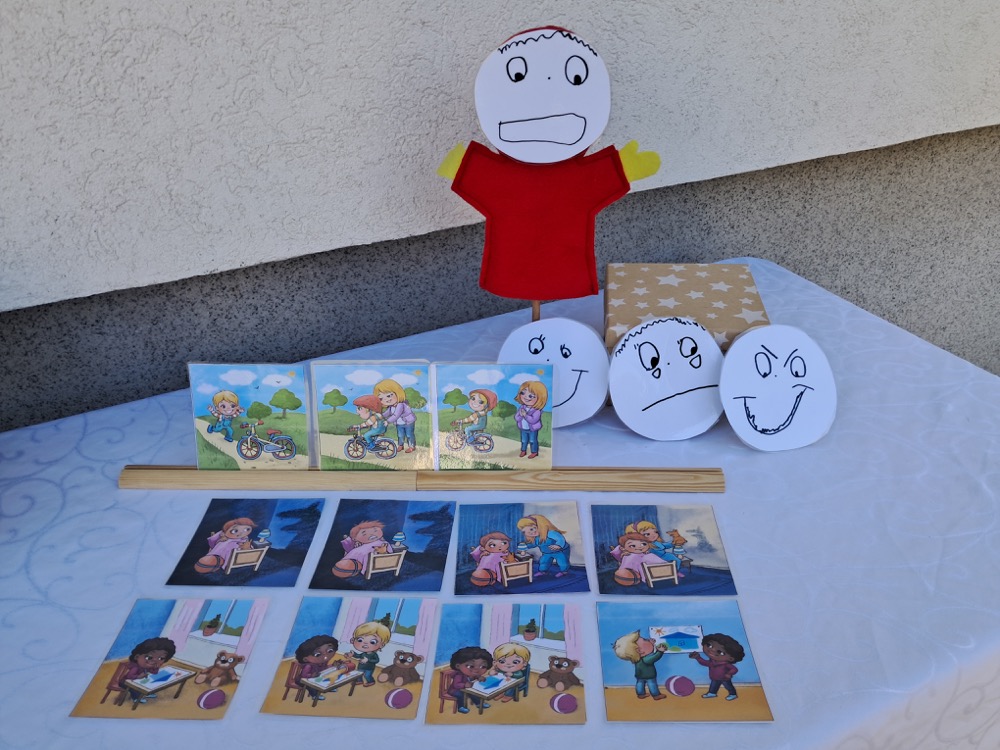
Next, introduce situation cards that show different emotional scenarios. Let the children explore them freely. Then, look at a few together.
Ask:
Guide the conversation to show that our emotions can change throughout the day - sometimes quickly! We can feel happy in the morning and upset later, and that’s completely normal.
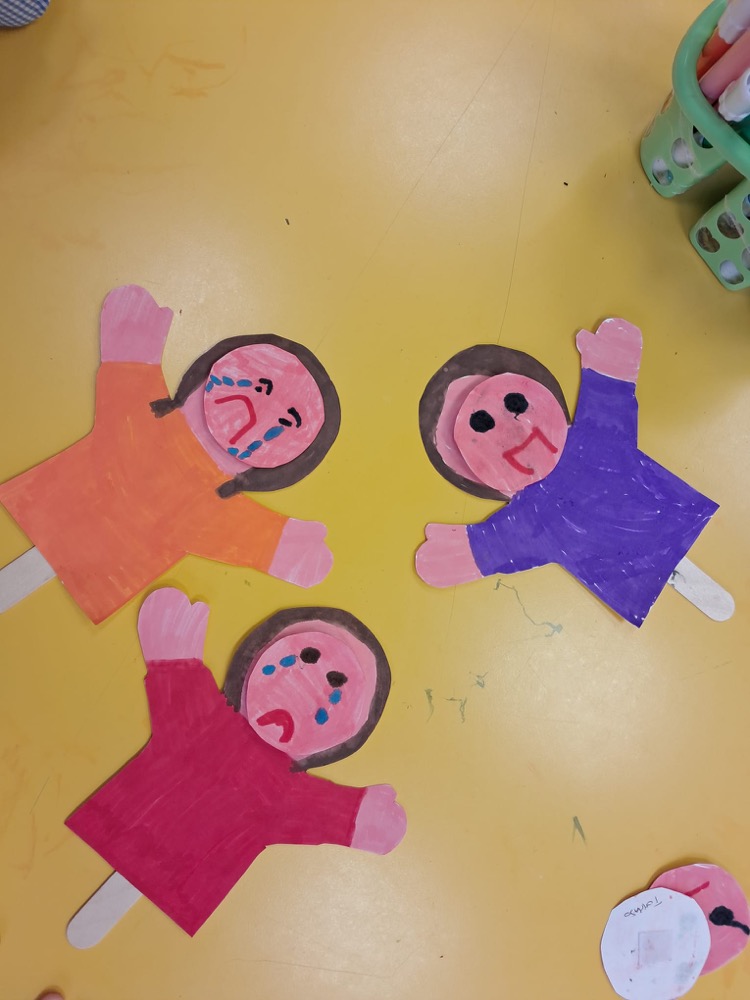
Each child creates their own set of emotion faces. Using a blank puppet silhouette or a simple card cut-out, children draw and color five facial expressions: happy, sad, angry, scared, and surprised.
Once finished, help the children laminate their emotion faces and add Velcro on the back. Now they can easily switch the faces on their puppet to show how it’s feeling.
Use the puppets together or in small groups. Try role-playing simple situations and let children show how their puppet feels by changing the face. You can also practice naming feelings or acting out small scenarios using the puppet.
Finish the activity with a group talk.
Let children know that they never have to talk about their feelings if they don't want to. Their puppet can be used anytime: during group play, on their own, or as a tool to help express something when words are hard to find.
Use a series of situation cards that tell a short story showing how emotions can change. E.g.:
Let the children talk about what happens in each picture and use their puppets to show how the child in the story might feel at every step.
After working with the five basic emotions (joy, sadness, anger, fear, surprise), encourage children to add other feelings they know.
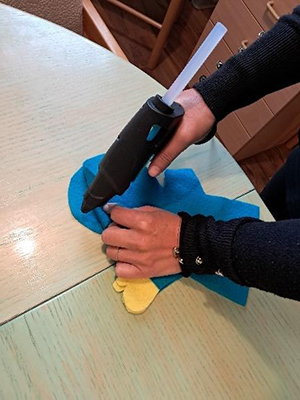
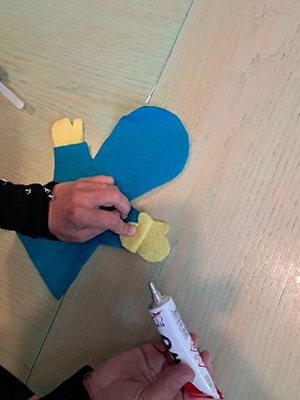
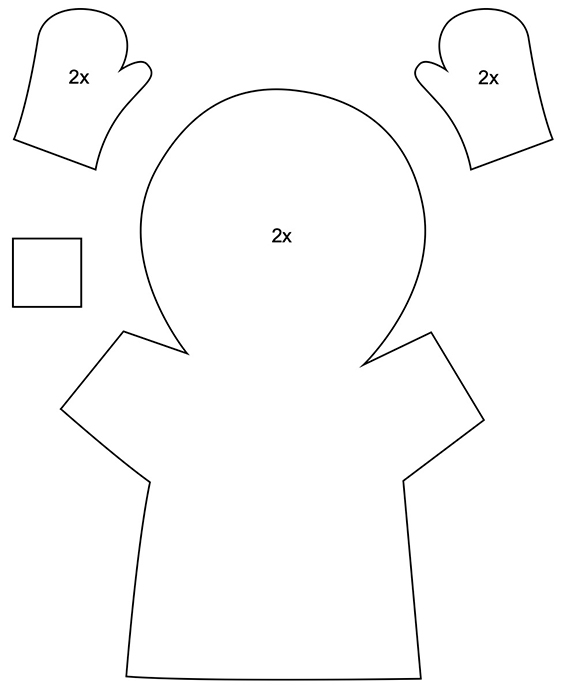
Print out the pattern. Because of the different printer settings, pay attention to the test square, which should be 2 cm x 2 cm. This will ensure that the puppet pattern is the right size. Transfer the pattern to a 1,5 mm – 2 mm thick felt fabric. Cut out the pattern.
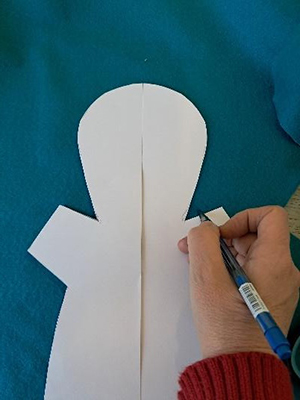
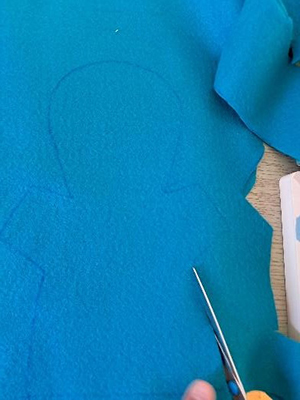
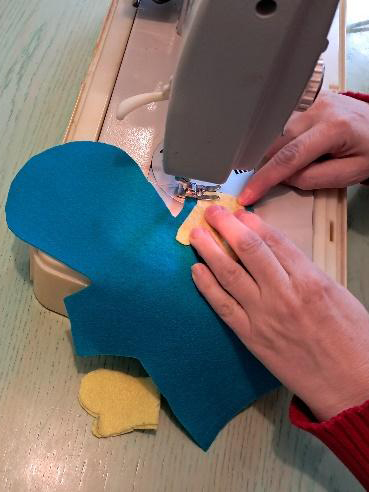
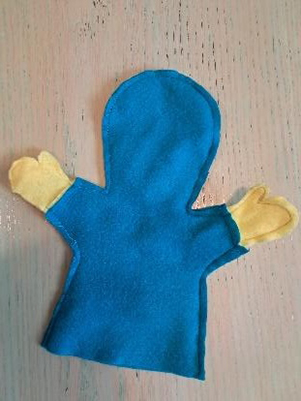
Start by sewing (or gluing) the arms on the pattern, then sew (or glue) both sides of the puppet along the 0.5 cm edge around the cut-out. Instead of sewing, you can glue the puppet together using Neostik, fabric glue, or hot glue.
Stick self-adhesive “hedgehogs” on the puppet head, as well as on the silhouettes of faces. The puppet is ready to use.

Funded by the European Union. Views and opinions expressed are however those of the author(s) only and do not necessarily reflect those of the European Union or the European Education and Culture Executive Agency (EACEA). Neither the European Union nor EACEA can be held responsible for them.

All contents, in particular texts, pictures and graphics, are protected by copyright. Unless expressly stated otherwise, copyright is held by sel.eduskills.plus and is licensed under Creative Commons Attribution - Non-commercial - Distribution under the same conditions 4.0 International license. They may be subject to the terms of the license.
© 2024-2026 sel.eduskills.plus | Impressum