| Basic | |
| Age: 4-6 | |
| 20-30 min | |
| Children sort picture cards into emotion boxes, reflect on emotional associations, and share personal stories to build empathy and emotional awareness. | |
| Flexibility | |
| Conversation Parents | |
|
Start with a conversation about how different images or objects can make us feel different emotions. E.g.: A picture of a cat might make you feel happy, but a picture of a dog might remind you of a certain dog you are afraid of, so you feel fear.
Encourage the children to share their own associations, and write down their ideas to help create a picture set for the activity.
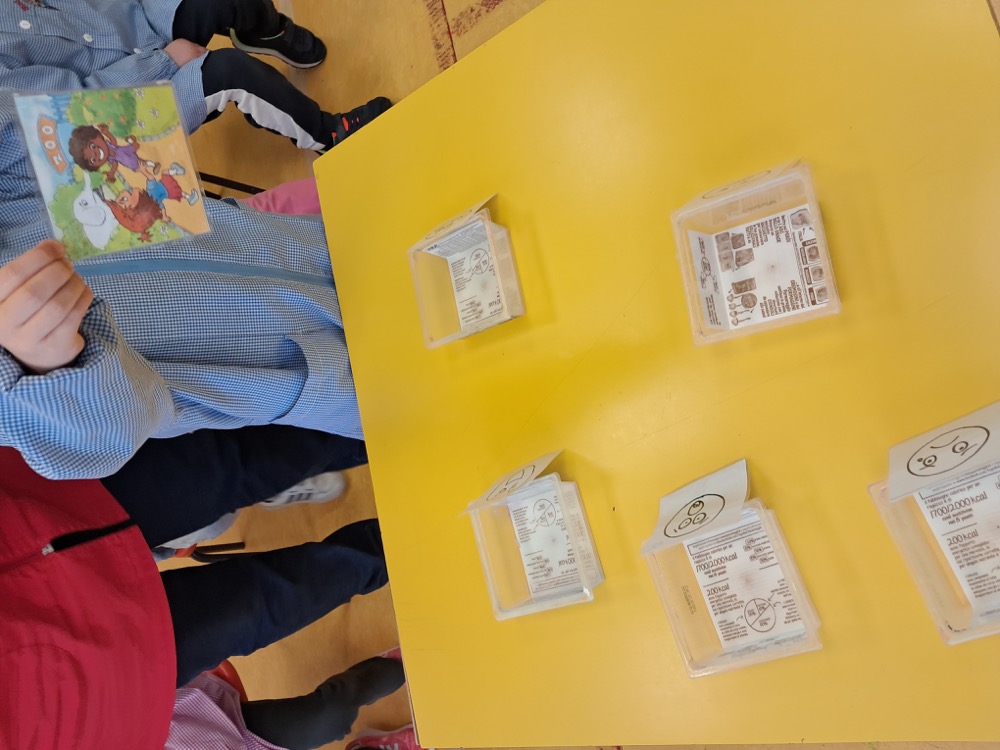
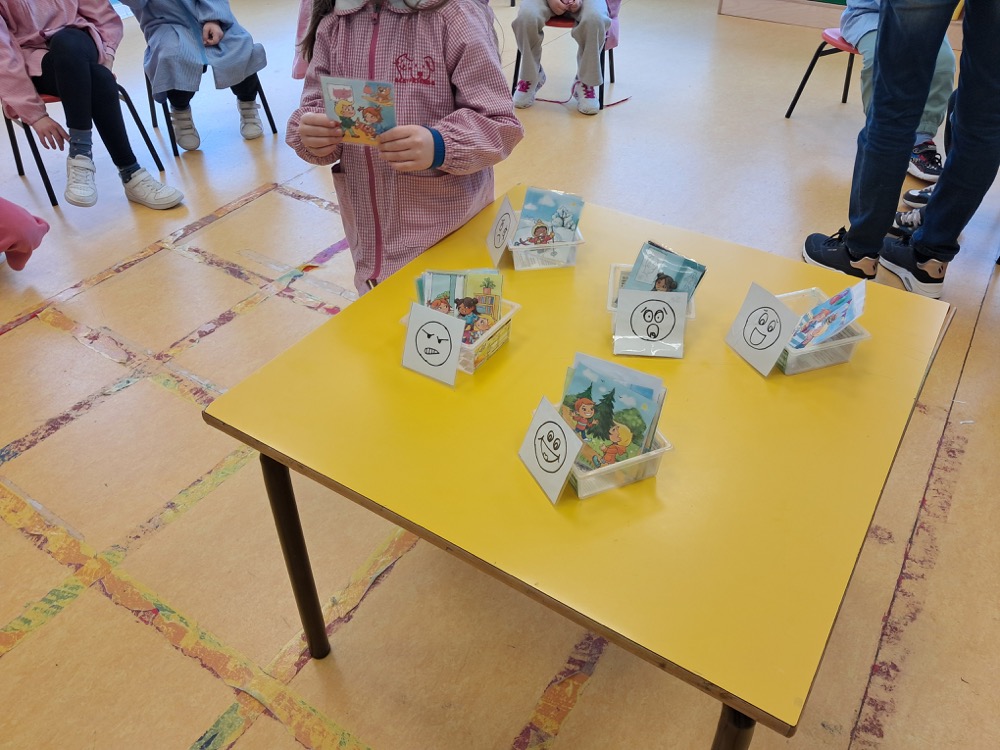
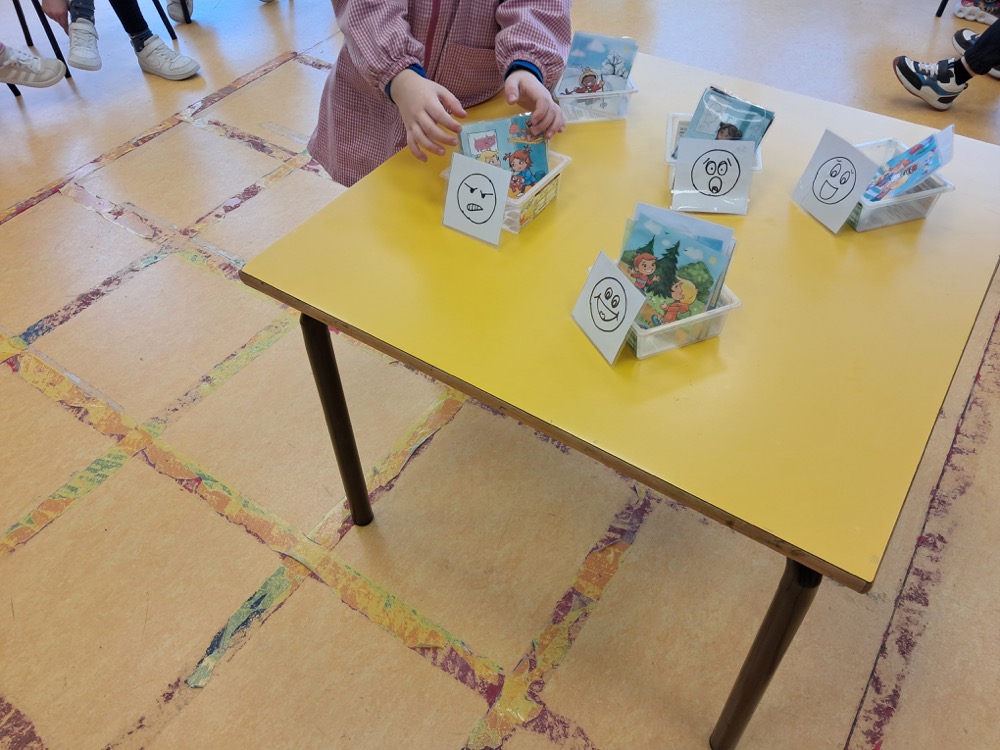
Children work in pairs or small groups. Set up boxes or trays, each labeled with an emotion (e.g. happy, sad, afraid, angry, surprised).
Each child takes turns:
Their partner then picks up the same picture and asks: Why did you put it in the happy/sad/etc. box?
The child who placed the image explains why they made that emotional connection. Children then switch roles.
This activity supports emotional awareness, listening skills, and respectful conversation around different perspectives.
Reflect on the experience:
Highlight the idea that our feelings are shaped by our experiences, and that understanding each other’s point of view helps us grow in empathy.
Encourage children to contribute new pictures to the game over time. Each new picture should be added with a short personal story explaining why it belongs in a particular emotion box. This helps children connect deeply with the materials.
Involve families by introducing the game during a parent meeting. Invite parents to try the activity themselves, and take time to explain the educational purpose - how the game supports emotional awareness, empathy, and respectful dialogue about feelings.

Funded by the European Union. Views and opinions expressed are however those of the author(s) only and do not necessarily reflect those of the European Union or the European Education and Culture Executive Agency (EACEA). Neither the European Union nor EACEA can be held responsible for them.

All contents, in particular texts, pictures and graphics, are protected by copyright. Unless expressly stated otherwise, copyright is held by sel.eduskills.plus and is licensed under Creative Commons Attribution - Non-commercial - Distribution under the same conditions 4.0 International license. They may be subject to the terms of the license.
© 2024-2026 sel.eduskills.plus | Impressum