| Basic | |
| Age: 4-6 | |
| 4-5 sessions of approx. 20 min | |
| Children explore everyday and natural sounds, guess and create them, and reflect on how we experience sounds differently with eyes open or closed. | |
| Self-regulation | |
| Cognitive task Conversation Outdoors | |
|
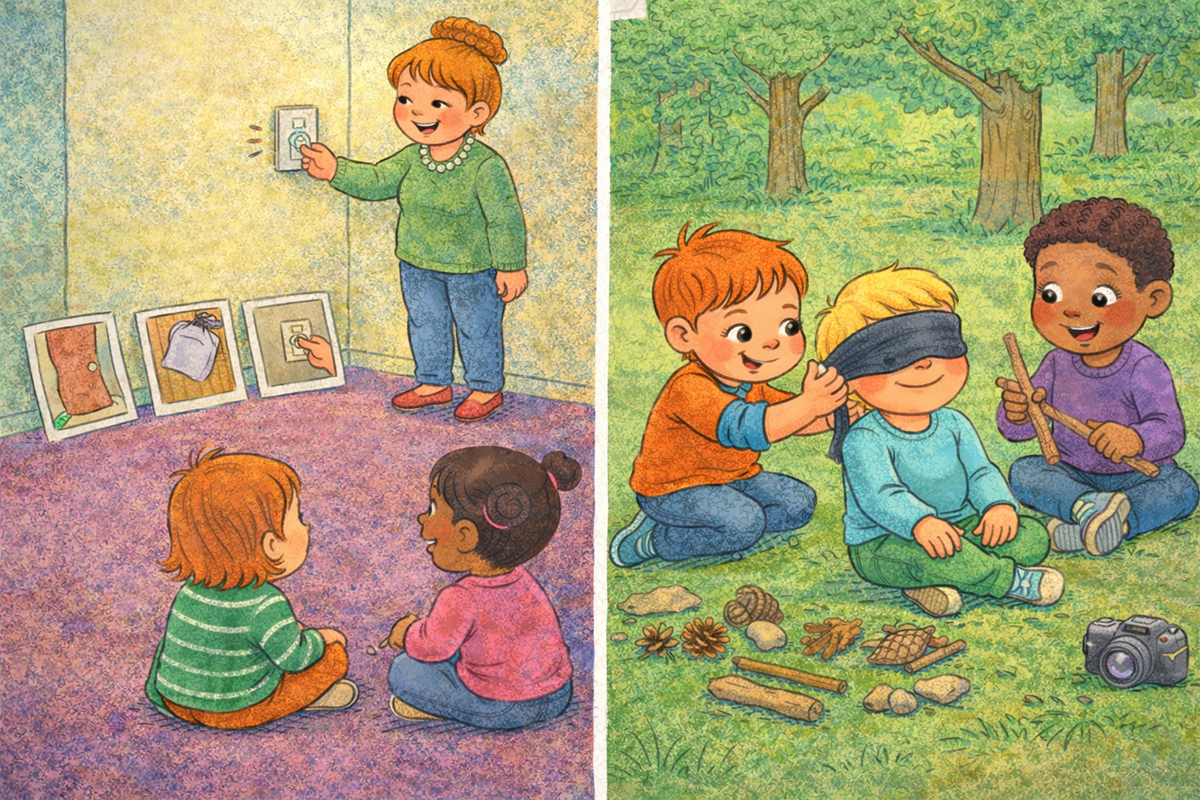
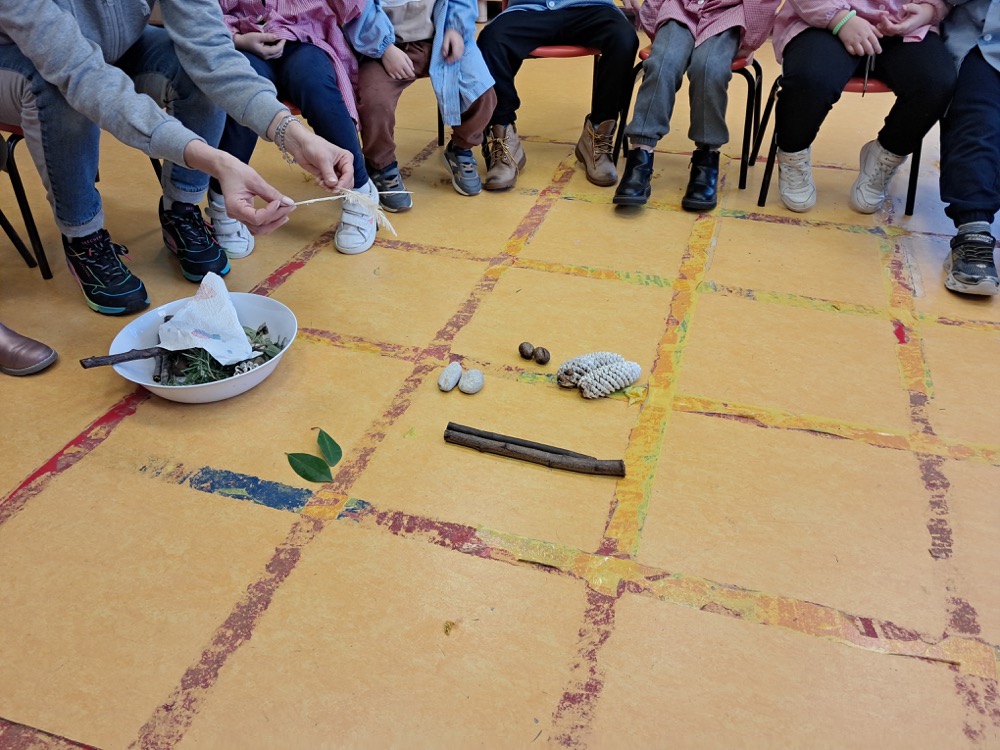
Before starting the activity, invite the children to collect natural, sound-producing materials during outdoor time - such as pinecones, walnuts, stones, bark, and sticks. These will be used later for sound games.
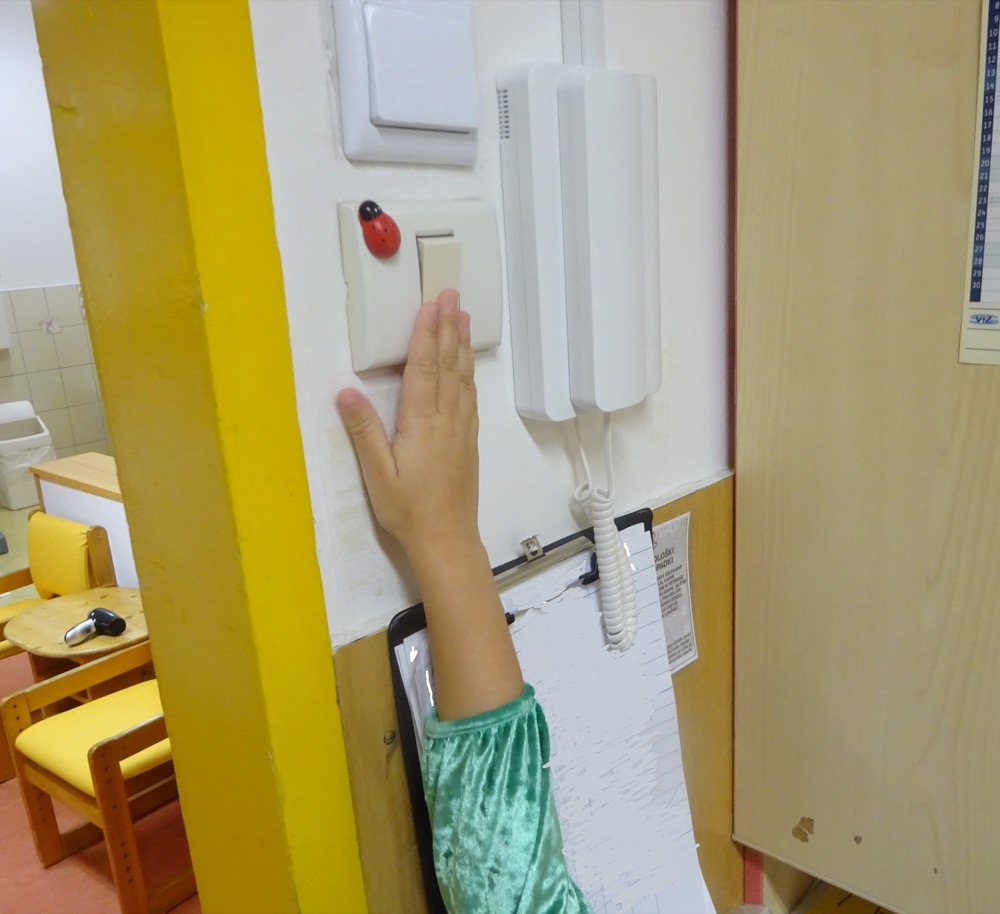
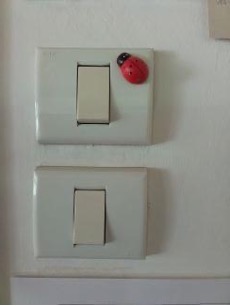
In the group room, explore familiar everyday sounds together - like switching lights on and off, opening doors, or tapping different surfaces. Take photos of these actions and print them out so they can be used during the sound-matching and guessing activities.
Invite the children to lie down comfortably on the floor. Create a quiet, safe, and relaxing atmosphere. Ask them to close their eyes and just listen. Encourage them to notice all the different sounds in the playroom, even the quiet ones.
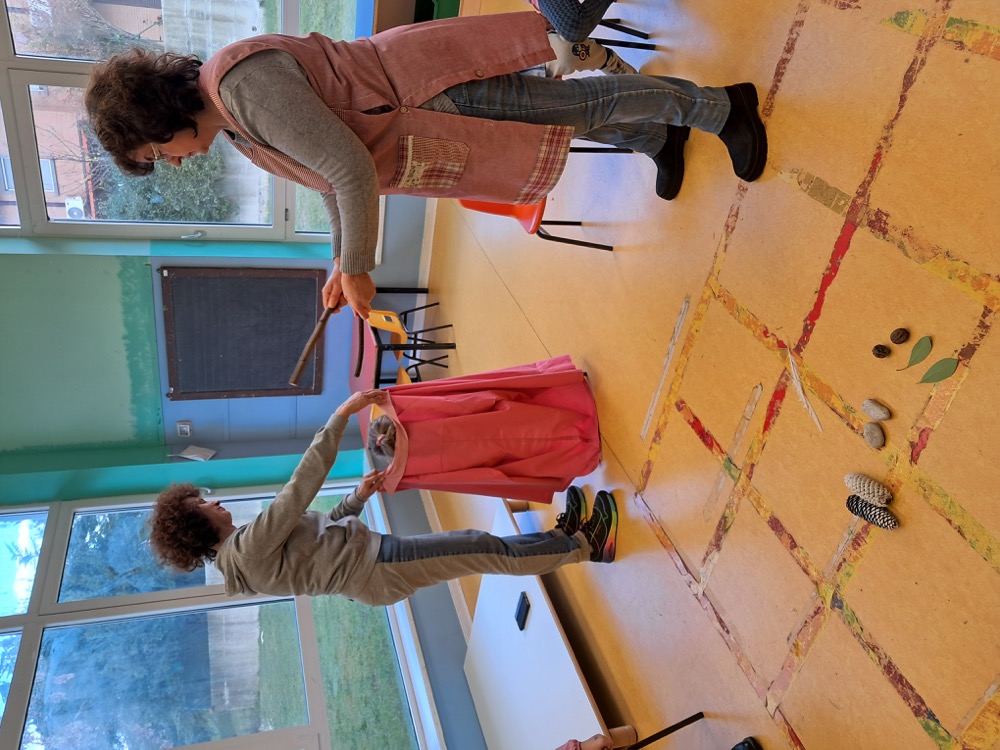
Walk slowly around the room, making different sounds with common objects - such as turning the light switch on and off, stepping on different surfaces, clapping, opening and closing a door, or rustling a plastic bag. Afterward, invite the children to open their eyes and gather in a circle.
Ask:
Look together at prepared photos of different sound-making actions or objects. Can the children match the photos with what they heard?
Repeat the same sound exploration, but this time let the children watch while you make the sounds. Seeing where the sound comes from helps them connect what they hear with what they see.
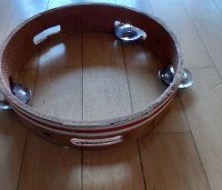
Show the children photos of sound-producing objects that were not used in the earlier activity. Provide these objects and give the children time to explore and play with them freely.
Talk together about the sounds:
Let them discover that everyone experiences sounds differently - what’s relaxing for one child might feel annoying to another.
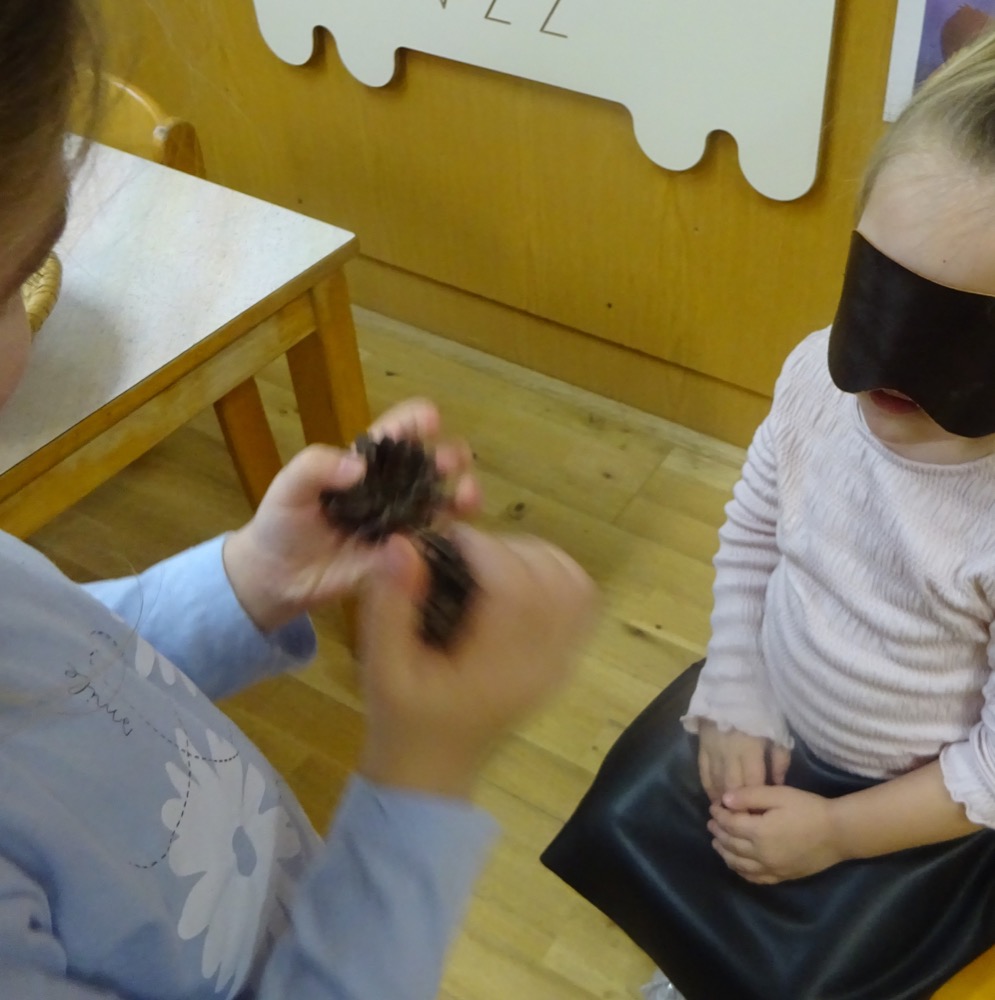
This is a partner activity. In one corner of the room, prepare a small station with blindfolds and natural objects (pinecones, walnuts, rocks, bark, sticks, etc.) collected by the children.
One child wears a blindfold while the other makes a sound using one of the objects. The blindfolded child guesses the source of the sound. Then, they switch roles. This game builds attention, curiosity, and sensitivity to sound in a playful and cooperative way.
Questions that can be explored:
Encourage children to notice and appreciate the rich variety of sounds in their everyday world and how listening carefully can be fun, calming, and surprising.
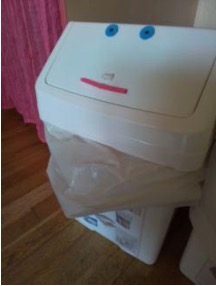
In the sound exploration corner, you can expand the activity by encouraging children to modify sounds they find unpleasant. Offer a variety of materials - like cloth, paper, or soft objects - and invite them to experiment with how these can change or soften a sound.
You can also have a short discussion about how children experienced the same sound differently with their eyes closed vs. open:
This helps children reflect on how our senses work together and how perception can change depending on context.

Funded by the European Union. Views and opinions expressed are however those of the author(s) only and do not necessarily reflect those of the European Union or the European Education and Culture Executive Agency (EACEA). Neither the European Union nor EACEA can be held responsible for them.

All contents, in particular texts, pictures and graphics, are protected by copyright. Unless expressly stated otherwise, copyright is held by sel.eduskills.plus and is licensed under Creative Commons Attribution - Non-commercial - Distribution under the same conditions 4.0 International license. They may be subject to the terms of the license.
© 2024-2026 sel.eduskills.plus | Impressum