

Research-based knowledge and practical guidance on social and emotional learning for kindergarten educators, from theory to everyday practice.
 Funded by the European Union. Views and opinions expressed are however those of the author(s) only and do not necessarily reflect those of the European Union or the European Education and Culture Executive Agency (EACEA). Neither the European Union nor EACEA can be held responsible for them. |
 All contents, in particular texts, pictures and graphics, are protected by copyright. Unless expressly stated otherwise, copyright is held by sel.eduskills.plus and is licensed under Creative Commons Attribution - Non-commercial - Distribution under the same conditions 4.0 International license. They may be subject to the terms of the license. |
© 2026 sel.eduskills.plus
Imagine having a treasure trove of ideas that enrich your daily work and help you foster children's social and emotional skills even more effectively. This project offers exactly that!
With our materials, you'll expand your knowledge in a targeted way and gain access to practical methods for your everyday work with children.
This project, including its methods and material recommendations, was developed by partners from four countries as part of an ERASMUS+ project. The participating universities and organizations are experts in early childhood education and development. All pedagogical activities were tested and selected by educators involved in the project in their own childcare centers.
The guidelines consist of seven chapters, each taking about 45 minutes to complete. We recommend working through the guidelines from beginning to end to gain valuable insights and learn practical methods that will enrich your everyday practice.
We wish you and your colleagues curiosity, joy, and success on this exciting learning journey!
Your Eduskills+SEL Team
The right of children to social and emotional health is a fundamental aspect of their overall development. Social and emotional health includes the ability to understand and manage one's emotions, establish and maintain positive relationships with others, feel empathy, and make responsible decisions. It is essential that children receive the necessary support to develop these skills from early childhood.
To ensure that children fully enjoy their right to social and emotional health, it is crucial that adults - whether parents, teachers, or guardians - adopt a child-centered approach. This means that adults must:
In summary, children's right to social and emotional health requires a continuous commitment from adults to ensure that their needs are heard and respected. Only through an empathetic, child-centered approach can we ensure that every child has the opportunity to grow in a healthy and supportive environment that fosters their emotional and social development.
Emotions - how they develop, how we “feel” and “live” them, how we express them, and their impact on our behaviors - have always sparked human interest. Emotions are, as we all know, a fundamental part of our daily lives, and all sentient beings experience emotions in one way or another.
However, we must also recognize that being “emotionally” (and consequently, socially) intelligent is not something we are born with. Many people struggle not only with managing their emotions but also with understanding them - sometimes feeling overwhelmed and unable to work well with themselves and others.
Worldwide, scholars and academics have investigated emotions from many perspectives: psychological, sociological, and neurobiological (Goleman, 1996; Lindquist et al., 2012), as well as educational (CASEL). Slowly but steadily, the idea that emotions are not just something we “carry around” but are much more - and that their impact is deeper than we might think - has found a place in educational discourse worldwide. Numerous publications, research projects, and initiatives now aim to understand how to help children, from a very early age, develop their own unique yet essential emotional and social literacy.
In Europe, in 2018, the Commission Department for Education, Youth, Sport and Culture (EAC), together with the Joint Research Centre (JRC), developed an important framework named the LifeComp framework. It can be described as “a framework to establish a shared understanding on the ‘personal, social and learning to learn’ key competence”.
In the words of its creators, it is “non-prescriptive, and it can be used as a basis for the development of curricula and learning activities. The framework wants to help people to unleash their dynamic potential, self-regulate their emotions, thoughts, and behaviours. The aim is to build a meaningful life, cope with complexity, be thriving individuals, responsible social agents, and reflective lifelong learners.”
This section will take you through the essential core of the LifeComp framework but with an ambitious goal in mind: to extend its potential to younger children and kindergarten teachers, as this pivotal stage of human life and development is not addressed explicitly in the document. Therefore, this introductory part will analyze and engage with this groundbreaking document while trying to pinpoint a set of theoretical-practical indicators fit for the age range explored by the EduSkills+ SEL Project.
Browsing through the LifeComp framework’s main points, we will outline what can be translated into the kindergarten reality, with a keen eye toward providing educators with a new (or expanded) set of tools to work harmoniously and systematically with children on their social and emotional potential. This part is connected to and extended in Section 2.5.
Social and Emotional Learning (SEL) refers to the process by which children acquire and apply the knowledge, attitudes, and skills necessary to understand and manage emotions, set positive goals, feel empathy for others, establish and maintain healthy relationships, and make responsible decisions (Morganti et al., 2024). For preschool children, SEL plays a crucial role in their overall development. It lays the foundation for success in school, relationships, and life.
“Social and emotional learning (SEL) is an important component of early school readiness and healthy child development. Research has shown that children’s development of social and emotional skills at preschool age is critical for long-term school and life success. Teachers play a key role in this process. There is evidence to indicate that effective SEL depends, among other factors, on the way teachers construct and incorporate SEL in their daily practices.”
These words, introducing a research paper on the importance of Social and Emotional Learning in kindergartens and preschools, show us several important aspects:
It is now more than three decades since scholars around the world began dedicating their time and effort to investigating the impact of various aspects of SEL, from its implementation to the crucial need for training teachers and educators, to the role played by families.
The world of the child is a world of emotions, as Feldman-Barrett (2017) extensively argued in her work “How Emotions Are Made”, providing almost a genealogy of human emotional development.
Therefore, the earlier we begin working with an attentive, scientifically, creatively oriented mind - together with children and their families (thinking with a horizontal attitude, not a vertical one) - on social and emotional learning, the more we can hope to help children live healthier, fulfilling lives and be ready to face their future with readiness, serenity, and openness.
Social and Emotional Learning (SEL) is a critical component of early childhood education, particularly in kindergarten. It involves teaching children skills such as emotional regulation, empathy, cooperation, and problem-solving. While traditional academic subjects like math and literacy are important, research increasingly highlights the significance of SEL in shaping a child’s overall development and future success. Implementing SEL in kindergarten is essential because it fosters emotional intelligence, supports academic performance, enhances social skills, and promotes long-term well-being.
SEL is built on five core competencies: self-awareness, self-management, social awareness, relationship skills, and responsible decision-making. Self-awareness helps children recognize their emotions and understand how they affect behavior. Self-management equips them with strategies to regulate emotions and control impulses. Social awareness fosters empathy by encouraging children to recognize and respect the feelings of others. Relationship skills teach effective communication and cooperation, while responsible decision-making guides them to make ethical and constructive choices.
In kindergarten, children are at a formative stage where they begin to develop these competencies. By incorporating SEL into the curriculum, educators can create a supportive environment where children learn to navigate emotions and interact positively with peers and teachers. Early exposure to SEL ensures that these foundational skills are ingrained from a young age, setting children on a trajectory for success in both personal and academic realms. For example, a kindergarten classroom that incorporates SEL may include activities such as emotion-identification exercises, breathing techniques for calming down, and guided discussions about feelings. These practices help children become more aware of their emotions and equip them with tools to manage emotional responses. Studies show that children with higher emotional intelligence tend to have better relationships, experience less anxiety, and perform better academically.
While SEL focuses on emotions and relationships, it also has a profound impact on academic performance. Children who develop SEL competencies are better equipped to focus, follow directions, and work collaboratively-all essential skills for academic success. Research indicates that SEL interventions improve cognitive development by enhancing attention span, problem-solving abilities, and executive function skills. Executive function includes working memory, cognitive flexibility, and self-control, all of which are necessary for academic learning. For instance, a child who can regulate emotions and stay focused on a task is more likely to engage in classroom activities and complete assignments effectively.
Moreover, SEL helps reduce stress and anxiety, both of which can hinder learning. When children feel emotionally secure, they are more open to exploring new concepts and taking academic risks. Teachers who integrate SEL into their lessons often observe higher levels of student engagement, motivation, and resilience in the face of challenges.
A fundamental aspect of kindergarten education is learning how to interact with peers and teachers. SEL fosters essential social skills such as cooperation, active listening, and conflict resolution. These skills are crucial for building healthy relationships and creating a positive classroom culture. Kindergarteners are still developing their ability to share, take turns, and express their needs appropriately. Through SEL, they learn strategies for effective communication, understanding different perspectives, and working collaboratively. Role-playing activities, group discussions, and cooperative games provide opportunities for children to practice these skills in real-life situations.
Conflict resolution is another key area where SEL makes a significant impact. Young children frequently encounter conflicts over toys, personal space, or differing opinions. SEL equips them with strategies to resolve disputes peacefully by using words instead of aggression, considering others’ feelings, and seeking compromise. These early lessons in social interaction lay the foundation for strong interpersonal skills that benefit children throughout their lives.
The benefits of SEL extend far beyond the kindergarten classroom. Research shows that children who receive SEL education have lower rates of anxiety, depression, and behavioral problems later in life. By developing emotional resilience early, children learn to cope with stress, build self-confidence, and maintain a positive outlook. Mental health challenges often emerge during adolescence, but early SEL intervention can serve as a protective factor. Children who learn to manage emotions, seek support when needed, and build healthy relationships are less likely to experience severe mental health issues as they grow older. Additionally, SEL fosters a sense of belonging and self-worth, both of which are essential for emotional well-being.
Furthermore, SEL contributes to positive life outcomes such as higher levels of academic achievement, career success, and overall life satisfaction. Employers increasingly value emotional intelligence and interpersonal skills, making SEL an essential component of workforce preparation. By instilling these skills early, kindergarten education sets children up for lifelong success.
Despite the clear benefits, integrating SEL into kindergarten curricula presents certain challenges. One of the main obstacles is the lack of standardized SEL programs across schools. Some educators may not receive adequate training in SEL implementation, leading to inconsistent application. Another challenge is balancing SEL with academic instruction. Some critics argue that focusing on SEL takes time away from core subjects like math and reading. However, research suggests that SEL enhances, rather than detracts from, academic performance by creating a more supportive and engaging learning environment.
To effectively implement SEL, schools need structured programs, professional development for teachers, and collaboration with parents. Parental involvement is particularly crucial, as children benefit most when SEL principles are reinforced at home. Schools should provide resources and workshops to help parents understand and support SEL strategies.
Implementing social and emotional learning in the kindergarten curriculum is essential for fostering emotional intelligence, academic success, and overall well-being. SEL equips children with critical skills in self-regulation, social interaction, and responsible decision-making, all of which contribute to lifelong success. While challenges exist in integrating SEL into early education, the benefits far outweigh the obstacles. By prioritizing SEL from an early age, educators and parents can help children develop the foundational skills necessary for a fulfilling and productive life.
Kindergarten children are just beginning to grasp, understand, and name their emotions. Kindergarten represents “[…] a critical time period for the development of basic social-emotional skills, which lay the foundation for later social-emotional competence” (Bierman, 2015), as between the ages of 3 and 6 children begin to shift from being self-centered and impulsive to being more socially oriented, interested in others, and becoming responsible (Bierman, 2015).
Social and Emotional Learning strategies can help them recognize, organize, and label their feelings such as happiness, anger, sadness, or frustration (Feldman-Barrett, 2017). Working on children’s emotional intelligence is important, as it helps them manage their emotions better and avoid outbursts, tantrums, and inappropriate behavior, while also helping them understand how their emotions can influence their interactions with others (their peers, the adults around them), leading to healthier social connections. Kindergarten children who develop strong SEL skills are better able to communicate how they feel, share, take turns, and resolve conflicts with their peers. Providing children with these social skills is essential for building friendships and creating positive and serene relationships with educators and other children.
In the long term, SEL skills can contribute to the development of strong intrapersonal and interpersonal abilities, which are necessary for success not only in school but in life in general, and support children in developing a sense of belonging, curiosity, respect, and open and welcoming attitudes, as well as understanding that even unpleasant feelings are legitimate and need to be addressed with calmness and responsibility, while avoiding aggressive behaviors that can cause harm to oneself and others.
Empathy is a very loaded word; however, it is at risk of becoming another empty buzzword whose real meaning gets lost in very shallow discourse, too often prey to social media hype.
The works of Baron–Cohen (2018) have shed light on the actual significance of the concept of empathy, which is the tendency, the drive to identify another person’s feelings and thoughts and respond to them appropriately. It also means recognizing the other as a person with their needs, dignity, desires, and emotions. Summing up, empathy is not just feeling what the other feels but entails a series of very refined competencies and skills - of a social and emotional caliber.
Through participation in Social and Emotional Learning activities, children learn to understand others’ perspectives, hone the necessary skills to meet the diversities of those around them and demonstrate compassion. In turn, the development and strengthening of these competencies and qualities encourage children to play cooperatively with others and reduce aggressive behavior. By teaching kindergarten children empathy with activities that foster the recognition of the otherness that makes us what we are, we not only pave the way for a deeper understanding of what kindness is but also prepare them to interact with others in a collaborative, open way, which is vital in group settings inside and outside kindergarten - and for the future.
Self-regulation is the ability to control impulses, manage stress, and maintain focus on tasks. Social and Emotional Learning approaches can help teach kindergarten children techniques for self-control. There is no need to propose complex activities, as tasks such as taking deep breaths, asking for help when needed, and learning to wait one’s turn patiently without throwing tantrums are already age-appropriate ways to begin the delicate work of developing self-regulation at such a young age.
As Bodrova and Leong (2008) stated, “Self-regulation has two sides: first, it involves the ability to control one’s impulses and to stop doing something, if needed—for example, a child can resist their immediate inclination to blurt out the answer when the teacher poses a question to another child. Second, self-regulation involves the capacity to do something (even if one doesn’t want to do it) because it is needed, such as awaiting one’s turn or raising one’s hand. Self-regulated children can delay gratification and suppress their immediate impulses enough to think ahead to the possible consequences of their actions or to consider alternative actions that would be more appropriate. While most children know that they are supposed to “use their words” instead of fighting, only children who have acquired a level of self-regulation are actually able to use them.” (p.1)
In essence, self-regulation means being aware of one’s feelings and reactions and then using strategies to calm oneself, solve problems, or adjust one’s behavior appropriately. This skill is key to making thoughtful decisions and interacting well with others. Self-regulation abilities are key in helping children manage challenging situations, such as frustration during play or conflict resolution with peers. When preschool children learn to manage their emotions, cooperate with others, and demonstrate self-regulation, they are more focused and ready to learn. SEL fosters a sense of confidence and motivation in children.
In detail, for children, self-regulation means being able to:
Self-regulation is crucial for children because it forms the foundation for healthy emotional, social, and academic development. When children develop strong self-regulation skills, they can:
Overall, self-regulation is a key skill that supports a child’s overall well-being and sets the stage for lifelong success.
SEL encourages children to think critically and solve problems, skills which are necessary for navigating social situations. For example, when preschoolers face a disagreement during play, they are taught to use problem-solving strategies, such as taking turns, compromising, or seeking help from a teacher. These skills help children handle conflicts more effectively and develop resilience. Problem-solving skills are essential for kindergarten children because they lay the groundwork for future critical thinking, independence, and resilience.
Here’s why they matter and how these skills can be nurtured:
By incorporating these strategies into everyday learning, children develop a strong foundation in problem-solving that will benefit them academically, socially, and emotionally as they grow.
A significant body of research indicates that preschoolers' mental health is closely related to several early learning outcomes, both concurrently and as predictors over time. Children entering kindergarten with greater competence in managing their emotions and others’ emotions, as well as fostering healthy relationships with peers and adults, demonstrate successful early school adjustment. In particular, preschoolers’ social-emotional competencies are strongly correlated with their level of school readiness (e.g., literacy and numeracy skills), even after taking into account cognitive ability and family background. Conversely, preschoolers who lack developmentally appropriate social-emotional competencies tend to engage less in classroom activities, exhibiting lower motivation and greater difficulty with completing early academic tasks. Notably, boys tend to score lower on assessments of these behaviors and attitudes in school. These deficits may endure throughout elementary and secondary education, heightening the risk of subsequent school dropout. In general, studies suggest that early intervention supporting children’s mental health is beneficial, as it not only enhances students’ well-being but also improves their achievements both in the short and long term (Conte et al., 2023).
Developing social-emotional skills in children is critical to laying a strong foundation for their mental health. These skills include the ability to manage emotions, establish and maintain positive relationships, and make responsible decisions. When children are taught to recognize and express their emotions in healthy ways, they become more self-aware and capable of regulating their emotional responses. This self-regulation is essential for reducing anxiety and stress, which are common challenges encountered during early development and throughout life.
Moreover, children who develop social-emotional competencies such as empathy, cooperation, and effective communication are better equipped to form meaningful connections with their peers and adults. These positive relationships act as a buffer against mental health issues, providing children with supportive networks to rely on during difficult times.
Incorporating SEL into early education not only enhances emotional intelligence but also promotes a positive self-image and self-esteem. Children who feel good about themselves are more likely to engage in prosocial behaviors and exhibit a positive attitude towards learning and interacting with others. This supportive environment created through SEL contributes significantly to the overall mental well-being of young children, preparing them to handle future challenges with resilience and confidence.
Incorporating SEL into preschool education is a proactive approach to nurturing mental health, providing children with the tools they need to thrive both emotionally and socially.
During the preschool years, social and emotional development occurs rapidly, significantly influencing children's behavioral patterns. Social-emotional skills are vital for various aspects of young children's lives. Research on these competencies is continually expanding. Improving social-emotional skills in early childhood contributes to more successful cognitive and social skills development. Prosocial behavior is essential for peer acceptance and for forming and maintaining relationships. Children with higher social-emotional competence during preschool are more likely to establish and sustain positive relationships with parents and teachers when starting school, as well as have positive interactions with peers. Higher social-emotional competence is also associated with reduced behavioral and emotional problems. There is substantial evidence indicating that low social-emotional competence is linked to the emergence of problematic behavior, emotional difficulties, and relationship issues. Children who rarely exhibit prosocial behavior tend to demonstrate various behavioral problems, such as aggression, and may also face peer rejection in educational settings (Martisone et al., 2022). Additionally, there is a significant correlation between hyperactivity in preschool-aged children and subsequent behavioral challenges at school. Aggressive and oppositional behavior in preschool, often stemming from poor behavioral self-regulation, is associated with emotional instability, reduced social skills, lower academic performance, and decreased engagement in the learning process (Martisone et al., 2022).
When preschool children are taught SEL skills, they are less likely to exhibit disruptive behaviors such as aggression, defiance, or withdrawal. Children with good social-emotional skills can manage their emotions appropriately, reducing the likelihood of temper tantrums or conflicts. This leads to a more harmonious classroom environment, making it easier for teachers to focus on instruction.
Helps Preschoolers Regulate Their Emotions
Many behavioral problems in preschoolers arise because they don’t yet know how to manage big emotions like frustration, anger, or disappointment. SEL teaches children:
By strengthening emotional regulation, SEL helps reduce meltdowns, impulsive behaviors, and emotional outbursts.
Teaches Preschoolers How to Solve Problems Peacefully
Preschoolers often struggle with sharing, taking turns, and resolving conflicts with friends. SEL teaches children:
This reduces aggression, fights, and social difficulties in the classroom and at home.
Builds Empathy and Social Awareness
A key part of SEL is helping preschoolers understand and care about others’ feelings. When children develop empathy, they are less likely to engage in:
Teaching preschoolers to recognize emotions in others (e.g., “How do you think your friend feels when you take their toy?”) helps them build kindness, cooperation, and respect for peers.
Encourages Self-Control and Reduces Impulsivity
Preschoolers are naturally impulsive because their brains are still developing self-regulation skills. SEL helps them:
When preschoolers learn self-control, they are less likely to engage in hitting, biting, or defiant behaviors.
Creates a Positive and Supportive Learning Environment
When SEL is incorporated into preschool classrooms or home routines, it fosters a sense of safety and belonging. This prevents behavioral problems by:
A supportive environment ensures that preschoolers trust adults, feel safe to express their emotions, and engage positively with their peers.
Helps Preschoolers Develop a Growth Mindset
SEL teaches preschoolers that making mistakes is okay and that they can learn from challenges. This mindset helps them:
By reducing frustration and discouragement, SEL prevents avoidant behaviors (like giving up) and oppositional behaviors (like refusing to follow instructions).
Reduces Anxiety and Stress-Related Behaviors
Many preschoolers struggle with separation anxiety, shyness, or fear of new situations. SEL provides them with tools to cope, such as:
When preschoolers feel secure and emotionally supported, they are less likely to exhibit clinginess, fear-based behaviors, or social withdrawal.
Prepares Preschoolers for School and Beyond
Early exposure to SEL helps children adjust to new environments with confidence. Children who develop strong SEL skills are more likely to:
This early foundation prevents long-term behavioral challenges and ensures that children enter kindergarten ready to learn, socialize, and succeed.
Social and Emotional Learning is a vital component of early childhood education. It provides kindergarten children with the tools they need to navigate their emotions, interact positively with others, and develop key life skills such as empathy, self-regulation, and problem-solving. These early experiences with SEL set the stage for strong relationships and mental well-being, forming a foundation that supports a child's growth into a well-adjusted, resilient adult. Implementing SEL in preschool programs is, therefore, crucial for fostering the holistic development of children.
As we have extensively stated in the previous sections, Social and Emotional Learning (SEL) is an essential component of early childhood education, particularly in kindergarten, where children begin to develop foundational interpersonal and emotional skills. SEL fosters self-awareness, self-regulation, social awareness, relationship skills, and responsible decision-making. The successful inclusion of SEL in kindergarten curricula requires structured strategies tailored to the developmental needs of young learners. This section outlines comprehensive strategies for embedding SEL in kindergarten education, including explicit instruction, teacher modeling, classroom environment design, play-based learning, parent and community involvement, the use of technology, differentiation for diverse learners, policy and administrative support, and continuous assessment.
A primary strategy for integrating SEL in kindergarten curricula is explicit instruction. This approach involves directly teaching social and emotional skills through structured lessons and activities. Educators use storytelling, role-playing, and guided discussions to help children understand emotions, empathy, and appropriate social interactions. Structured SEL programs such as the Second Step Curriculum and PATHS (Promoting Alternative Thinking Strategies) offer developmentally appropriate lessons for young children. These programs use engaging visuals, interactive lessons, and reinforcement activities to help students recognize and regulate emotions, manage conflicts, and develop social skills. Explicit instruction ensures that children systematically acquire the necessary social and emotional competencies essential for their academic and personal success.
Teachers play a crucial role in modeling SEL behaviors. Children learn social and emotional skills through observation, and when teachers demonstrate empathy, patience, active listening, and respectful communication, students are more likely to internalize these behaviors. Establishing a supportive classroom climate further enhances SEL. A structured environment with clear expectations fosters a sense of security and belonging. Teachers should emphasize kindness, inclusivity, and respect, creating a culture where students feel valued and understood. Morning meetings and circle time provide opportunities for students to express their emotions, reflect on their experiences, and interact with peers in meaningful ways. These structured moments of connection help students build strong social-emotional skills while reinforcing an overall positive classroom environment.
Play is a powerful tool for SEL development in young children. Both structured and unstructured play experiences allow students to practice critical SEL skills such as communication, emotional regulation, conflict resolution, and teamwork. Dramatic play areas encourage role-playing and perspective-taking, enabling children to understand different viewpoints and practice empathy. Cooperative board games teach patience, rule-following, and problem-solving. Outdoor activities and group games promote collaboration and conflict resolution skills. Through play-based learning, children develop social and emotional competencies in an engaging and natural manner.
SEL implementation extends beyond the classroom; engaging parents and the community strengthens students’ social and emotional development. Schools can organize workshops to educate parents on SEL strategies, providing them with tools to reinforce these skills at home. Simple family activities such as emotion charades, storytelling, and gratitude journaling help children internalize SEL concepts in everyday life. Community involvement, such as guest speakers, mentorship programs, and local partnerships, introduces students to positive role models who exemplify strong SEL behaviors. Extracurricular SEL initiatives, including mindfulness programs and cooperative sports, further support students’ holistic development, ensuring they receive consistent social and emotional reinforcement across different environments.
Incorporating technology into SEL instruction can enhance learning and engagement. Digital tools such as educational apps, interactive games, and video storytelling provide additional avenues for students to develop social-emotional skills. Applications like ClassDojo and Smiling Mind offer mindfulness exercises, emotion regulation techniques, and cooperative challenges that reinforce SEL principles. Digital platforms also allow for self-paced learning, enabling students to reflect on their emotions and progress. Teachers can integrate technology through videos and digital storytelling to illustrate real-life SEL scenarios, prompting discussions and reflections. When used thoughtfully, technology can complement traditional SEL instruction and provide diverse learning experiences.
SEL programs should be adaptable to meet the diverse needs of all learners. Differentiation ensures that students with varying abilities, backgrounds, and learning styles can engage meaningfully with SEL concepts. For children with special needs, individualized SEL instruction may involve visual supports, social stories, and personalized coaching. Teachers can use sensory tools and structured routines to support students who require additional assistance with emotional regulation and social interactions. Cultural inclusivity is also essential. SEL materials should reflect diverse cultures, traditions, and perspectives to ensure all students feel represented and respected. Multilingual resources and culturally responsive teaching approaches help bridge gaps and foster a more inclusive SEL environment.
The successful implementation of SEL in kindergarten curricula requires strong administrative and policy support. Schools should allocate time and resources to SEL training and development, ensuring teachers receive ongoing professional development. Administrators should integrate SEL into school policies, emphasizing its importance alongside academic subjects. Scheduling dedicated SEL time within the daily curriculum, providing access to research-based SEL programs, and incorporating SEL competencies into school-wide behavior management policies can strengthen implementation efforts. Collaboration between school districts, policymakers, and educational researchers is essential to refine SEL frameworks and ensure they align with developmental standards and best practices.
Assessing SEL progress is vital for evaluating effectiveness and making necessary improvements. Unlike traditional academic subjects, SEL assessment requires diverse evaluation methods, including teacher observations, student reflections, and peer feedback. Teachers can use anecdotal records, checklists, and student portfolios to document SEL growth. Self-assessment tools such as emotion journals and mood meters help students reflect on their emotions and interpersonal interactions. Regular professional development ensures that educators stay updated on effective SEL strategies and assessment techniques. Continuous improvement efforts, informed by data and feedback, enhance the long-term success of SEL initiatives.
SEL can be seamlessly woven into daily classroom activities. By integrating SEL practices into routine moments like circle time, storytime, transitions, and mealtimes, teachers can reinforce social-emotional skills naturally throughout the day. For example:
For successful SEL implementation, teachers need comprehensive training in teaching social-emotional skills effectively. Ongoing professional development equips educators with:
Implementing SEL in kindergarten curricula requires a multifaceted approach, combining explicit instruction, academic integration, teacher modeling, a supportive classroom environment, play-based learning, parental involvement, technology integration, differentiation, policy support, and continuous assessment. These strategies collectively foster children's social and emotional development, preparing them for future academic and personal success. As SEL gains increasing recognition, educators and policymakers must remain committed to refining and expanding its implementation, ensuring that all children develop the necessary skills to navigate social and emotional challenges effectively.
The European LifeComp framework provides a structured approach to developing personal, social, and learning competencies for lifelong learning. However, the framework largely targets older children and adults, overlooking the foundational social and emotional needs of kindergarten-aged children. This section argues that LifeComp should be adjusted to cater specifically to early childhood development. It explores how integrating social-emotional learning (SEL) at this stage can significantly impact lifelong well-being, education, and social cohesion.
The LifeComp framework was designed to foster personal, social, and learning development across various educational and professional contexts. While comprehensive, it does not sufficiently address the unique developmental needs of young children, particularly during kindergarten years. Research in early childhood education (ECE) underscores the significance of social-emotional learning in shaping cognitive, emotional, and social development. Early interventions in SEL have long-term positive effects on academic achievement, mental health, and social interactions. We argue that modifying LifeComp to include SEL for kindergarten-aged children is essential to establish strong foundational competencies.
LifeComp is structured around three main areas: Personal, Social, and Learning to Learn competencies. While these areas are applicable to a broad range of age groups, they lack the specificity required to address the needs of young learners. The framework focuses on adaptability, resilience, and critical thinking but does not explicitly highlight emotional regulation, early empathy development, and foundational social skills, which are crucial for kindergarten-aged children.
Adapting LifeComp’s Competencies
Pedagogical Approaches
The personal area of LifeComp focuses on self-awareness, emotional regulation, and resilience. For children, this involves helping them build a sense of identity, confidence, and emotional intelligence.
LifeComp emphasizes understanding others, empathy, and effective communication—essential for young children's ability to navigate social interactions.
LifeComp’s “learning to learn” domain emphasizes self-regulation, goal-setting, and a growth mindset. Adjusting this for children focuses on helping them manage tasks, stay motivated, and learn from mistakes.
Adapting LifeComp for children involves creating an environment that supports their personal, social, and emotional growth.
While LifeComp encourages self-assessment and reflection for lifelong learners, assessment for children needs to be adapted to be child-friendly, non-invasive, and developmentally appropriate.
Adjusting the LifeComp framework to children's needs requires educators to be well-versed in child development and SEL practices. Continuous training is essential to equip teachers with the tools and strategies needed to foster children’s competencies in a meaningful way.
Social and Emotional Learning (SEL) is a structured yet flexible approach to teaching children how to understand and manage emotions, set positive goals, show empathy for others, establish and maintain relationships, and make responsible decisions. Early childhood is a formative period when children begin to develop these essential life skills. Research shows that children who engage in SEL from a young age experience improved academic performance, higher self-esteem, and better long-term mental health. Current kindergarten approaches often acknowledge the importance of SEL but often confine it to isolated lessons instead of integrating it into every learning experience. However, given the way young children learn—primarily through interaction, observation, and play—it is essential to provide a more holistic approach.
A structured hour-long SEL lesson may seem like a well-intentioned effort to address children's social and emotional needs, but it presents significant limitations. Social and emotional skills do not develop in isolation; they emerge through continuous interaction with peers, teachers, and the environment. When SEL is treated as a standalone lesson rather than an integrated practice, it fails to align with the natural ways in which children acquire these skills.
One of the primary issues with an isolated SEL session is the fragmentation of learning. Young children learn best through repetition, consistency, and real-life applications. When social-emotional skills are taught in a compartmentalized format, children may struggle to transfer these lessons into daily interactions. A child who learns about emotional regulation in a structured lesson may not apply those strategies when facing a conflict during playtime. SEL must be reinforced across different settings—while playing with peers, listening to stories, engaging in group activities, and interacting with teachers—so that children develop a deeper, more intuitive grasp of these concepts.
Another critical limitation of the one-hour approach is that it removes SEL from real-world application. Children do not learn empathy, cooperation, or self-regulation simply by listening to a teacher discuss them. Instead, they develop these skills by experiencing them in action, practicing them in authentic situations, and receiving guidance when challenges arise. A one-hour SEL class may introduce the concept of kindness, but it is the spontaneous moments—sharing a toy, comforting a friend, negotiating a turn—that reinforce it in a meaningful way. By embedding SEL throughout the day, teachers can capitalize on these organic learning moments to provide immediate, relevant support.
The artificial separation of SEL from other learning areas also limits its effectiveness. Social and emotional development is deeply intertwined with cognitive learning. A child learning math may experience frustration and need guidance in perseverance. A group science project requires collaboration, patience, and communication. Literacy activities often introduce characters who face conflicts, allowing for discussions on emotions, empathy, and problem-solving. By restricting SEL to a single hour, educators miss the opportunity to integrate it seamlessly with academic subjects, reinforcing its importance in every aspect of learning.
Furthermore, confining SEL to a single session overlooks the role of spontaneous social interactions in a kindergarten setting. Classrooms are dynamic environments where social and emotional experiences occur continuously. A structured SEL lesson may not coincide with moments when children truly need emotional guidance. If a child experiences a conflict in the morning but the SEL lesson is scheduled for the afternoon, the opportunity for immediate learning is lost. In contrast, when teachers weave SEL principles into everyday interactions, they can address challenges in real time, helping children understand and navigate emotions as they arise.
Finally, the one-hour-per-day model places unnecessary constraints on the teacher's ability to foster a positive classroom climate. SEL is not just about teaching specific skills; it is about creating an environment where children feel safe, valued, and understood. This requires a continuous commitment to nurturing relationships, modeling emotional intelligence, and fostering a sense of belonging. A designated hour may provide some instruction, but it cannot replace the broader influence of a classroom culture infused with SEL values.
In summary, the limitations of a one-hour-per-day SEL approach stem from its lack of continuity, its detachment from real-life application, its failure to integrate with other learning areas, and its inability to address spontaneous learning opportunities. To maximize the benefits of SEL, it must be embedded in every aspect of kindergarten education, allowing children to develop these critical skills in a natural, sustained, and meaningful way.
The alternative to a compartmentalized approach is one in which SEL is seamlessly woven into every part of the kindergarten experience. Neuroscience research supports the idea that children learn best through immersive experiences that engage multiple senses and cognitive functions. When SEL is part of every activity—from morning routines to storytelling, collaborative play, and academic instruction—children receive ongoing reinforcement, making SEL principles second nature. Learning theories from prominent psychologists, including Vygotsky, Piaget, and Bandura, further emphasize the importance of learning through interaction, imitation, and guided participation. Case studies from successful SEL-integrated programs demonstrate that when children have consistent exposure to SEL in a variety of contexts, they develop stronger social skills, exhibit greater emotional resilience, and achieve higher academic outcomes.
To fully integrate SEL into the kindergarten curriculum, educators can adopt several strategies. Play-based learning naturally encourages children to practice communication, problem-solving, and emotional regulation. Storytelling provides a rich medium for discussing emotions, empathy, and ethical decision-making. Group activities promote cooperation, teamwork, and conflict resolution, while mindfulness exercises help children regulate emotions and develop self-awareness. Even outdoor play contributes to SEL, as it fosters social bonds, negotiation skills, and self-control. By consciously embedding SEL principles into these everyday activities, teachers can create an environment where children continuously learn and practice essential social-emotional skills.
For SEL to be successfully integrated, teachers need training and support in fostering social and emotional competencies throughout the day. This requires a shift in mindset from viewing SEL as a separate subject to recognizing it as a fundamental aspect of all teaching and learning. Educators must be equipped with practical strategies, resources, and assessment tools to monitor SEL development effectively. Additionally, parental involvement is essential, as children benefit most when SEL principles are reinforced both at school and at home. Overcoming resistance to this shift in educational practice will require strong advocacy, policy support, and collaboration among educators, administrators, and families.
To truly support children's social and emotional development, SEL must be embedded in every kindergarten activity rather than confined to an isolated lesson. A holistic approach allows children to internalize SEL principles through consistent reinforcement, real-world application, and cross-disciplinary integration. Educators, policymakers, and parents must work together to ensure that SEL becomes a natural and continuous part of early childhood education, providing the foundation for lifelong well-being and success.
“Consciously, we teach what we know; unconsciously, we teach what we are.”
Who is a kindergarten teacher? Korthagen (according to Tatalović et al., 2023) continuously questions the professional identity of teachers, trying to answer the question of who is a good teacher. He tells us that we will get a quality answer if we ask two questions: what are the fundamental qualities of a good teacher, and how can we help teachers achieve them? Therefore, this is a perfect time to ask these questions and offer some answers.
A kindergarten teacher is a professional who plans, organizes, and participates in the implementation of the educational process. In addition to possessing professional knowledge and applying it in practice, he or she should be able to adjust to unpredictable situations for which theoretical knowledge may be lacking, but with the help of acquired competencies, he or she is ready to solve the problem. The professionalism of educators is reflected in their competencies, which denote a set of knowledge, skills, and attitudes. Competencies are a set of skills, knowledge, and attitudes that demonstrate the employee's work efficiency in the best possible way.
Being competent means being capable, flexible, exercising authority and, likewise, not only possessing certain skills and attitudes, but knowing how to use them. This means knowing how to act in certain situations and how to influence changes that occur. A competent person is one who is responsible, behaves in accordance with the rules of the profession, is communicative, in demand, and likes to help. In fact, the development of competence indicates the need to interact with the environment.
The competence of the kindergarten teacher is, first of all, reflected in the child's satisfaction with being in the group. A child whose needs are met and who feels safe and accepted in the group learns more easily and develops naturally. A competent kindergarten teacher constantly asks himself or herself the question: “Why?”.
For example:
The professional role of a kindergarten teacher always includes striving for better, reflecting on and evaluating his or her educational practice as it is.
It is sometimes difficult for the kindergarten teacher to independently assess what is working well and what is not. In order to perform his or her job adequately, a critical, friendly perspective from a colleague is needed, since a perspective from a different angle can be very useful. In doing so, the key is the skill of listening to children, colleagues, oneself, and the institution as a whole. A competent kindergarten teacher is a professional who possesses specific knowledge, skills, and attitudes aimed at child development and well-being.
The kindergarten teacher puts the child “in the centre of attention” in order to understand him or her and thereby ensure the optimal path of development in which every child can fully develop his or her potential. In this way, the kindergarten teacher becomes a leader, a co-creator of development and learning, and a researcher of his or her practice. Competence itself is not a static category, but a developmental one, and kindergarten teachers should be ready for lifelong learning and research.
“Well teachers, well students.”
In addition to the basic competencies kindergarten teachers should have (interactions, inclusion, diversity and democratic values, assessment and planning; teaching strategies; learning environment, professional development, and family and community), the process of educational work in the domain of implicit pedagogy is significantly influenced by their personality (Tatalović Vorkapić, 2017), attitudes, and certain lifelong competencies, of which social-emotional competencies (CASEL) and personal, social, and learning-to-learn competencies (LifeComp) are extremely important.
Social-emotional competencies are acquired from an early age and are crucial for success in life, which also applies to teachers. Social-emotional competencies promote success on a personal and professional level, supporting positive behaviours in interactions with the environment and reducing stress. At the same time, it is a key competence for future kindergarten teachers, who should remain ready for changes and lifelong learning. It is a set of competencies that are also a prerequisite for achieving a high level of well-being and mental health among kindergarten teachers, and thus the well-being and mental health of early and preschool-aged children.
Thinking about myself… about me personally… and about me professionally… Thinking about developing and nurturing personal competencies in early and preschool-aged children, I should think about my own personal competencies…
In order to be able to shape children positively and serve as an example, it is extremely important that kindergarten teachers have the appropriate criteria in terms of emotional maturity and the ability to manage their own emotions. It is important that they have a highly developed self-awareness and resilience. Kindergarten teachers spend a large part of their time with children and significantly influence their development in all aspects, and individuals who have developed social and emotional skills, as a rule, achieve much better relationships with their students.
In addition to possessing key skills and competencies, it is also necessary to enable kindergarten teachers to receive appropriate education and implement programs aimed at encouraging the development of socio-emotional competencies in children. Some of the skills that are key to adequately fostering these competencies include the ability to assess a child's socio-emotional well-being, emotional literacy, and the creation of programs and curricula aimed at improving these competencies. The personal area of LifeComp focuses on self-awareness, emotional regulation, and resilience.
Self-awareness refers to the ability to recognize and understand one's own emotions, interests, values, and strengths. Individuals who possess this skill can better understand how their emotional states affect their behaviour and decisions. Self-awareness also includes being aware of one's strengths and weaknesses, which helps in setting realistic goals and developing personal motivation. Understanding one's own emotions and values allows individuals to focus on their personal goals and improve their emotional regulation.
Emotion regulation encompasses the skills needed to manage emotions and behaviour, including controlling impulsive reactions, managing stress, and persevering in the face of challenges. Effective regulation helps individuals stay focused on their goals and cope effectively with various stressful situations. This dimension encourages the development of positive habits and resilience, which is essential for successfully overcoming life's challenges.
Resilience is a term associated with positive adaptation in the context of challenges. In the psychological sense, the term resilience refers to a variety of meanings, including recovery from traumatic experiences, overcoming lack of success in life, and enduring stress in order to perform effectively in life's tasks. Thus, resilience refers to patterns of positive adaptation or development that are manifested in the context of adverse situations. Resilience is not a static concept but a process that is interactive and complex, within which protective factors need to be recognized and nurtured. Protective factors are persistence, hope, positive expectations, optimism, goal orientation, motivation, and the desire for education.
In order to support socio-emotional learning among children of early and preschool age in kindergartens, it is extremely important to ensure a high level of the same competencies among kindergarten teachers. In this context, programs have been developed with the aim of developing self-awareness, emotion regulation, and resilience in kindergarten teachers in order to be effective models for children and competently develop the same competencies in children. One of them is the program RULER (Recognizing, Understanding, Labelling, Expressing, and Regulating Emotions; Hoffman et al., 2020), whose goal is the preparation and education of teachers for the implementation of socio-emotional learning as well as the improvement of emotion management skills contained in the acronym of the program. Its purpose is to train teachers to express and communicate their emotions in everyday situations and to respect and encourage children's emotions and thoughts, as well as to effectively regulate them, which affects their personal and professional development.
The second is the PROMEHS program (Tatalović Vorkapić, Colomeischi & Ornaghi, 2023), which, based on the CASEL theory of social-emotional competencies, describes five dimensions: self-awareness, self-regulation, awareness of others, relationships with others, and responsible decision-making. This program emphasizes the importance of developing all five dimensions of social-emotional competence in teachers in order to be effective in developing the same in children of an early and preschool age. At the same time, education is key, and with it competencies are acquired that not only lead to effective educational work with children, but also contribute to a higher level of well-being and mental health of the children and the teachers themselves.
These two and other similar programs speak in favour of the implementation of socio-emotional learning programs for the purpose of promoting emotional intelligence and improving the way teachers work. Teachers with highly developed emotional competencies can better recognize the strengths and weaknesses of their students and thus better adapt their teaching to their needs. In addition to students, teachers also have to regularly communicate and cooperate with parents, which requires developed emotional and social skills in order to resolve conflicts and find adequate strategies and solutions in challenging situations.
Today it is known that research studies, as well as educational practice itself, have shown that emotional intelligence and emotional competence of teachers is one of the key factors in the control and perception of stress and feelings of burnout in the context of kindergarten. The aforementioned competencies certainly affect the quality of work and communication of kindergarten teachers, both with each other and with children and their parents/families. Depending on the level of developed emotional competencies, especially in the adequate and timely recognition of emotions and their expression and regulation, kindergarten teachers will have different approaches to challenging situations, and thus different perceptions of stressful events and the possibilities of solving them, which is all extremely important for the overall experience of a possible professional burnout. Emotional competencies are crucial in the perception of a sense of control at work and support among kindergarten teachers.
It is interesting that, depending on the extent to which they are developed, they can be both a risky (lowly developed) and a protective (highly developed) factor in the professional activities of kindergarten teachers, and, in addition, in their personal life and in general for their well-being and mental health. It is extremely important to promote emotional competencies as well as the training of kindergarten teachers in socio-emotional learning programs in order to achieve stronger relations between kindergarten teachers and children, and better educational work. In addition, together with parents, kindergarten teachers are key models of desirable behaviour for children, and it is definitely necessary to invest in quality parenting as well as in the well-being of kindergarten teachers.
From the above, it is noticeable that there is an emphasis on preserving mental health as a key point for maintaining the well-being of employees. At the same time, it is important to keep in mind the specifics of work in kindergartens, where the specific cultural context, as well as the educational system and policies of a particular country, are significant determinants of the quality of educational work and the possibility of adequate adaptation of kindergarten teachers. It is known that stress is certainly one of the factors leading to the deterioration of mental health and resilience, and it is crucial to provide kindergarten teachers with the conditions for the development of competencies for more efficient coping with various challenging conditions. A large number of previous studies indicate a connection between emotional competence and resilience, and both concepts are related to stress. Possessing emotional competencies and emotionally intelligent behaviour is also associated with increased resilience and leads to better general functioning of the individual.
One of the key competencies is certainly the already mentioned resilience. The motivation and inner values of kindergarten teachers encourage emotional and professional competencies that foster resilience and enable them to face stressors and turn potentially negative situations into personal and professional resources that help them in their further work. Resilience develops simultaneously through positive and negative factors, depending on the way the individual reacts to the aforementioned factors. It is dependent on personal resources and external factors. This is also supported by the connection between positive emotions, resilience, and lower levels of stress compared to negative emotions, lower psychological resilience, and higher levels of stress. Based on all of the above, it is evident how important emotional competencies are for the development of resilience and the maintenance of mental health at the workplace, especially in highly stressful environments. Therefore, it is important to strengthen kindergarten teachers’ competencies for mental health and well-being (Tatalović Vorkapić & Pereša, 2024).
Given that institutional education implies that children spend most of their day in institutions for early and preschool education, kindergarten teachers’ behaviour towards children and the way in which they convey positive and negative emotions are of utmost importance. Through the strategies of planning and leading the educational process, kindergarten teachers convey their attitudes, values, and way of thinking to the children, thereby largely characterizing the child's perception model. It follows that the child's adoption of an optimistic attitude towards life largely depends on the extent of his/her exposure to positive examples in his/her environment. In addition to parents, kindergarten teachers also play a decisive role in this regard through their behaviour. Active participation in practical activities that are related to the child's life experiences strengthens the child's sense of self-confidence and competence. By marking the child's efforts and achievements, learning becomes a positive experience and encourages the child to continue learning.
Kindergarten teachers, as models of emotionally competent behaviour with high levels of resilience, have a significantly greater influence on the possibilities of developing the same competencies and behaviours in the children they work with. In an educational environment that stimulates resilience, children are accepted as individuals who decide and participate in their own social action in the process, as well as in the manner, goals, and content of their actions and learning, where the provision of motivation and support represents a significant role of kindergarten teachers. By providing children with the opportunity to choose and decide for themselves, as well as to recognize their own effort and success, kindergarten teachers send the message to the children that they have a positive opinion of them and high expectations, and the result of this kind of action and relationship is the child's successful achievements and outcomes.
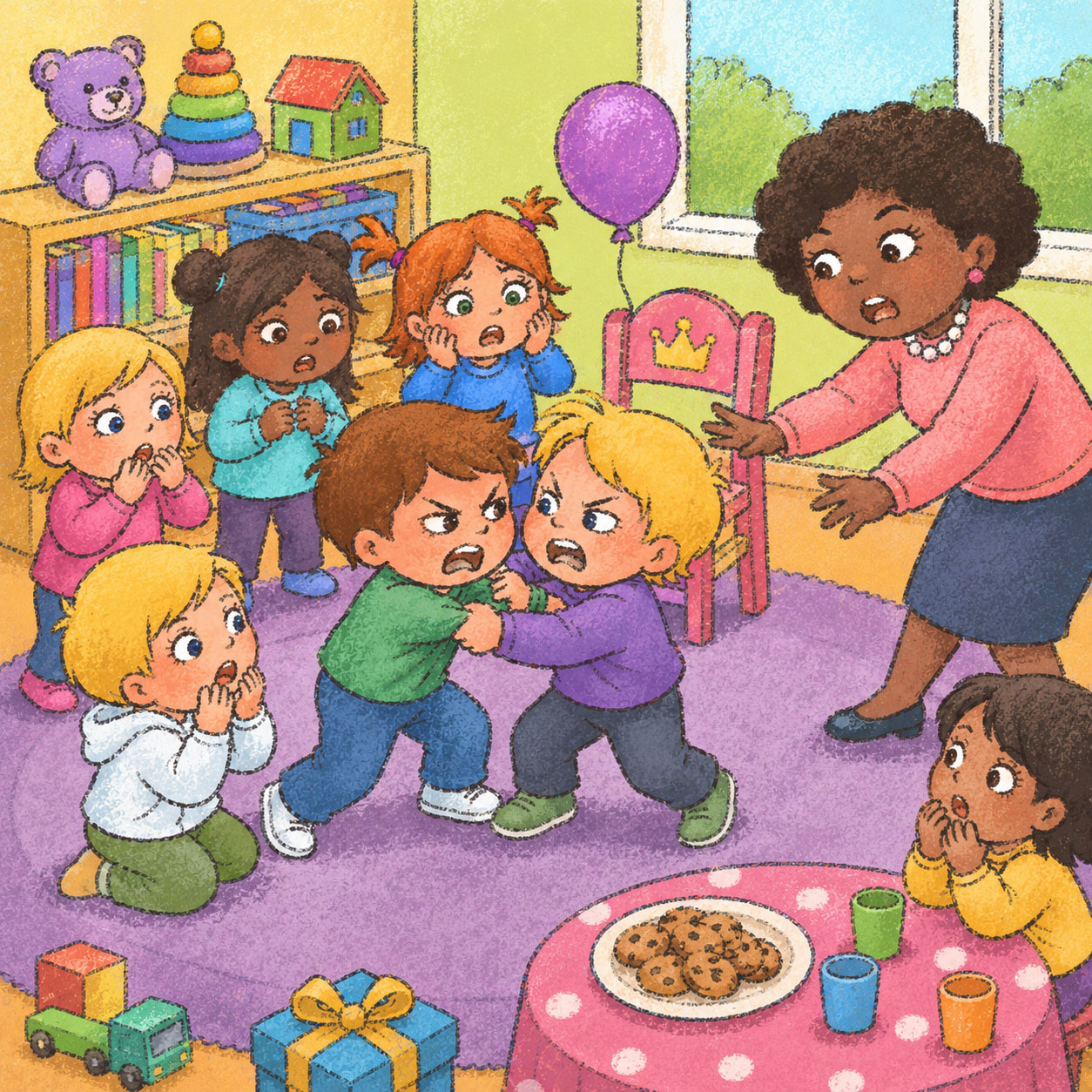
Teacher X enters the class. Today is the birthday of Child Y. Child Y is very excited. The teacher starts the usual birthday preparations. A special birthday chair and a crown are needed. There are some cookies to be served and songs to be sung.
Suddenly, Child Z shouts: “Birthday parties are stupid! Child Y is stupid, I don’t like him!”
Child Y starts shouting angrily too, and both children get into a fight.
Have you had experience with a similar situation – how did you react, how did you feel, would you change anything? If not, how would you react? How would you feel?
Teacher X recognizes his/her own emotional response to the conflict and stays calm. He/she should take a deep breath and avoid reacting impulsively. Teacher X has to use a calm tone to address the situation. Teacher X should tell Child Z that he/she recognizes how upset he is, and tell Child Y that it is justified to get angry in such a situation, and then invite them to talk about what can be done. By demonstrating emotional awareness and regulation, it is important for the creation of a safe and supportive atmosphere. This situation could serve as an example that every emotional moment is an opportunity to teach children how to navigate their feelings and relationships. Even when conflicts arise, we can guide children toward positive resolutions.
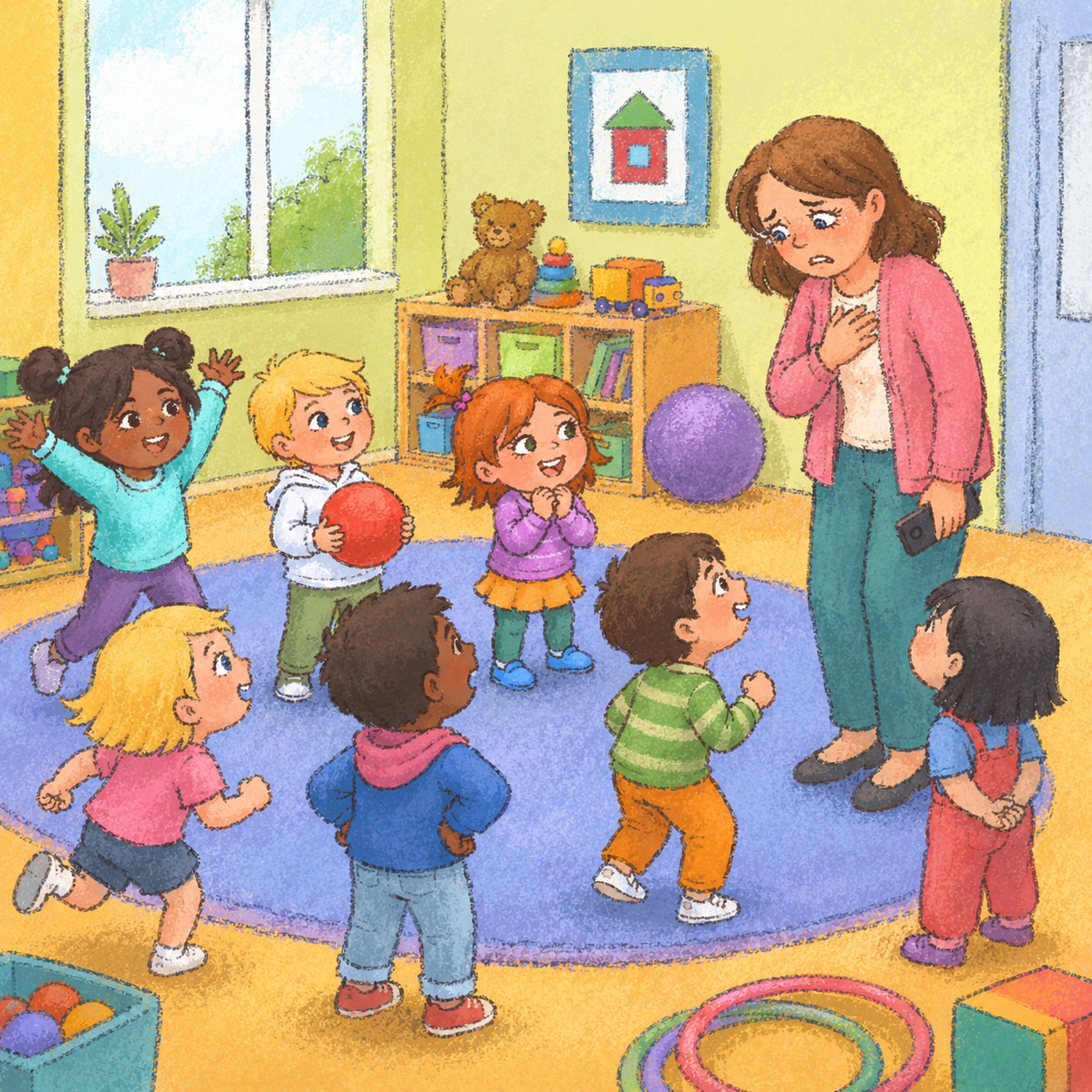
Teacher A had an urgent phone call. His/her mother had an accident and was taken to hospital. He/she suddenly feels very weak and is close to tears. Back in class, the children are eager to finally start some funny movement games they chose before the phone call came in.
Have you had experience with a similar situation – how did you react, how did you feel, would you change anything? If not, how would you react? How would you feel?
Teacher A has to acknowledge and process personal emotions, and take a moment to settle down. He/she can take a few deep breaths and acknowledge the emotional response internally: ‘This is upsetting, and it’s okay to feel this way.’ If necessary, he/she can seek support from a colleague. It is important to demonstrate self-awareness and emotional regulation in challenging situations.
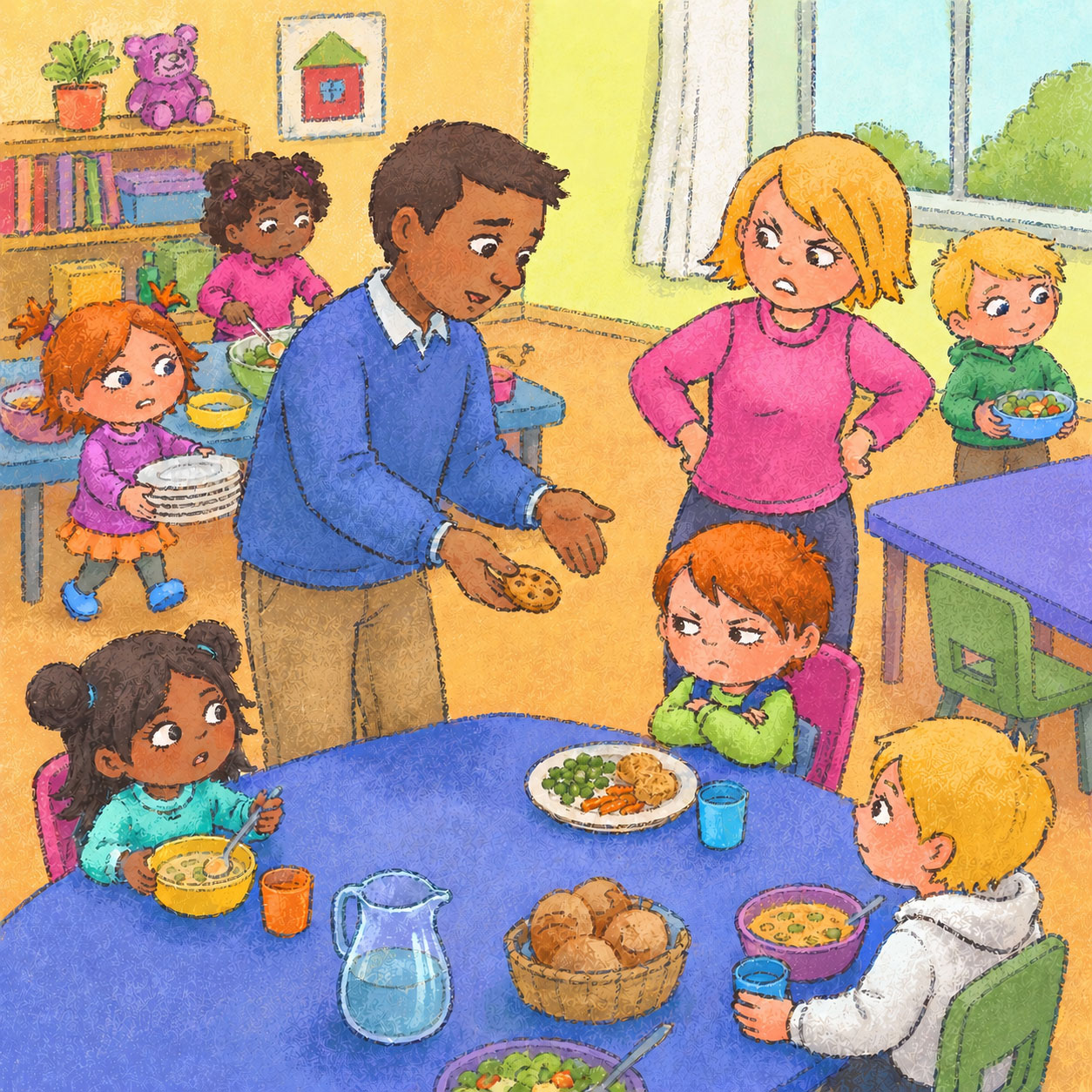
It's lunchtime. The children have returned from the yard and are preparing for lunch. They set the table and serve the food, while teachers supervise and monitor whether someone needs help. Boy F is picky and doesn't like today's meal. He refuses to eat. Teacher A tries to persuade him to at least try, but F is persistent. A then offers him a cookie, so he won't be too hungry. Educator B believes that this is wrong, both in relation to the boy and towards the other children.
Have you had experience with a similar situation – how did you react, how did you feel, would you change anything? If not, how would you react? How would you feel?
Teacher B has to show an understanding and regulation of emotions, respect for the colleague, and a commitment to problem-solving, in order to avoid impulsive criticism. Both teachers need to acknowledge shared goals, namely what’s best for F and the group. Teacher B could use I statements to avoid defensiveness from Teacher A.
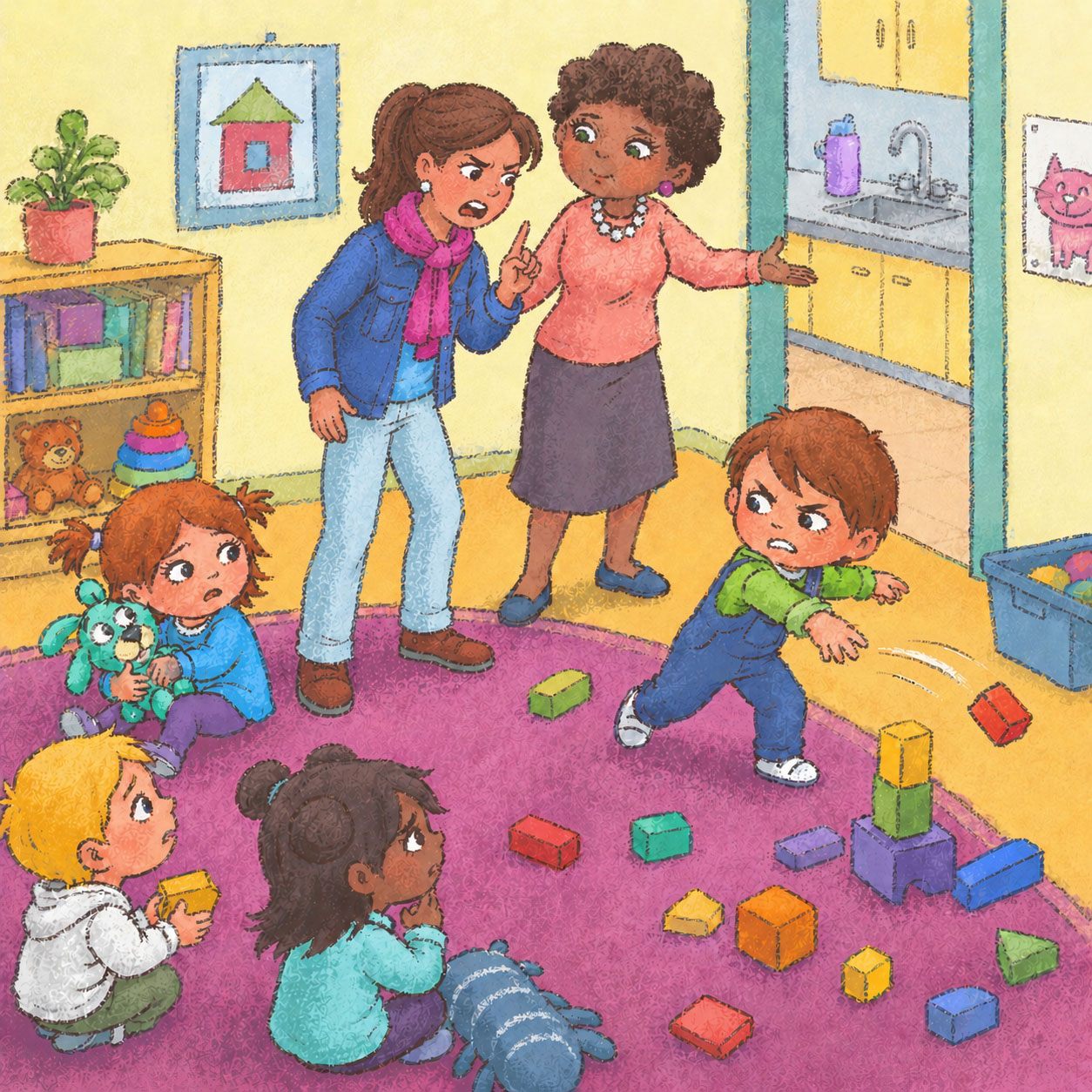
Teacher A has been talking to Child C for some minutes. C is not willing to stop throwing building bricks in the classroom. A tries his/her best, explaining to the child that the whole group is disturbed and the action is also dangerous. C does not change his/her behaviour. By now A has become quite distressed and starts to raise his/her voice. Educator B comes closer, very lightly touching Teacher A’s arm and asking gently:
“A, could you help me? I forgot to fetch the water bottle in the kitchen.”
Have you had experience with a similar situation – how did you react, how did you feel, would you change anything? If not, how would you react? How would you feel?
Teacher A has to recognize personal stress, accept help, and use the interruption constructively to self-regulate emotions and behaviour. Teacher A could take a moment to step away from the situation to regulate his/her emotions. The reaction of Teacher B shows collaboration and openness to supporting colleagues.
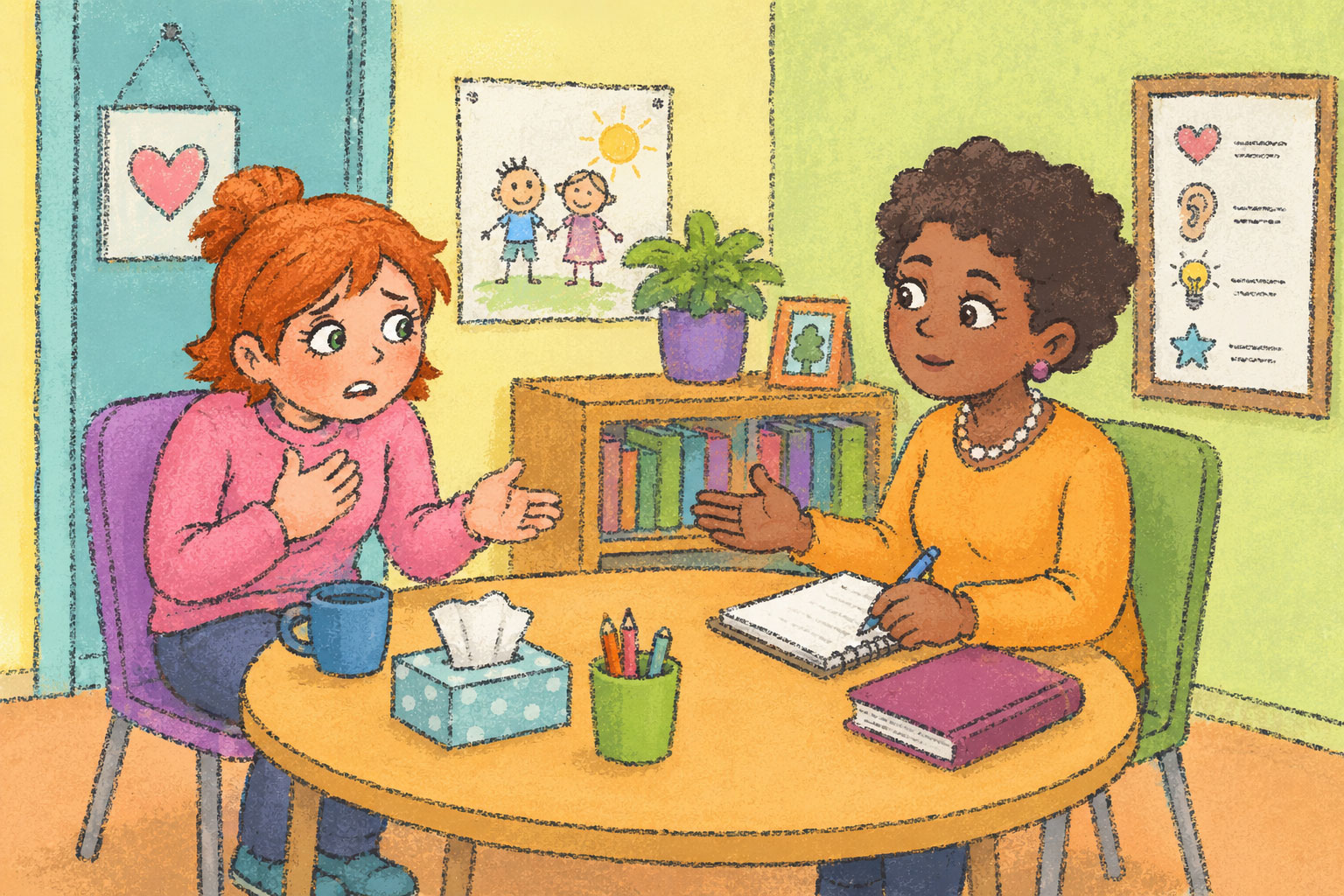
X is an educator in a daycare center. He/she finds it often hard to stay calm in stressful moments. X addresses M, the head of kindergarten, and asks for support: “M, I am awfully ashamed about that, but I notice that I sometimes become upset when conflicts between the children escalate or when I feel overwhelmed in my role. This leads to situations where I don’t always manage my own emotions well. Last Friday I ended up shouting in front of the group.”
M reacts calmly and supportively. Without blaming X, M points out that aggressive behaviour towards children harms them and is unacceptable. On the other hand, M tries to empower X by giving useful advice.
Have you had experience with a similar situation – how did you react, how did you feel, would you change anything? If not, how would you react? How would you feel?
M can start by appreciating X’s openness and willingness to seek support. M can offer constructive feedback and support, and address the importance of maintaining composure in a professional and non-judgmental way. The head of kindergarten should foster a safe and supportive environment where X feels encouraged to improve his/her emotional regulation and reduce stress responses.
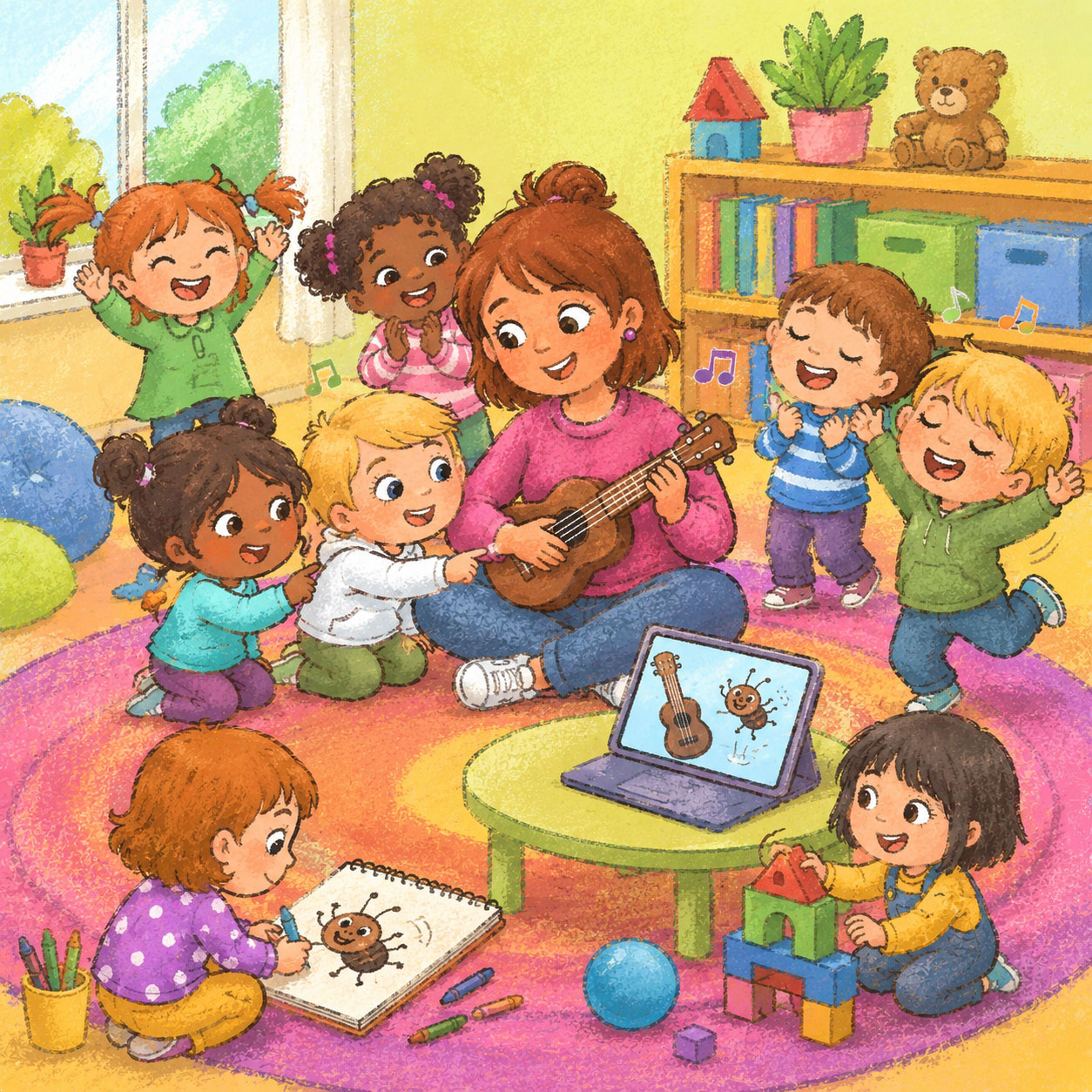
One morning Teacher M enters the classroom holding a very small guitar in his/her hand. Children are curious. They count the strings. This guitar only has four! They start a media research and find out the instrument is a Ukulele. They even find out that the funny name Ukulele means 'Jumping flea'. Together with M they start to invent a short song about a happy jumping flea. The children love the Ukulele, and they are very proud of their own self-composed song. Every day in the afternoon M plays the Ukulele for some minutes. He/she never forgets to end with the 'Jumping flea song'. Children sing or hum along when they feel like it. Some start dancing and jumping or join in clapping their hands. Others listen cheerfully without interrupting their current actions.
Have you had experience with a similar situation – how did you react, how did you feel, would you change anything? If not, how would you react? How would you feel?
Teacher M should carefully track all the changes and activities in the group that led to the positive outcome, since this new situation turned into a motivating and positive learning situation. Toward children, the teacher can acknowledge the new positive experience and express enthusiasm and gratitude towards everyone involved in the process. Children should be commended for their natural curiosity, attention, and activities towards learning. In addition, this situation could be used for creating connectedness and a sense of belonging in the group. The teacher is a role model who has positive emotions and manifests positive behaviour.
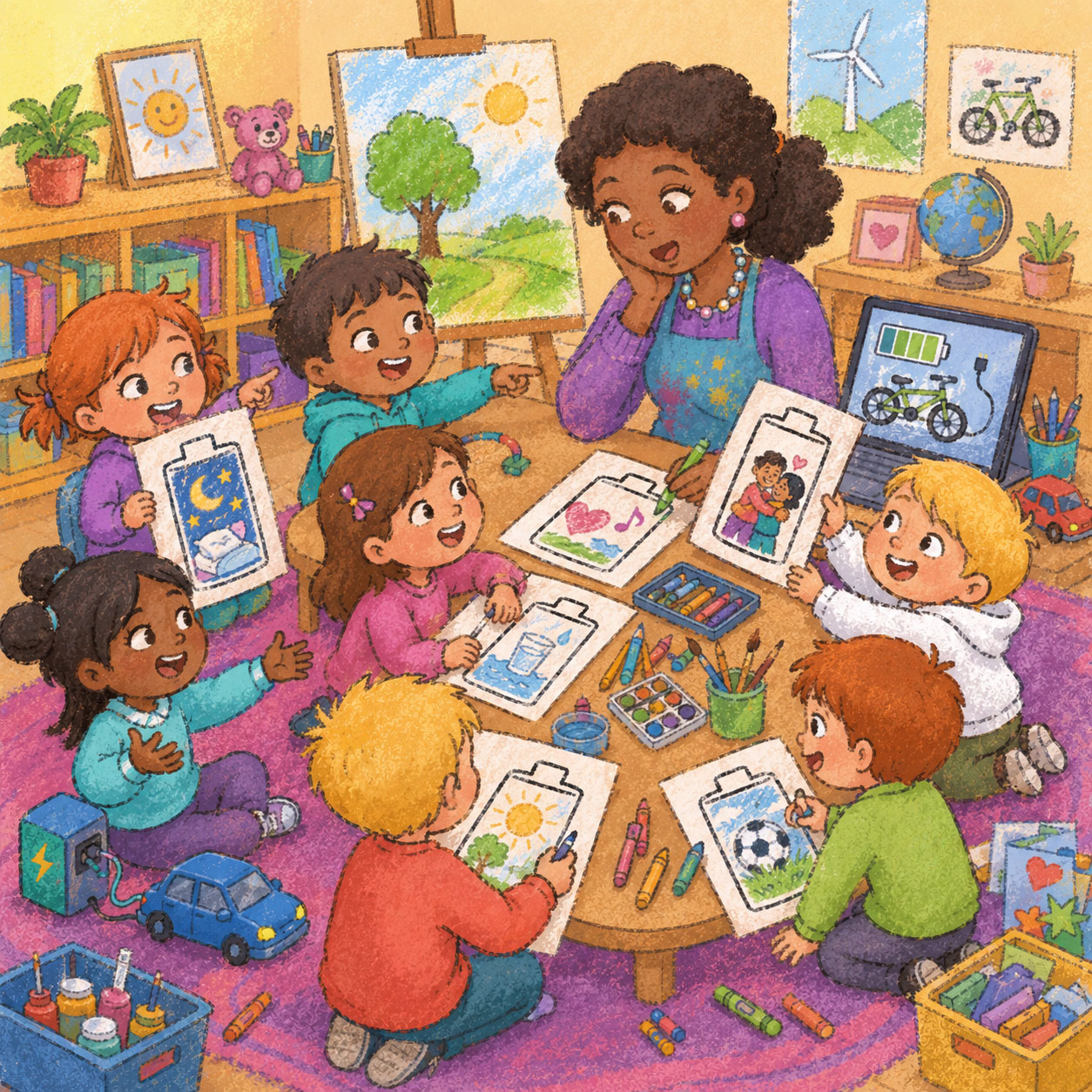
Teacher G enjoys arts and painting, but does not like using pre-made coloring pages.
Today, however, G gives the children copies of a drawing showing a battery. Some of the children immediately recognize what they see.
X (4;9) shouts, “Ha, it is about cars!”
G smiles and asks, “Why do cars have a battery?”
A lively discussion begins. The children talk about energy and electricity. They explain that a battery starts the engine or powers a car.
Y (5;2) adds, “And the battery has to be filled up.”
Y continues, “My mom has an e-bike. It is old. The battery has to be charged often.”
G smiles again and says, “That is the point. All batteries have to be filled up.”
Then G asks, “Can you imagine yourself as a power cell?”
G continues, “What do you need to be full of energy? If you like, you can use the copy and draw or paint your ideas.”
The children like the suggestion and start working.
Y hands a copy to G and asks, “Can you fill your battery too?”
G is surprised, but joins in.
In the evening, G sits in the kitchen and looks thoughtfully at the drawing of the battery.
G murmurs, “Is it half empty or half full?”
After a pause, G adds, “I should find more power lines to refill my battery.”
Have you had experience with a similar situation – how did you react, how did you feel, would you change anything? If not, how would you react? How would you feel?
This is one of the examples in which the teacher could recognize creativity and openness to new situations and children’s reactions. All of these should be widely embraced. Children love new, stimulating situations, ideas, and materials, and it is recommended for a teacher to always be focused on that, and always include children in co-constructing the learning situation. Listen to the voices of children! In addition, this particular situation could be related to human experiences of needing rest and restoring our energy for a new day, and the teacher serves as a fine role model.
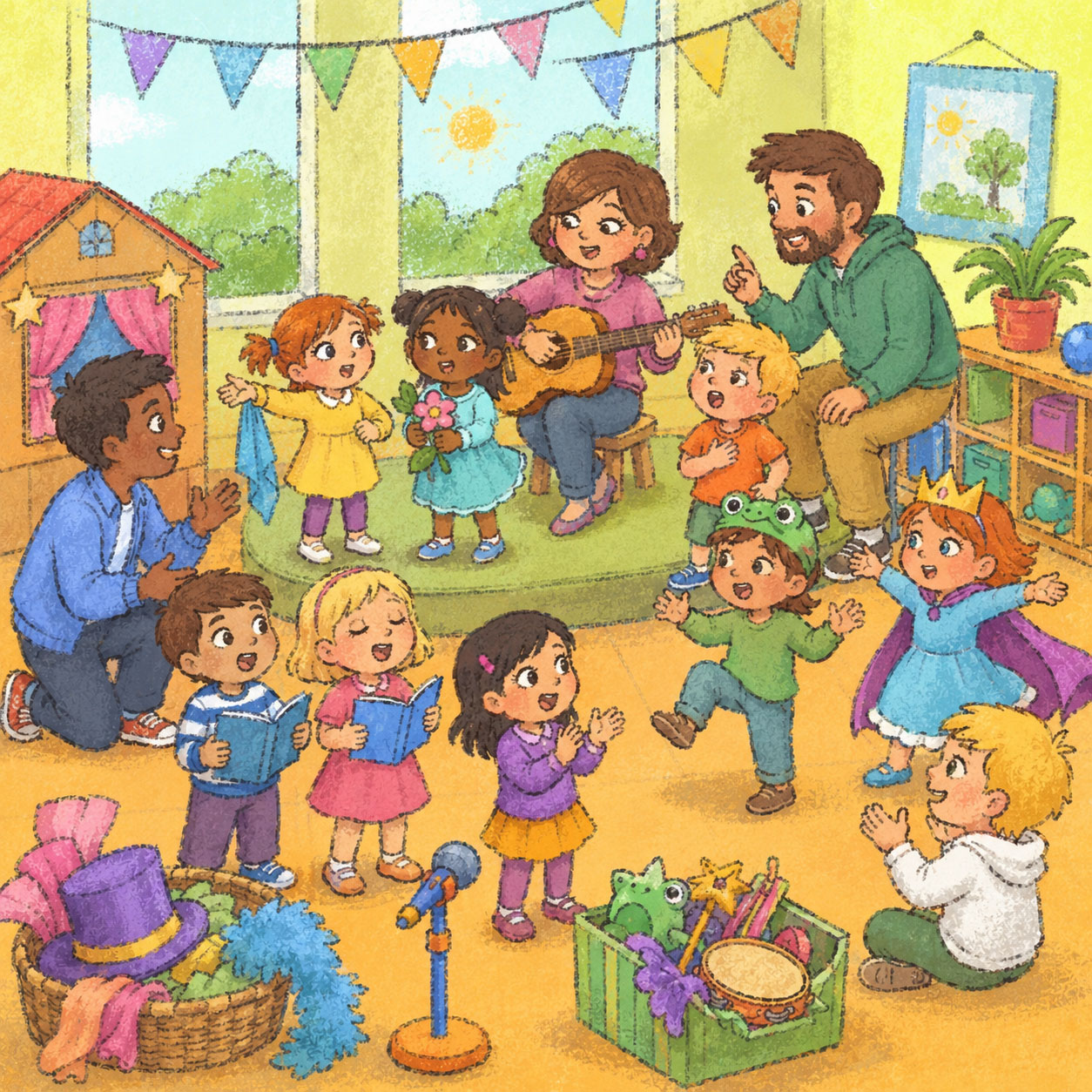
It's summertime. Children and teachers are preparing a show. All parents will be invited. Every day children and teachers practice songs and recitations that they have chosen together and will perform at the event. Teacher P accompanies on the guitar, while teachers Z. and L. help with recitation and speaking. Efforts pay off! Singing together becomes more and more harmonious. Children's skills in recitation and acting increase. In the morning everybody is eager to join rehearsal again.
Have you had experience with a similar situation – how did you react, how did you feel, would you change anything? If not, how would you react? How would you feel?
In this situation the teacher should make children aware of having the same goal and emphasize the connectedness and togetherness while working together towards it. Each child and teacher has a certain role in this task, and children could be motivated to be responsible for that. All teachers, P, Z, and L, are role models in this situation through their mutual relationships and cooperation towards the same task.
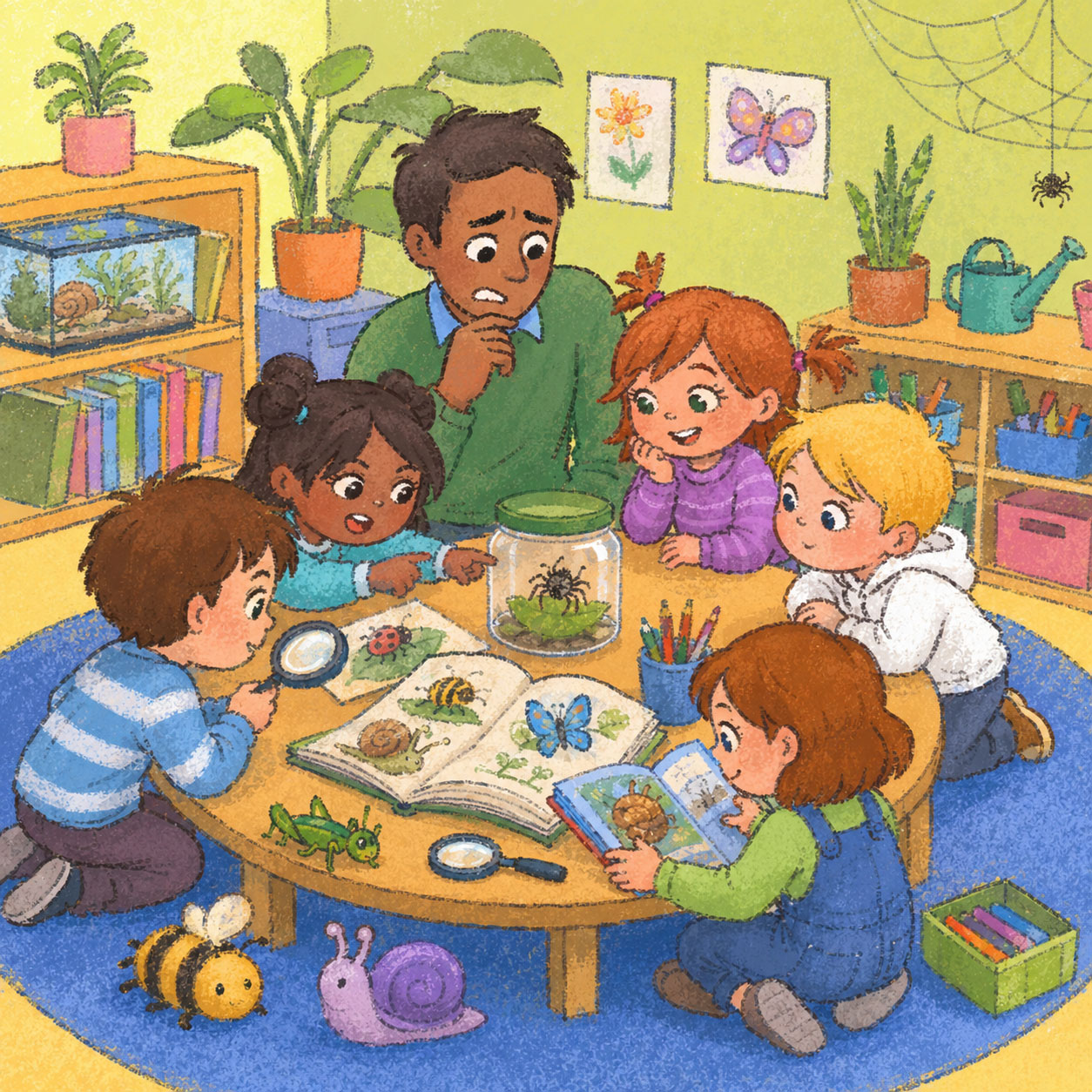
Teacher K is very fond of animals and plants. But he/she dislikes spiders because he/she thinks they are ugly and mean and leave dust-catching sticky webs on ceilings and walls. When a new project idea comes up, the theme is 'Our little helpers in house and garden'. The children want to learn more about insects. They are very curious about spiders too.
Have you had experience with a similar situation – how did you react, how did you feel, would you change anything? If not, how would you react? How would you feel?
Teachers should become aware of their dislikes and fears regarding various things that could be of interest for children. They could gain awareness by talking with children, their parents, and other teachers. After that, depending on the level of dislike and/or fear, teachers have several options for approaching a learning situation in which children want to know something about things that cause negative feelings for them.
One option is to overcome this dislike or fear and prepare themselves for this learning situation. A second option could be to organize this learning situation with another teacher who has a lower level of dislike or fear of spiders. A third option could be to deal with this situation by inviting an expert on spiders who can explain everything about them. Finally, many picture books and other relevant materials could be used.
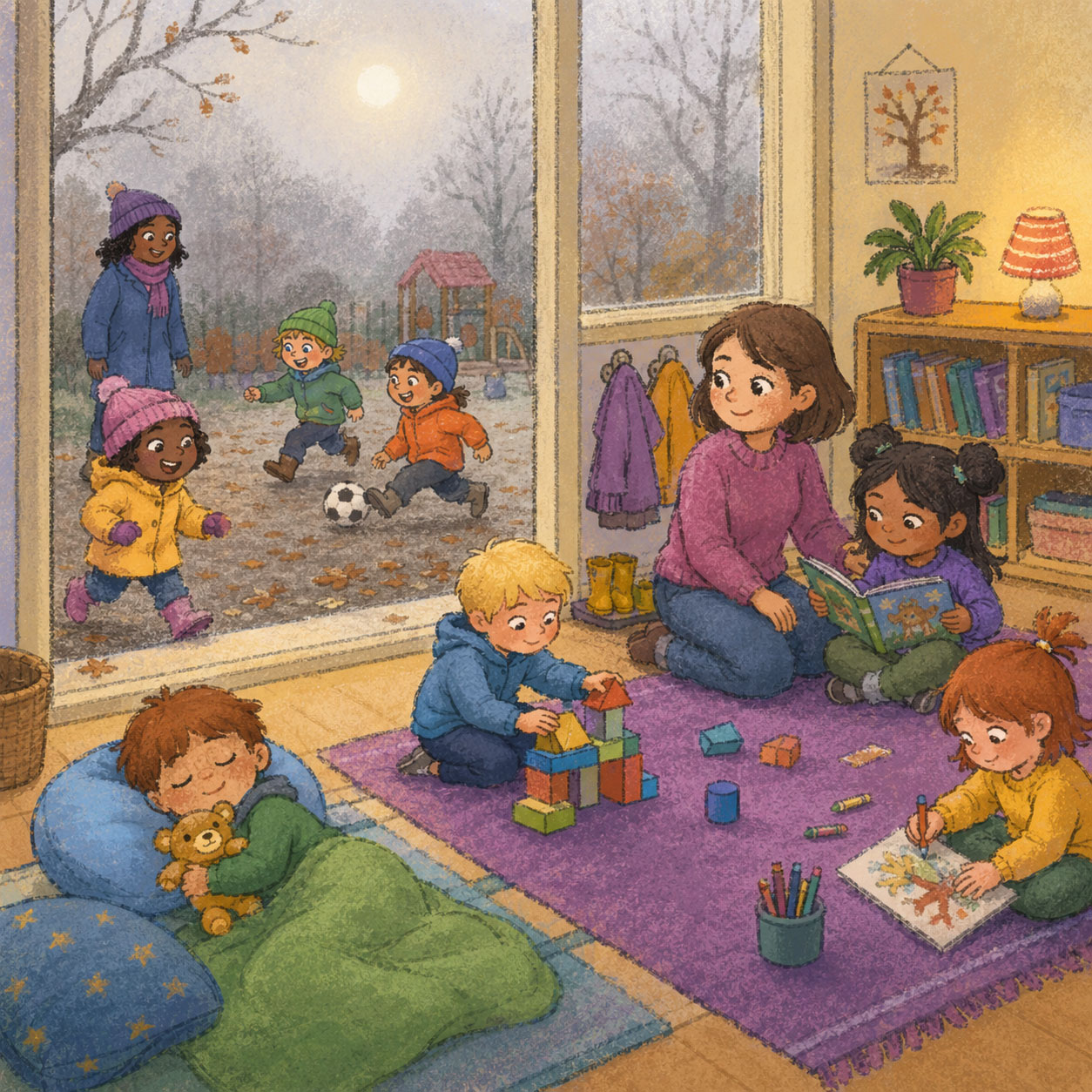
It is late autumn, and the days are short, foggy, and gloomy. The sun appears in the middle of the day and disappears in the early afternoon, exactly when the schedule wants children to stay indoors, between lunch, afternoon break, and snack. In both kindergarten groups with children aged four and five years, most children don't rest anymore. At mealtimes, some children complain to Teacher N. They want to play outside while it is light! N. and her/his colleague agree to break the established routine. Children may decide on their own to go to the yard after lunch. When the weather is bad or when a child wants to rest, they may stay inside. N. and her/his colleague take turns monitoring the children inside and outside.
Have you had experience with a similar situation – how did you react, how did you feel, would you change anything? If not, how would you react? How would you feel?
Regarding contemporary curriculum, one should focus on children’s voices and their interests and needs within the framework of the basic conditions for their development. This is something that Teacher N did. So, in organizing kindergarten routines, the need for spending time in nature and outdoor play should be satisfied. Through the collaboration of all kindergarten teachers, pedagogues, psychologists, and parents, all children’s proposals should be taken into consideration. Also, one should bear in mind that there are individual differences regarding described needs and organized routines.
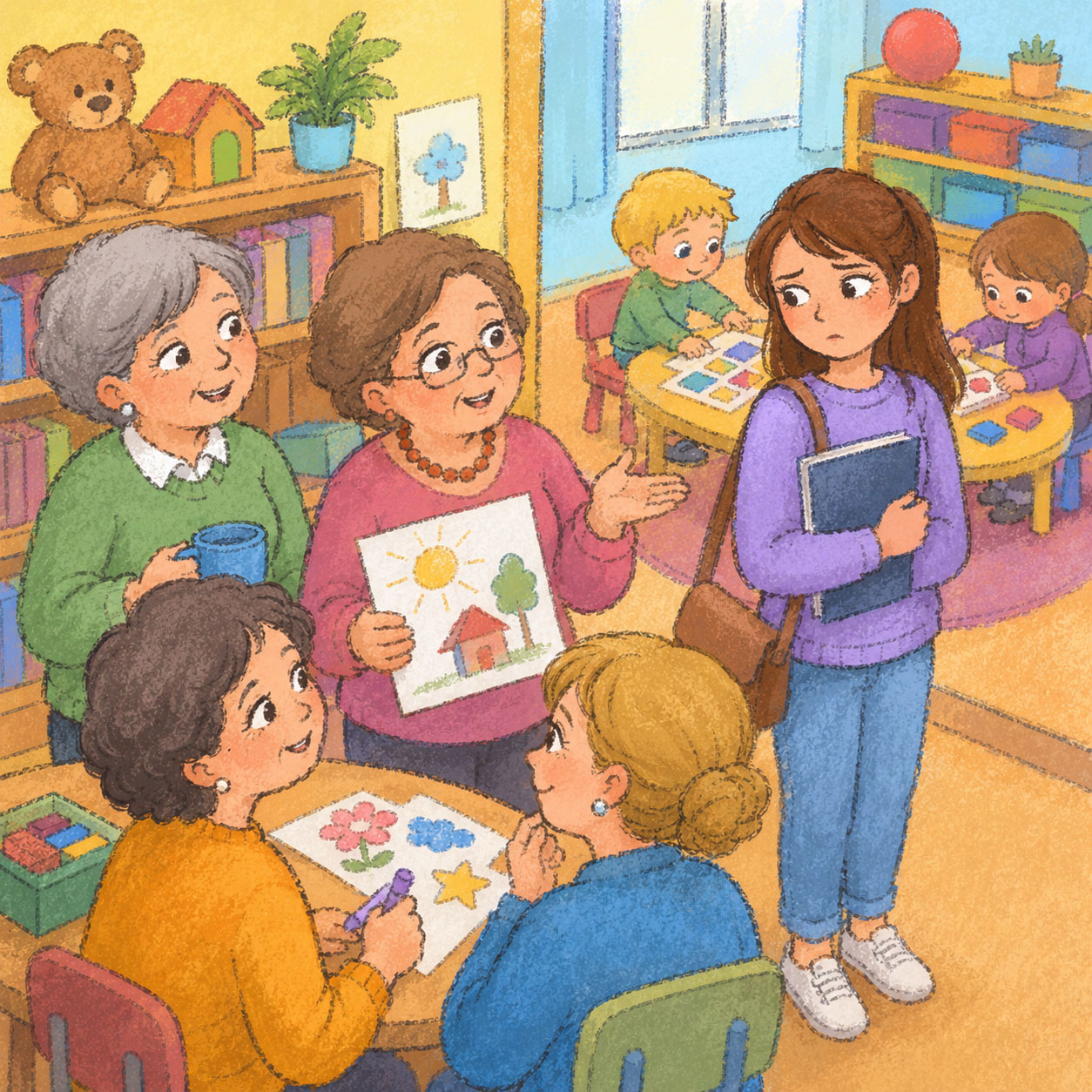
Teacher X. (25 y.) starts working in a kindergarten after graduation. The kindergarten team has been working together for ages. The average age of colleagues is 50+. Everybody is friendly and willing to help K., but K. feels somehow strange and “too young.” The situation is also quite different from preceding internships he/she experienced in kindergartens during university studies. She/he also has some difficulties with the low educational standards in the institution.
Have you had experience with a similar situation – how did you react, how did you feel, would you change anything? If not, how would you react? How would you feel?
Teacher X can become more aware of all the new aspects of this new position, and this includes both positive and negative ones, as well as similarities and differences regarding being a teacher in this particular kindergarten. An objective approach to all these aspects is helpful. Each position—including the one described, such as the age difference—is like a coin with two sides: maybe change the perception from focusing on differences to focusing on all the great experience older colleagues could share with Teacher X. Approaching older colleagues with respect and acknowledgement is the best way to connect with them. Also, sharing concerns and questions regarding their possible mutual differences could open a new door to collaboration. In this open and sincere communication, Teacher X can be flexible, but other teachers can be flexible too, which makes this transition a rewarding experience within the professional life of a young teacher.
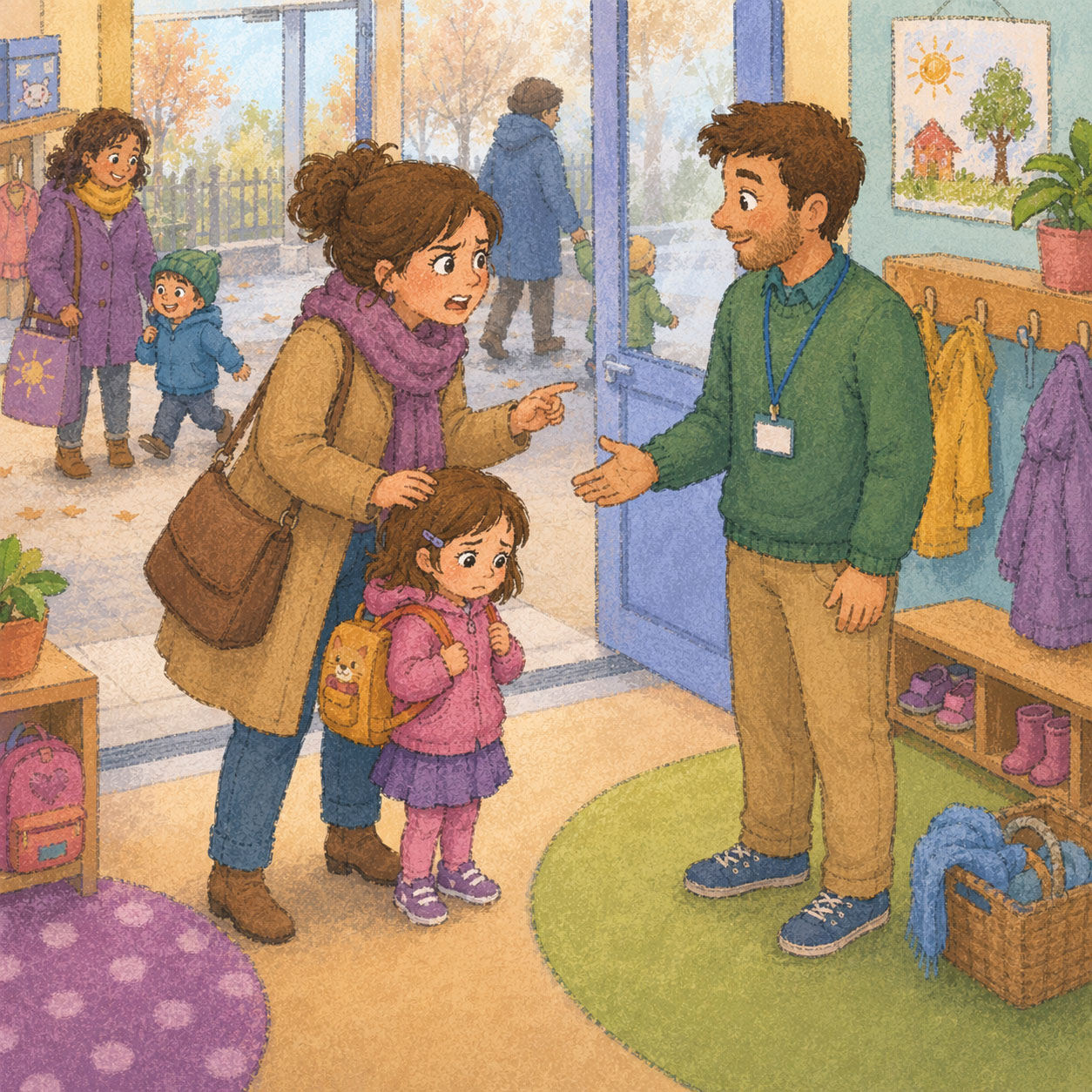
Early in the morning, Educator A is in charge of welcoming the incoming children in the hall. Mother Z. and her five-year-old daughter, M., are rushing into kindergarten. Z. is obviously in a hurry and shouts: “Come on, M., don’t be as slow as a snail!”
Then Z. turns to Educator A: “I don’t know why she is not able to move faster. Every morning, she manages to shake my nerves to pieces! I must show up at work on time! Other children behave much better.”
Which reasons might drive Z. to talk the way she does? In what way might her behaviour affect the child, Z. herself, and A.? Have you had experience with a similar situation – how did you react, how did you feel, would you change anything? If not, how would you react? How would you feel?
This situation could be used as one of the numerous examples in which parents have certain expectations of their children that could be discussed at a parents’ meeting led by the psychologist and teachers. At such meetings, kindergarten staff can provide parents with instructions on how to adjust to the situation of coming to kindergarten with their child and, at the same time, how to do this in a way that is not conflicting with their profession or the organization of other life activities. Also, parents should be educated on how to communicate their expectations to their children without harming their self-esteem and without making comparisons with other children. All parents have similar expectations, and there are various challenges that could arise. How to adequately address these challenges should be discussed during the meeting.
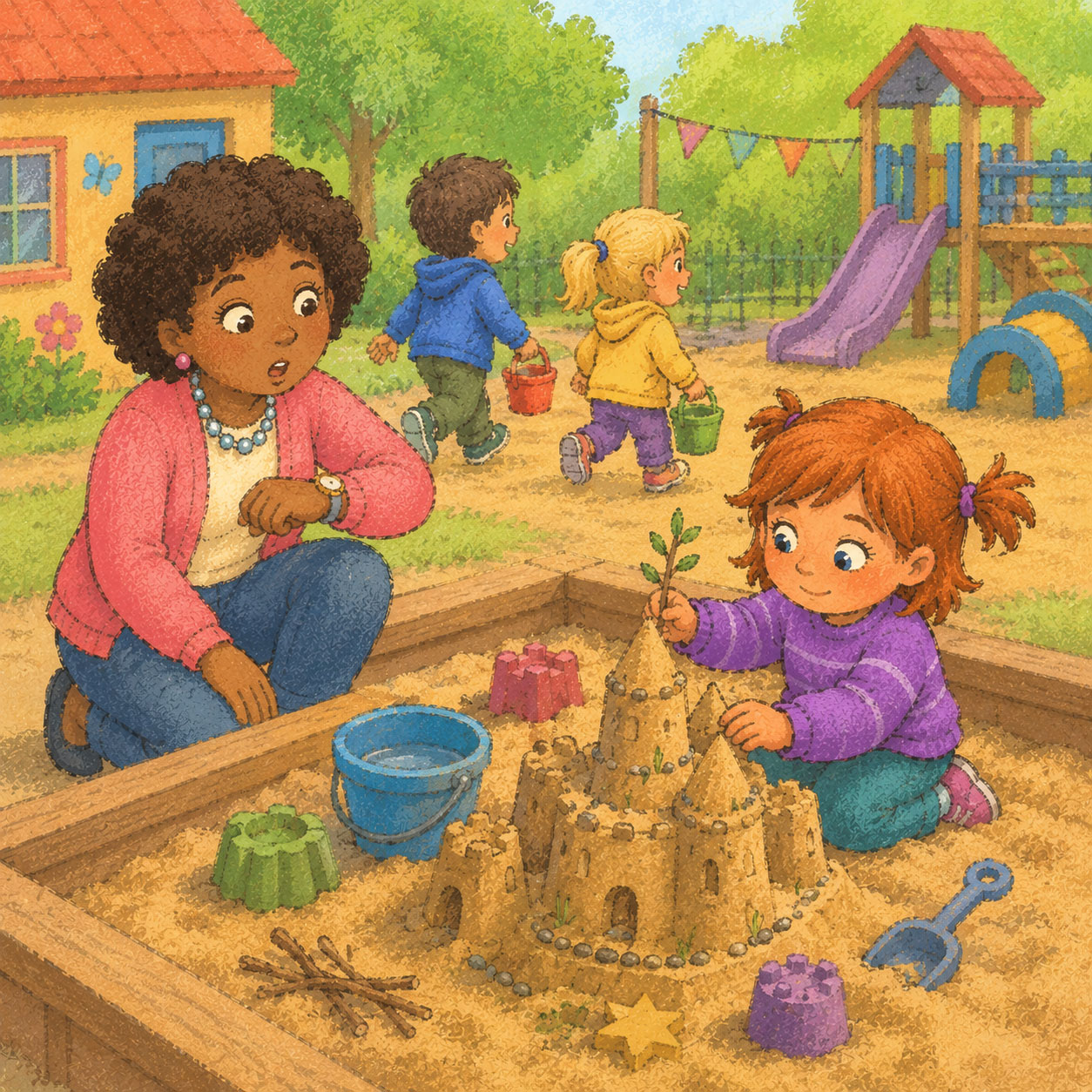
It is outdoor time. L. is building a sandcastle in the sandpit. She/he is using different sand molds, water, and some twigs. Teacher B. is watching and starts to wonder how long L. will go on with her/his work. Two other children join in. After some minutes they leave again. L. does not stop. B. realizes that L. has been “on the job” for more than 25 minutes.
Have you had experience with a similar situation – how did you react, how did you feel, would you change anything? If not, how would you react? How would you feel?
Kindergarten teachers should carefully observe all children and try to know each of them well. In this situation, on one hand, it is very positive that L. spends so much time absorbed and focused on the same activity. This could be a great starting point for a conversation with the child about what is going on and what she/he is doing. On the other hand, it is advisable to mention to the child in advance how long outdoor time will last, so they are prepared for the transition indoors. In addition, a similar activity could be continued indoors or resumed the next day, which could again affect the child’s social interactions in different ways. Finally, it is always useful to remind a child of his/her basic needs (going to the toilet, eating, etc.) during long-lasting games.

N. (28) has been working for five years and approaches her/his work very seriously. She/he tries to fulfill all professional tasks: address children’s needs and developmental tasks individually, be available and partner-oriented with parents, and meet the expectations of the members of the professional team regarding expertise, projects, and training. But each day seems too short to fulfill all obligations. Almost every night, N. writes reports or prepares for the next day. In the morning, N. is usually tired and feels physically exhausted all day long. During work time, N. regularly reexamines what she/he has forgotten or done wrong.
Have you had experience with a similar situation – how did you react, how did you feel, would you change anything? If not, how would you react? How would you feel?
First of all, there is no such thing as perfection, especially when we work with other human beings—in this situation, with children. If we set overly high self-expectations, this can lead to potentially stressful situations with no positive result in the end. So, it is good to set small steps toward a bigger professional goal, never losing sight of the children, since the main goal should be to achieve the satisfaction of children and their parents, creating a stimulating environment that will positively influence children’s development.
It is recommended to share your concerns and thoughts on this subject with colleagues and see how they balance their professional needs and workload. Mindfulness techniques or similar methods are very good tools to analyze all aspects of this situation and help find inner balance in dealing with them.
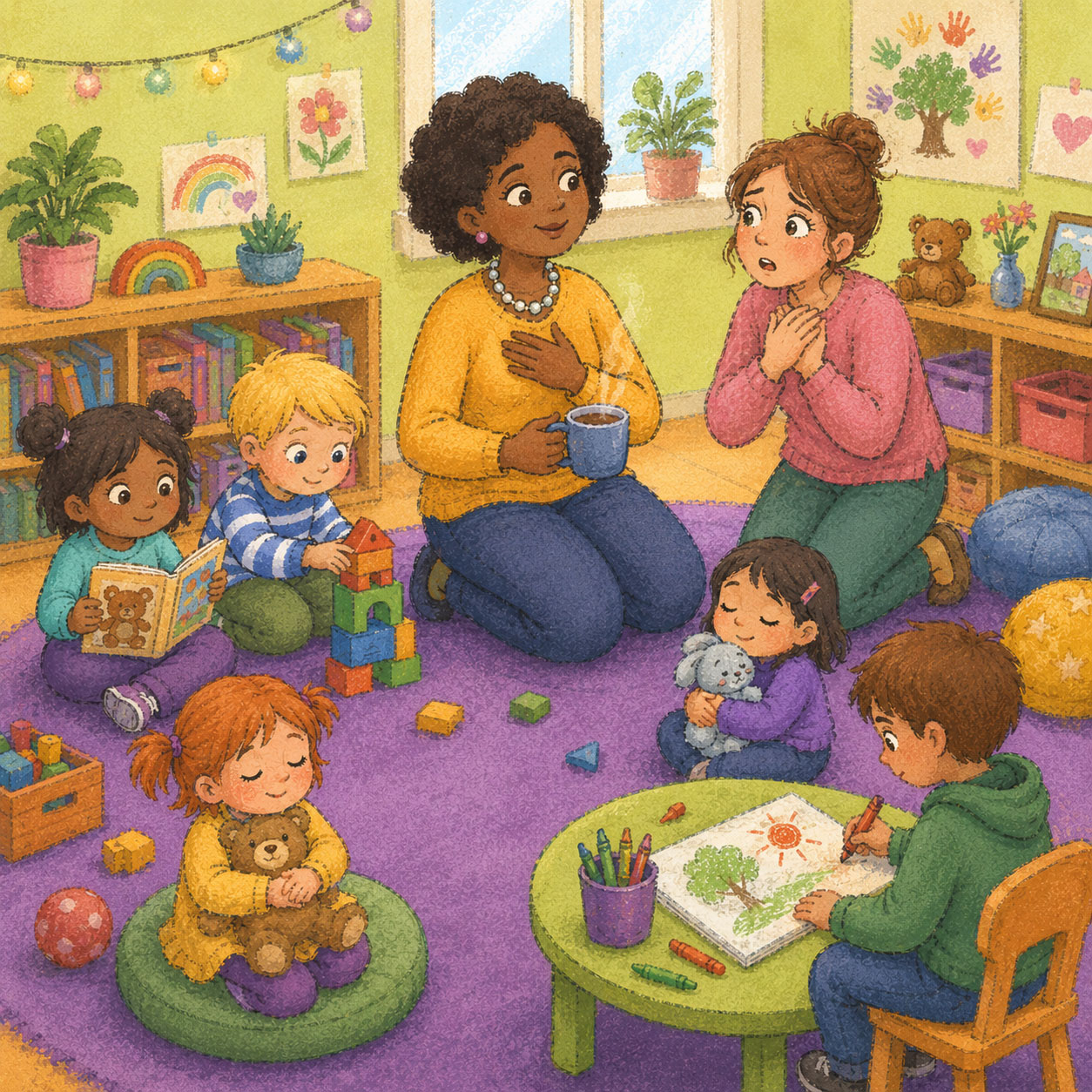
Even when things go haywire at work, T. (43) remains calm. R. (25), her/his colleague, wonders: “How do you do that? I am completely freaking out, but you come up with a brilliant idea and the children calm down.”
T. replies: “In one way, it might be in my genetic makeup. I am on the calmer side. On the other hand…”
T. laughs, “it’s hard training!”
“So, you are doing workouts in the evenings?” R. asks.
T. shakes her/his head, “Yes, I do sports, but mainly my ‘training’ is about how I do things day-to-day in kindergarten. For example, I am very aware of my breathing, and I know how to ‘ground’ myself when things get tough. I have established some routines. You know, the way I prepare my tea — things like this. I had severe heart problems five years ago. This was a real wake-up call. Thereafter, I established routines. I find this very helpful!”
Have you had experience with a similar situation – how did you react, how did you feel, would you change anything? If not, how would you react? How would you feel?
Sharing good habits and practices with colleagues is one of the most positive things within teacher collaboration and social support. Even though there are no single, universal recipes for everyone, a presented strategy or technique could be inspiring for another teacher. Also, we cannot expect that we are all the same, or that we all have the same reactions in certain situations. However, we can find our own way to deal with everyday challenges in kindergarten.
In-depth personal analysis of needs and interests, communication and support from colleagues in kindergarten, continuous professional development, and always putting children’s needs at the center present solid guidelines to become a competent, satisfied, and positive teacher.
For successful Social and Emotional Learning (SEL) implementation in the educational process, a fundamental question arises: how to ensure adequate professional development for teachers—both pre-service and in-service—to improve the quality and effectiveness of social-emotional skills.
The professional development of teachers is understood as a lifelong process of learning and growth in the personal, social, and professional fields. It is important how the teacher views their competencies and how they assess the opportunities for professional action in the direction of critical, independent, and responsible decision-making and action (Kalin & Čepić, 2019; Čepić & Šćulac, 2019).
The effectiveness of each teacher–child interaction depends, in part, on the adult’s ability to understand social and emotional cues and respond appropriately. Continuing teacher training and professional development should emphasize the enhancement of preschool teachers' social competencies, such as empathy, communication, collaboration, and teamwork. By teaching empathy, teachers create a supportive environment where children learn to understand and respond to others' emotions. Effective communication strategies are essential for helping children express their feelings and understand different perspectives. Furthermore, kindergarten teachers should facilitate group activities that promote collaboration and teamwork, encouraging children to respect diverse ideas and contributions.
Scientific studies (e.g., Ranta et al., 2020; Brown et al., 2019; Blewitt et al., 2018; Tatalović Vorkapić & Čepić, 2020) confirm that empathy, high-quality communication, and well-developed social competencies among kindergarten teachers are key factors that positively influence the emotional and social development of children in early and preschool years. Blewitt et al. (2018) proposed a conceptual model aimed at encouraging social and emotional learning in preschoolers by focusing on the quality and intentionality of teacher–child interactions. The authors drew upon two frameworks relevant to early childhood settings: the Teaching Through Interactions Framework, which outlines the types of interactions associated with positive child outcomes, and the Pyramid Model for Supporting Social Emotional Competence in Infants and Young Children. This systematic, tiered approach seeks to implement strategies that enhance social-emotional well-being. The model could guide teachers in applying appropriate techniques and fostering positive relationships through daily interactions with children.
Evaluating current teacher–child interactions and identifying areas for improvement help in understanding existing practices and establishing a baseline for enhancement. Providing teachers with targeted training, implementation, reflection, feedback, and ongoing professional development are crucial factors in improving teachers' social competencies and the quality of teacher–child interactions, particularly in terms of children's social-emotional functioning and overall well-being.
Teachers with high levels of empathy help children develop emotional intelligence, foster better social interactions among peers, and are more effective in responding to children's emotional needs, thereby reducing stress and aggressive behavior. Reflective practices are essential for improving teachers' empathetic abilities. By engaging in reflective exercises, such as journaling or peer discussions, teachers can better understand their emotional responses and biases, which helps them respond more empathetically to children's needs. The study advocates for ongoing reflective training as part of teachers' professional development to promote deeper emotional engagement and improve the quality of teacher–child interactions. These findings emphasize that empathy is not an inherent trait but a skill that can and should be cultivated through targeted professional development.
Communication plays a central role in child development. Teachers who practice open, clear, and positive communication help children develop better language and social skills. Active listening and responding to children's inquiries and needs encourage them to feel more secure and confident. Both verbal and non-verbal communication play a crucial role in building trust between teachers and children. Research has shown that communication plays a key role in fostering children's emotional regulation and social skills. Teachers who use open-ended questions, active listening, and reflective communication strategies are better able to help children articulate their emotions and understand others' perspectives. Professional development programs for teachers should emphasize communication training, particularly strategies that support emotional expression and understanding. Additionally, training focused on emotional attunement and conflict resolution is essential. Techniques such as active listening, open-ended questioning, and modeling appropriate emotional expression should be given stronger emphasis in continuous professional development programs for kindergarten teachers.
Teachers' social competencies, which include the ability to create a positive and supportive environment, significantly impact children's overall development. Teachers with well-developed social competencies are better equipped to manage group dynamics and conflicts among children. Children learn social skills by observing and interacting with teachers who demonstrate effective social strategies. Setting clear and consistent boundaries, combined with warmth and support, helps children develop a sense of security and self-regulation. Therefore, teachers who continuously improve in these areas can make a significant contribution to creating a positive and supportive environment, which is essential for the health and well-being of children. Professional development that equips teachers with tools to scaffold collaborative activities effectively ensures that children not only participate in group work but also learn essential teamwork and conflict-resolution skills. The importance of professional development programs focused on collaboration and teamwork strategies must be emphasized, both for teachers working with children and within their own professional practice. Training that focuses on modeling, guiding group interactions, and promoting collaborative problem-solving is key to improving children's social and teamwork skills.
In summary, teachers’ social competence is crucial for managing group dynamics. Teachers with well-developed social skills, such as empathy, communication, and conflict resolution, are better able to manage group dynamics in educational settings. This leads to a more cohesive, positive learning environment where children feel supported and engaged. Professional development should focus on group management strategies. Programs should prioritize skills such as active listening, peer mediation techniques, and fostering inclusive participation, as these are essential for creating a collaborative and harmonious climate.
Training in social competence improves teacher–child interactions and has a positive impact on children's social-emotional development. Short-term training programs are not sufficient for lasting changes in teacher behavior. Continuing teachers’ professional learning and development, supported by regular reflective practices and peer collaboration, are necessary to reinforce social competence and ensure that teachers consistently apply these skills in their daily interactions with children. Continuous support and reflection are essential, as social competence is a dynamic skill set that requires ongoing learning and adaptation.
These conclusions underscore the critical role of sustained professional development in enhancing kindergarten teachers' social competencies, which directly benefit both teacher–child relationships and children's overall development. Comprehensive and continuous professional development programs that integrate theory, practice, and reflective learning are particularly important for cultivating strong social competence in kindergarten teachers.
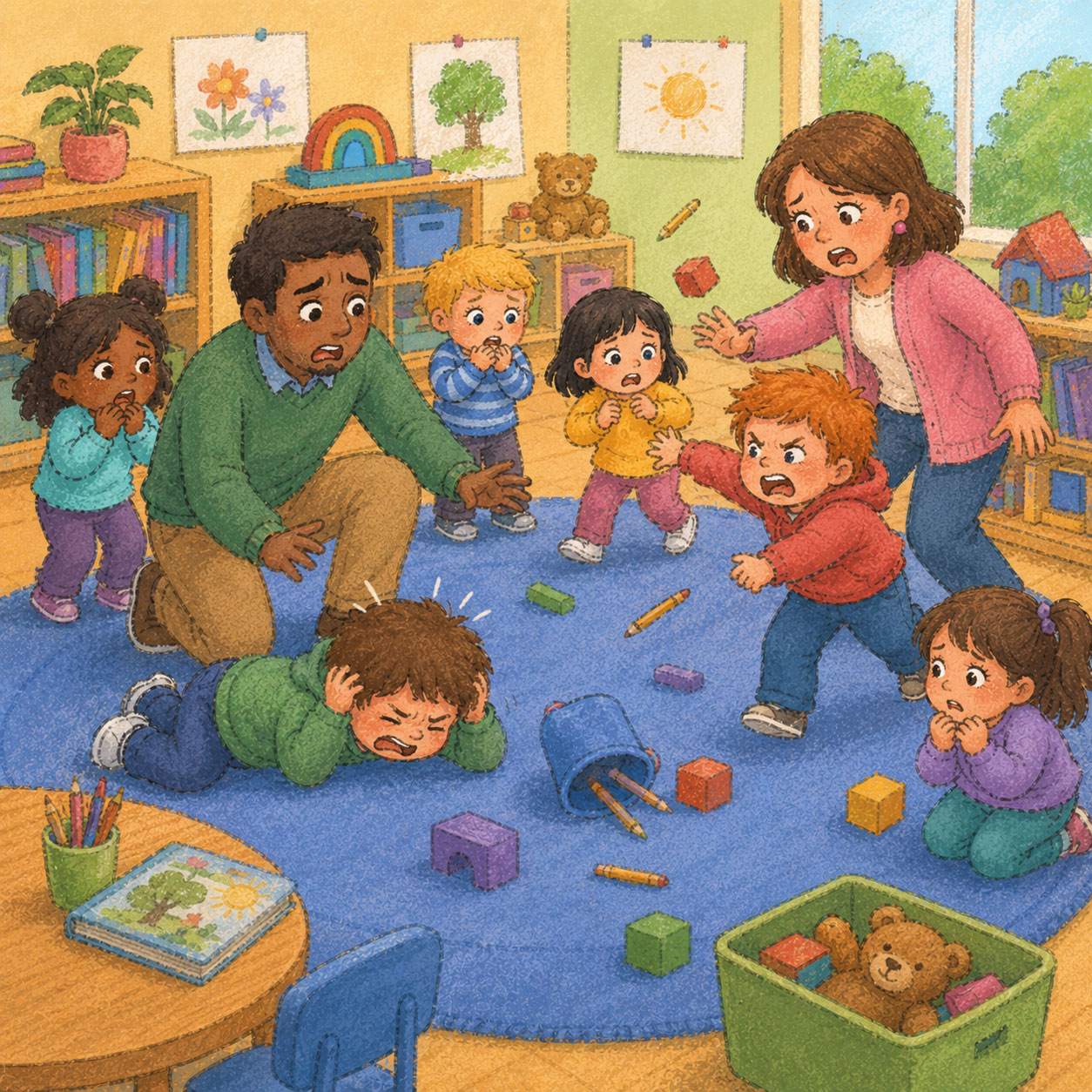
Two children in the group of teachers H. and J. have problems with emotional regulation and anger control. They have tantrums. Sometimes the children bang their heads on the floor or even endanger other children or teachers by throwing toys and pencils.
Have you had experience with a similar situation – how did you react, how did you feel, would you change anything? If not, how would you react? How would you feel?
The application of techniques based on empathy and support for positive behavior is important. First, kindergarten teachers should establish a predictable routine to provide a sense of security and reduce stress triggers. Second, modeling emotional regulation through calm reactions and verbalizing emotions (e.g., “I see you’re upset; let’s take a deep breath together”) helps children develop emotional awareness. Third, implementing proactive strategies such as redirecting attention, offering sensory tools (e.g., stress balls), and reinforcing positive behaviors with instant praise fosters self-regulation skills. Additionally, creating a supportive environment with clear boundaries and empathetic engagement helps children feel understood and supported while reducing aggression. Cooperation with parents and experts ensures consistency and the use of appropriately adapted educational methods.
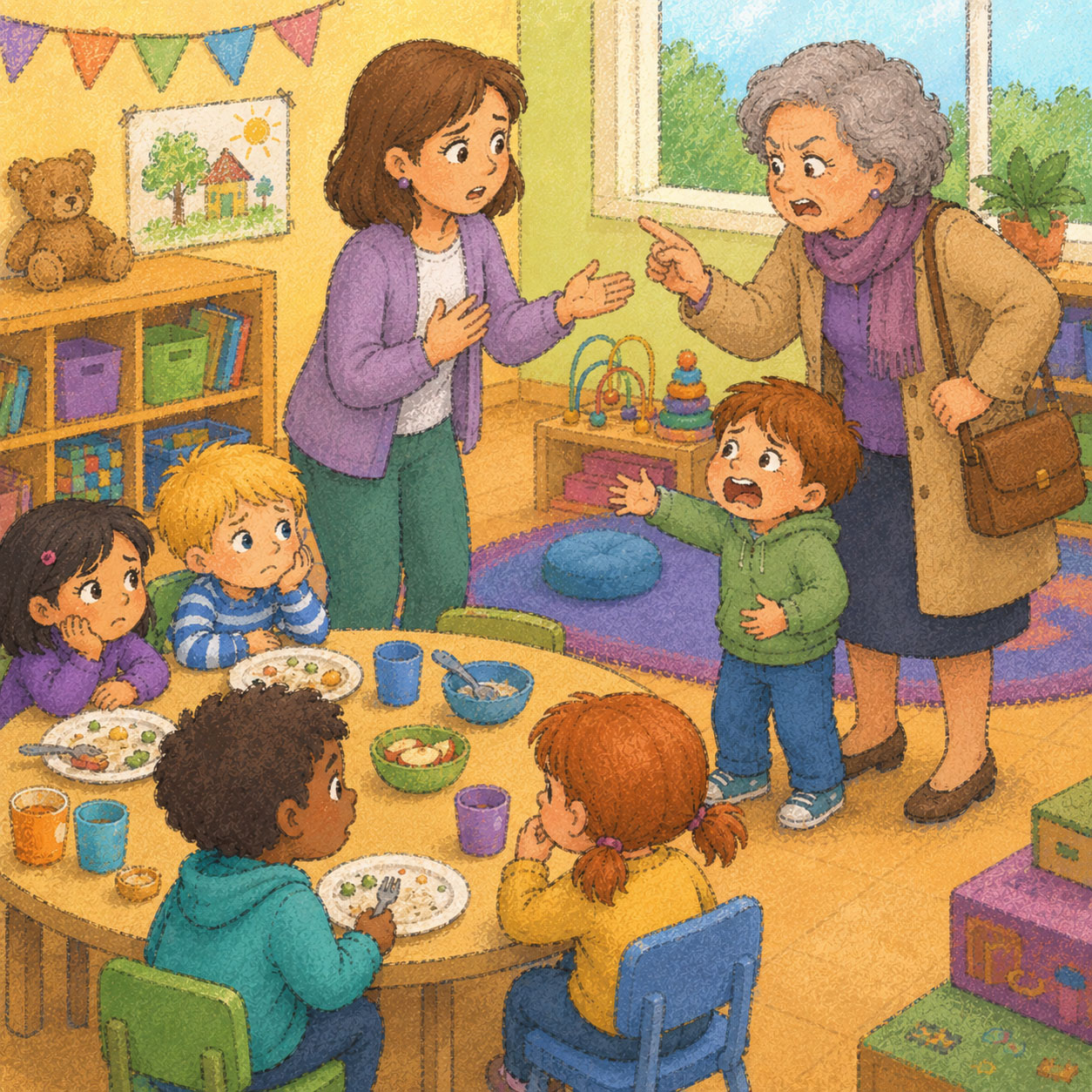
F. (5) is a child with difficulties in the social and emotional area of development. He stays in the group from 9 to 12. He has frequent and intense tantrums. On Monday at lunchtime, F. does not want to join the group and decides he doesn't want to eat lunch. Every invitation to join in is fruitless. After lunchtime, F.’s grandma comes to pick him up. The teacher explains that F. had no lunch because he refused to eat. Grandma becomes angry and complains that they are paying for kindergarten meals. All of a sudden, F. claims that he is hungry. Grandma demands that he be offered lunch immediately. Other children in the group witness the scene and seem irritated.
Have you had experience with a similar situation – how did you react, how did you feel, would you change anything? If not, how would you react? How would you feel?
Approaching with empathy and active listening, confirming grandma’s concerns while remaining calm and professional, is especially important in this situation. The kindergarten teacher can explain the steps taken to encourage the child to eat while emphasizing the child’s autonomy and emotional state at the time, ensuring that the grandmother feels heard. Offering a solution, such as providing a small snack or discussing meal preferences collaboratively, demonstrates flexibility and care. Additionally, the kindergarten teacher can model emotional regulation by maintaining composure and using language that reassures both the child and the grandmother, setting an example for the children observing the interaction. To prevent similar situations, the kindergarten teacher might suggest a follow-up meeting to align expectations and develop strategies tailored to the child’s needs, fostering a supportive partnership with the family.
M. is an educator in an age-mixed group. The youngest child is 2;4, the eldest 5;7 years old. Today, the mother of Z., a new boy/girl (2;3), spent the day in kindergarten to help her child settle in. Before she leaves, she has a talk with M.: “I am so impressed and touched. I feel as if you have a close and heartwarming connection with every child. And children talk about everything! They are not at all shy. It seems as if they feel really safe. How do you manage that? Do you have an extra huge heart?”
M. answers: “Thank you. It makes me glad to hear that you realized how well we get along here. One thing we do in kindergarten is always pay attention to the emotional status of children. We do this in a practical way. Often, we act like a ‘mirror,’ showing a child with our bodily and verbal expression that we try to understand their ongoing emotions. So, children feel safe and seen as a person.”
Have you had experience with a similar situation – how did you react, how did you feel, would you change anything? If not, how would you react? How would you feel?
In such a situation, the kindergarten teacher can acknowledge the parent’s emotions and strengthen the bond by expressing gratitude and modesty. By confirming the parent’s observations, the teacher validates their perspective and deepens trust. They can explain that building strong relationships with children involves intentionally modeling empathy, actively listening, and fostering a safe environment where children feel valued and understood. Highlighting practices such as aligning with individual needs, encouraging open communication, and maintaining consistent routines helps parents appreciate the professional strategies involved. This approach not only shows respect for the parent’s feelings but also strengthens the partnership between teachers and parents in supporting the child’s development.
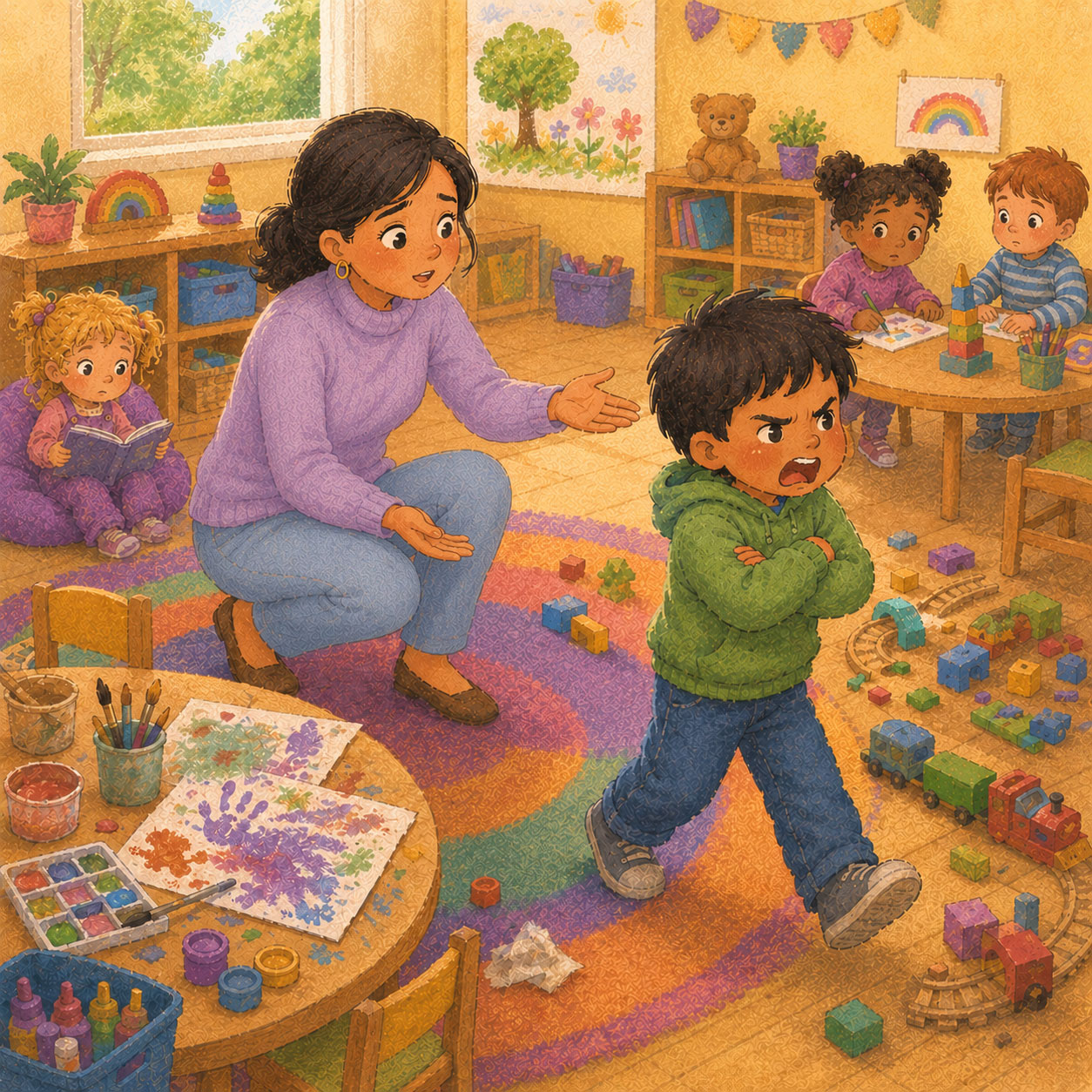
Today, F. (5;5) has a hard time finding an activity or a place that suits him. The teacher suggests several activities. First, F. starts a game with cubes and trains but soon stops and leaves the scattered toys on the floor. Then F. starts painting but gives up and leaves a mess on the table. The teacher kindly reminds him to put away the toys and utensils he used before starting something new. F. doesn’t want to do so. The teacher is persistent: “Come on, it won’t take long to get this done!” and even offers to help clean up, but F. walks away shouting angrily, “Leave me alone! I hate you!”
Although the teacher is paying attention and interacting with the child, there is no positive outcome. At which point did communication go wrong? What was the teacher’s aim? How would you address the child?
Communication went wrong when the kindergarten teacher insisted on cleaning despite the child’s visible frustration, which escalated rather than de-escalated the situation. The teacher’s goal in this scenario should be to help the child regulate his emotions and feel understood, rather than to focus immediately on completing the task. A socially competent kindergarten teacher should validate the child’s feelings by calmly acknowledging his frustration (“I see you’re upset; it’s okay to feel that way”) and giving him space to calm down. Once the child has settled, the teacher can gently revisit the cleaning task, presenting it positively, offering choices, or incorporating playful elements (“Can we work as a team to clean up quickly?”). This approach models empathy, reduces conflict, and supports the child’s emotional self-regulation.
F. (4;11) approaches teacher M. F. seems terribly upset—breathing heavily, with tears in the eyes—and struggles to verbalize what is going on. M. says, “Come on, F., why don’t you talk when there is something wrong? Don’t you think you’re overreacting? This looks like a drama.”
Later, F. (4;11) approaches teacher O. F. again seems terribly upset—breathing heavily, with tears in the eyes—and struggles to verbalize what is going on.
O. says, “Hello, F., you are upset. It’s extremely hard for you to talk now. We can take a couple of slow, deep breaths together if you want to. This might help you relax and make talking easier.”
Have you had experience with a similar situation – how did you react, how did you feel, would you change anything? If not, how would you react? How would you feel?
Acknowledging the child’s feelings, offering support, and proposing a soothing strategy foster trust and emotional security. A socially competent kindergarten teacher would validate the child’s emotions by calmly recognizing their distress (“I see you’re upset; it’s okay to feel that way”). They would use calming strategies such as deep breathing, providing a comforting presence, and using simple, gentle language to guide the child toward calm. Avoiding judgment or pressure to verbalize immediately allows the child to process emotions at their own pace. Building a safe environment grounded in consistent empathy and patience helps children develop self-regulation skills over time.
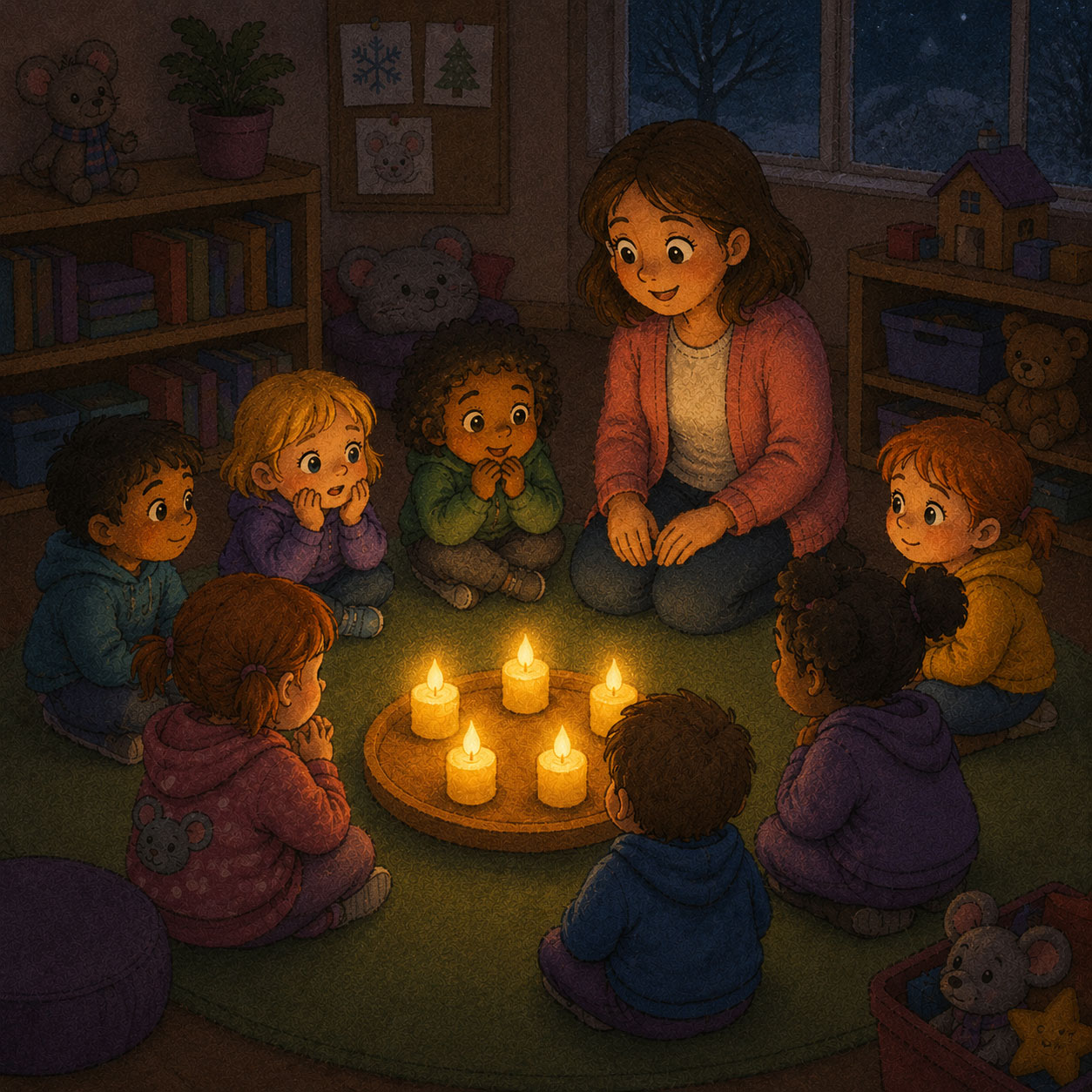
During the cold and dark months of the year, the ceiling lamps in rooms and corridors are constantly switched on. The artificial light is very efficient but cold.
One child expresses, “It is like a big flashlight! It hurts my eyes.”
“What should we do?” asks the teacher of the “Wise Mice” group.
The children discuss and finally decide to start an experiment and turn off the ceiling lamps. Suddenly, the room is dark. It is not easy to see features, and some children become a little frightened.
“We need a night light. I have one at home,” J. (5;6) says.
Another child remembers that they use tiny plastic candles powered by batteries at birthday celebrations. The teachers bring small lights. Finally, the group gathers around six small “candles.” All the children relax, and together they enjoy the small circle of flickering light.
Have you had experience with a similar situation – how did you react, how did you feel, would you change anything? If not, how would you react? How would you feel?
Some of the key strategies that a kindergarten teacher can apply include:
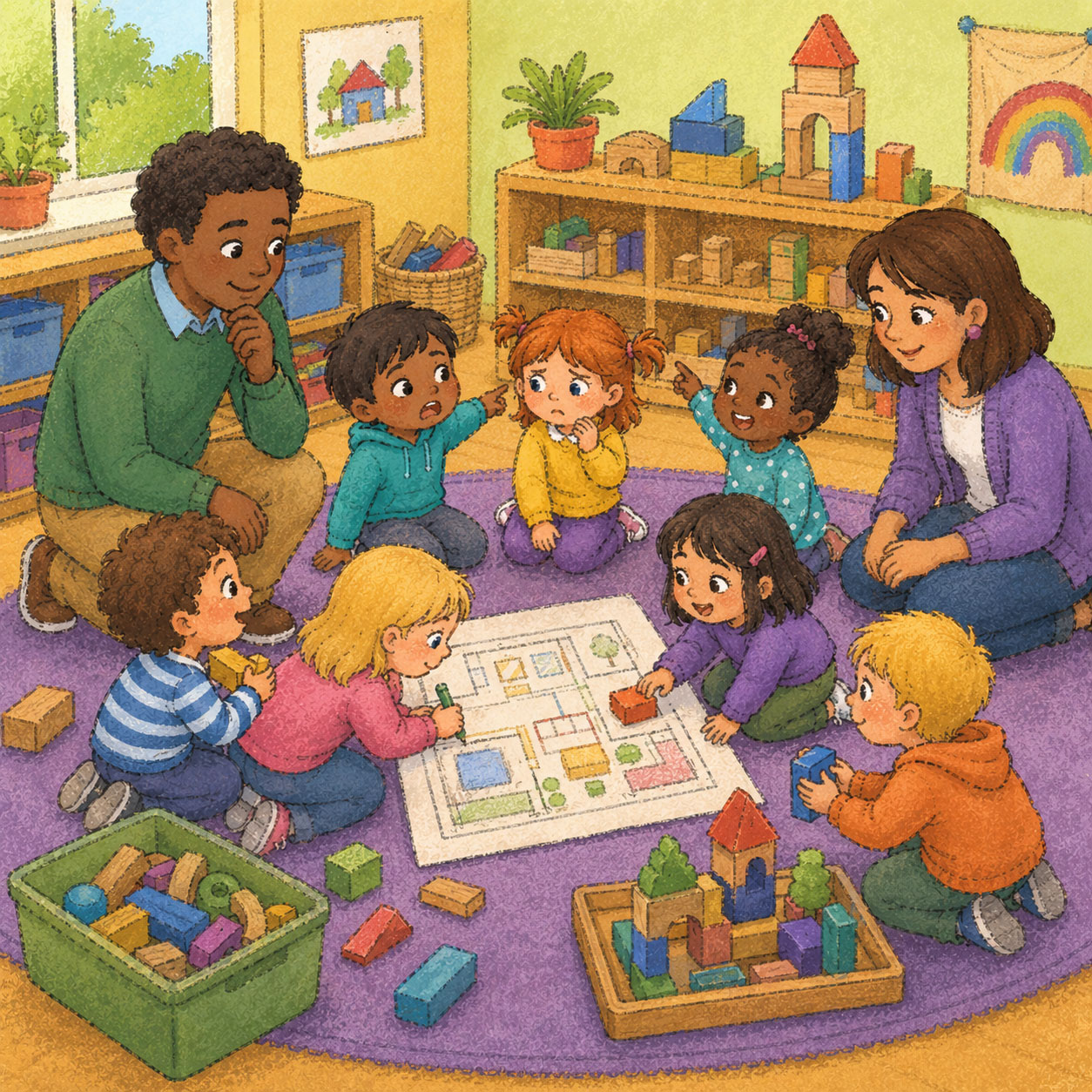
Last week, teachers F. and K. evaluated how children use the building area. They discussed the outcomes and realized that most of the time, there is more frustrated shouting than actual play happening in that corner. K. wanted to help the children and had several ideas to improve the situation. She/he wanted to buy a “traffic light,” hang up posters with visualized behavior advice, and do many other things.
F. suggested another approach: “Let’s take a step back and talk with the group first.” K. doubtfully agreed.
They asked the children about the situation, and the results were interesting:
F. and K. asked the children to map out ideas to alter the setting.
Have you had experience with a similar situation – how did you react, how did you feel, would you change anything? If not, how would you react? How would you feel?
To promote collaboration and respect in the construction area, a socially competent kindergarten teacher can establish clear group norms for turn-taking, sharing, and respectful communication—co-created with the children to ensure their engagement and ownership. Introducing collaborative building challenges (e.g., “Let’s build the tallest tower together”) fosters teamwork and shared goals. The educator can model problem-solving by mediating disputes constructively, encouraging children to articulate their feelings and propose solutions. Using role assignments (e.g., planner, builder, decorator) ensures all children contribute meaningfully and respect one another’s roles. Lastly, regular reflection sessions where children share their experiences and ideas for improvement reinforce positive behaviors, empathy, and collaboration.
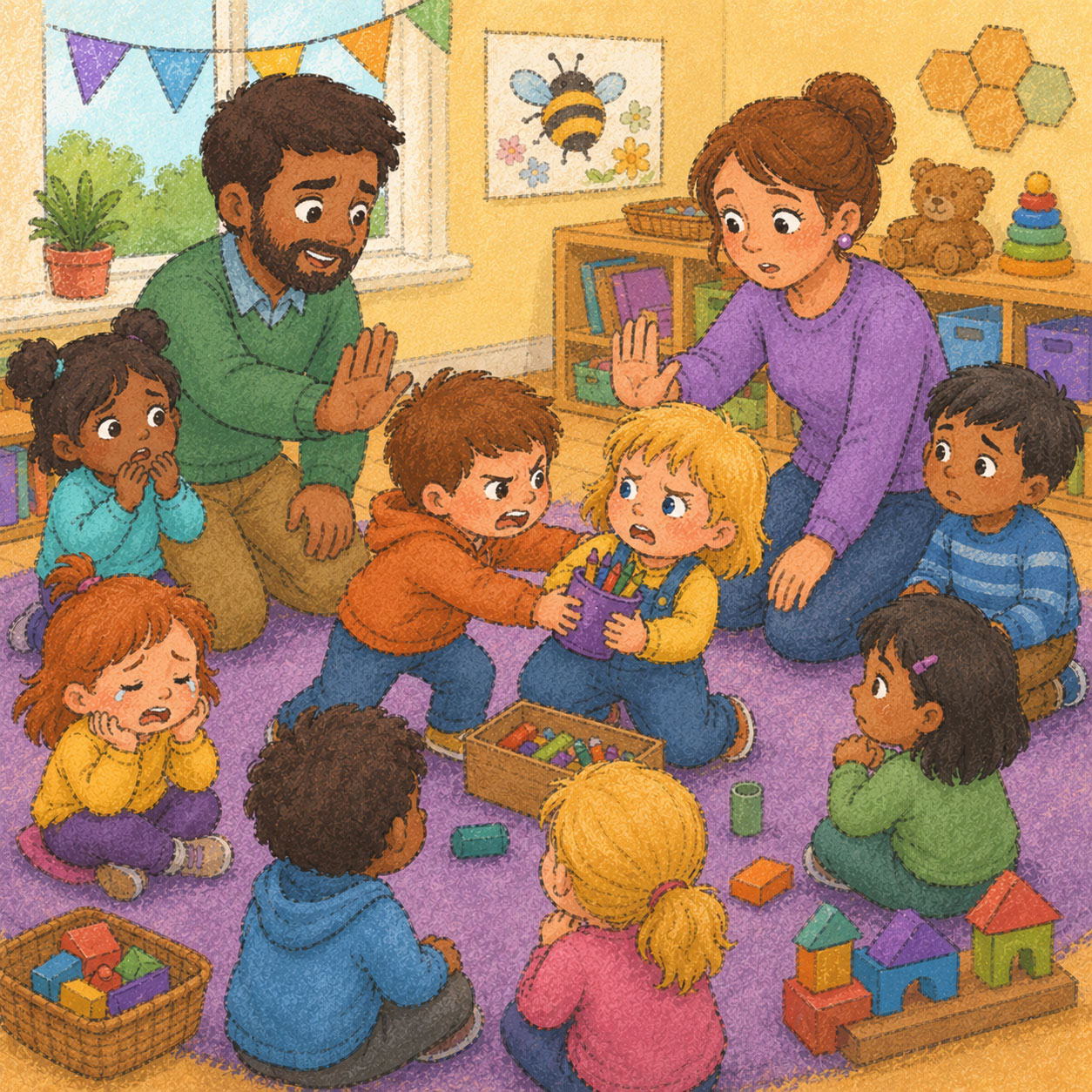
After the new kindergarten year started in September, every day in the “Bees Group” became a real challenge for the teachers. The “bees” did not behave like those busy and organized insects. There was a lot of shouting all day long. Children did not like to share materials, and when someone was angry, he or she often pushed other children. Things seemed to get worse day by day. Both teachers shared their observations and decided to emphasize fostering mediation and problem-solving skills in their educational work. First, they established a routine to help children feel safe: whenever an argument took place or one or more children came close to an emotional meltdown, they gave a “Stop” signal.
Name further steps that will help children to develop problem-solving skills and a sense of peer mediation.
To address yelling, reluctance to share, and physical conflicts, a kindergarten teacher can explicitly teach social skills through role-play and storytelling, helping children learn to share, take turns, and express their emotions constructively. Establishing a conflict resolution corner provides a peaceful space for children to discuss and resolve disputes with guided instructions. Collaborative projects, such as creating group art or building together, encourage teamwork and shared goals. Visual cues such as posters or cards with simple conflict resolution steps help children remember strategies on their own. Finally, the kindergarten teacher should consistently model and reinforce positive behaviors by praising examples of sharing, problem-solving, and collaboration to create a supportive and cooperative environment.
The importance of competencies related to learning is highlighted in European education policy documents and global research on the quality of education systems. Participation in continuous professional development (CPD) appears as a key predictor of the quality of interactions between educators and children and is correlated with child development and learning (Jensen & Rasmussen, 2019; OECD, 2018).
To keep pace with the changing paradigms of preschool education and to adapt to new scientific knowledge and needs in a changing environment, preschool teachers need to continuously improve their skills. This includes following the results of scientific research, adapting to new pedagogical principles, and learning from examples of best practice. A commitment to lifelong learning ensures that teachers can continually improve their skills and knowledge, which ultimately benefits the children they teach.
Based on scientific knowledge, the conceptualization of learning-to-learn competence has become part of key documents aimed at educational change. Recommendations from several major international organizations (OECD, 2017; 2019; 2020; UNESCO, 2013/2014; European Commission, 2021) emphasize the importance of the competence to learn how to learn (L2L; European Council, 2006) as a core competence for lifelong learning.
The European Framework for Personal, Social and Learning to Learn Competences (LifeComp) aims to advance the common understanding of this key competence and facilitate its implementation. LifeComp competencies are described as adaptable and acquired through formal, non-formal, and informal learning. Their development is defined as crucial for citizens to become successful individuals who direct their own learning and career paths (Caena, 2019; Sala et al., 2020).
Learning to learn is a competence that can be acquired throughout the lifespan. It is a relevant driver for change in adulthood, promoting employability and competitiveness.
Learning to learn is considered a 21st-century competency that preschool teachers should develop so they can encourage this competence from an early age in children. Although this is still not applied to a great extent for these youngest ages (Brito et al., 2021; Huerta et al., 2020).
Learning to learn is the ability to persist in learning and to organize one's own learning, including effective management. The competence of learning to learn refers to the affective and cognitive elements of learning and implies a mixture of knowledge, skills, and attitudes. This competence is related to self-regulated learning, metacognition, and motivation for learning, and implies the acquisition, processing, and adaptation of new knowledge and skills, as well as the use of assistance and guidance.
Knowledge refers to the knowledge of preferred learning methods, education, and career choices. The competence to learn how to learn includes knowledge of preferred learning strategies, awareness of one's own learning process and learning needs, recognition of available opportunities, and the ability to overcome obstacles on the path to successful learning. It is related to knowledge of developmental needs and possible ways to develop competencies, and a focus on education, training, and career development while recognizing developmental guidelines and support.
Skills include managing one's own learning and career in general, persistence in learning, independence, the ability to identify one’s capacities, focus, to deal with complexity, to make decisions, the ability to concentrate, the ability to organize one's own learning, the ability to think critically about the purpose of learning, and the ability to communicate and learn in cooperation with others while seeking help and support. The competence to learn how to learn includes the development of skills in showing tolerance, expressing and understanding different points of view, as well as the ability to create trust and a sense of empathy.
Attitudes and values refer to the self-concept that supports the willingness to change, motivation, confidence in one's own abilities necessary for success, and a positive attitude towards learning. Positive attitudes and motivation to learn are important components of this competence. Individuals should be able to identify and set goals, motivate themselves, and develop resilience and confidence to pursue and succeed at learning throughout their lives. A problem-solving attitude supports both the learning process and the individual’s ability to handle obstacles and change. It includes the desire to apply prior learning and life experiences and the curiosity to look for opportunities to learn and develop in a variety of life contexts.
Learning to learn implies that teachers base learning on prior knowledge and life experiences that they can apply in different contexts: at home, at work, in education, and training. Motivation and self-confidence are necessary for this competence (European Parliament, 2006). A later framework of the competence to learn how to learn has been expanded to socioemotional and interpersonal skills, recognizing it as increasingly important in the modern world in which individuals face the challenges of numerous changes and uncertainties (Council of the European Union, 2018). The broader definition of this competence includes personal competencies such as self-awareness and personal well-being, social competencies such as interpersonal skills and cooperation with others, and competencies related to lifelong learning and career management. With this broader conceptualization, “Learning to learn” can be defined as a meta-competence that includes higher-order competencies necessary for the management and optimal development of other competencies. This competence empowers individuals to deal with innovative solutions to challenges in an increasingly unstable, uncertain, and complex world (Caena, 2019).
With regard to the expanded understanding of the competence to learn how to learn, two functions can be stressed. The first is to enable the person to progress in learning and personal development, and the second is to enable them to socialize and function successfully in a world of rapid changes, which contributes to the development of successful learning societies. The personal domain includes cognitive, metacognitive, and motivational-affective dimensions and dispositions for learning such as curiosity, perseverance, and creativity. The social dimension refers to the understanding of the learning environment and to social values, interpersonal relationships, and the perception of support from others.
According to the European Framework for Personal, Social and Learning to Learn Key Competence (Sala, Punie, & Garkov, 2020), the Learning to Learn area includes three components: growth mindset, critical thinking, and managing learning. Each component has three descriptors, which you can find in the reference document.
The competence of “learning to learn” is a key aspect of education at all educational levels, including for preschool teachers. This competency emphasizes the ability to take control of their own learning processes, fostering skills that will benefit them throughout their educational journey and beyond.
Preschool teachers should be aware of the importance of this competence, because if they develop their skills, they will be better prepared for all the challenges in the new circumstances of working with children. At the same time, preschool teachers are a good role model for children and encourage the development of this competence from an early age through their example.
In order to stimulate the competence of learning to learn among preschool teachers, it is important to develop an active approach to learning and a positive attitude towards learning, and to apply the acquired knowledge and skills in different situations and contexts. Pre-school teachers are expected to facilitate children’s learning, bearing in mind that their initial education still tends to use top-down approaches that do not act in that direction, which can represent a basic obstacle in the application of this paradigm in the work of preschool teachers.
The most important components of the competence to learn how to learn (Stringher, 2014) point to several key features that should be recognized in fostering this competency in general and also among preschool teachers:
The effectiveness of promoting learning how to learn in children depends on educators' awareness and knowledge about this competence (Demetriou, 2014). In applying this paradigm, it is necessary to go beyond the usual views of educators that lead to misconceptions about the potential of early childhood in the development of learning how to learn competence. When preschool teachers develop this competence, they have to start from a description of their initial conceptions of learning how to learn and their current pedagogical practices and the activities they commonly apply, which could be useful for supporting children's competence in learning to learn.
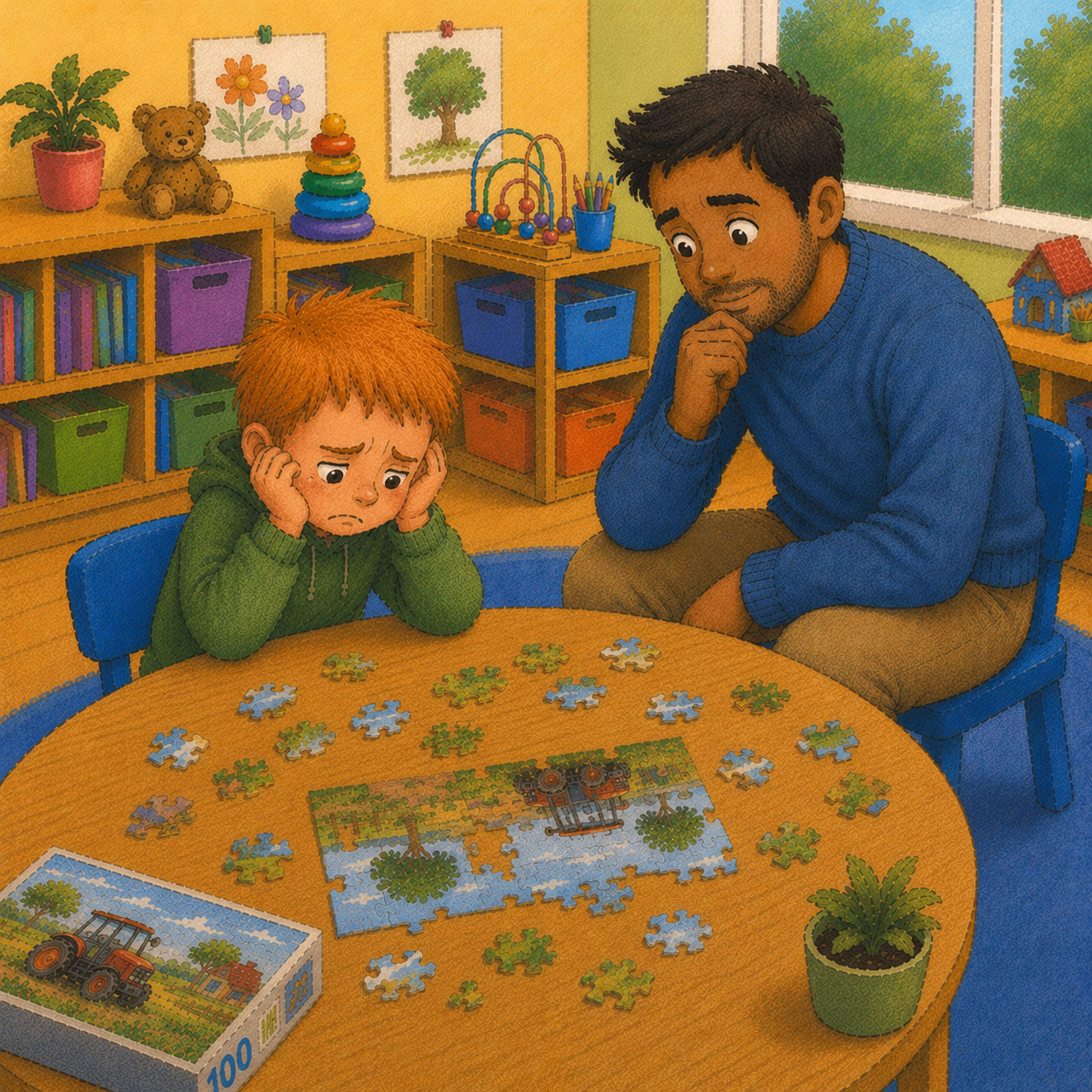
Child O. is often struggling when tasks require hand–eye coordination. This morning O. chose a jigsaw containing small-scale pieces. Nothing seems to fit! O. looks unhappy. Teacher M. is observing O.’s efforts. M. sees that some pieces do fit already, but O. looks more and more frustrated.
What might happen next? Will M. intervene and help? What kind of help could M. offer? What influence might M.’s own learning experiences have on the way M. offers help?
Teacher M. could encourage child O. by stimulating him to try another strategy. Teacher could stress that some situations are hard to solve, but it is important to persevere. The teacher could offer the child help in exploring a new way of solving the problem together and encourage the child’s belief in one’s potential to continuously learn and progress.
Teachers C. and D. work in a small kindergarten that is situated in an old building. The room was for a shop. Daycare started two years ago. C. and D. talk about their current observations.
“Why does it take parents so long to say goodbye in the morning or the afternoon?” asks C.
D. has an idea: “It might be as simple as that: parents do not know where the ‘border’ is. Our group room is not divided from the entrance area. Look around, imagine you were a parent. Would you know where the group area begins?”
C. smiles: “No, not at all! You might be right! Wouldn’t it be a great idea to talk with children and parents and figure out how we can change the room setting so that children and parents know exactly where the spot to say goodbye is?”
Have you had experience with a similar situation – how did you react, how did you feel, would you change anything? If not, how would you react? How would you feel?
Teachers could seek out examples of how other kindergartens have handled similar challenges. They can share lessons learned with parents and children, adapting them to the unique needs of their space. Teachers can acknowledge that even small improvements, like clearer boundaries or smoother transitions, can improve their relations. They can use positive reinforcement to show children and parents that their efforts are valued.
Teachers X. and Y. and a group of children are starting a media project. During a discussion circle, X. and Y. talk freely about things they don’t know about some brand-new media tools. They share their thoughts with the group. They let everybody know that they don’t feel embarrassed about things they don’t know. They point out how glad they are to learn some new skills in this project.
Have you had experience with a similar situation – how did you react, how did you feel, would you change anything? If not, how would you react? How would you feel?
Teachers X. and Y. show curiosity about unfamiliar media tools and model lifelong learning. They share personal learning goals with the children, such as “By the end of this project, I’d like to understand how this tool works.” They invite children to explore together and see what they can discover. They model self-awareness and openness to new knowledge. Teachers openly admit what they don’t know, normalizing uncertainty as an opportunity for growth. They can say: “It’s okay not to know everything right away. What matters is being willing to find out.” Teachers could use humor to reduce anxiety about making mistakes.
Q. wants to set up a new bookshelf in the kindergarten. During a team discussion, some colleagues point out that there already are book boxes near the sofa in the reading corner.
Q. replies: “I have another approach in mind. Yes, we use read-aloud books in recreation time, which is great and important for the development of language. But I have noticed that children don’t use books and other media to explore topics or to collect information on project themes. They simply wait and love to cuddle in and listen to the teacher reading aloud (which is, like I already said, great). But I was thinking about an ‘explorer-book-shelf’ to invite children to see media as an interesting resource.”
Have you had experience with a similar situation – how did you react, how did you feel, would you change anything? If not, how would you react? How would you feel?
Q. explains how this initiative supports learning-to-learn competencies: “By exploring on their own, children learn how to gather information and make connections.” Q. could incorporate the use of the shelf into project-based activities, encouraging children to share their discoveries.
Teacher X. has been on the job for eight years. She/he never attended further training since her/his job training. X. has been working in a new kindergarten since last June. The head of the kindergarten acts quite pushy about further training and wants every teacher to partake regularly in different training sessions. She/he has set an appointment with X. to discuss the topic and decide about the next steps.
Why might X. have missed further training? Which feelings might she/he have concerning the meeting? How should X. prepare themself for the appointment with her/his superior to make it a success?
X. decides to actively plan their professional development. X. adapts their learning goals and plans as needed. If a chosen training session doesn’t meet expectations, the teacher has to explore alternative options and research local or online courses, workshops, and conferences. Goals could be updated based on evolving interests, challenges, or opportunities in the workplace. It is important to remain flexible and adaptive in learning strategies. Teachers can discuss training options with the head of the kindergarten or colleagues to ensure relevance.
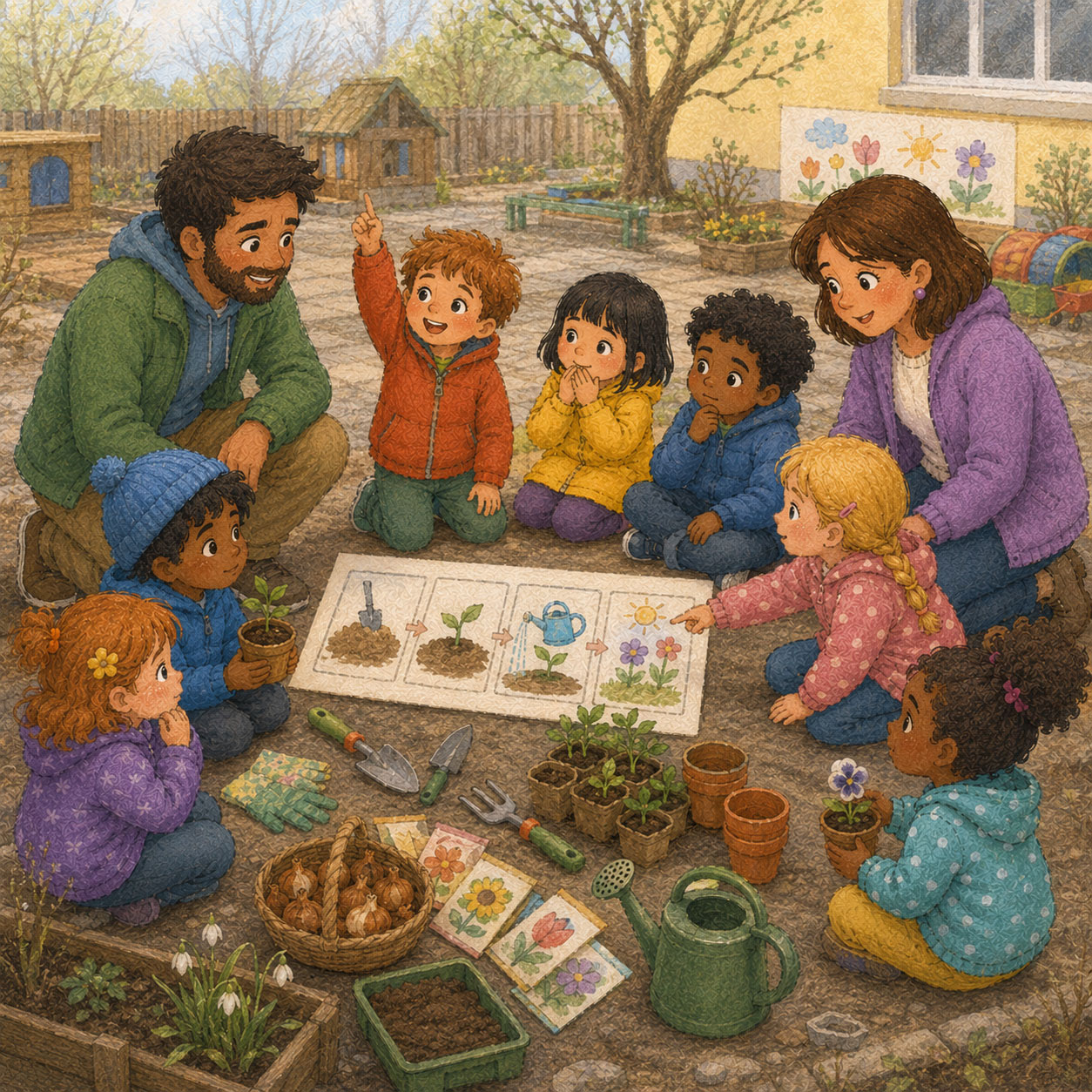
It is springtime. The kindergarten outdoor space looks grey and odd. Some children have the idea to plant flowers. A new project has been born! Teachers B. and C. have a lot of experience with project work. Overall, they want the children to participate when decisions are made. At the project group meeting, B. and C. invite all children to get involved. They also set out main steps to master the idea of successful gardening in kindergarten.
Why does it make sense to sketch out project steps? Which steps are important? Why are B. and C. so interested in including children in decision making?
Both teachers can outline specific learning objectives for themselves and the children. They can define what they hope the children will learn (e.g., teamwork, understanding plant growth, or taking responsibility). They can reflect on their own learning goals. Teachers can acknowledge that they are also learning (e.g., exploring new gardening methods or sustainable practices).
You already know it: Social, emotional, and "learning to learn" (so-called metacognitive learning) are not just pedagogical buzzwords - they are the foundation for successful development and harmonious everyday life with children.
With this project, you intentionally place these topics at the center of your pedagogical work.
And yes - you're probably already very familiar with the following core principles. But because they are so important to us, they appear right at the beginning of the introduction as a reminder. They are the common thread that holds everything together.
Placing the child at the center and aligning decisions with their well-being is a cornerstone of early childhood education and care.
This means: Every attitude, every measure, and every activity that concerns children should support their safety, well-being, and development.
This principle is not only pedagogically and ethically sound, but also anchored in Article 3 of the UN Convention on the Rights of the Child, which has been ratified by all EU member states and emphasizes the best interests and participation rights of children.
When you use the child's well-being as your compass, you create a space in which children feel safe, seen, respected, and empowered.
The project supports you with tried-and-tested methods to accompany each child individually and sensitively in a caring and developmentally supportive learning environment.
Appreciative engagement with diversity is essential. Children should develop pride in their own identity and, at the same time, learn to respect and understand others in their differences.
With the anti-bias approach, we reflect on our own unconscious biases in order to evolve, embrace diversity more fully, prevent exclusion, and enable genuine participation for all children. It all begins with our attitude: open, curious, and reflective. We look at our environment differently and pay increasing attention, for example, to using materials in which as many children as possible can see themselves - without clichés, without one-sidedness.
In the activities, you'll find carefully selected stories, images, and materials that reflect the diversity of family structures, cultural backgrounds, and life realities.
Social and emotional learning does not stop at the center's door.
Actively involve parents - with small take-home ideas, invitations to explore stories or activities together, or with parent evenings that convey SEL topics in a hands-on way.
When early childhood educators and parents work together, a strong bridge is built between home and daycare and that gives children orientation, security, and support.
For your introduction to SEL practice, two main components are available:
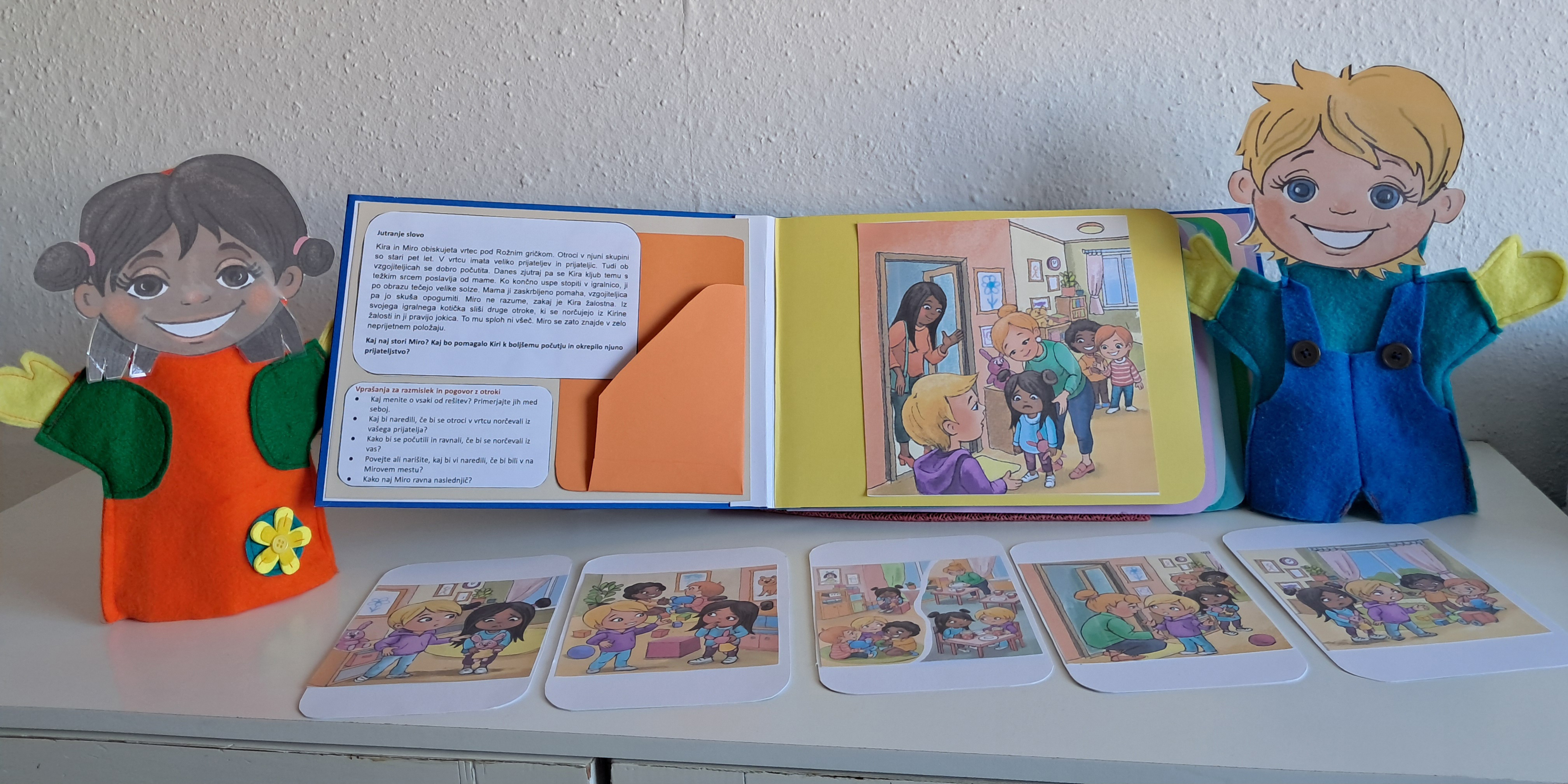
Our booklet supports you in integrating SEL (Social and Emotional Learning) into everyday kindergarten life in a situational, child-centered, and playful way. The stories address central themes such as friendship, empathy, diversity, and collaborative problem-solving — engaging, age-appropriate, and closely connected to children’s real-world experiences.
Through listening, storytelling, discussion, and role-play, children strengthen their social relationships, learn to understand and express emotions, and develop confidence in managing everyday challenges. The stories can be enriched with materials such as hand puppets, picture cards, and play ideas that stimulate imagination, bring the content to life, and encourage active participation.
A particular focus of the booklet is L2 – Learning to Learn (Critical Thinking) as the main competence area. The activities and stories support children in developing self-awareness, reflection, curiosity, and independent learning strategies, while also fostering important personal and social learning competencies through cooperation, communication, empathy, and shared experiences.
Instructions for Making a Puppet
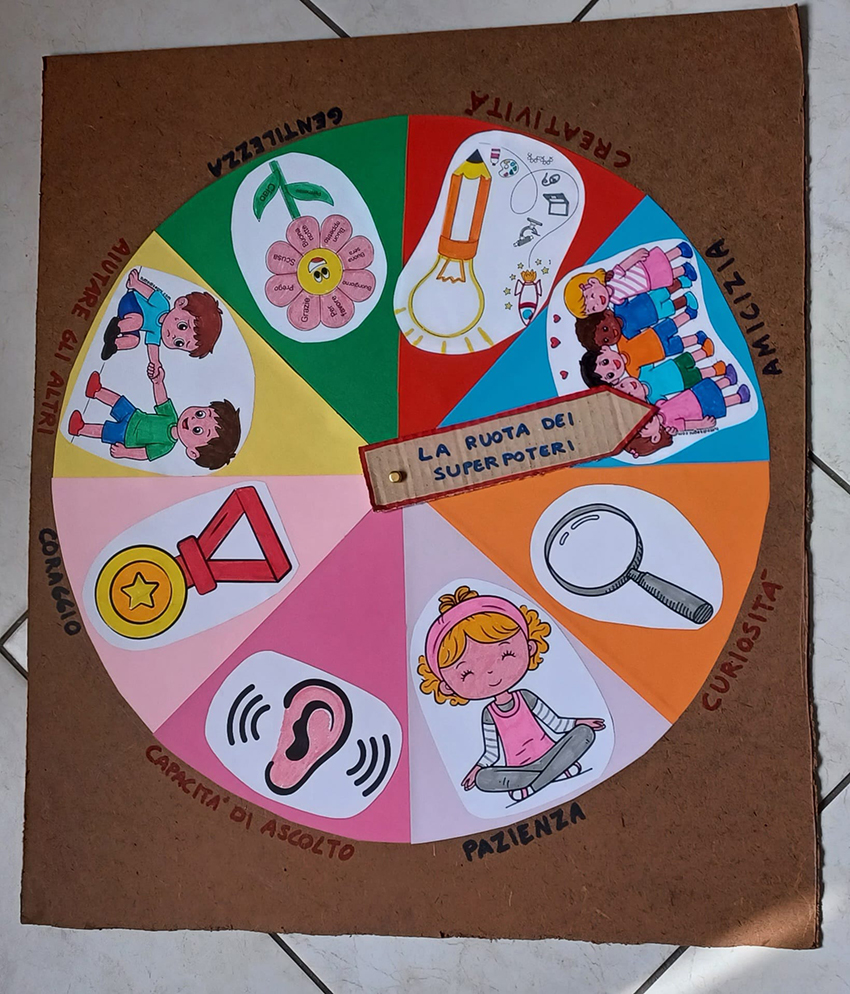
All foundation and advanced activities offer various formats - playful exercises, role-plays, or targeted, child-friendly SEL techniques. Or you might launch into a project that spans multiple sessions.
Projects are particularly well suited to anchor SEL topics in daily life and make them personally meaningful for children.
Make SEL an experience in participation. You hold the overview of the methods - and you know the children in your group. Involve them actively in the process and let them choose among ideas. Let's be honest: not everything we adults find useful automatically appeals to children. Be open to what unfolds when you follow the children's ideas.
All activities are flexible: you can adapt them to your group's current stage, leave out individual elements, or rearrange them as needed.
Each activity stands on its own, is clearly structured, and marked with symbols - making it easy for you to navigate and plan effectively.
With each new activity, SEL becomes a more natural part of your educational routine - tangible, impactful, and full of life.
You can start right away with the full sequence, which includes all activities and prompts. Alternatively, you can use our example sequence to introduce SEL step by step into your daily educational practice.
This example sequence is intended as inspiration. You can always adjust the order, pace, and focus areas to match the needs and interests of your children. Some of the most meaningful learning moments often happen when children are especially engaged and a topic can be explored in greater depth together.
Step by step, the suggested activities can help build important SEL experiences and supportive routines that grow naturally and sustainably over several months. Afterwards, you can easily switch to the advanced activities included in the full program.
Phases of the example sequence and suggested approximate duration:
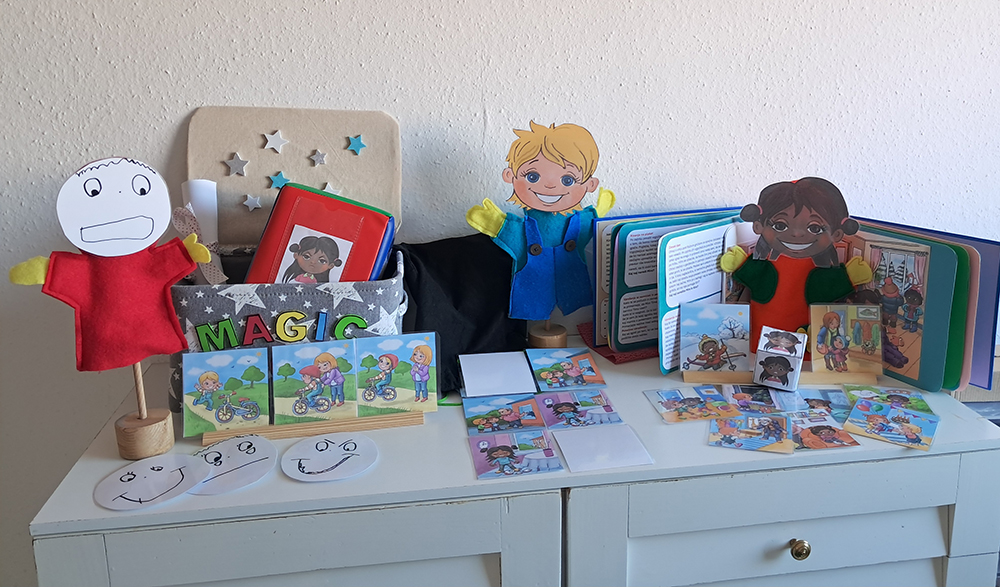
Some activities are especially suited for embedding into small puppet scenes - and who better than Kira and Miro to lead the way? They introduce the activity - ideally with the Magic Box. It's a multi-talented pedagogical tool. Inside are materials that kick off the topic in an exciting way. This has impact - motivating, engaging, and with a pinch of magic.
To make everything flow smoothly, we recommend the SEL three-phase structure:
During shared social-emotional learning (SEL) activities, children may express intense emotions such as joy, anger, sadness, fear, or frustration very strongly. These situations are a normal part of everyday pedagogical practice, offer important learning opportunities, and require attentive and professional guidance. Early childhood educators provide safety in these moments, take children’s feelings seriously, and support them in recognizing, naming, and gradually regulating their emotions. A key principle is a flexible, child-centered approach in which the planned structure is adjusted according to the current group situation.
Equally important is educators’ self-regulation and self-reflection. Their own emotional reactions such as uncertainty, anger, overwhelm, or helplessness should be consciously noticed and reflected upon, as they can influence professional practice. Regular team exchange and collegial consultation support educators in making sense of challenging situations and continuously developing their pedagogical approach.
This stance helps to understand strong emotions not as a disruption, but as an integral part of early childhood development and as meaningful opportunities for learning.
Because emotions are closely linked to bodily processes, the body can be used as a central access point for emotion regulation. In highly emotional moments, it is often no longer possible to address situations calmly through conversation. Through the body, children can be supported in a targeted way by first expressing strong internal arousal, then structuring it, and finally calming down. Educators should have a high level of methodological confidence and, when offering body-oriented impulses, respond sensitively to children’s reactions and adapt activities accordingly.
Examples:
The foundation activities lay the groundwork. The advanced activities are available to you flexibly. With them, children deepen their knowledge, practice constructive emotional management, improve self-regulation, develop social skills, dive further into learning to learn, and grow even stronger as a group.
Use your growing experience and confidence with the methods to choose what suits your group - always together with the children, of course.
With your attitude, your knowledge, and your commitment to the children, SEL comes to life. The methods and materials offer inspiration - but they only unfold their full impact through you. You guide children to feel safe and confident, to understand themselves and others better, to shape relationships, and to grow with optimism.
We wish you and the children an enriching journey - with hands, heart, mind, and lots of joy.
| Area | Competencies | Descriptors | Learning Goals With the support of an adult, the child will: |
Learning Outcomes With the support of an adult, the child will be able to: |
Suitable activities |
|---|---|---|---|---|---|
| Personal | P1 Self-Regulation | 1. Awareness of Myself |
|
|
Basic
Advanced |
| 2. Awareness of My Senses |
|
|
Basic P1.2 Exploring Sounds in the Environment P1.2 Memory of Smells - Exploring and Matching Scents P1.2 Exploring Materials "Hands-on" |
||
| 3. Awareness of Emotions |
|
|
Basic
Advanced |
||
| 4. Regulation of Emotions |
|
|
Basic
Advanced |
||
| P2 Flexibility | 1. Awareness of Changes |
|
|
Advanced |
|
| 2. Adjustment in/during Changes |
|
|
|||
| P3 Wellbeing | 1. How to Be Well (Awareness of Biological and Psychological Needs) |
|
|
Basic
Advanced |
|
| 2. Respect for the Environment |
|
|
Advanced P3.2 Me and Recycling P3.2 Little Gardeners Grow P3.2 Eco Treasure Hunt: Fun Recycling and Green Living Activities |
||
| Social | S1 Empathy |
|
|
Basic
Advanced |
|
| S2 Communication | 1. Communication Strategies |
|
|
Basic S2.1 Fishing for Emotions |
|
| 2. Conversation Skills |
|
|
Basic S2.2 My Emotions... How Do I Feel Today? |
||
| 3. Listening Skills |
|
|
Basic
Advanced |
||
| S3 Collaboration |
|
|
Basic
Advanced |
||
| Learning to Learn |
L1 Growth mindset L3 Managing learning |
|
|
Advanced L1 My Superpowers L1 The Superpower Bag L1 My Special Day in Kindergarten: From Planning to Celebrating L1 My Timeline: Growing and Learning L3 My Learning Journey |
|
| L2 Critical thinking |
|
|
Basic
Advanced |
Social and emotional competencies develop through everyday interactions in children’s different environments. While kindergartens provide structured learning experiences, families play a central role in children’s daily emotional and social development.
Cooperation between educators and parents helps create a consistent and supportive learning environment for the child.
Parents do not need a lot of theoretical knowledge of social and emotional learning. What is more important is that they understand the value of these competencies and feel confident in supporting their children in everyday situations.
Information the kindergarten provides to parents, should therefore be:
SEL can be introduced to parents in small and accessible ways, for example during parent meetings or informal conversations.
A good opportunity to introduce SEL to parents in kindergarten is during parent meetings. A simple structure may include:
Everyday interactions with parents offer valuable opportunities to support their understanding of social and emotional learning. This can include:
Various informational materials can offer a low threshold way to support communication with parents. You can also offer these materials in different languages and support parents who may not be fluent in the language of the environment. These materials may include:
Children themselves can play an important role in communicating SEL to their parents. Their participation can make learning visible and meaningful. Possible formats include:
Cooperation with parents is most effective when it is based on trust, openness, and mutual respect. The goal is not to instruct parents, but to support them in their role and to create shared understanding around the child’s development.